







Smart hotel Malaysia: what operators actually ask the team
Smart hotel Malaysia: the AqaraLink Industry Application Platform for hotels, serviced apartments and offices, and the operational questions operators ask.
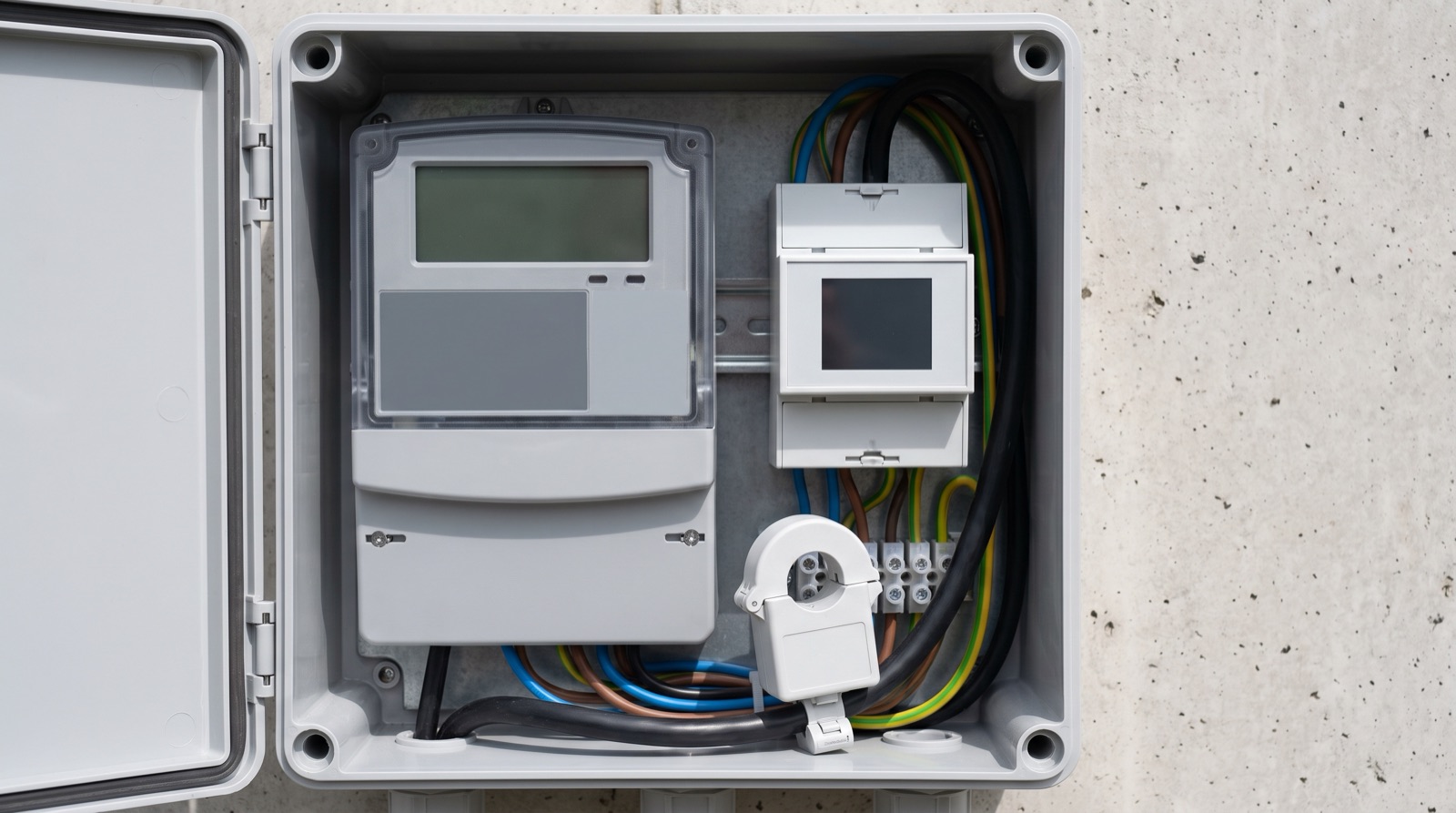
Answer up front — Most owners buy control when what they needed was measurement. Smart control changes what equipment does; metering tells you what happened. Without sub-metering you cannot tell whether a control change saved anything, and you cannot produce credible evidence for a green building certification or an ESG disclosure. Instrument first, control second, and check the current GBI criteria with your certifier rather than trusting a blog — including this one.
This is the single most common confusion in commercial energy projects, and it is expensive because you can spend a year optimising something you never actually measured.
| Smart control | Smart metering | |
|---|---|---|
| What it does | Changes what the equipment does — switching, setpoint, scheduling, zoning | Records what happened — consumption, runtime, state changes |
| Typical hardware | Relays, smart switches, presence sensors, valve controllers, room panels, HVAC controllers | Clamp-on current sensors, in-line or panel metering modules, existing sub-meters, utility data |
| What it changes | The building's behaviour | Your knowledge of the building's behaviour |
| What you can claim afterwards | An operational improvement you can only size if you had a baseline | A baseline, a trend, and a defensible number |
| Failure mode | Automation that fights the BMS, or a schedule nobody trusts, and occupancy quietly overrides it | Unread data, or data nobody owns, and no decision changes |
| When you need it | After you know where the load is | Before anything else |
| Reversibility | Often partial — a reconfigured control strategy is hard to unwind | None needed. Measurement does not change behaviour |
The logic is not subtle. You cannot optimise a circuit you have not measured, and you cannot prove a saving you did not measure. If you install presence-based lighting control across a floor and never sub-meter that floor, you will be asked in a year what it saved and the honest answer will be that nobody knows. That is a procurement failure, not a technical one.
It is also worth saying plainly what a control system will not do. A smart system does not reduce the base load of an air-conditioning plant, does not fix an oversized chiller, does not improve the building envelope, and does not care about a tariff. It can make a well-designed building behave better, and it can make a poorly designed building behave slightly worse if it is badly commissioned. None of that is a criticism of the technology — it is a description of where the value sits.
Two instrument types, often confused.
A clamp-on current sensor clamps around a single conductor and reports the current flowing through it. What it gives you: a live or historical current trace for that circuit. What it does not give you: volts, power factor, and therefore not true energy in kWh, unless the system combines it with a voltage reference and knows the power factor. It is excellent for switching detection, runtime, load steps and proving whether a control change did anything — a proxy instrument, not a billing instrument.
A metering module is a proper measuring device. Depending on the model and CT arrangement it gives you kWh, and often demand, power factor, voltage, current and an exportable time series. It is what a credible energy claim is built on.
A clamp and a meter are not the same purchase and they are not the same price. Ask which one you are being quoted, and ask what the output actually is. "It measures energy" and "it clamps the circuit" are different sentences.
A note on what we sell. Aqara's Malaysian device range is a control and sensor range — motion sensors, presence sensors, relays, room panels, locks — and it does not, as at September 2026, include a sub-metering product in the list we publish. Some devices, such as the Smart 20A Switch H1, report the power and consumption of the load they switch, which is useful for seeing how a circuit behaves, but that is not a sub-metering system. What that means commercially is that your metering hardware will come from your metering supplier or your M&E contractor, and the smart control layer sits on top of the data it produces. Ask us directly what we support and what we do not; we would rather tell you we have no energy meter than sell you one by implication.
Not the exciting part of the project. The part that decides whether you can say anything afterwards.
The minimum viable sub-metering for a commercial building is a set of boundaries that match how the building is used and how it is billed:
Then the discipline: the sub-meter total should reconcile to the incoming meter, within a stated tolerance, every month. If it does not, you have a boundary error or a missing meter, and until that is fixed you have a set of numbers, not a data set.
Two things that ruin an otherwise good installation: no defined boundary in writing — every building has one odd circuit that belongs to nobody, so name it — and data nobody owns. If the meters report to a portal no one in the building has a login for, and the data is not in a report that reaches a person, the meters are decoration. Budget the reporting, not just the hardware.
In Malaysia, a building owner is likely to be measured against one or more of these. We are naming them as the frameworks in play, not making claims about their current contents.
GBI — the Green Building Index. Greenbuildingindex Sdn Bhd publishes versioned criteria documents, and the rating applies through separate tools depending on the building and its stage — non-residential new construction, non-residential existing buildings, and other categories. Ratings are issued in tiers running from Certified through to Platinum, and the process runs through application and registration, design assessment, and completion and verification.
Two honest warnings. First, those criteria documents are revised. A version number you read last year may no longer be the current one, and the difference between a design-stage requirement and an operational-stage evidence requirement is exactly where projects get caught out. Second, we are not going to quote you a version number, a scoring threshold or an incentive amount on this page. Those change, they differ by building type and by scheme, and a blog that quotes them will be wrong within a year. Check the current GBI criteria with your certifier. That is not a brush-off; it is the correct advice for anyone in this market.
MIDA. MIDA publishes guidance and promotes green building adoption, and its material is a reference point owners and developers work against.
JKR and the public sector. Government buildings and JKR-adjacent bodies work to their own efficiency and green building requirements, which are separate from GBI and are frequently stricter in practice for the buildings under their scope.
The wider ESG and green-building reporting landscape. Owners of tenanted buildings increasingly face customer, lender and investor questions about energy and emissions data. The common thread across all of it: the claim must be measurable, and the measurement must be defensible to someone who is not on your side of the negotiation.
Sub-metering data feeds those frameworks in a specific and unglamorous way. It gives you:
And the honest corollary: smart control does not on its own satisfy a green building certification. It may contribute to how a building is operated, and operation is part of how performance is demonstrated, but the certification is a whole-building assessment against criteria that cover energy, indoor environment, site, materials, water and management. Do not let a control system be presented to a certifier as a substitute for the assessment.
The costing and governance around any of this is in building a smart building business case, and the landlord–tenant metering boundary is in common areas, tenant space and who pays.
We are not giving you a percentage, a payback period or a carbon number, and we would push back hard on any vendor who does without showing the baseline.
If you need figures for a board paper, a tenant negotiation or a certification submission, the only honest route is: measure your own building over a period that includes both an ordinary and a hot month, establish the boundary of every meter, and then let the difference do the talking. Get those numbers before you commit to a control system, because a control system without a baseline is an expensive opinion.
For the broader commercial property context, see hotels, serviced apartments and offices.

Smart hotel Malaysia: the AqaraLink Industry Application Platform for hotels, serviced apartments and offices, and the operational questions operators ask.

A smart building business case guide for Malaysian owners: measure a real baseline, scope phase 1 to fail cheaply, and price the true total cost before you commit.
Smart building capex, opex and service charge in Malaysia explained: the landlord and tenant boundary, capital or operating spend, and a responsibility matrix.
Tell us about your space. Our B2B team will reply within one business day with a recommended setup and quotation.
WhatsApp us →
[email protected]
+603-5880 5486