






SIRIM Smart Switch Malaysia: ST and PDPA Compliance Checklist
A sirim smart switch malaysia compliance guide — what to check before buying mains-powered gear, who may do the wiring under Act 447, and where PDPA applies.
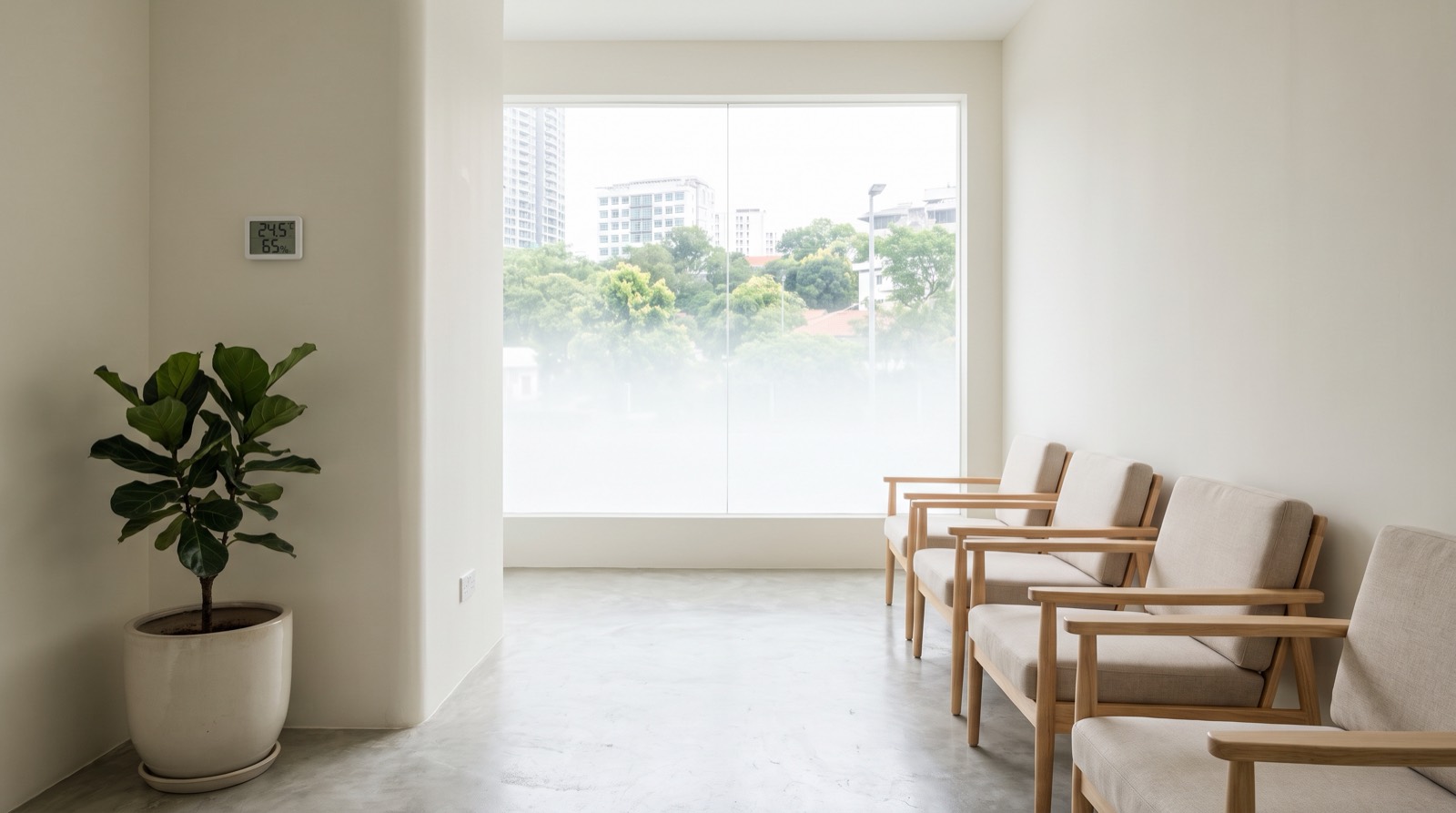
Answer up front — The defensible scope for a clinic is the building, not the patient: waiting-room comfort, consultation-room temperature, consumable stock conditions and after-hours access. None of it is clinical. It does not diagnose, it does not hold records, and it does not identify anyone. And any data captured inside a consulting room raises questions under Malaysia's Personal Data Protection Act 2010 that need a legal review, not just a technical one.
A clinic is a retail unit with a waiting room, a stockroom and a very specific set of things that must not go wrong. It is not a hospital, not a medical device environment, and not a practice management system.
That gives it an unusually clear boundary. There is a genuinely useful set of automations that improve the building, and a set of things that sound like clinic technology and are not ours to sell. Most suppliers blur them together. This post separates them.
The waiting room is where patients form their judgement of the practice, and it is the one space where comfort and running cost point the same way.
The useful scope is small: keep the space at a comfortable temperature when people are in it, stop conditioning it when they are not, and run the lighting off occupancy rather than a timer that switches on at 8 a.m. whether or not the first patient has arrived. In Malaysia the waiting room is conditioned almost all of the working day, and frequently while empty.
One specification limit shapes the design. Aqara's air-conditioner control runs through infrared, and only one IR air-conditioner can be bridged into Matter AC mode. A clinic with a waiting-room split unit, an office split unit and a treatment-room unit cannot have all three on one hub's IR bridge.
For reading the conditions themselves, the Presence Multi-Sensor FP300 is the practical choice where you do not own the wiring: it measures PIR, mmWave presence, light, temperature and humidity in one body, runs on CR2450 ×2 batteries for up to 3 years on Zigbee or 2 years on Thread, and needs no cable run. It is switchable across Thread, Zigbee and Bluetooth. Two honest details: it has no IP rating stated, and 45° corner mounting is recommended, so aim it across the waiting area rather than straight down into it.
This is the most defensible automation in a clinic, and the least controversial.
A consultation room is conditioned to be comfortable for a seated conversation with a closed door, and it is the room most often left conditioned and empty — between patients, over lunch, at the end of the day.
The boundary is worth stating precisely. A sensor that reports a room is occupied is doing building management. A sensor that reports a person is in a consultation is a data point about an identifiable individual once it is tied to an appointment list. That is where the privacy analysis changes completely. Presence logic for consultation rooms should therefore drive the aircon and the lighting, and should not be surfaced anywhere a member of staff can browse a per-room history by time of day.
Be careful here, because this is where the most overclaiming happens.
What a sensor can do is report the conditions a store room, a cool box or a dispensing area is holding — temperature and humidity, on a schedule, with an alert when something moves outside the range you set.
What a sensor cannot do is tell you what you have, how much, or when it expires. Stock levels, batch numbers, expiry dates, reorder points and recalls are inventory management. They belong to the practice management system your practice already runs, and no device in the Aqara range touches them.
On temperature-sensitive items: if a practice stores anything with cold-chain or regulatory obligations, those obligations are yours to establish with your professional adviser, and we do not state them here. A logging sensor reporting a temperature every few minutes is an environmental record. Whether it constitutes the record your quality system requires is a decision for your own governance, made before you install anything.
Staff doors, back entrances and the storeroom are the sensible target, and the technology here is genuinely ordinary.
Two cautions specific to healthcare premises. Aqara publishes no door thickness for any of its retrofit locks — confirm the door with us before ordering. And a lock's access log is itself a record of who entered the premises and when. Used for staff access that is routine; retrieved later in relation to a particular person, it is a different matter, and it should be handled that way from day one.
If the practice is in a strata or shop-lot scheme, the entrance door may also be governed by the scheme — the same question every non-residential tenant has to ask in writing.
Nothing in this post, and nothing we install, is any of the following. The list is blunt on purpose, because "smart clinic" has been used to imply all five at once.
If a supplier tells you a single device will cut your waiting time, your stock wastage and your energy bill at the same time, ask them which of those five claims they are making, and in writing.
This is the section we would ask any clinic to read twice, then take to their own adviser.
Malaysia's Personal Data Protection Act 2010 applies to the commercial transaction side of a practice, and a clinic is where personal data, commercial activity and a physical building meet. We are not lawyers and we do not state your obligations. What we can do is lay out the questions that need answering before commissioning, so that you ask them properly.
The test that matters is context, not technique. A presence event recorded at 10:14 in Consulting Room 3 looks anonymous on its own. The moment it can be lined up against an appointment list, it is a record about a person. That is why the same sensor is unremarkable in a corridor and a problem in a consulting room.
Settle these in writing before the system goes live:
Settle the data question first, then specify the device. It is much harder to retrofit privacy into a system that is already running.
| Constraint | What it means in a clinic |
|---|---|
| Only one IR air-conditioner bridges into Matter AC mode | Three split units does not mean three automated aircons on one hub |
| Power monitoring requires a neutral wire | Older shop-lot circuits may not have one, and the cost-control feature needs it |
| Hub capacity is finite | The M100 is 20 Zigbee + 20 Thread, the M200 is 40 + 40, the M3 is 127 + 127 — count the rooms before quoting them |
| The Hub M2 is a Matter Bridge only | No Thread radio and no controller role, so it is the wrong hub for a Matter-over-Thread clinic |
| No door thickness is published for any lock | Confirm every door before ordering |
| Several Aqara spec tables are images, not text | If a figure is not readable on the manufacturer's page, we will not quote it |
| FP300's radar and sampling controls are Aqara Home or Home Assistant only in Zigbee mode | In Thread mode they need a third-party Matter controller |
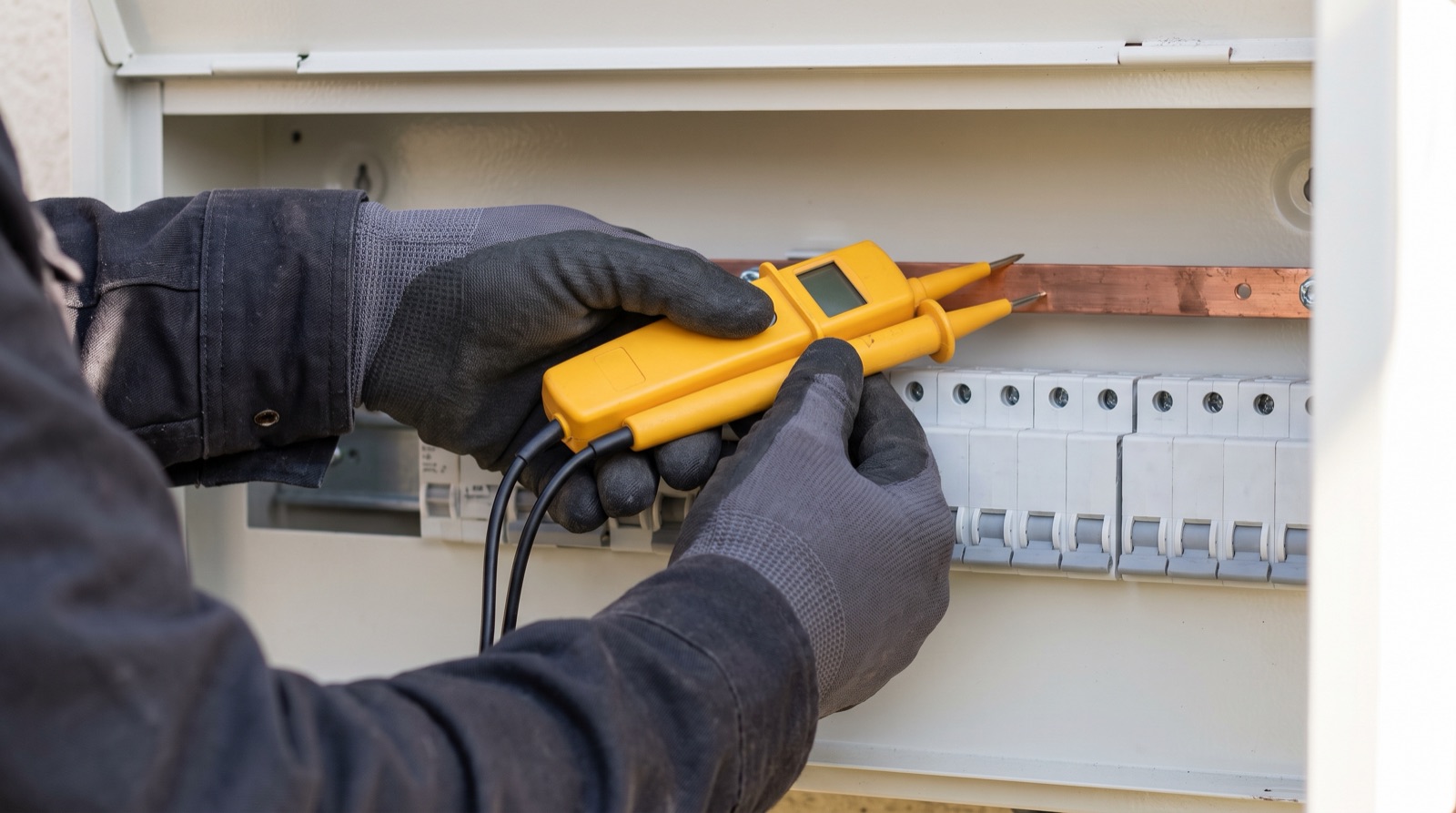
A sirim smart switch malaysia compliance guide — what to check before buying mains-powered gear, who may do the wiring under Act 447, and where PDPA applies.
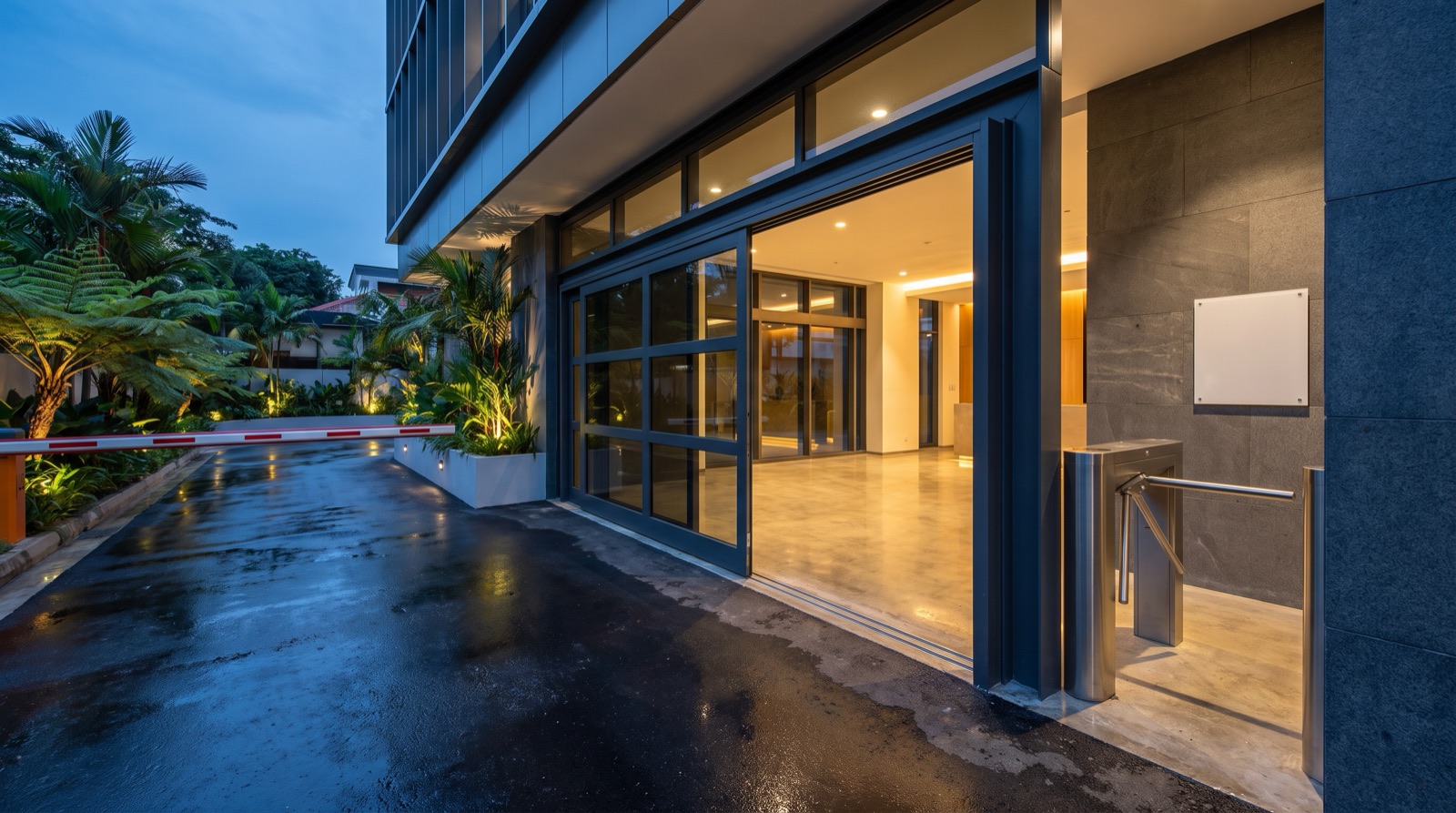
Commercial access control for smart buildings in Malaysia: which doors to automate, how presence sensing cuts after-hours cost, and the limits of CCTV integration.
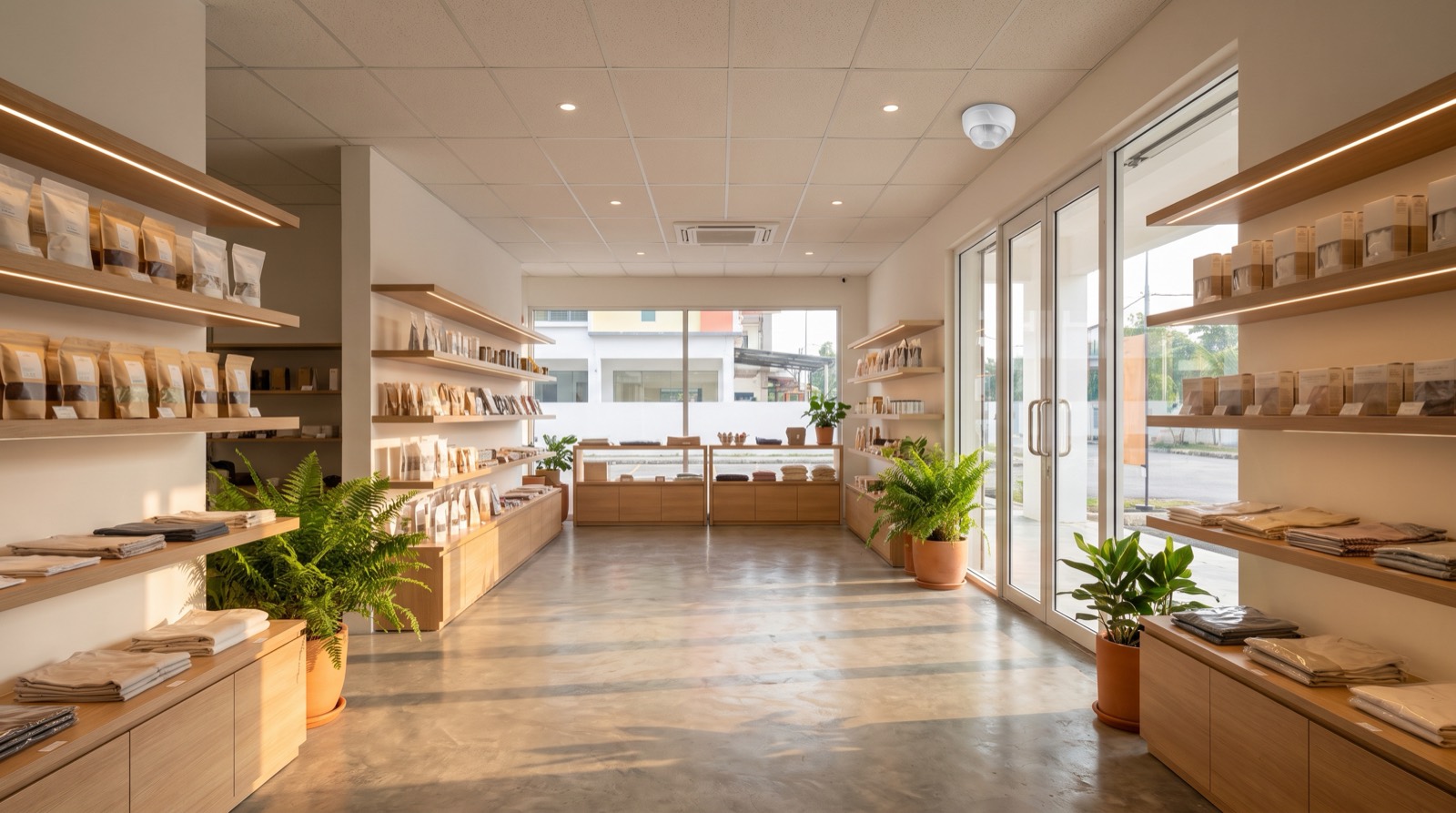
Smart retail store malaysia: aircon and lighting cost control in a hot shop lot, stockroom and shutter security after closing, and what a sensor cannot do.
Tell us about your space. Our B2B team will reply within one business day with a recommended setup and quotation.
WhatsApp us →
[email protected]
+603-5880 5486