







Commercial Access Control for Smart Buildings in Malaysia: Doors and After-Hours Cost
Commercial access control for smart buildings in Malaysia: which doors to automate, how presence sensing cuts after-hours cost, and the limits of CCTV integration.
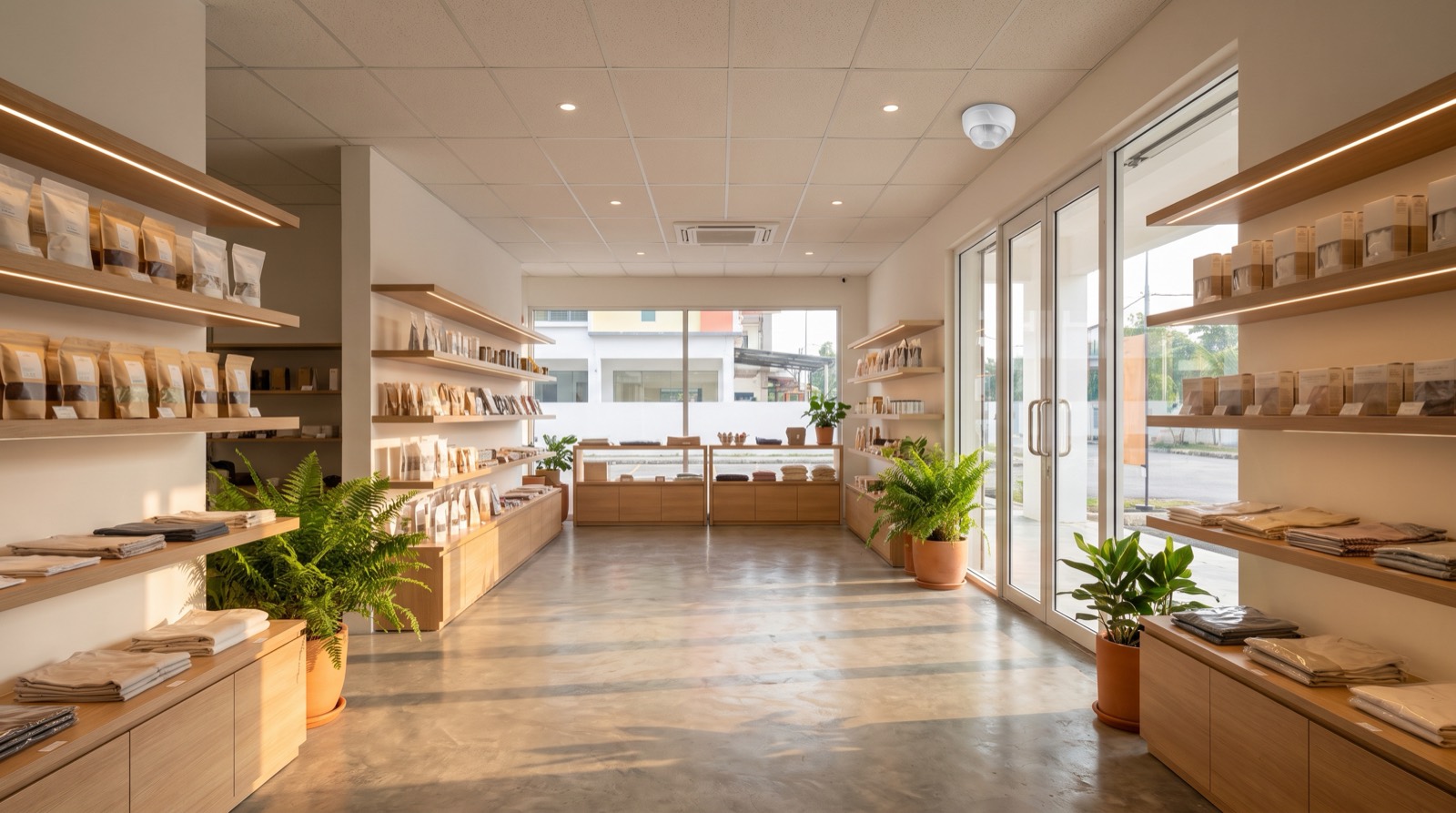
Answer up front — A Malaysian shop lot needs three things done properly before it needs anything clever: aircon and lighting under control in a space that is hot from opening to closing, a stockroom and shutter that are genuinely secure after the last customer leaves, and lighting that responds to whether anyone is in the space. Presence sensors do the third of those well and are honest about their limits — a presence sensor tells you the shop is occupied; it does not count customers and it does not tell you what they picked up.
A shop lot is not a house, and the difference is not decoration. A house is occupied a few hours a day by people who live there. A shop lot is occupied for fourteen hours by people passing through, in a space that is hot, lit for merchandising rather than comfort, and secured by a rolling shutter that is the single most important security device in the building. A spec written from a residential template will get all three of the shop's real problems wrong.
This is where the money is, and where one product limit decides your architecture.
Aqara's own air-conditioner control path is infrared. The Hub M200 and the Hub M3 both carry an IR blaster, and the M200's published specification carries one hard limit: only one IR air-conditioner can be bridged into Matter AC mode.
That line is the whole design decision for a shop lot. A typical Malaysian shop lot has two to four wall-mounted split units — sales floor, stockroom, often an office at the back. They cannot all be IR-bridged through one M200. You either run more than one hub, choose a different control route for the additional units, or accept that only one is automated. Any quote that says otherwise has not read the specification.
| Approach | What it covers | Honest limitation |
|---|---|---|
| One M200 with IR | One air-conditioner in Matter AC mode | A second split unit is not covered |
| One M3 with IR | One air-conditioner, plus 127 Zigbee + 127 Thread capacity, dual-band Wi-Fi and PoE | Same one-unit IR limit |
| Multiple hubs | Every split unit gets its own IR path | More hubs to mount, power, network and maintain |
| Separate control for the extras | Whatever suits the unit | A different vendor, a different maintenance route |
The same logic applies to lighting, with a different constraint. Aqara's wall switches require a neutral wire for power monitoring — for both the Light Switch H2 US and the Presence Switch H2 US, the feature that makes a switch useful for cost control is exactly the feature that needs the wire. A shop lot with older 20A circuits may not have it. And the US variants are 120 VAC, so they are not directly suitable for a Malaysian 240 V circuit without checking.
Two points that get skipped in a quotation. Retail lighting is a merchandising decision before it is a lighting decision — dimming a display circuit to save power makes the stock look worse, and that is not the saving you should be chasing. And LED load and driver compatibility decides whether dimming works at all, so check it against the actual fittings rather than the lamp rating.
Start with the honest part: the rolling shutter is the security device. Nothing above it changes that. Motorising a shutter or reporting its state is useful; none of it matters more than the shutter being closed and locked.
A rolling shutter motor and its controls are not part of the Aqara range we hold verified specifications for, so treat that as a separate procurement and confirm the interface with us rather than assuming compatibility.
For staff doors:
And for all of them: Aqara publishes no door thickness. Their spec tables omit it and the help pages are JavaScript-only. Confirm the door with us before ordering — a lock that does not fit is the most common failed purchase there is.
For cameras after hours:
| Camera Hub G5 Pro | Camera G100 / G100 Select | |
|---|---|---|
| Also a hub? | Yes — Zigbee, Thread and Bluetooth, with Ethernet and PoE on the CH-C03E/D variant | No — Wi-Fi and Bluetooth only, no Thread, no Matter |
| Resolution | 2688 × 1520 | 2304 × 1296 |
| Field of view | 133° diagonal | 140° diagonal |
| Wi-Fi | 2.4–5 GHz on the Wi-Fi variant | 2.4 GHz only |
| Storage | 30-day cloud trial, then a subscription-free tier | MicroSD card not included (Class 10+, up to 512 GB); H.264 only |
| Stated in the box | Stand not included | — |
Two corrections worth knowing: Aqara's own spec table mislabels the G5 Pro's 133° as "Image Sensor Size" — it is the diagonal field of view. And whether the G5 Pro is a full Matter Controller is not stated by Aqara, so we will not claim it either.
A camera in a shop records identifiable people. Customers are identifiable in a way a sensor is not, which raises a privacy question under Malaysia's Personal Data Protection Act 2010 that should be settled with someone qualified to advise on it before the camera goes on the wall, not after.
Occupancy-driven lighting is the cheapest useful automation in a shop: fitting-room and stockroom lights come on when somebody walks in and go off when they leave, instead of running on a timer from opening to closing.
| Sensor | Published capability | The honest retail read |
|---|---|---|
| FP1E | 60–61 GHz, 360° rotating head, wall, ceiling or corner mount; moving versus still plus duration. Zigbee only, so it needs an Aqara hub | The budget option for one defined space. But Aqara's own product page still ships unreplaced "Lorem ipsum" copy, so treat FP1E claims as unconfirmed |
| FP2 | 60 GHz, up to 40 m², up to 5 people, IPX5, Wi-Fi 2.4 GHz and Bluetooth only — no Zigbee and no Thread, and no hub required | Strong for a stockroom or a defined zone. Zone positioning and multi-person detection require wall mounting |
| FP300 | 5-in-1: PIR, mmWave, light, temperature, humidity. Thread, Zigbee and Bluetooth, switchable, on CR2450 ×2 — up to 3 years on Zigbee, 2 years on Thread. 120° field of view, 6 m max. No IP rating | The one that also reads temperature and humidity, with no wiring to install. 45° corner mounting is recommended, so aim it across the space |
| FP400 | Up to 10 people, 120° field of view, headcount and ambient light; side mount 10 m × 8 m, corner 7 × 7 m, ceiling 3–4 m. Thread and Zigbee, IPX5 | The only one with a published headcount figure — but it is not confirmed as a Malaysian-channel product and is missing from Aqara's own sitemap |
Two mounting facts decide these. On the FP2, fall detection requires a ceiling mount and disables most features including zone positioning and presence detection — so a shop with a high ceiling gets the trade-off it wants, and a shop without one should wall-mount it and keep the zones. And the FP400's ceiling specification is conditional: it is specified for a 3–4 m ceiling, and at 3 m it gives 5 × 6 m of motion and 4 × 5 m of presence directly below. A shop lot with a 2.7 m suspended ceiling is a different problem.
This is where a retail automation project quietly over-promises, so it is worth reading twice.
A presence sensor tells you the shop is occupied. That is what it is for, and it does that well.
It does not tell you:
If you need a customer count, that is a different product category. Do not let a presence sensor be quoted as one. What occupancy data does give you reliably is occupied or unoccupied, over time — a real operating number, just not the one a shop owner asks for first.
Once you have several zones across a store, or a handful of stores, the useful question stops being "is this room occupied" and becomes "which of our sites needs attention tonight".
Synchroweb's Omaya platform runs across People, Devices, Environment and Space, and the Space stream is the one a retailer asks about — dwell time, traffic patterns, peak hours and underused rooms. Device inventory with health, firmware, last-seen, battery and location means a sensor that died in a stockroom two weeks ago appears on a list instead of being discovered by a customer complaint. Environment covers temperature, humidity, noise and air quality with threshold alerts and evidence-ready logs. It is described as covering twelve gateway vendors on one screen, and integrates with Mokosmart and Minew sensors.
That answers the shop owner's question — how busy am I, and when — in a way a room sensor structurally cannot.
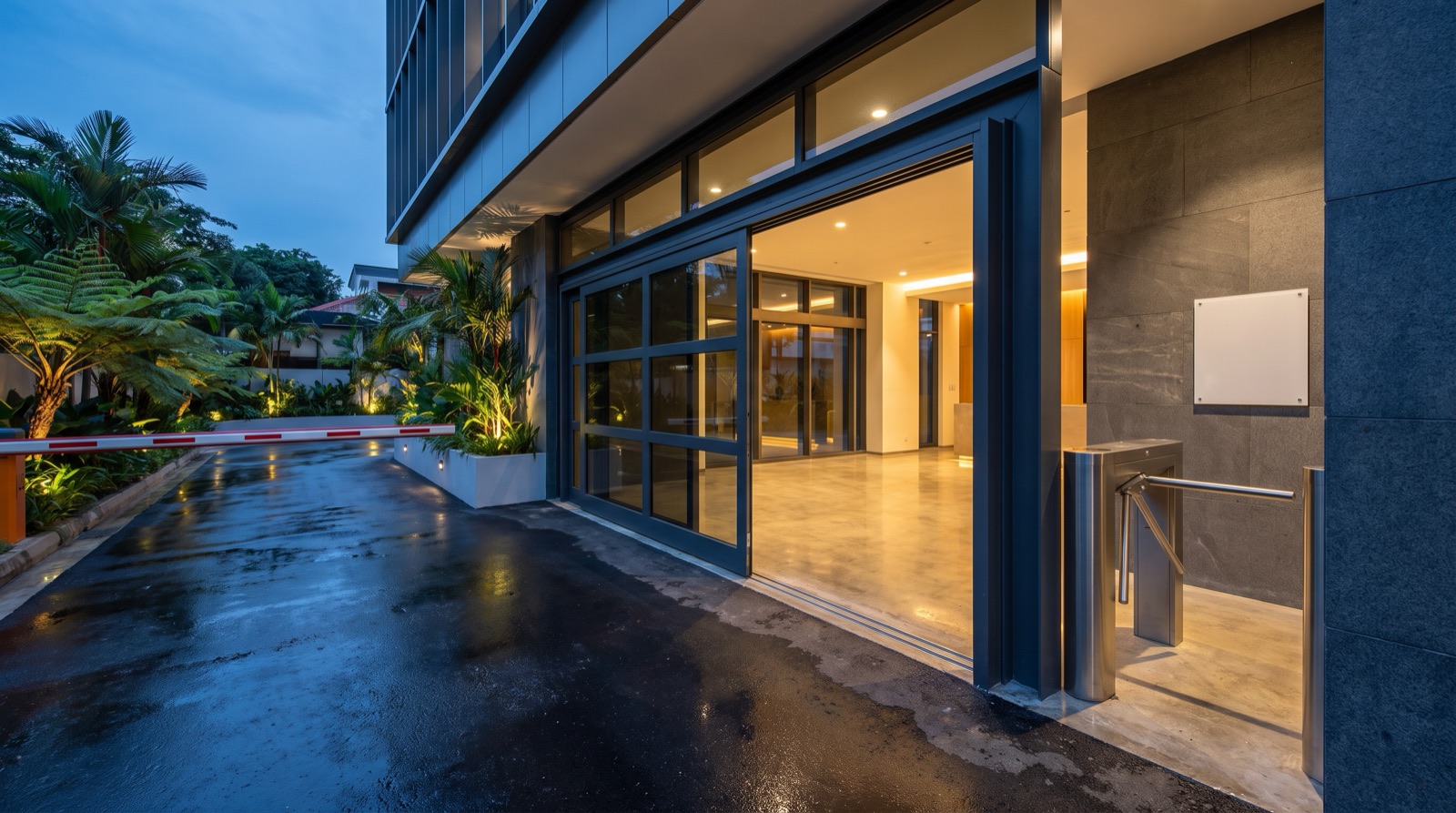
Commercial access control for smart buildings in Malaysia: which doors to automate, how presence sensing cuts after-hours cost, and the limits of CCTV integration.
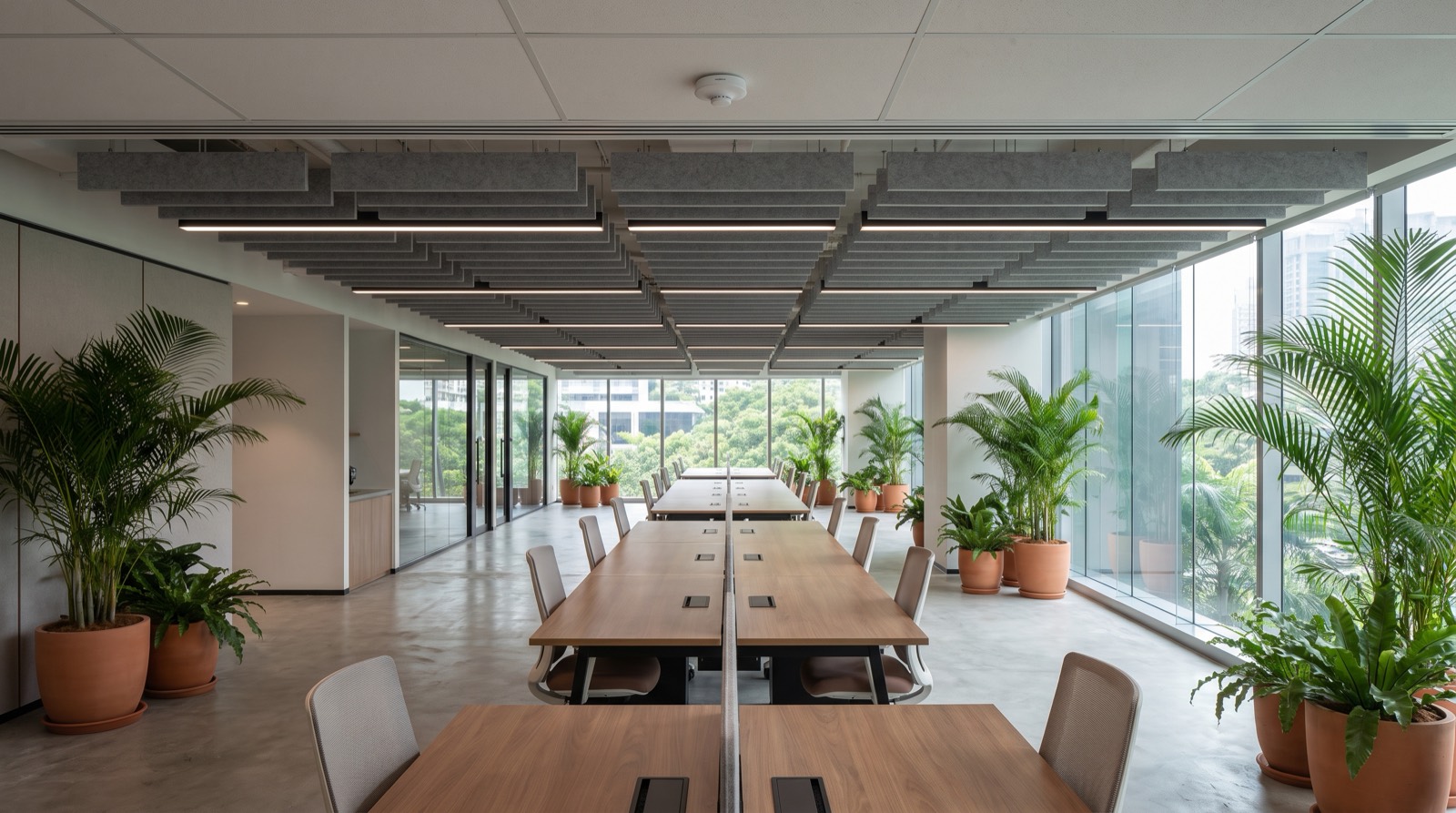
Office occupancy sensor Malaysia: a buyer's guide comparing PIR and mmWave, coverage maths at 2.7 m and 3.6 m ceilings, and the PDPA questions to ask.
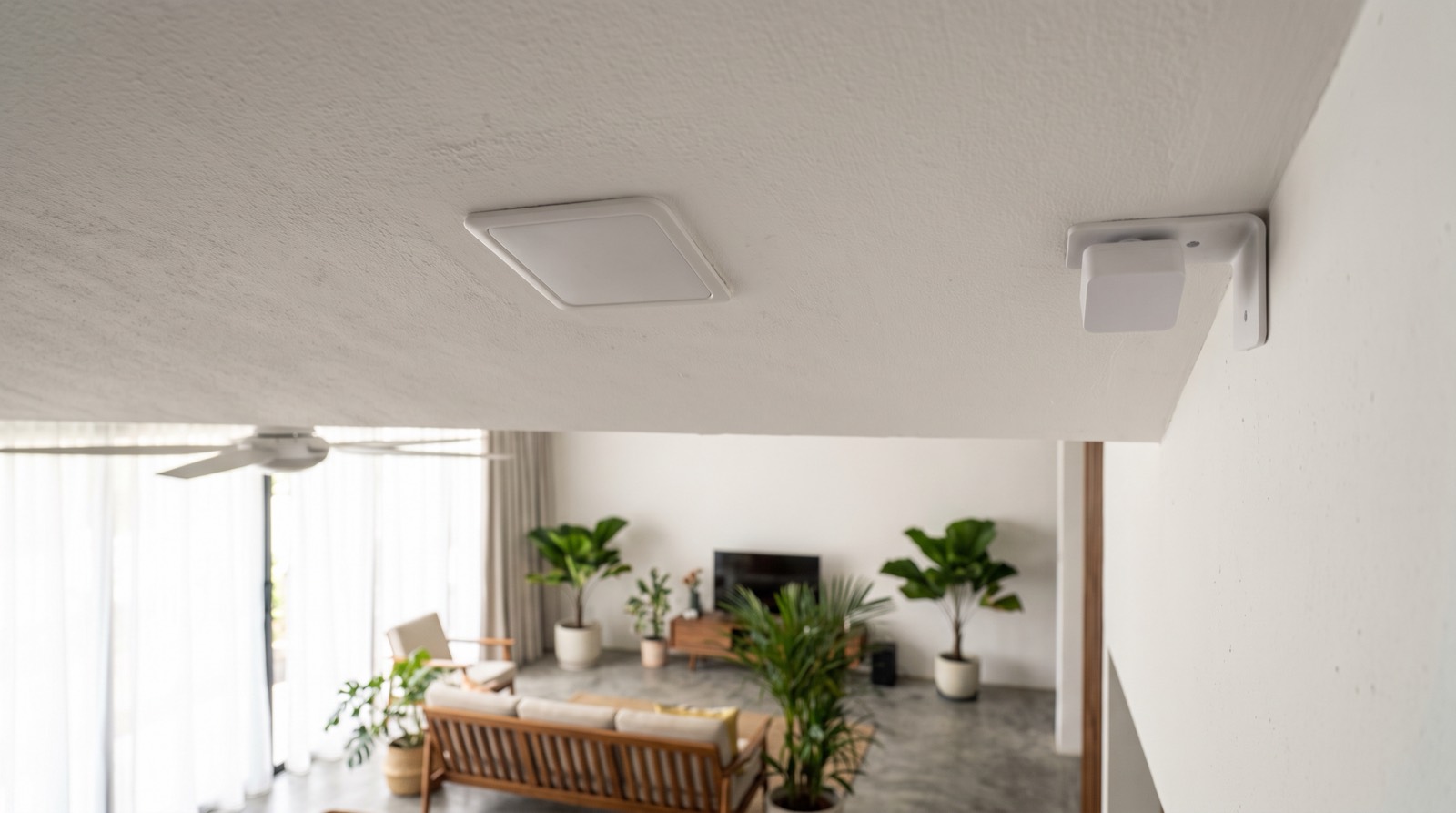
aqara fp2 vs fp400 compared with the FP1E and FP300: Wi-Fi or Zigbee or Thread, power, coverage, IP rating and what each one disables, as at Sept 2026.
Tell us about your space. Our B2B team will reply within one business day with a recommended setup and quotation.
WhatsApp us →
[email protected]
+603-5880 5486