







Smart home outdoor sensor Malaysia: monsoon and IP rating
Smart home outdoor sensor Malaysia guide: monsoon sun, rain and humidity, what an IP rating means, why a car porch is not a sheltered spot, and flood advice.
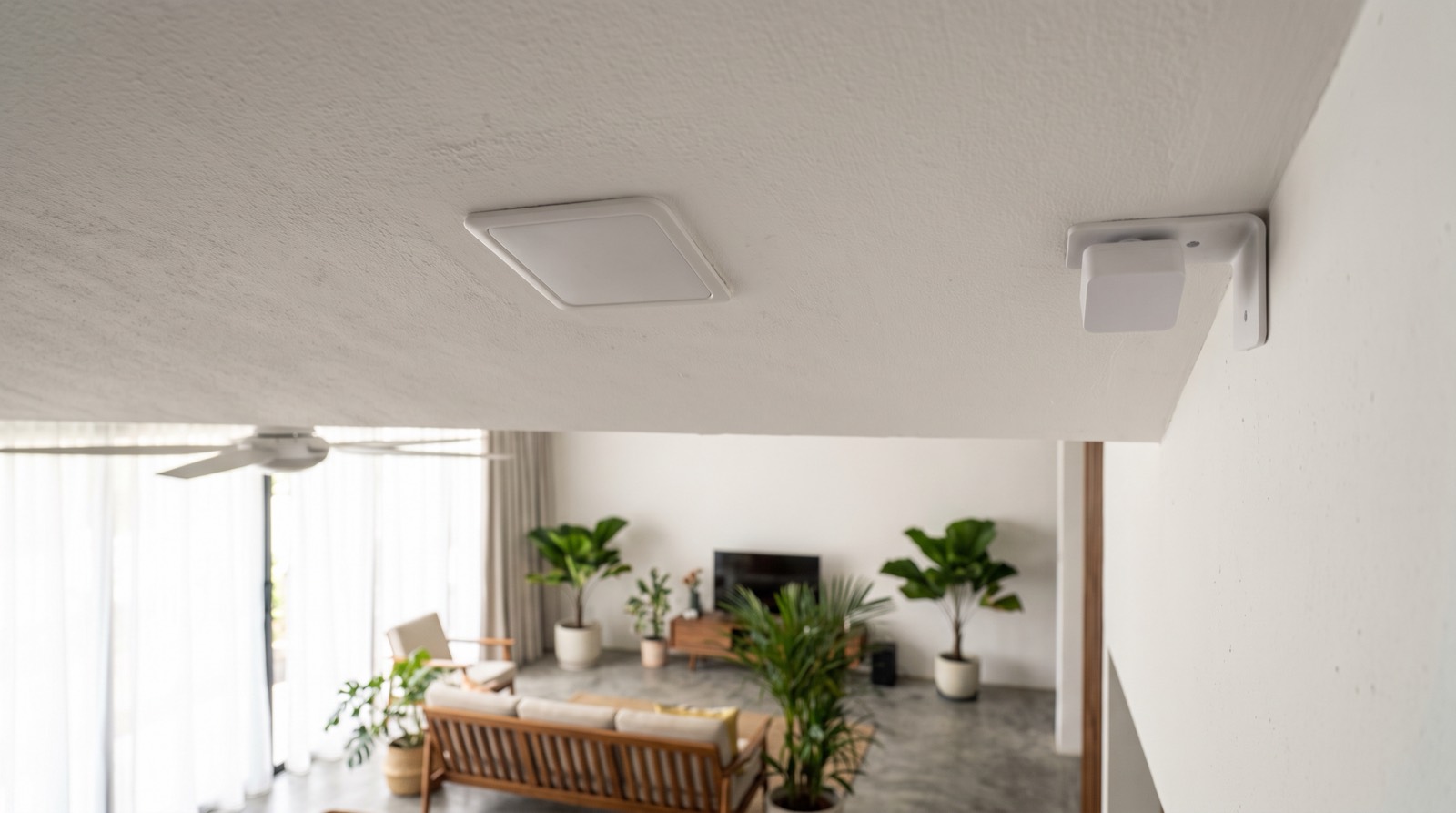
Answer up front — Before comparing anything else, the protocol correction that most articles get wrong: the FP2 is not a Zigbee device. It is Wi-Fi 2.4 GHz and Bluetooth 4.2 only, with no Zigbee and no Thread, and it never pairs to a Zigbee hub. The FP1E is Zigbee only. The FP300 and FP400 are Thread + Zigbee. So which sensor you can install is decided first by which hub you already own. On the rest: the FP2 for zones and multi-person detection on a wall, the FP300 if battery power matters most, and the FP400 for large-area tracking — but FP400 is not confirmed as a Malaysian-channel product.
There are four Aqara presence sensors in this range, and on the outside they are four small white squares. Underneath they differ in three ways that decide your purchase: what radio they speak, how they are powered, and how much area they actually cover. A fourth factor — what each one gives up — is the one nobody writes about, and it is the most useful thing on this page.
Start with the first one, because it is the most commonly mis-stated.
The FP2 has no Zigbee radio and no Thread radio. Aqara's own specification for it lists Wi-Fi 2.4 GHz and Bluetooth 4.2, and nothing else. It talks to your network directly and no Aqara hub is required for it to work.
This matters practically in two ways. If you already run a Zigbee mesh, the FP2 will not join it. And if you were planning to put every sensor behind one hub for reliability, the FP2 is the exception — it has its own connection to fail, and its own place on your network.
The rest of the range:
| FP2 (PS-S02D/E) | FP1E (PS-S03D/E) | FP300 (PS-S04E/D) | FP400 (PS-S05E/D) | |
|---|---|---|---|---|
| Radio | Wi-Fi 2.4 GHz + BT 4.2 — no Zigbee, no Thread | Zigbee 2405–2480 MHz only — no Thread, no Matter | Thread + Zigbee + Bluetooth, switchable | Thread + Zigbee |
| Hub needed | No Aqara hub required | Yes — an Aqara Zigbee hub | Zigbee: an Aqara hub. Thread: a third-party Matter controller | Yes — a Matter Controller plus Thread Border Router |
| Power | USB-C 5V 1A | USB-A 5V 1A | CR2450 ×2 — up to 3 yr on Zigbee, 2 yr on Thread | USB-C 5V 1A |
| Sensing | 60 GHz mmWave | 60–61 GHz mmWave | PIR + 60 GHz mmWave + ambient light + temperature + humidity | 60 GHz mmWave, headcount + ambient light |
| People tracked | Up to 5 | Not published | Not published | Up to 10 |
| Zone detail | 30 zones / 320 cells | Not published | Not published | 0.5 m zone grid |
| Coverage | Up to 40 m² | Not published | 120° field of view, 6 m max range | Side mount 10 × 8 m; corner 7 × 7 m; ceiling 3–4 m height (at 3 m: 5 × 6 m motion, 4 × 5 m presence) |
| IP rating | IPX5 | Not stated | Not stated | IPX5 |
| Dimensions | 64 × 64 × 29.5 mm | 57 × 50 × 37 mm | 42 × 42 × 50 mm | 64 × 64 × 29.5 mm |
| Operating temp | −10~40 °C | −10~40 °C | −10~50 °C | −10~50 °C |
| Mounting | Wall or ceiling — zones need wall mount | Wall, ceiling or corner; 360° rotating head | Rotatable base; 45° corner mount recommended | Wall, ceiling or corner; Aqara recommends corner |
| Malaysia availability | Confirm with us | Confirm with us | Confirm with us | Not confirmed as a Malaysian-channel product |
All figures are Aqara's published specifications. Where Aqara publishes nothing, this table says so rather than estimating.
The FP2's most advertised feature is fall detection. Read the condition attached to it: fall detection requires a ceiling mount, and enabling it disables most of the sensor's other capabilities — including zone positioning and presence detection.
That is a significant exchange. You are choosing between fall detection and the zone map and multi-person detection that make the FP2 worth having, not both. If the zones matter to you — which is usually the reason for buying an FP2 in the first place — fall detection is not something you switch on and keep.
Two more FP2 conditions worth knowing before you mount it:
The FP2's stated capability is up to 40 m², 30 zones across 320 cells, and up to 5 people.
The FP300 runs on two CR2450 cells — up to 3 years on Zigbee, up to 2 years on Thread. It is the only battery-powered presence sensor in this range, and in a Malaysian home that is often the deciding factor: a bathroom ceiling or a car porch with no nearby power point.
It is also a 5-in-1 — PIR, 60 GHz mmWave, ambient light, temperature and humidity — in one 42 × 42 × 50 mm body with a rotatable base, with 45° corner mounting recommended by Aqara. Its coverage figure is narrower than the FP400's: 120° field of view, 6 m maximum range.
One setting note that catches people out: radar sensitivity, absence period and sensor sampling controls are available in Aqara Home and Home Assistant in Zigbee mode only. In Thread mode, those controls require a third-party Matter controller. So Thread costs you a year of battery and costs you the tuning options, unless you already run a Matter controller.
The FP400 publishes the clearest coverage figures in the range:
Read the ceiling figure honestly. A 5 × 6 m motion zone at a 3 m ceiling is a large living room, and it is less than half the area of the 10 × 8 m it can cover from a side wall mount. If you have a high ceiling and a big room, corner mounting is where Aqara gets its full coverage — though Aqara also notes the corner mount may need third-party accessories. It tracks up to 10 people on a 0.5 m zone grid, and carries IPX5.
The availability caveat is not optional. The FP400 is missing from Aqara's own sitemap — it exists on Aqara's site but was found only by direct probing, and it has no /specs/ subpage. It is not confirmed as a Malaysian-channel product. If you are considering it, confirm availability with us first rather than ordering on the assumption it ships here.
We are including the FP1E because it is a genuine budget entry point into mmWave presence sensing, and it distinguishes moving from still occupancy plus duration. But you should know something about its source.
Aqara's FP1E product page still ships unreplaced "Lorem ipsum" placeholder copy. That is the manufacturer's page, as of September 2026. The specification figures quoted in this article come from the spec table, not from that marketing text — but treat any FP1E feature claim that appears only in the page prose as unconfirmed, and confirm it with us before you rely on it.
The FP1E's confirmed position is narrower in a different way: Zigbee only, no Thread, no Matter, and no IP rating stated. No third-party ecosystem, and it needs an Aqara Zigbee hub.
Only two sensors in this range publish a rating: the FP2 and the FP400 are IPX5. The FP300 and FP1E have no IP rating stated.
This matters for bathrooms, kitchens and covered outdoor areas, where a sensor with no published rating is a guess rather than a specification. Our guide to monsoon and outdoor sensor placement covers where sensors realistically survive, and installing Aqara presence sensors: placement covers mounting height and angle. Confirm the wet-area decision with us rather than reading an unstated rating as approval.
| If your priority is… | Choose | Because |
|---|---|---|
| Zones and multi-person detection, no hub | FP2 | Wall-mounted, 30 zones / 320 cells, up to 5 people, up to 40 m². But Wi-Fi only, and fall detection is ceiling-only and disables the rest |
| No cable at that position | FP300 | The only battery option — CR2450 ×2, up to 3 yr Zigbee / 2 yr Thread. Coverage is narrower: 120°, 6 m |
| A large open space, multiple people | FP400 | Up to 10 people, 10 × 8 m side mount, 0.5 m zone grid, IPX5. Confirm availability with us first |
| Cheapest way into mmWave presence | FP1E | Zigbee only, needs an Aqara Zigbee hub, no IP rating stated, and its Aqara page still carries placeholder copy |
| A wet area or covered outdoor spot | FP2 or FP400 | These are the two in the range with a stated IPX5 rating |
FP2 if you want zones and multi-person detection on a wall, you are on Wi-Fi rather than a mesh, and you accept that fall detection is a ceiling-only mode that turns the rest off.
FP1E if you already run an Aqara Zigbee hub and want the cheapest route into mmWave presence — after confirming the specs with us given the placeholder copy on its page.
FP300 if avoiding a cable at that position matters more than coverage area, or if you want ambient light, temperature and humidity from the same device. Budget for Thread's shorter battery life.
FP400 if you need multi-person tracking across a large space and can wait — confirm availability with us first.
If you are still unsure whether you need presence sensing at all rather than a plain motion sensor, that is a separate and cheaper question, covered in presence sensor vs motion sensor.
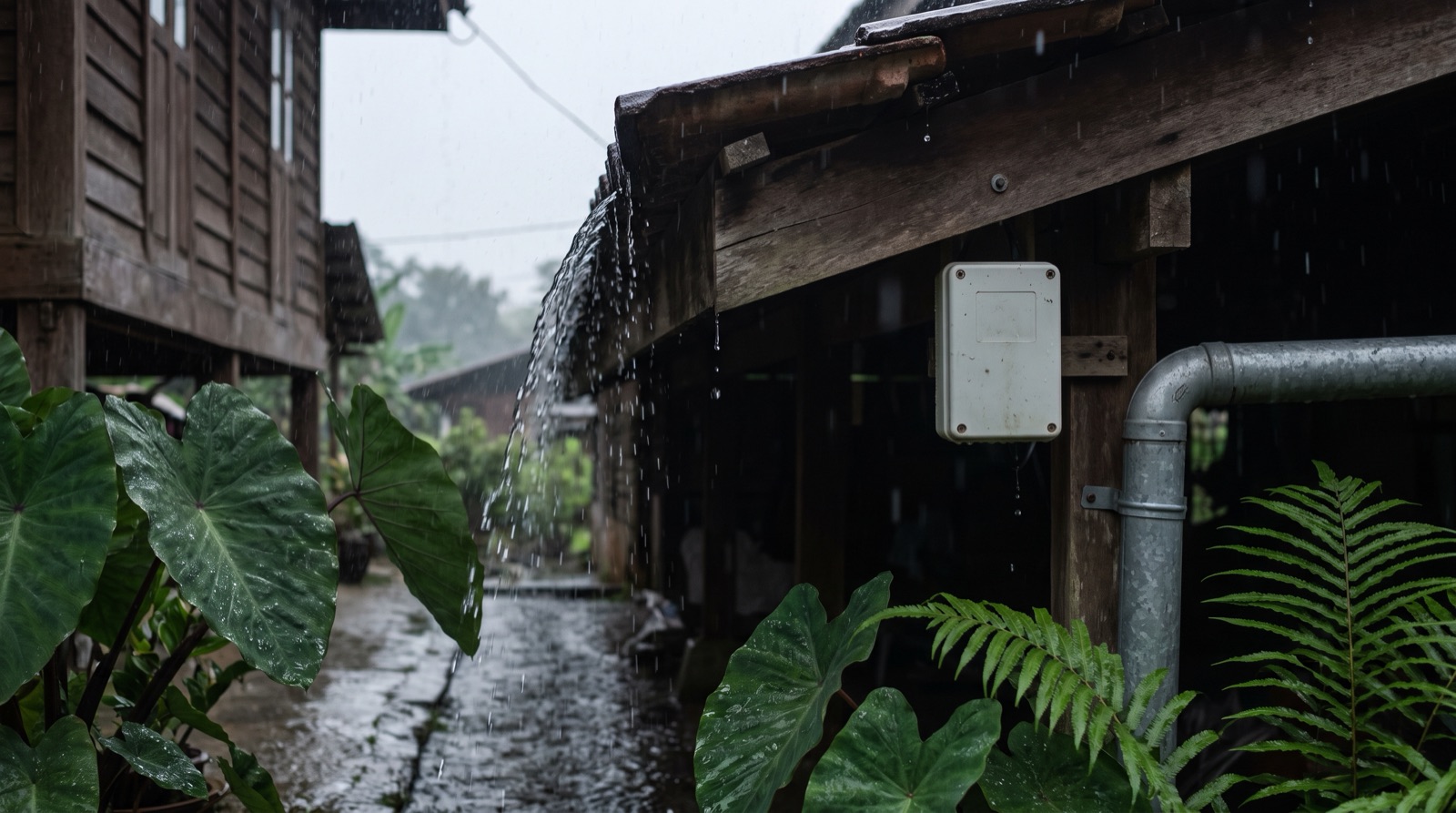
Smart home outdoor sensor Malaysia guide: monsoon sun, rain and humidity, what an IP rating means, why a car porch is not a sheltered spot, and flood advice.
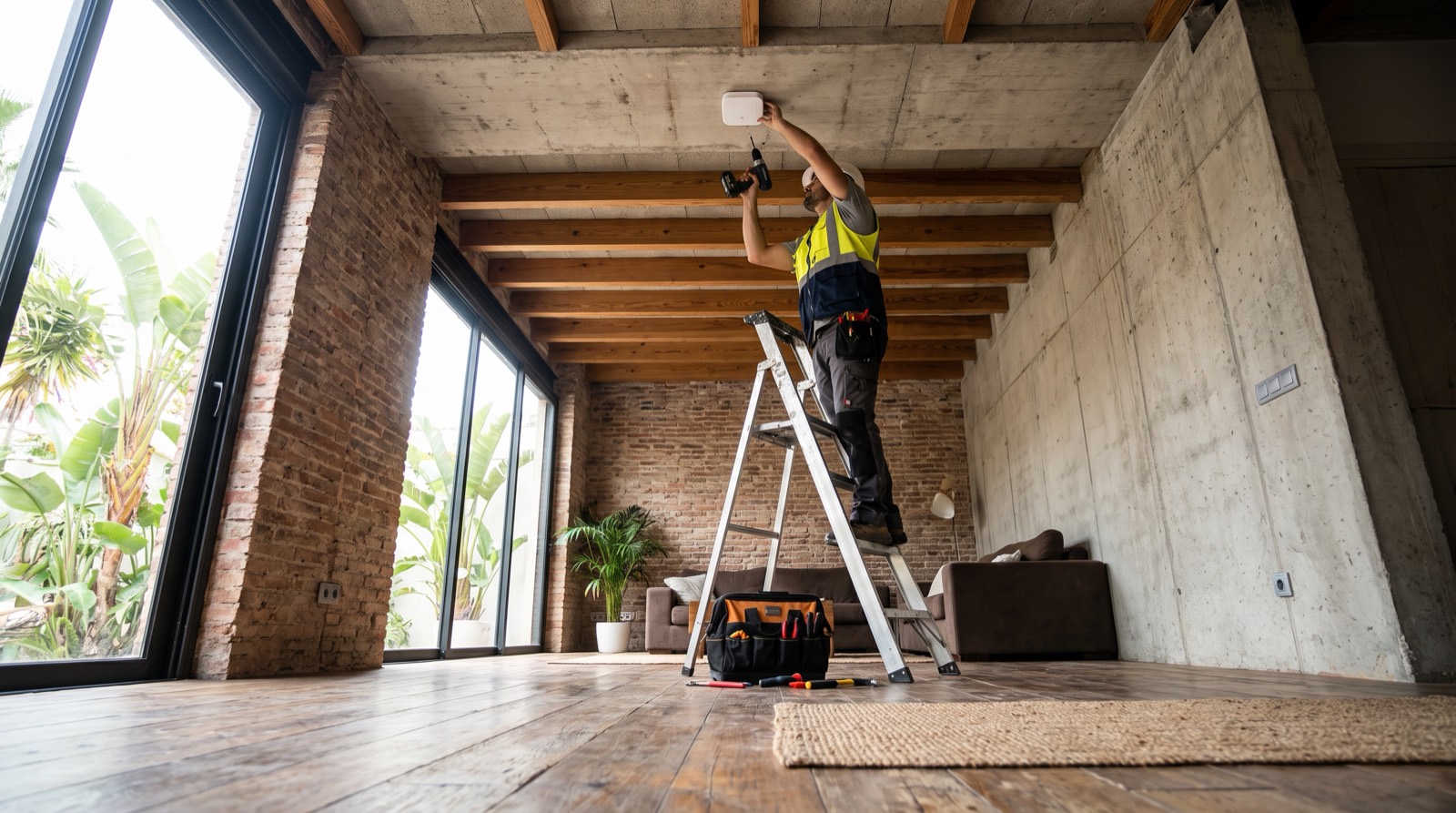
Install presence sensor Malaysia guide for trade: the 3-4 m mounting height, 5 x 6 m coverage, IPX5 limits, and why a 2.7 m condo ceiling fails the maths.
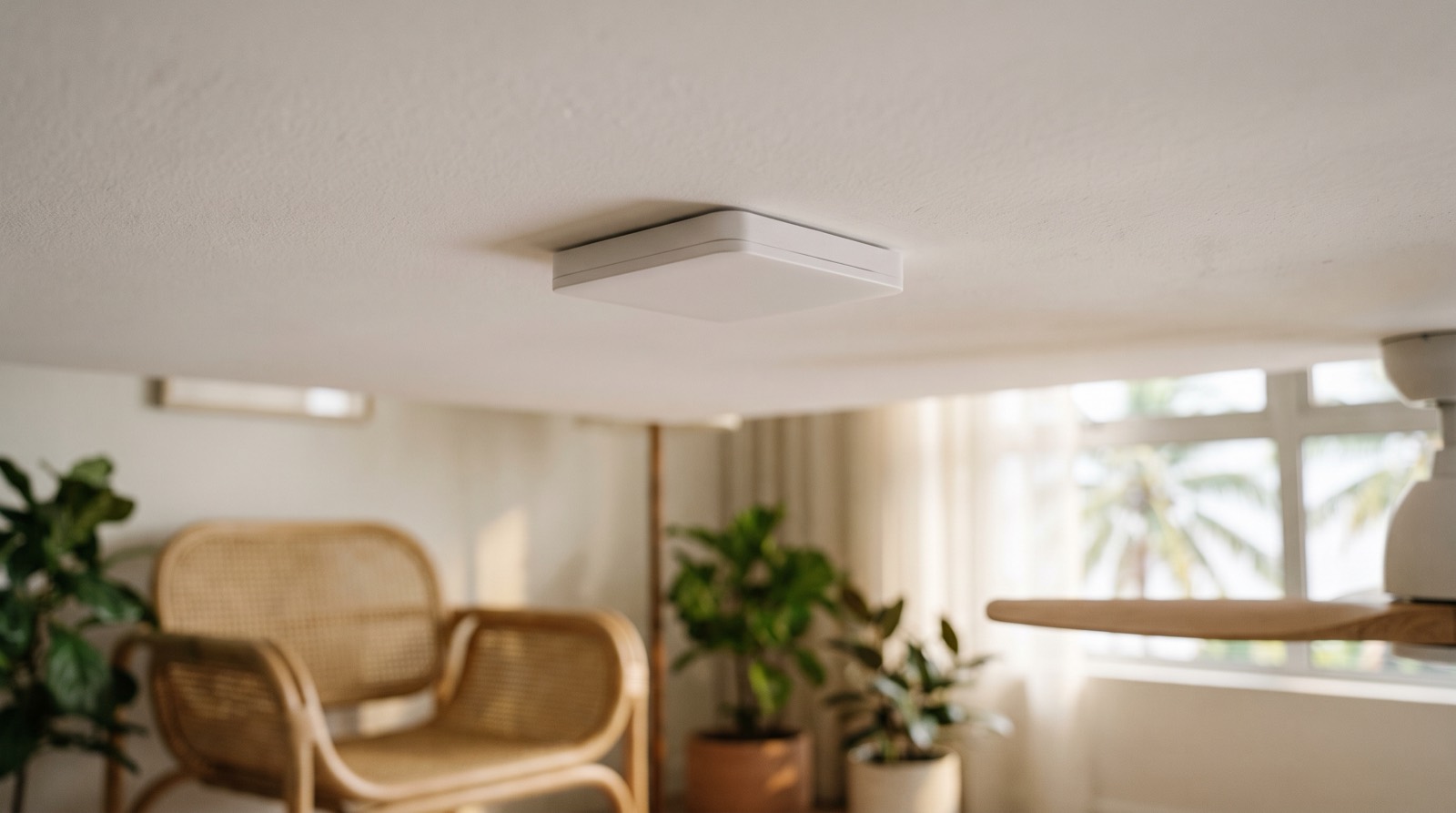
Presence sensor vs motion sensor explained: why PIR stops working when you sit still, what mmWave radar adds, and the Thread limits buyers are not told.
Tell us about your space. Our B2B team will reply within one business day with a recommended setup and quotation.
WhatsApp us →
[email protected]
+603-5880 5486