







Which Smart Home Retrofit Is Realistic in Malaysia? By House Type
Smart home retrofit Malaysia house type: what is easy, what is painful, and what it costs to start - terrace, shop lot, walk-up and new high-rise unit.
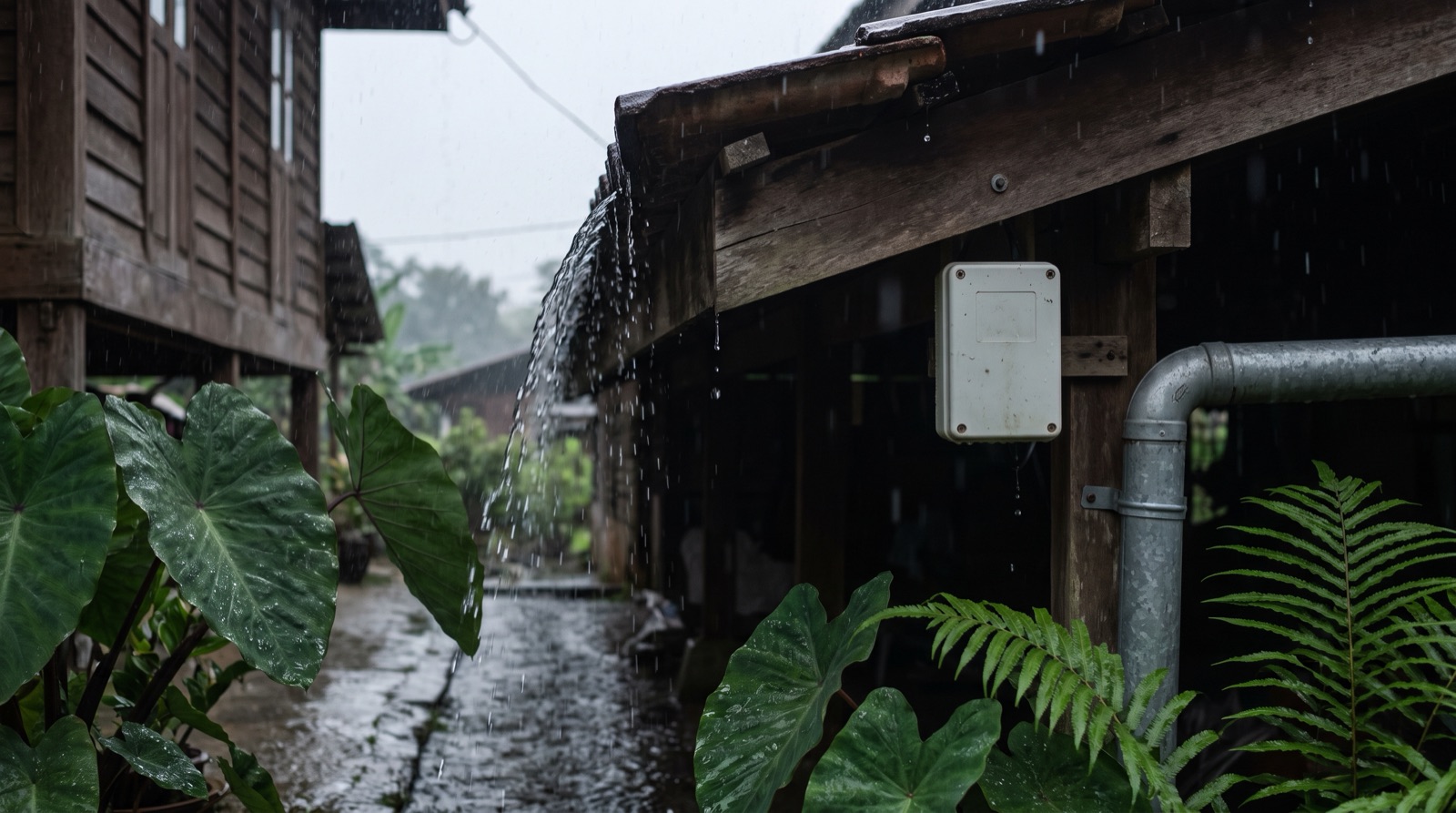
Answer up front — Most sensors sold for the home are indoor devices, and "IP rated" is a specific claim that must appear on the datasheet for the exact model. If you cannot find the datasheet for the model in your hand, treat it as an indoor device. In Malaysian conditions, a car porch and a balcony are exposed positions, not sheltered ones. The honest answer for a gate or a yard is usually an indoor device mounted on the sheltered side, as high and as dry as the structure allows — or no sensor there at all.
Almost every smart home guide is written for a temperate climate with a roof overhang, mild humidity and a device that only has to survive drizzle. Malaysia is none of those things: equatorial sun, monsoon rain that arrives sideways, year-round humidity, and a great many homes where "outdoors" is a car porch with no walls at all.
The result is that people buy a sensor for the car porch or the gate, install it, and either it stops reporting after a few months or it never worked properly. Both are avoidable, and the avoidance is a reading exercise rather than a spending one.
An IP rating is a two-part code on a product's datasheet: the first part covers solids getting in, the second covers water. Higher numbers mean more tolerance, and the second digit is the one that matters for anything outside.
The rule that protects you:
The rating belongs to the exact model, not to the brand, not to the product line, and not to the product's sibling.
Two sensors from the same family can have different datasheets. A newer revision can be re-rated or not. A datasheet copied onto a general online listing may be for a different regional variant. So: find the datasheet for the exact model number, look for the IP line, and if there is no IP line, the manufacturer is not claiming one. Treat the device as indoor-only.
We are deliberately not quoting a rating for any product here. A number published in a blog post that later turns out to be for a different variant is a bad outcome for the person who trusted it. Ask us for the datasheet, or ask us to confirm the rating in writing for the model you are considering.
Equatorial sun. Direct sun on a dark plastic enclosure, day after day, is the hardest thing most electronics face. It raises the internal temperature well above ambient, on the days with the highest humidity. A device in full sun is a device running hot and wet at the same time.
Monsoon rain. Not vertical. Driven by wind, it enters a car porch from the side, under a door gap, or through a soffit vent. "Under a roof" is not the same as "not exposed".
Humidity. The one that gets missed. Malaysia sits in high humidity for most of the year, and humidity does its damage slowly: corrosion on contacts, condensation inside a sealed enclosure when the temperature swings between night and day, and battery contacts that corrode enough to cause dropouts.
The sheltered eave versus the exposed position. This is the distinction that actually matters when you are standing in your own car porch trying to decide.
| Position | What it really is | Honest assessment |
|---|---|---|
| Directly under the roof, against a wall, clear of the drip line | Sheltered | The closest thing to a safe outdoor spot in a typical Malaysian home |
| Car porch edge, open on two sides, facing the road | Exposed | Wind-driven rain, full sun for part of the day |
| Front yard gate post | Fully exposed | Sun all day, rain from every direction |
| Balcony or landing | Exposed on the open side | Wind-driven rain, and salt-laden air if you are near the coast |
| Water tank or pump area | Exposed and wet | Ground-level splash, standing water, and insects |
| Inside a ceiling void or above a false ceiling | Sheltered, but inaccessible | Fine for the environment, bad for signal range and for changing the battery |
Rule of thumb: if water can reach it from the side, it is exposed.
| Where you want it | What you probably want to know | What to do |
|---|---|---|
| Car porch | Whether a person or vehicle arrives | A video doorbell such as the Doorbell Camera Hub G410 at the door, or an indoor sensor on the inner wall of the porch. Not a sensor outside the porch line |
| Front gate | Whether the gate was opened | A contact sensor on the inner face of the gate leaf, protected from the weather by the gate structure itself — and only if the datasheet and the position allow it |
| Front yard | Movement | A battery sensor such as the Presence Multi-Sensor FP300 should be treated as an indoor device unless its datasheet says otherwise. If the position is exposed, the answer is "no sensor", or a camera designed for outdoor use, such as the Camera Hub G5 Pro — check its datasheet for the rating |
| Balcony | Anything at all | Almost always an indoor device at the wall closest to the room. The open side is not a sensor position |
| Water tank area | Water presence | A leak detection job, not a sensor job. See below |
Notice the pattern: in almost every row, the answer moves the device inside, to the sheltered side of the wall, rather than trying to find a gadget that will survive outside.
Because most sensors are not, this is the normal case, not the exception.
Range is a separate issue from weather, and if you are moving a sensor to the sheltered side, the far end of the home may need attention too. Zigbee mesh, repeaters and dead zones covers that side, and why your smart device keeps dropping off helps when a device has already gone quiet.
If you are in an area that has flooded, or drains badly in a monsoon downpour, there is a ground-level question to answer before you place anything at the bottom of a wall or on a post: what is the lowest point, and what happens to it?
A sensor at ground level in a flood-prone area can be the thing that tells you water is there — but only if it is a device rated to be wet, or an indoor device on a wall high enough that standing water never reaches it. A device that fails the moment it is needed is worse than no device, because you will have trusted it.
Two practical rules: never place an indoor device below the historical high-water line on that wall, and if you want early warning, use a water leak detection approach near the lowest point rather than a general sensor.
Equatorial sun, sideways rain, constant humidity, and no device is rated unless the datasheet says so for that model. Check the datasheet, move the device to the sheltered face of the wall, accept that some positions cannot be covered, and spend the money on the device that does a specific job rather than the one trying to do all of them at the front gate.
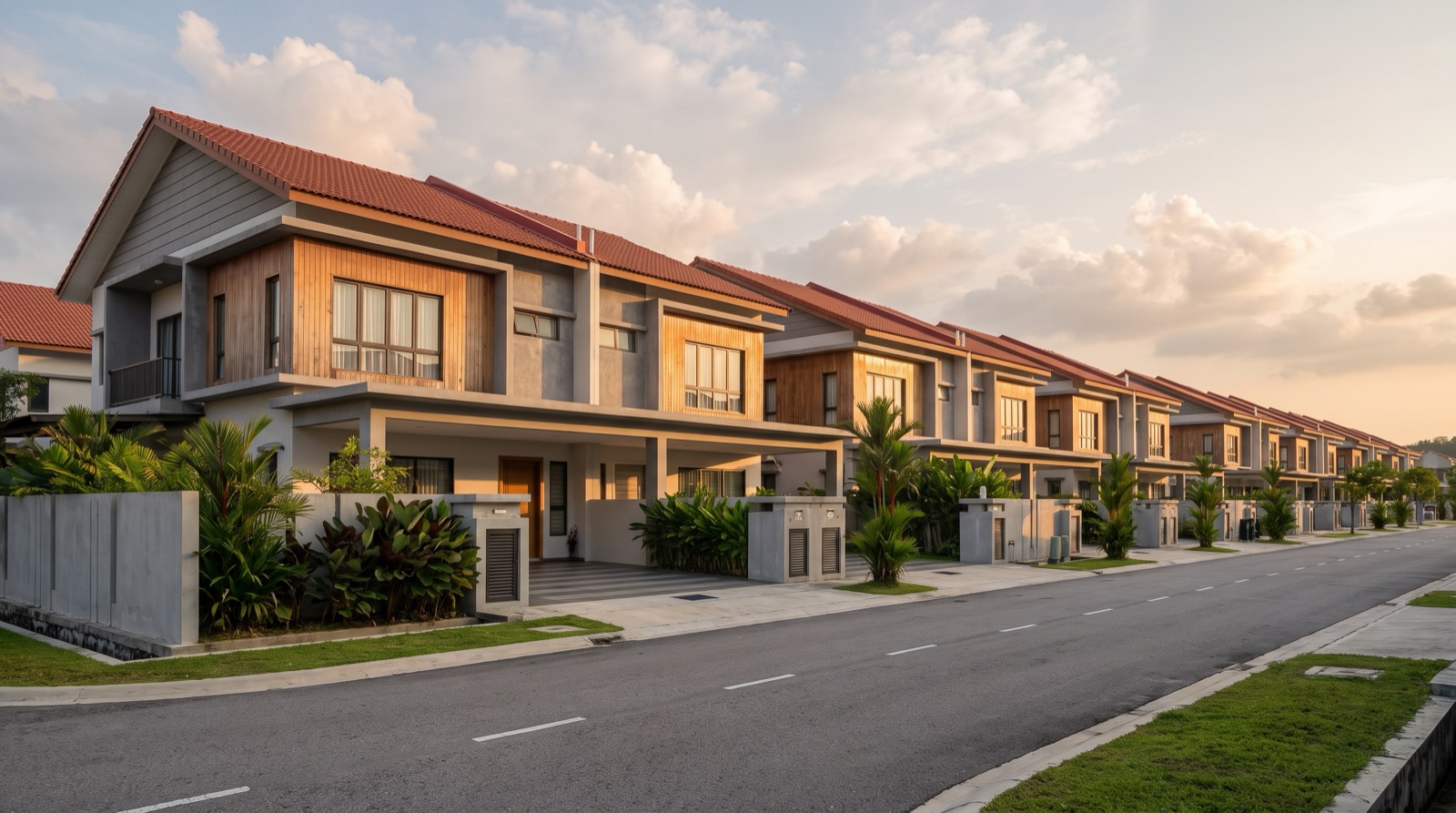
Smart home retrofit Malaysia house type: what is easy, what is painful, and what it costs to start - terrace, shop lot, walk-up and new high-rise unit.
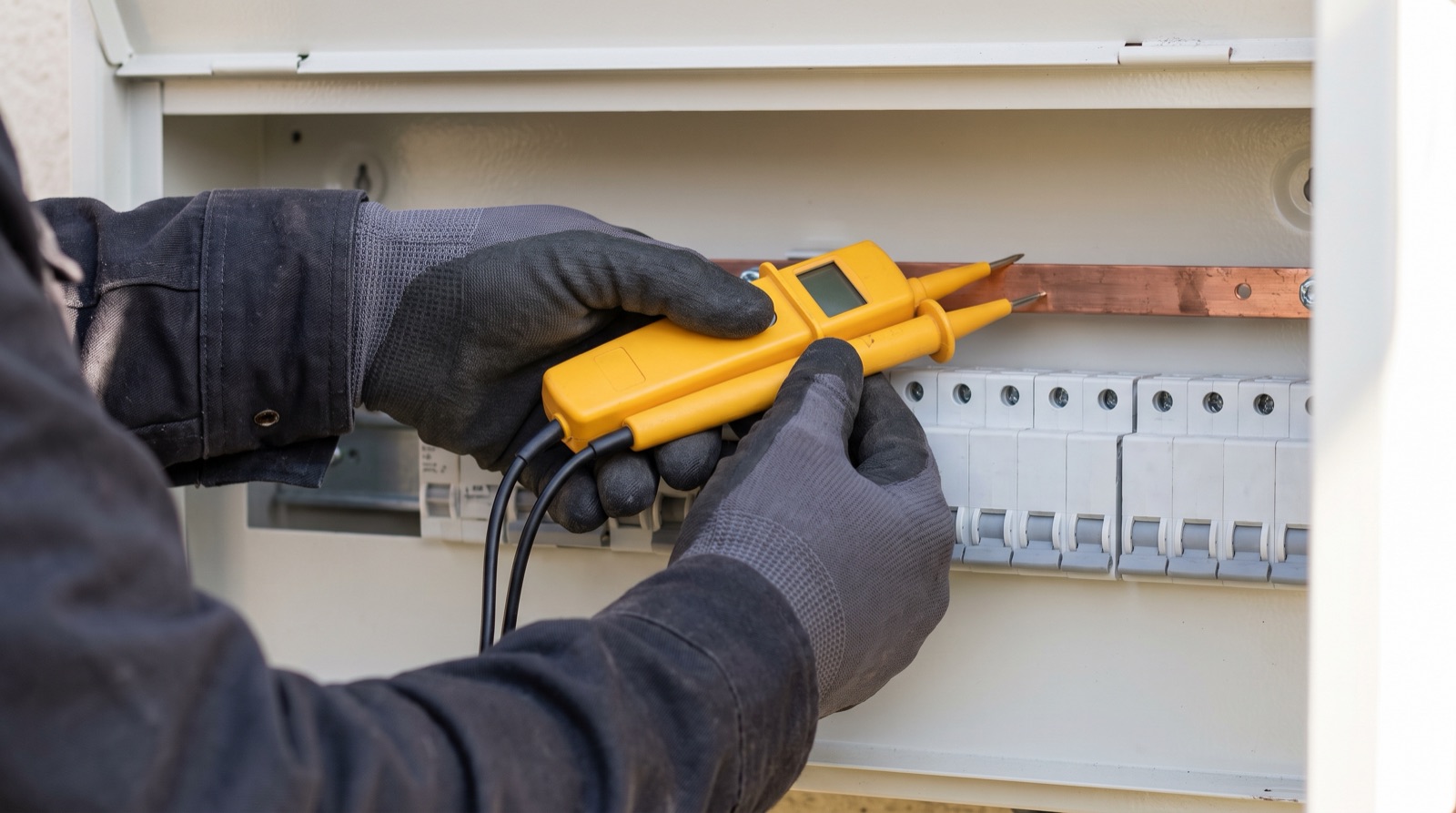
A sirim smart switch malaysia compliance guide — what to check before buying mains-powered gear, who may do the wiring under Act 447, and where PDPA applies.
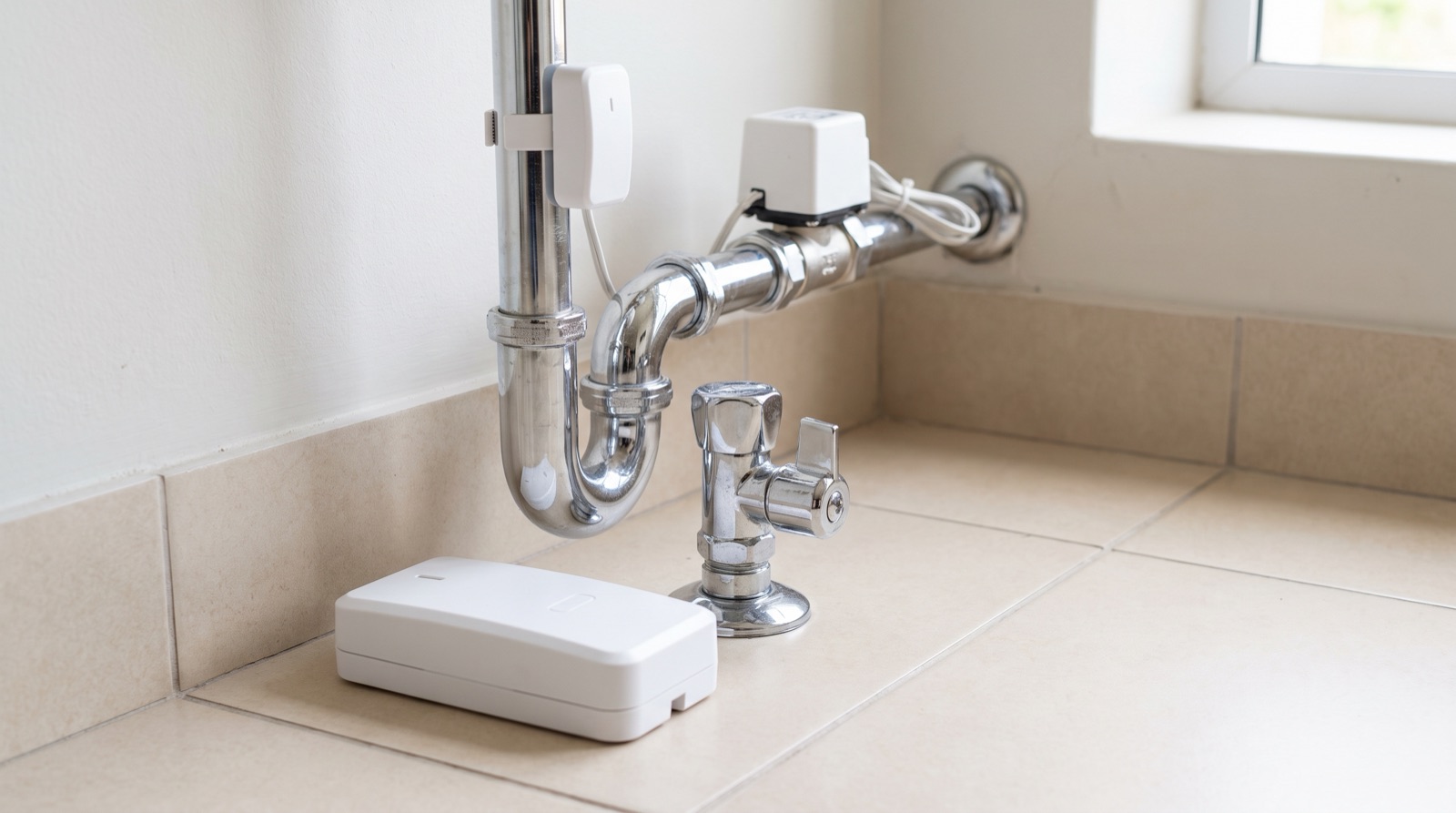
Water leak sensor placement for Malaysian homes: where leak, gas and smoke sensors belong, how to plan an automatic water shut-off, and what sensors honestly do not do.
Tell us about your space. Our B2B team will reply within one business day with a recommended setup and quotation.
WhatsApp us →
[email protected]
+603-5880 5486