







Installing Aqara Presence Sensors: Mounting Height and Placement
Install presence sensor Malaysia guide for trade: the 3-4 m mounting height, 5 x 6 m coverage, IPX5 limits, and why a 2.7 m condo ceiling fails the maths.
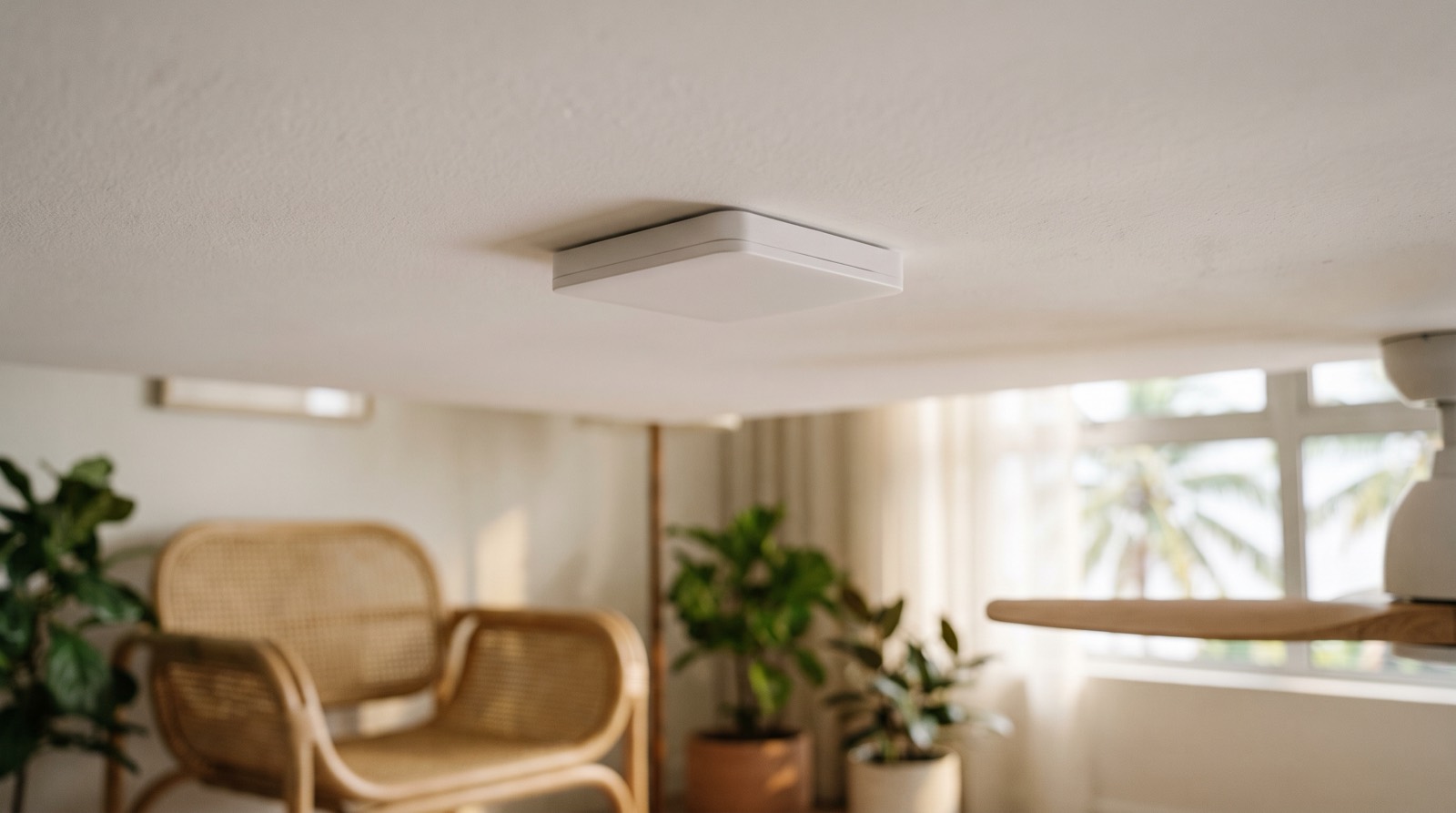
Answer up front — A motion sensor answers "is something moving?" and a presence sensor answers "is anyone here?". A passive infrared motion sensor detects changes in heat across its field of view, so a person sitting still becomes invisible to it; mmWave radar detects the micro-movements of a breathing body, so it can still know the room is occupied. That difference decides whether an automation works when you are reading on the sofa or asleep in bed. It is also why presence sensors cost more and mount higher. One important caution up front: Aqara's FP400 spatial sensor was released globally on 16 September 2026 and its listed retail channels do not include Malaysia, so availability here must be confirmed.
Every smart home owner has hit this: the hallway light switched itself off while you were standing still, or the bedroom aircon switched off in the middle of the night. The usual explanation is a fault. It usually is not a fault. It is a motion sensor doing exactly what a motion sensor does, and the gap between that behaviour and what you wanted is the entire subject of this article.
Motion sensors detect change. Presence sensors detect occupancy.
A passive infrared sensor, or PIR, is a passive device: it sits behind a plastic lens, splits the infrared light coming from the room into zones, and watches for a difference between the zones. Warm something moving across a boundary and the pattern changes, so it triggers. Stand still and the pattern stops changing, so after its timeout it decides the room is empty. A cat, a curtain in the breeze and a person walking past all look the same to it, because from its point of view they are all just moving heat.
A mmWave radar sensor sends out a low-power radio signal in the 60 GHz band and measures how the reflected signal changes. A breathing body produces a small but continuous movement — the chest rises, micro-movements persist. That is enough to distinguish "a person is sitting very still" from "the room is empty", and it is why presence sensing is the more accurate of the two.
| Room and automation | Motion sensor (PIR) | Presence sensor |
|---|---|---|
| Hallway — light on when someone walks through | Fine. Movement is the event you care about | No better. Over-sensitivity causes lights that stay on |
| Living room — lights off when nobody is home | Poor. Reads an empty room correctly but also reads a room with a sleeping person as empty | Correct. Knows a person on the sofa is still a person |
| Bedroom — aircon or fan off when the room empties | Poor. The failure that ruins sleep most often | Correct. Lying-down occupancy is still occupancy |
| Home office — switch the desk scene on | Acceptable but wasteful if you sit still for two hours | Correct, and the scene runs only when someone is really at the desk |
| Bathroom — light on with occupancy, off when clear | Works, but can switch off with someone still at the shower | Works reliably, including for a person who is stationary and wet |
| Staircase / landing at night — dim light on approach | The strongest PIR case. Movement is the event | Overkill and more expensive for the same result |
| Multi-person room — count who is present | Cannot. It sees movement, not people | The meaningful difference. Can distinguish up to ten people |
| Monitoring a person who has fallen | Cannot help at all. A still body is invisible to it | Potentially useful — but this is not medical monitoring and we do not claim fall detection |
The pattern is worth stating plainly: motion sensing is still the right tool for corridors and staircases, where passing through is the event. Presence sensing earns its cost in the rooms people sit or sleep in — which, in a Malaysian home, is most of them.
Aqara's Spatial Multi-Sensor FP400 is the most complete public example of this technology in Aqara's range. It was announced at CES 2026 and released on 16 September 2026. In summary, from Aqara's own product material:
The no-camera point deserves emphasis for Malaysian homes, particularly for bedrooms and children's rooms. Presence sensing answers "is someone there" without generating a picture of anyone. It is a genuinely different privacy posture from a camera-based occupancy solution, and it is the reason this class of sensor is credible for private rooms.
Availability in Malaysia — confirm with us. Do not assume it is on the shelf at a local store. Aqara announced global availability on 16 September 2026 and listed Aqara's own store plus Amazon in Belgium, Canada, France, Germany, Ireland, Italy, the Netherlands, Poland, Spain, the UK and the US. Malaysia was not in that list, and a scan of local marketplace listings in September 2026 found no FP400. Treat it as something to ask about, not something to go and buy.
Presence sensors need height, and the numbers matter if you have a high ceiling or a low one.
That geometry is not cosmetic. In a landed house with a high-ceilinged living room, ceiling mounting at 3 m or above is what makes a single sensor viable. In a condominium with a 2.7 m ceiling, the same maths does not work the same way — the sensor sits closer to head height, its 120° field spreads much wider across a short distance, and you may need more devices or a different mounting position. We would rather tell you that during a survey than after installation.
Our installation guide for presence sensors covers placement in detail, and our hub compatibility matrix covers which hubs will actually run one.
Here is the detail that matters most if you are planning to put a presence sensor into Apple Home, Home Assistant or another third-party platform, and it is the part most competitor articles omit.
When the FP400 is integrated over Thread, it exposes only 1 overall presence sensor and 1 illuminance sensor. You lose the per-person tracking, the zone data and the posture distinction — the three capabilities that made it worth considering in the first place. It still knows whether the room is occupied. It stops knowing who, where and in what posture.
Two related requirements come with that. An Aqara hub is essential when integrating the FP400 into third-party Matter platforms in Zigbee mode. And using it in a third-party Matter platform requires a Matter Controller and a pre-configured third-party Thread Border Router supported by the target ecosystem.
Which means the hub choice decides how much of the sensor you actually get. In the native Aqara path on a supported hub, you get zones, posture and per-person tracking. In a third-party Thread path, you get presence and illuminance only. That is not a minor difference and it should be part of the purchase decision, not discovered afterwards.
There is also a hard hub floor. To experience FP400 features you need an M3, M100 or M200 hub running at least firmware 4.5.70, and compatibility varies by model, region and firmware.
| Hub status | Hubs |
|---|---|
| Currently supported | Hub M3, Hub M100, Hub M200, Doorbell Camera Hub G410, Camera Hub G5 Pro |
| Support planned during 2026 | Thermostat Hub W200, MagicPad S1, Panel Hub S1 Plus, Camera Hub G350 |
| Not supported | Hub M2, Hub M1S, Hub M1S Gen 2, Hub E1, Camera Hub G3, Smart Video Doorbell G4, Camera Hub G2H Pro |
That last row is worth pausing on. If you already own a Hub M2 or an older G3, an FP400 will not work on it, and no firmware update will change that.
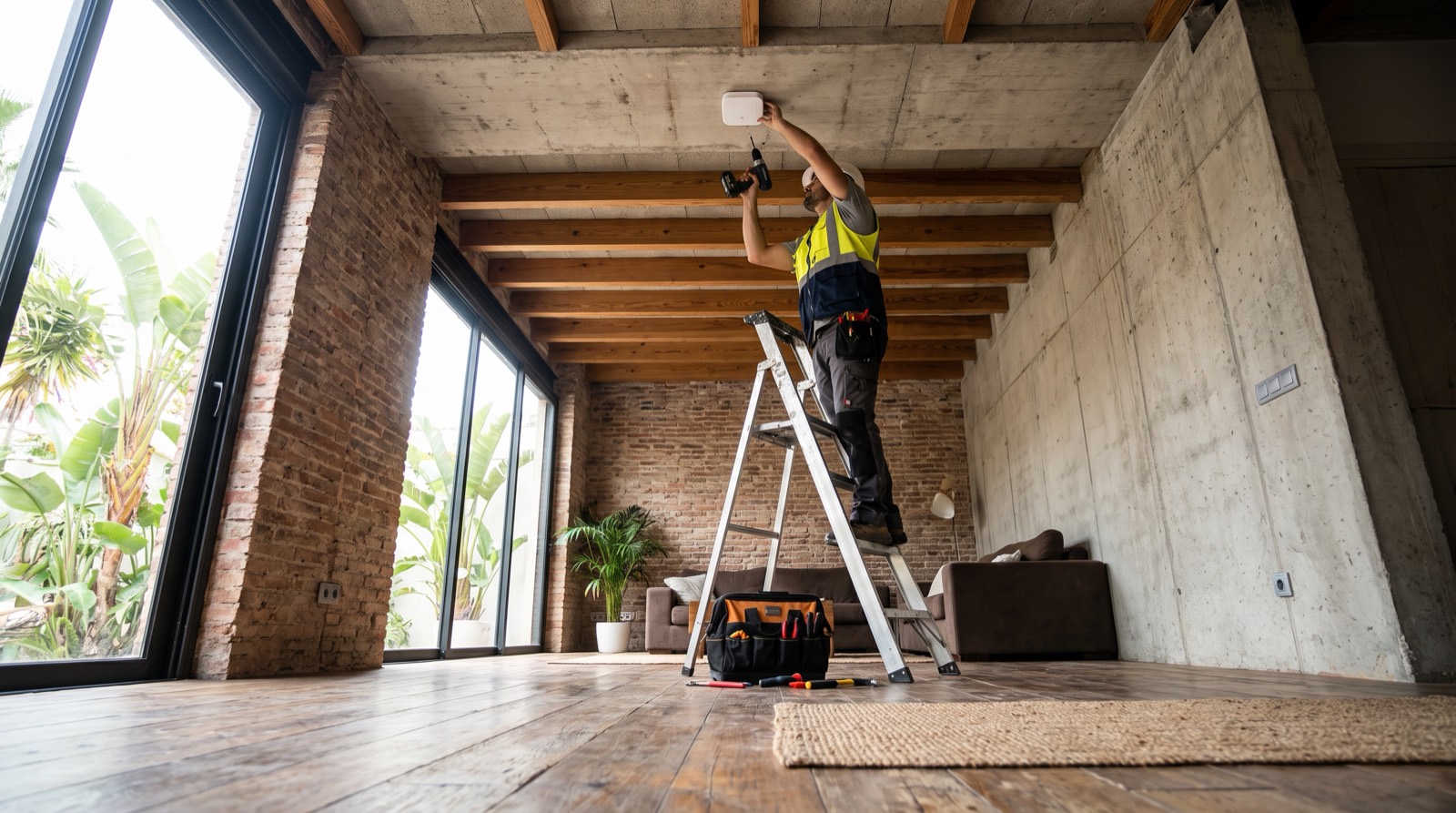
Install presence sensor Malaysia guide for trade: the 3-4 m mounting height, 5 x 6 m coverage, IPX5 limits, and why a 2.7 m condo ceiling fails the maths.
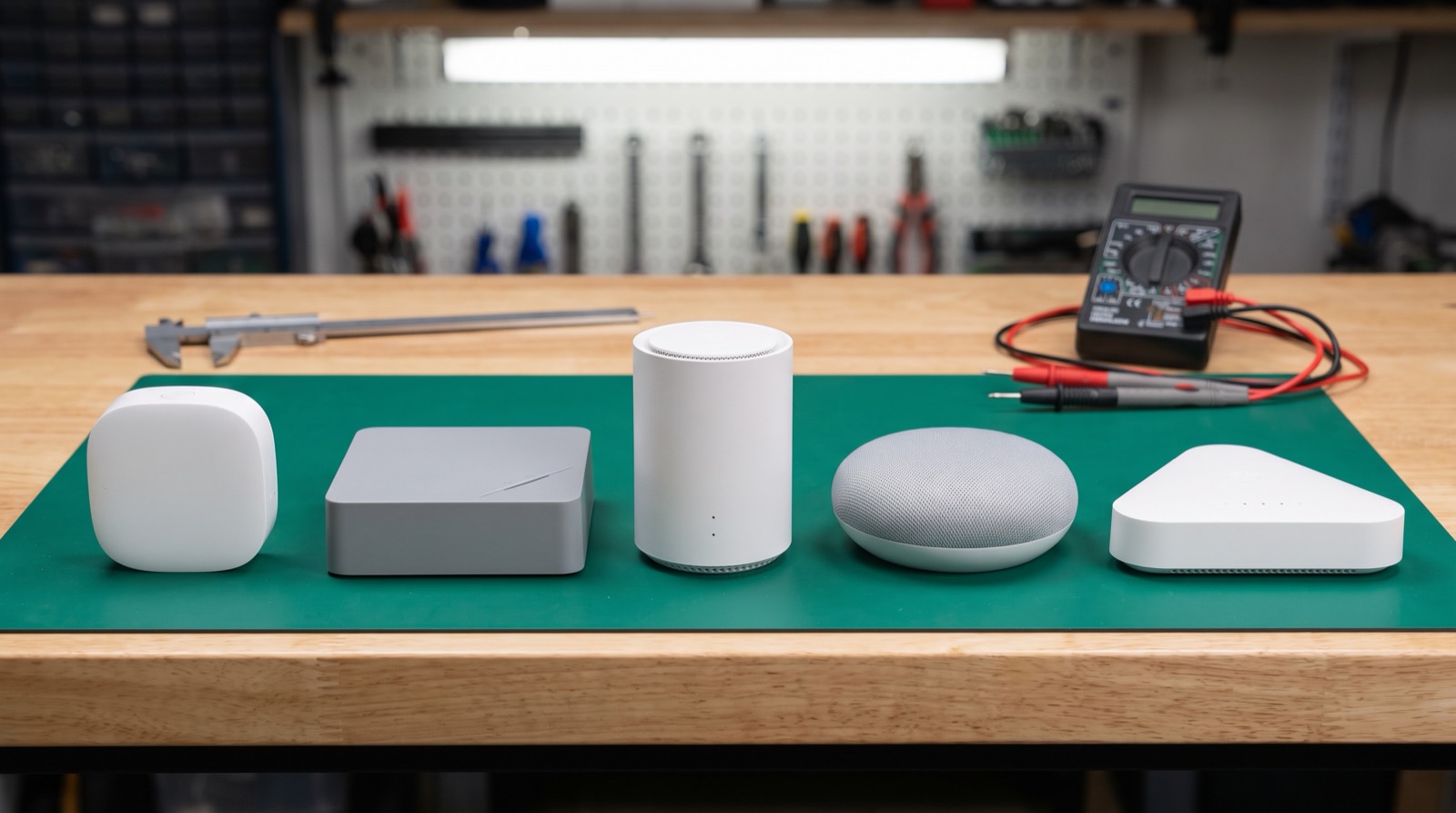
Aqara hub compatibility for installers: the FP400 supported and unsupported hub list, the 4.5.70 firmware floor, and the Matter controller rules that apply.
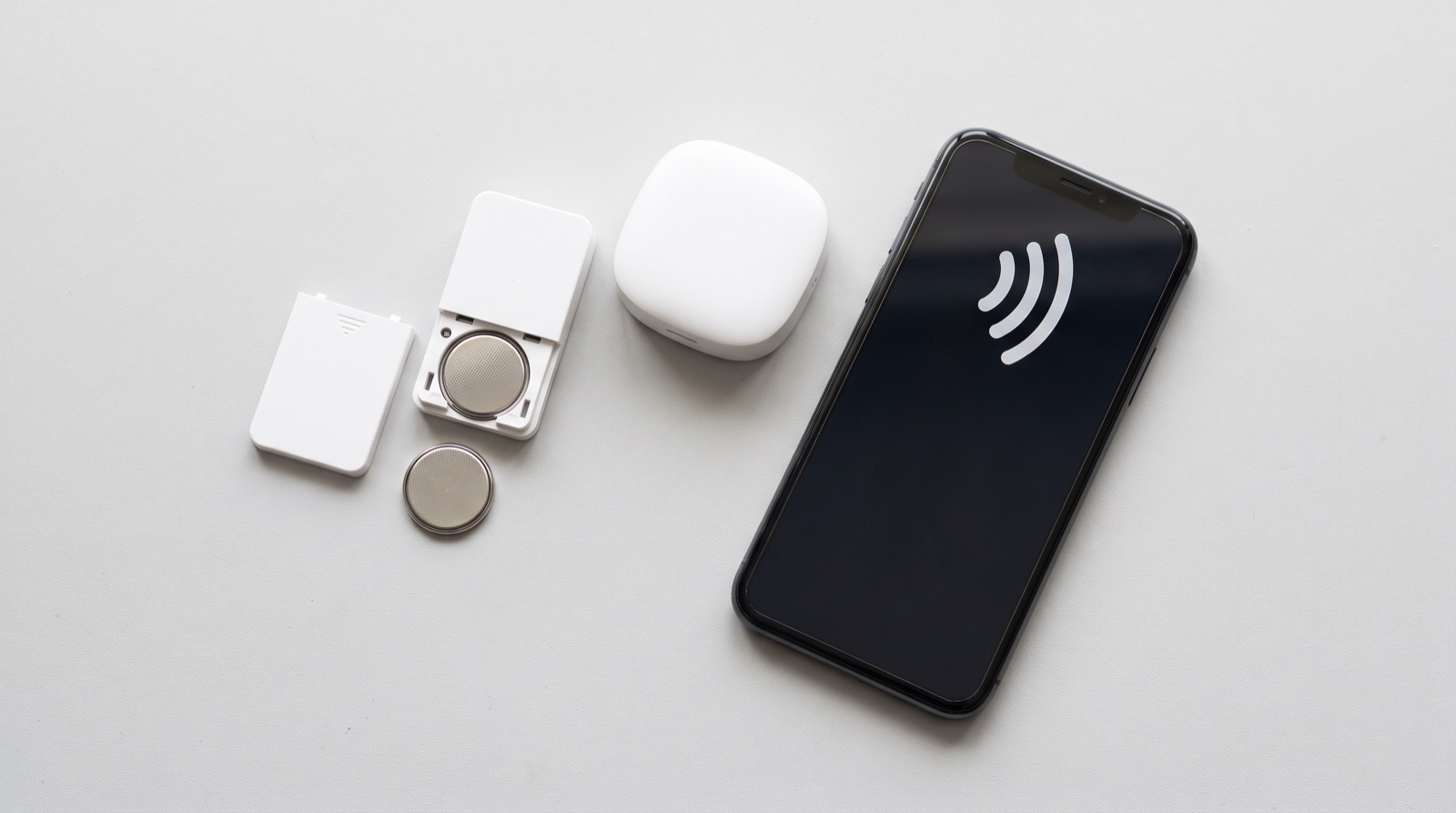
Smart home device keeps going offline in Malaysia? A six-step checklist from battery to hub to Wi-Fi, and the Zigbee versus internet mistake that costs people money.
Tell us about your space. Our B2B team will reply within one business day with a recommended setup and quotation.
WhatsApp us →
[email protected]
+603-5880 5486