







How much does a smart home cost in Malaysia? RM500 to RM10,000
Smart home cost in Malaysia: rough RM500, RM2,000 and RM10,000 budget bands, what each one typically covers, and why installation labour is a separate line.
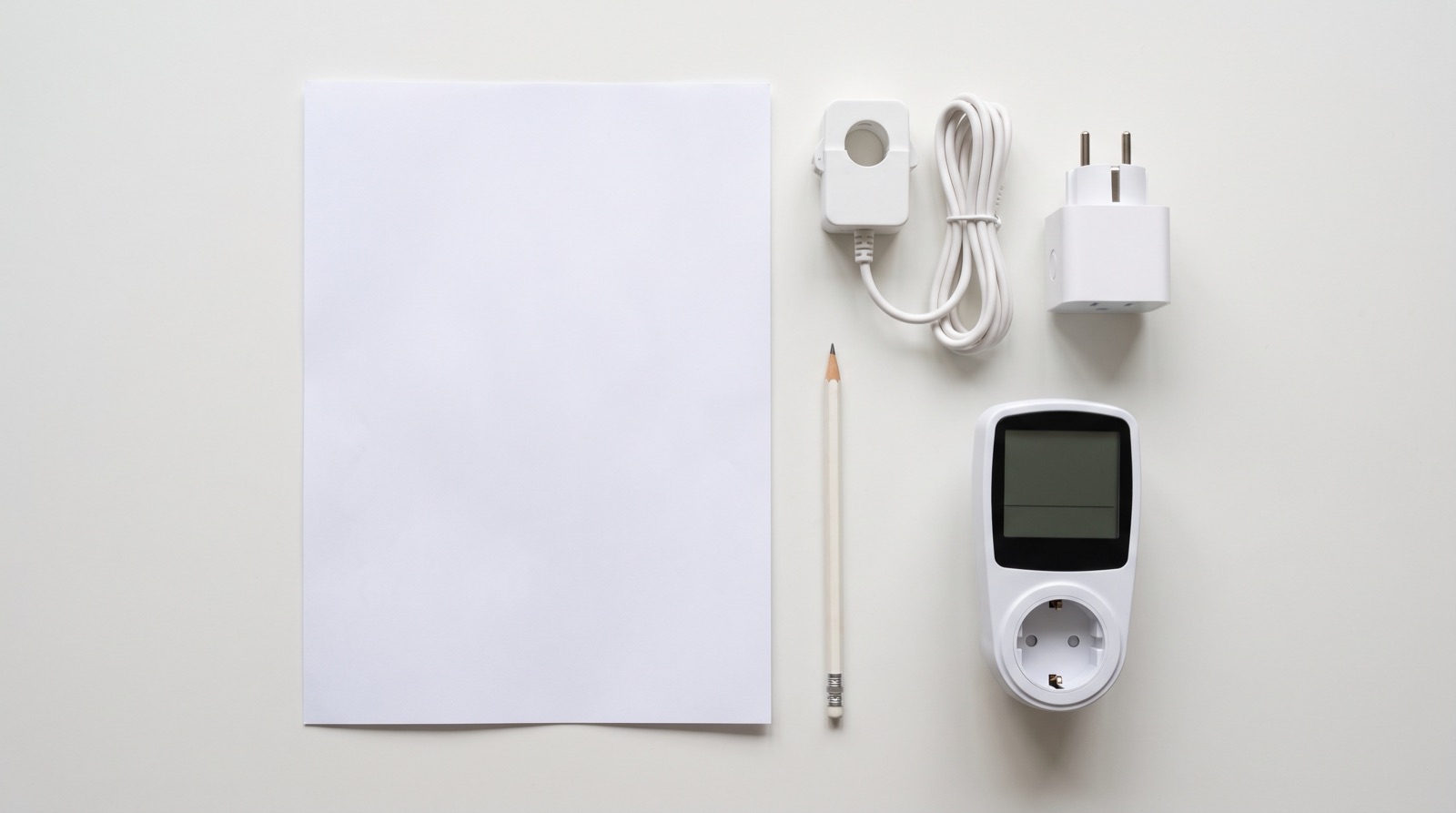
Answer up front — A smart home changes your electricity use in three ways: it can switch things off that you would otherwise leave on, it can run things that a dumb house never would have run at all, and it can do both badly. This article deliberately gives you no percentage, no kWh figure and no payback number, because any figure printed on a website is somebody else's house, not yours. What it gives you instead is the mechanism, the failure modes, and how to measure your own baseline from your own bill before you change anything.
The most searched phrase in this space is a percentage. If you have read a headline promising to cut your electricity bill by some percentage, you have read a marketing claim, not a measurement. The real number depends on your house, your appliances, your schedule, your aircon, whether anyone is home during the day, and what you would have done anyway.
So here is the rule we work to: we will not print a number we cannot stand behind. What we can do is tell you precisely how your consumption changes, in both directions, and tell you how to find out what it is doing in your own home. That takes an afternoon and it costs you nothing, and the answer is worth more than any number on a website.
This is the real one, and it is unglamorous.
Standby and forgotten-on loads are the quietest consumer of money in any home: the television left on, the aircon left running in a room nobody is in, the water heater left on all day, the lights left on in an empty corridor, the washing machine left mid-cycle.
A smart home changes three variables in a good way:
Note what all three have in common: they only work on loads that are actually on, and the mechanism is switching off. There is nothing clever here. That is the point.
This is the honest half of the article, and it is the half that almost nobody writes.
A smart home adds load. It is hardware, and hardware draws power.
Put plainly: a badly configured smart home can consume more than a house with no automation at all. If your scenes turn things on that used to be off, you have added a load. We would rather say that here than have you discover it on your next TNB bill.
Narrow, and worth knowing exactly, because these are the two things people buy first.
A smart plug does two things: it switches a socket on and off on a schedule or a command, and it reports what it can measure. On the second point, be careful — not every smart plug reports consumption. The Aqara Power Plug H2 UK does, but a plug's reading is not a billing-grade meter. Treat a plug's reported usage as a comparison between two similar states, not as a number you can send to a utility.
A scheduled scene switches things at times you choose. Its value is that it removes a decision you would otherwise have to remember to make.
Neither of them is a thermostat, neither of them is a control system, and neither of them changes how much an appliance uses when it is running. A schedule on a running aircon does not make the aircon more efficient. It makes the aircon run for a different number of hours. That is the entire scope, and it is still useful.
| Approach | What it changes | What it does not change |
|---|---|---|
| Scheduled scene | When a load runs, and for how long | How much that load draws while it runs |
| Motion or presence automation | Whether a room's load runs at all | The efficiency of the appliance in that room |
| Smart plug on a socket load | Switching a specific device on and off | The device's own consumption while running |
| Smart lighting control | Which lights are on, and when | Anything about a non-lighting load |
| Aircon control (IR control from a hub, or a thermostat) | The set temperature, and when the unit runs | The equipment's rated consumption; it changes the duty cycle, not the peak |
| Nothing, and manual habit | — | — |
That table is the whole article in one place. Every smart energy feature you will be sold in Malaysia sits in one of those rows. None of them changes what your aircon draws when it is on. They change when it is on.
Step 1 — Read your own bills, before you change anything. Take six months, not one. A single month is weather, a family visit, an aircon month. Pull the readings and the amounts and write them down. You are looking for a pattern, not an average.
Step 2 — Identify your two or three biggest loads honestly. For most Malaysian homes it is aircon, then the water heater, then the fridge and standby loads, then lighting. Write down what you actually believe the split is, then go and find out. Guessing is fine as a starting point; guessing is not a measurement.
Step 3 — Read your TNB bill properly. The consumption figure is your own metered consumption, at your own meter. Compare months against each other, not against anybody else's house. If the number moves a lot between months that had similar weather, the driving variable is probably not your lighting.
Step 4 — Change one thing. One scene, one circuit, one room. Then wait at least two comparable periods and look again. Changing six things at once and looking at one bill tells you nothing about which of the six did what.
Step 5 — Repeat. The measurement is the product.
If you genuinely want to know, the only way to know is to measure the thing you are interested in rather than the whole incoming supply.
A building-level or whole-house meter tells you the total. It cannot tell you which of your decisions moved it. To know what a specific circuit or appliance contributes, you need that circuit or appliance metered separately — an inline energy meter on a circuit, or a sub-meter for a group of loads. Some smart switches report energy for the load they control; the Aqara Smart 20A Switch H1 (SEA Version) for aircon and water heater circuits is one, and the same comparison-not-billing caution applies.
Once you have that, three things become possible that were not before:
The limits are worth stating too. A sub-meter is better than a bill for comparison work and worse than a bill for billing. A plug-level reading is a comparison tool, not a meter. And none of this is a substitute for a proper electrical set-up done by a wireman registered with Suruhanjaya Tenaga — mains work is not a weekend job.
Energy and green-building frameworks do exist in Malaysia — MIDA, GBI and JKR are the names a building owner will meet, and they are why energy questions come up in development and certification conversations rather than only in the domestic bill.
We are deliberately not quoting anything about them: no version numbers, no scoring thresholds, no incentive amounts, no mandated reporting dates, no carbon figures. Those change, and a post that quotes them from memory will be wrong within a year. Check the current criteria with your certifier, and make your decisions against your own metered data.
The same discipline applies to the commercial frame: whether a smart system pays for itself in a tenanted building is a question about your lease, your service charge recovery, your tenant behaviour and your equipment life. You answer it with a sub-meter and your own bills, not with a figure from a marketing deck.
Smart home cost in Malaysia: rough RM500, RM2,000 and RM10,000 budget bands, what each one typically covers, and why installation labour is a separate line.

Smart home automation ideas for Malaysia: eight automations worth building in a landed or condo home, what each one needs, and which need no wall work at all.
Smart hotel Malaysia: the AqaraLink Industry Application Platform for hotels, serviced apartments and offices, and the operational questions operators ask.
Tell us about your space. Our B2B team will reply within one business day with a recommended setup and quotation.
WhatsApp us →
[email protected]
+603-5880 5486