







AqaraLink Developer Platform Getting Started: Zero to First Call
AqaraLink developer platform getting started: the documented steps, three authorisation modes, virtual accounts, app keys and device onboarding routes.
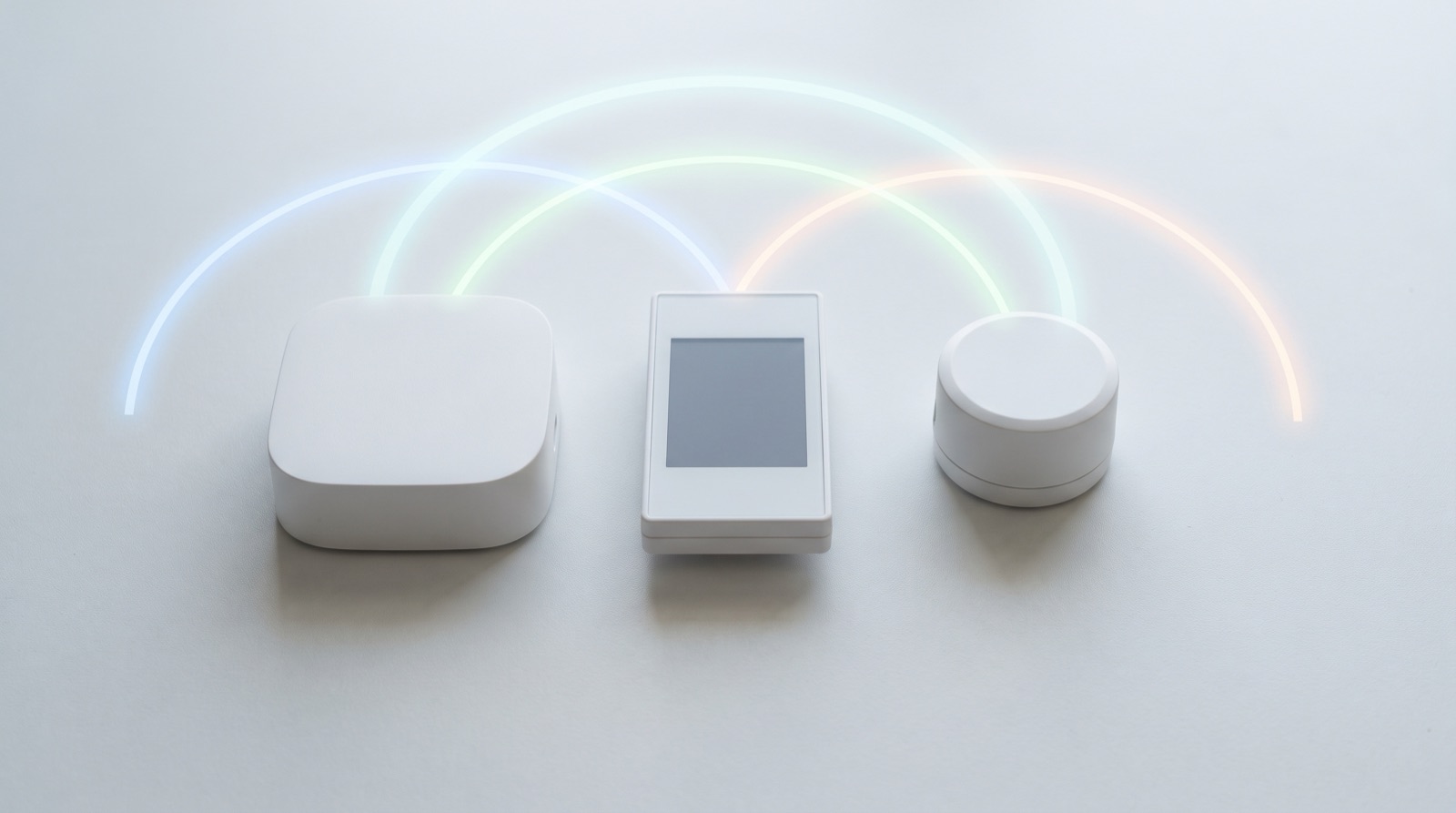
Answer up front — There is no single correct route, because the three solve different problems. Matter buys cross-vendor interoperability and the ability to walk away from one ecosystem later. Zigbee buys reliable low-power mesh with rules that keep running when the internet drops. The vendor API buys the capabilities only that vendor exposes — Aqara's own locks, cameras, IR and local automations. The honest answer for most Malaysian projects is a split: Matter for anything a client may replace, Zigbee for the local-control backbone, vendor API only where nothing generic exists. On Aqara specifically, Matter needs a controller such as Hub M3 set up in Aqara Home first, and Matter sub-devices in the SDK must be connected via an Aqara Matter hub using Magic Pair before they can be configured or controlled.
Choosing a hub covers which hub to buy, and Matter with Aqara covers setting up the Matter controller. Neither is about the architecture decision, which is what this post is for.
Every integration strategy is really an answer to one question: when the vendor, the cloud or your own server disappears, what still works? That framing beats a feature matrix, because features change and failure modes do not.
Teams get this wrong by picking the route that demos best. The route that demos best is usually the vendor API, because it has the prettiest integration and the most capability. It is also the one that puts your client's building on a dependency you do not control.
| Matter | Zigbee | Vendor API | |
|---|---|---|---|
| Primary value | Cross-vendor interoperability | Reliable low-power mesh, local execution | Capabilities no standard exposes |
| Who controls the spec | The Connectivity Standards Alliance, not a vendor | The Connectivity Standards Alliance (formerly the Zigbee Alliance), not a vendor | The vendor |
| Runs without the internet | Yes, once commissioned on a controller | Yes — this is the default | Generally no |
| Engineering effort per device | Higher — commissioning, multi-admin, ecosystems | Lower for the mesh; the hub still needs commissioning | Lowest to start, highest to maintain |
| Ecosystem breadth | Growing, and it is cross-vendor by design | Broad in sensors, but hub-anchored | Exactly one vendor's catalogue |
| Lock-in | Low at the device layer, higher at the controller | Medium — tied to the hub vendor | High, and it is the whole point |
| What you give up | Vendor-specific extras | Cross-vendor reach | Portability |
Matter's value is not features. It is that it lets you leave. A Matter accessory commissioned onto a Matter controller is controlled by that controller, and the accessory is not tied to the app that set it up. If your client outgrows Aqara, the device does not become a brick.
The engineering cost is real and sits in commissioning, not in the API. You have to get the controller right, the fabric right, and the multi-admin story right. Aqara's supported Matter device type list covers lighting and actuators — on/off, dimmable, temperature colour and enhanced colour lights; on/off and dimmable plug-in units; mounted on/off control and mounted dimmable load control. That is a genuine range, and it is worth checking against your device list rather than assuming.
The Aqara facts that trip people up:
The lock-in caveat: escaping the device layer is not escaping the hub layer. Whichever controller you commission onto becomes the thing your client depends on. Matter reduces one axis of lock-in, not all of them.
Aqara is Zigbee-first, and a hub controls up to 128 related devices. The value of Zigbee for an integrator is not the protocol — it is that the rule runs in the unit. Motion lighting in a corridor does not care whether the fibre is up, and a smart home where the lights need a datacentre is a smart home with a single point of failure that is not in your building.
Local execution is the deciding factor, and it is why the automation and scene decision belongs at the hub rather than only in your cloud. The platform documentation advertises localised multi-device automations for stable scene control, with Away Mode and Home Mode as the examples.
Engineering effort is lower per device and higher in aggregate. The mesh is simple; the commissioning, the placement and the routing are not. A sub-device on the far end of a three-storey shophouse with one repeater is a site problem, not a protocol problem, and no API decision fixes it.
Aqara's platform declares itself multi-protocol: Zigbee, Wi-Fi, Thread, Bluetooth, Ethernet, IR, Matter, BACnet, KNX, DALI and Modbus. On the developer side, the cloud HTTP API covers device status queries, remote control and linkage configuration, with message push for real-time device reports. The App SDK set covers device pairing, device control, IR remote control, camera and door lock product lines.
This is where you go for Aqara-specific behaviour: IR learning and IR virtual sub-devices, the door lock product line, camera preview and playback, the Aqara Home ecosystem experience. None of that is coming to a generic standard tomorrow, and pretending otherwise is how integrations get stuck.
The cost is the one you already know: your client's building now depends on one vendor's roadmap, one vendor's cloud and one vendor's pricing. The Aqara IoT Solution Platform targets exactly this — real estate, buildings, hotels, campus and senior care, with batch onboarding and operations tooling — and it works, because that is a deliberate choice of lock-in in exchange for capability.
| Your requirement | Route |
|---|---|
| Client may change vendor in two years | Matter, for anything the client pays for |
| Lights and locks must work when the internet is down | Zigbee, with rules on the hub |
| IR-controlled aircons in a serviced apartment | Vendor API — no standard covers it sensibly |
| Cross-vendor building with Apple Home as the controller | Matter |
| Aqara door locks across a residential block | Vendor API, accept the dependency, contract for support |
| Sensor-dense occupancy analytics | Zigbee plus vendor API for the data |
| A client who will never leave the ecosystem | Vendor API throughout, and say so in the contract |
The failure mode to avoid is a single-vendor stack presented to the client as vendor-neutral. If the property manager is told they can change vendors later and every device turns out to be Aqara-only, that is a commercial problem you created and cannot undo. If Matter is your exit strategy, the devices that matter must actually be Matter.
The order is not negotiable and it is the same on every project:

AqaraLink developer platform getting started: the documented steps, three authorisation modes, virtual accounts, app keys and device onboarding routes.

Aqara automation scene API developer guide: how scenes and automations differ as objects, where rules should run locally, avoiding automation explosion.
Aqara SDK Android iOS integration developer guide: pairing versus control SDKs, camera and lock SDKs, documented build requirements and mobile permission UX.
Tell us about your space. Our B2B team will reply within one business day with a recommended setup and quotation.
WhatsApp us →
[email protected]
+603-5880 5486