







Choosing an Occupancy Sensor for a Malaysian Office Floor
Office occupancy sensor Malaysia: a buyer's guide comparing PIR and mmWave, coverage maths at 2.7 m and 3.6 m ceilings, and the PDPA questions to ask.
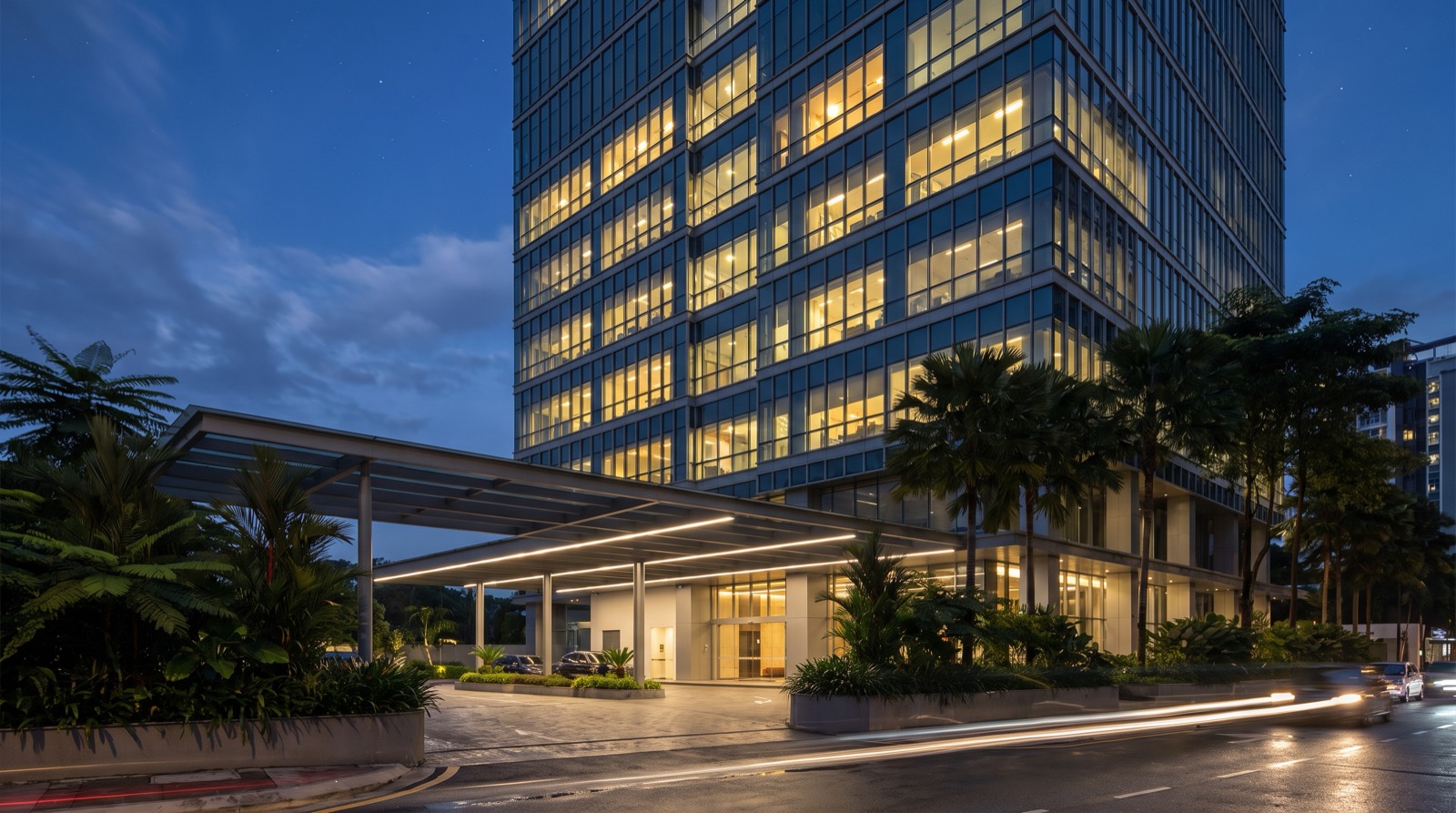
Answer up front — A commercial smart building quote is seven line items, not a device count multiplied by a price: the devices, the site survey that determines them, cabling and containment, installation, integration, commissioning and documentation, and ongoing maintenance. Two quotes for the same building usually differ because they include different scopes, not because one supplier is dishonest. The actual number depends on a site survey — which is precisely why nobody should publish a price for someone else's work.
There is a reason this site does not publish a price for a commercial project, and this is the explanation, not an apology.
Not because the answer is secret. Because a smart building quote is not a product list, and any number offered before a site survey is a guess wearing a decimal point — which would make this page stale within a month and quietly wrong within three.
So: what a real quote contains, why each line exists, and the three mistakes that make competent buyers compare the wrong numbers.
| Line item | What it covers | What changes it |
|---|---|---|
| 1. Device selection | Which products, how many, and why those | Survey findings, protocol strategy, how many people share a hub |
| 2. Site survey | Ceiling heights, back box depths, neutral wire, circuit loading, radio coverage, existing kit | Nothing — it is the input to everything else |
| 3. Cabling and containment | Cable, conduit, back boxes, extra neutral conductors, patching | The building fabric, and what is reused |
| 4. Installation and configuration | Physical fitting, pairing, naming, scene building | Access conditions, ceiling access, working hours |
| 5. Integration and network | New devices talking to aircon, access control, lifts, an existing BMS — over a network that carries it | Entirely what is already on site |
| 6. Commissioning and handover | Testing, offline and failover behaviour, documentation, training | What was actually promised at handover |
| 7. Maintenance and support | Batteries, replacements, firmware, spares, response | How many sites, how many devices, what response was agreed |
Two of these — the survey and the maintenance — are the two most commonly left out of a comparison, and they decide whether a quote is comparable to anything.
The device list is what everyone looks at first and what means least on its own. It is also the only line where product specifications can be checked factually, which makes it useful — once you know what it does not contain.
A real list for a commercial building includes presence sensors, wall switches, locks, cameras, curtain or shutter control, gateways, hubs and network hardware. It does not include the labour to fit any of it, the cable to reach it, the electrician to make the circuit work, or the person to test it.
Four selection decisions most often change a list.
Hub capacity is not linear, and price alone does not decide it. The Hub M100 handles 20 Zigbee + 20 Thread, the Hub M200 40 + 40, and the Hub M3 127 + 127 — so the M3 supports roughly three times the device count of the M200, with dual-band Wi-Fi, IR and PoE. That headroom is a decision about how many rooms, how many people sharing accounts, and how long the building will run.
Hub roles are not interchangeable, and this is the cheapest possible mis-sell. The Hub M2 is a Matter Bridge only — no Thread radio and no controller role. Putting one into a Matter-over-Thread project is a straightforward error, and on an invoice it looks identical to a hub that is correct.
Where a claim cannot be verified, it should not be on the list. Aqara publishes no door thickness for any retrofit lock, several spec tables are images rather than text, and the Curtain Controller C3, Curtain Controller SEA and Smart Wall Switch Z1 Pro SEA have no machine-readable specification at all.
Availability is separate from suitability. A product that fits perfectly and cannot be obtained through the Malaysian channel is not a device in your building. Check it with us rather than assuming.
This changes the other six lines, and it is the one most often skipped to make a quote arrive faster.
A survey answers the questions that change the design: is there a neutral wire in this box, what is the back box depth, what is the ceiling height, what is this circuit carrying, where does the radio reach, and what can be reused. Each answer is a fork. A missing neutral means relay modules or a rewiring decision. A shallow back box means a different switch. A 2.7 m ceiling means a sensor's published ceiling coverage does not apply.
Two of these are safety-relevant, not preference-relevant. Power monitoring on Aqara's wall switches requires a neutral wire — the feature that makes a switch useful for energy work is the one that needs the conductor. And the US variants of the Light Switch H2 and the Presence Switch H2 are 120 VAC, not a drop-in fit for a Malaysian 240 V circuit.
A quote produced without a survey is not cheaper. It is provisional, and it will move once someone opens the wall.
The line easiest for a buyer to forget and a contractor to price honestly.
It includes first-fix containment, cable, back boxes and — on older stock — additional neutral conductors, the item most likely to surprise both sides. It also includes patching and termination, and it is constrained by whether the building can be drilled at all, which in a strata scheme or leased shop lot may be a permissions question before it is a cost question.
Related: some products are indoor-rated by specification. The Curtain Driver E1 — Rod is IP20, indoor only; the FP300 has no IP rating stated; the FP2 and FP400 are IPX5, which is water resistance rather than waterproofing.
Fitting the hardware is the visible part. Configuring it is where the hours are: pairing, naming, building the automations the brief actually promised, and deciding what happens when a device is offline — a configuration decision, and cheaper made early.
Integration means getting the new devices talking to what already exists — air-conditioning, access control, lifts, a building management system, a booking platform — and making sure the network carries it. Its scope depends almost entirely on what is already on site, which is why two quotes can differ substantially here without either being wrong.
One limit shapes it more often than any other: only one IR air-conditioner can be bridged into Matter AC mode. A building with six split units does not have six IR-automated air conditioners on one hub.
The line that determines whether anything still works in three years, and the one most often reduced to a single afternoon.
Commissioning should cover the promised scenarios, what happens when the internet drops, and what the system does at 2 a.m. in an empty building. Documentation should include a device register with model and location, the automation schedule with its intended behaviour, credential ownership, a spares list, and what is deliberately not automated. An unexplained automation is an automation nobody dares disable.
The line that never appears in a hardware list and should appear in every quote.
It covers batteries — which devices have them and who replaces them — device replacement and model numbers for spares, firmware, configuration changes as the building is reconfigured, and a response expectation. It also covers what happens when a vendor, an integrator or a member of staff leaves.
If maintenance is not a line item in the quote, it is not a zero-cost line item. It is an unfunded one, and it will be funded later by somebody without a plan.
At portfolio scale this is where a site-level layer starts. Synchroweb's Omaya platform runs on People, Devices, Environment and Space, and the one that changes the operating conversation is Devices: an inventory of health, firmware, last-seen, battery and location across what the site describes as twelve gateway vendors on one screen. That is a different purchase from a room sensor, and it belongs in the quote as its own line.
The most common and the most expensive. One quote includes cabling, commissioning and documentation; the other lists hardware only. One includes a year of maintenance; the other excludes it. Both are honest documents and they are not comparable.
Write the scope down once and check both suppliers quoted against the same document. Otherwise you are not comparing two prices — you are comparing two different projects that end in the same digits.
"A hundred and twenty devices" is not a price, and not even a device list, because it does not say which hundred and twenty. Even a precise device list is hardware only — the survey, the cable, the electrician, the configuration, commissioning and maintenance are all still to come.
A device count becomes a price only after a survey, a selection, an installation scope and a maintenance term. Anyone who converts one into the other before those four things exist is guessing.
Hardware lists are generated from a product catalogue. Maintenance is not, which is why it is absent from so many quotes and resurfaces as an unhappy client conversation eighteen months later.
Ask for it explicitly: batteries, spares, replacements, firmware, response. If the answer is "covered", ask where it is written down. If it is "minimal", ask what minimal means in devices per visit.
A single checklist covers all three mistakes: was this quoted after a physical site survey; give me the device list with model numbers, not a total; is every hub a controller or a bridge; what is excluded; what is the maintenance line in writing; and what is handed over at completion — the register, the schedule, the credentials, the spares, the training.
Because the number is only true for one building, on one day, with one scope — and it stops being true the moment the survey finds a neutral wire that is not there.
We hold verified specifications for what we supply, and we will quote your building properly with every line itemised. This page carries no figure because a published price would be someone else's building, and wrong for yours.
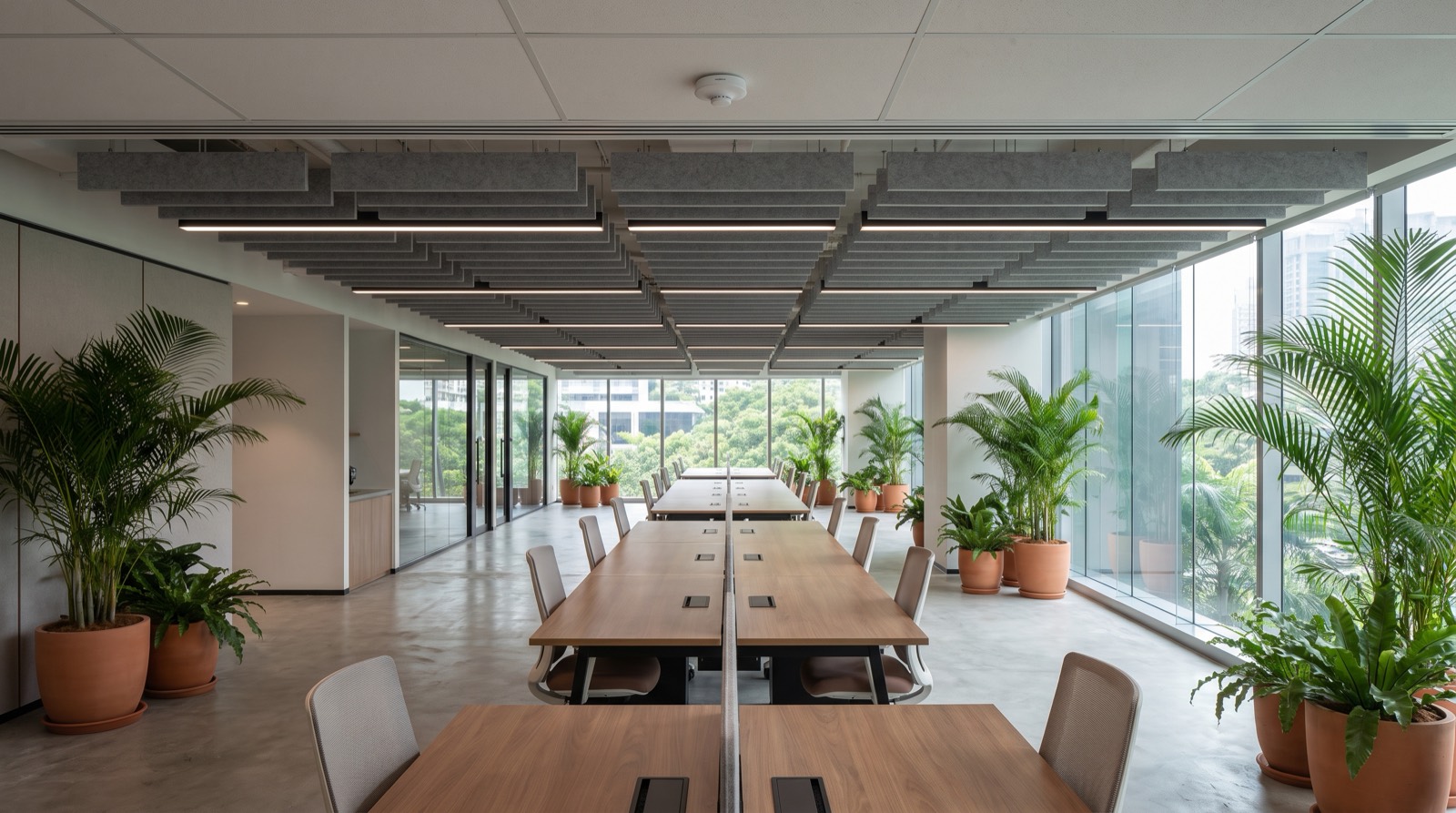
Office occupancy sensor Malaysia: a buyer's guide comparing PIR and mmWave, coverage maths at 2.7 m and 3.6 m ceilings, and the PDPA questions to ask.

BMS Malaysia and smart building IoT explained: Aqara is room-level, Omaya is site-level. Where each one ends, and why a building needs neither everywhere.
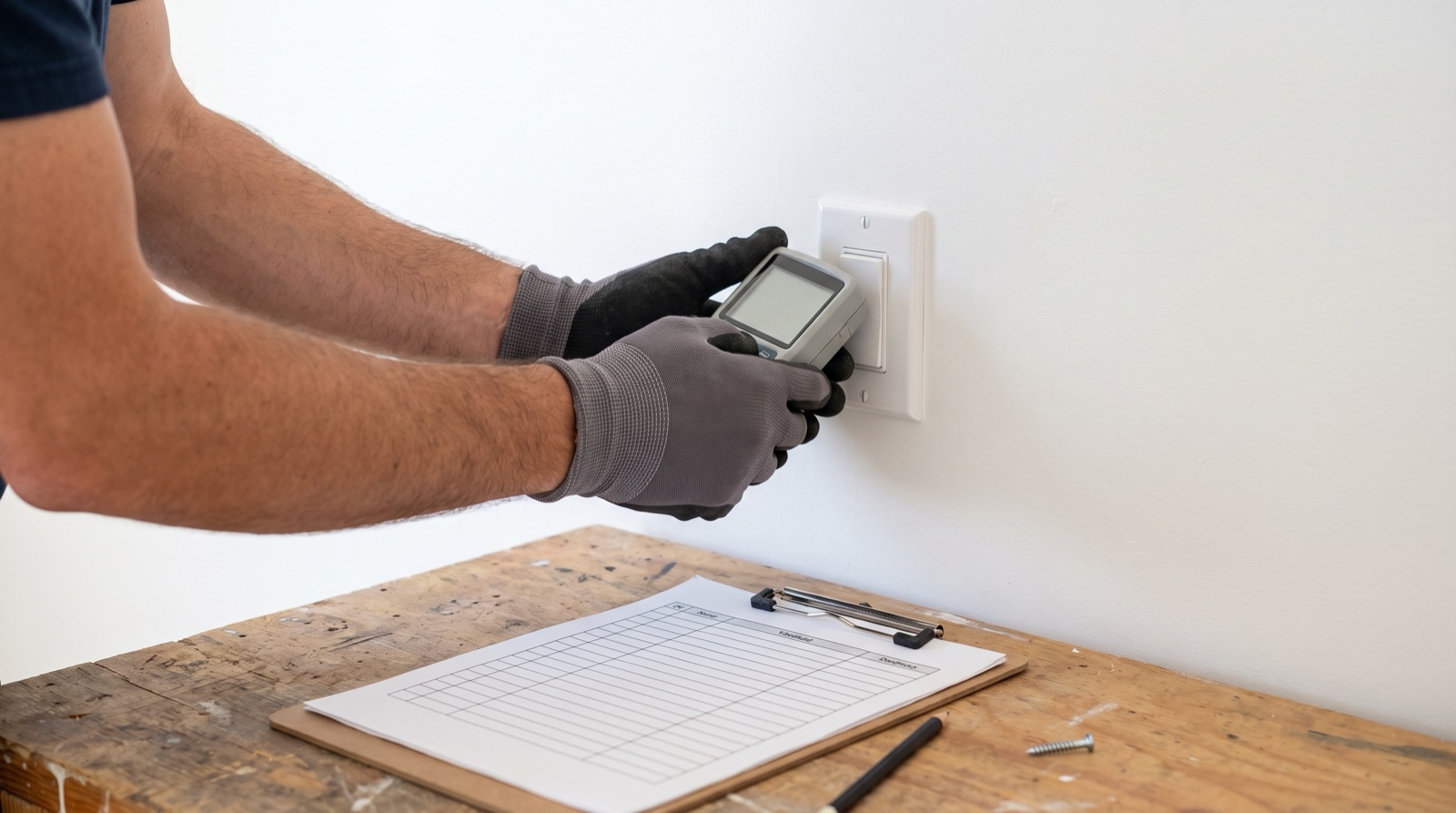
A smart home commissioning checklist Malaysia guide: a per-room test sheet, cold-start automation checks, load tests, board marking and handover pack.
Tell us about your space. Our B2B team will reply within one business day with a recommended setup and quotation.
WhatsApp us →
[email protected]
+603-5880 5486