







Aqara FP2 vs FP1E vs FP300 vs FP400: Which Presence Sensor?
Aqara FP2 vs FP400, FP1E and FP300 compared: Wi-Fi, Zigbee or Thread, power, coverage, IP rating and what each one disables, as at September 2026.
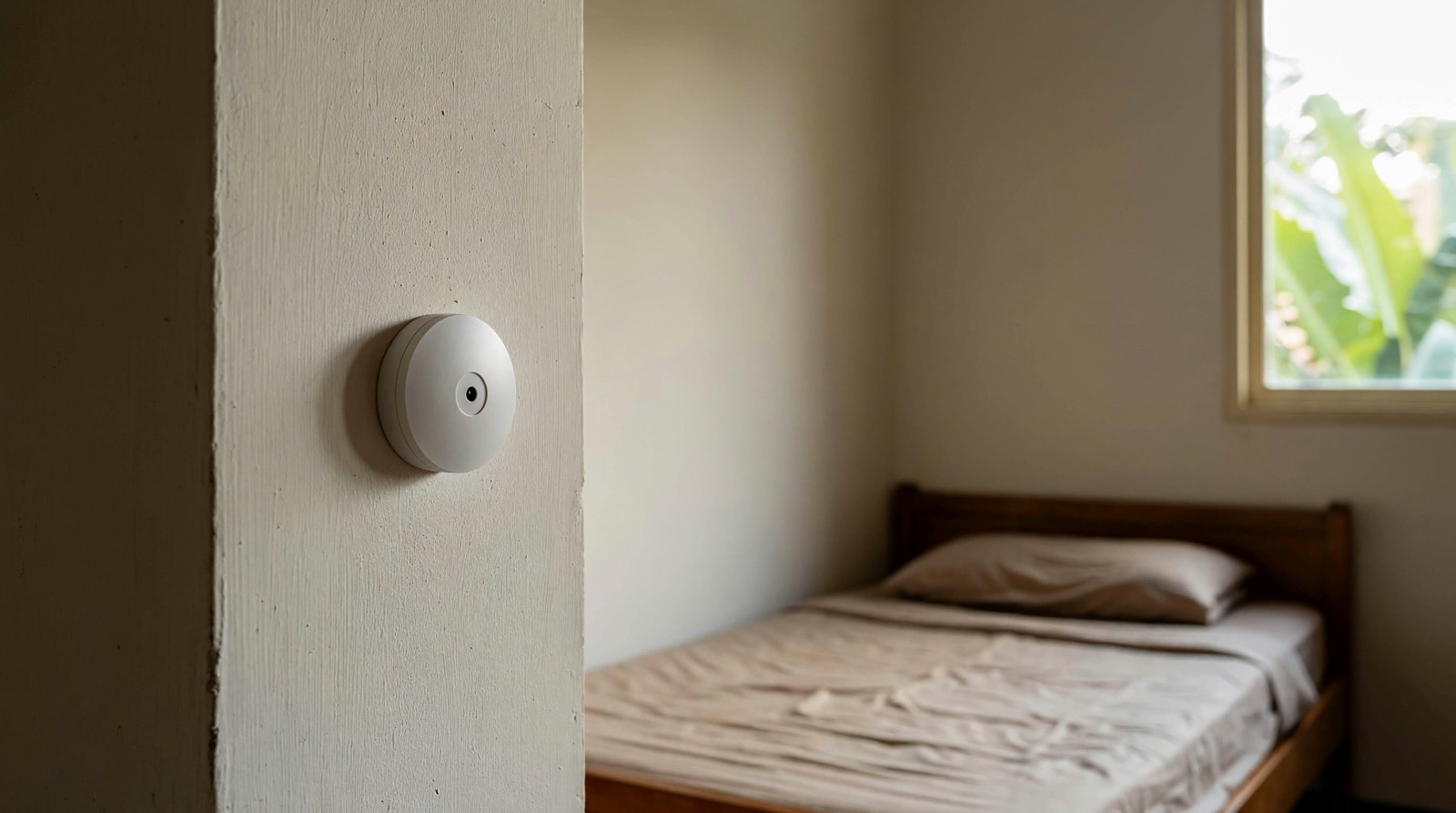
Answer up front — The FP310 is a real Aqara sensor, but it is a model most people have not heard of, and it is not yet on Aqara's global product pages. Aqara introduced it in China in April 2026 as an AI multi-dimensional presence sensor: battery powered, no wiring, and it measures four things in one unit — whether a person is present, the light level, the temperature and the humidity. It uses 24 GHz millimetre-wave radar, so it can tell that someone is sitting still, which is the problem that trips up ordinary motion sensors. It speaks Zigbee 3.0 and Thread, and it works with Apple Home. Availability in Malaysia: confirm with us. Everything below is what Aqara has published, plus what follows from it.
This page is for a Malaysian homeowner or installer who has heard the name FP310 and wants to know whether it is something to plan around, or something to wait for. The short answer is that it changes one specific thing about how you build a smart home: it removes the power cable and the drilled hole from a presence sensor, which is the single thing that stops most people from installing one in an older house or a rented flat.
Aqara announced the FP310 on its official China site in April 2026, calling it an AI multi-dimensional human presence sensor. It has not appeared on Aqara's global English product pages, in the global product catalogue, or in the manual library that Aqara publishes for download.
That is worth stating plainly rather than glossing over, because it changes how you should treat any specification you read about it. A model that appears in a global product page has a published specification sheet, a manual, and a firmware support commitment behind it. A model that appears only in a regional announcement has a published announcement and, so far, no global datasheet to check it against.
So the honest way to use this page is as a description of what Aqara has said, with the gaps marked. Where Aqara has published a figure, we use it. Where it has not, we say so and tell you to confirm with us.
The FP310's headline claim is consolidation. Instead of a presence sensor plus a separate light sensor plus a separate temperature and humidity sensor, one device covers all four.
For a Malaysian home, the humidity reading is not a trivial extra. A bathroom or a closed room in the Klang Valley sits at a different humidity from a living room with air conditioning running, and the same sensor reading that is useful for comfort is also the number that tells you whether a fan or dehumidifier should switch on.
Aqara publishes no accuracy figure for the temperature, humidity or light readings on this model. Do not treat them as laboratory instruments. Treat them as the inputs to an automation, not as a monitoring service.
The FP310 runs on batteries. Aqara describes magnetic mounting and adhesive strip mounting, with the point being that nothing is drilled and no cable is run.
This is the reason the model matters to an older Malaysian terrace or a rented flat. Presence sensors have traditionally been the one device in a smart home that needed a power outlet in an awkward place — a ceiling corner, a bathroom wall, the middle of a corridor. A presence sensor that runs on a battery can go there without chasing a cable through a wall that may be brick, or asking a landlord for a socket.
Two consequences follow. First, the sensor becomes movable: you can take it with you when you move house, which is exactly the case a rented flat puts you in. Second, you are now depending on a battery, so you need to know how long it lasts and how you find out before it fails. Aqara describes the FP310 as having long battery life but publishes no battery duration figure, no battery type and no cell arrangement, so confirm all three with us before you plan maintenance around it.
The FP310 uses a 24 GHz low-power millimetre-wave radar. Aqara's other presence sensors — the FP2, the FP300 and the FP400 — are published at 60 GHz.
This is not a marketing upgrade in either direction. Lower frequency radar has a longer wavelength, which carries better through walls and partitions and covers a larger volume, at the cost of spatial precision. Higher frequency radar resolves smaller areas more finely, which is what lets you draw a tight zone around a sofa or a desk, but it is more attenuated by materials and less forgiving of a sensor being mounted behind something.
The practical Malaysian cases are easy to picture. A bathroom separated from the corridor by a tiled partition, a bedroom behind a thick masonry wall, a landing with a cupboard in the corner — these are the positions where a lower frequency radar is the easier one to commission. A large open living room where you want to distinguish where someone is sitting is the case where the finer resolution of the 60 GHz models earns its keep.
Aqara publishes no comparative test between the two bands. Treat the difference as a directional guide for choosing a position, not as a measured result.
Aqara publishes three adjustment parameters for the FP310, and they are the ones you will actually spend time with.
Every one of these is a per-room decision. That is the work of installing a presence sensor, and it is the same work as the FP2 or the FP300 — the difference is that the FP310 does it on a battery.
Aqara describes an in-house AI spatial learning algorithm that scans the space, learns the background interference in it, and excludes false reports caused by strongly reflective surfaces such as metal and glass.
This is the honest answer to the objection that millimetre-wave sensors report things that are not there. They can, and the usual culprits in a Malaysian home are a ceiling fan, a curtain moving in the afternoon breeze, a metal ceiling or a mirrored wardrobe. The learning step is designed to identify and filter those. The honest counter is that it is a first-run behaviour, and you should expect to spend a commissioning session with it.
Aqara publishes no measured false-positive rate for the FP310, and we are not going to invent one. What you can expect is a sensor that improves over the first days in a room, and a commissioning session where you watch the app while you move through the space and fix the things it reports wrongly.
The FP310 supports Zigbee 3.0 and Thread natively, and Aqara states native Apple Home support. You can therefore use it in a Matter-over-Thread setup with a Thread Border Router, in a Zigbee mesh through an Aqara hub, or in the Aqara Home app.
This is where the FP310 sits unusually well against its siblings. The FP2 needs no Aqara hub but is Wi-Fi 2.4 GHz and Bluetooth only — it is not a Zigbee device and not a Thread device. The FP300 and the FP400 both speak Thread and Zigbee. The FP310 joins that group and adds the battery, which until now the FP300 was the only one in this range to offer.
If you already run an Aqara hub, the FP310 is a battery device that extends it. If you are starting from scratch with a Thread Border Router and Matter, it fits without an Aqara hub. Neither case needs you to change architecture for it.
The honest value proposition is narrow and real. It is not that the FP310 is a better sensor than the FP2 or the FP400 — for a fixed installation in a room you own, the mains-powered models give you more zones, more people tracked, and better resolution.
It is that the FP310 removes the three things that stop an ordinary homeowner from adding presence sensing at all: the power socket, the drilled hole, and the landlord conversation. For a rented flat, a room you are about to leave, or an old terrace where chasing a cable means breaking into a wall, that is the difference between a presence sensor being possible and not being possible.
What it does not do is replace a camera for anything you need to see, or make an existing smart home cheaper to run. It is a presence sensor with a lighter installation cost and a narrower feature set than the models above it.
The FP310 was launched for the China market, and Aqara's global product pages and product catalogue do not list it yet. Malaysian availability is not confirmed — ask us.
Confirm availability in Malaysia with us. If you are planning a project around it, ask us to check current stock and lead time before you commit a design to it — and if it is not yet here, we will tell you which model we can actually supply for the same job.
Aqara FP2 vs FP400, FP1E and FP300 compared: Wi-Fi, Zigbee or Thread, power, coverage, IP rating and what each one disables, as at September 2026.
Presence sensor vs motion sensor explained: why PIR stops working when you sit still, what mmWave radar adds, and the Thread limits buyers are not told.
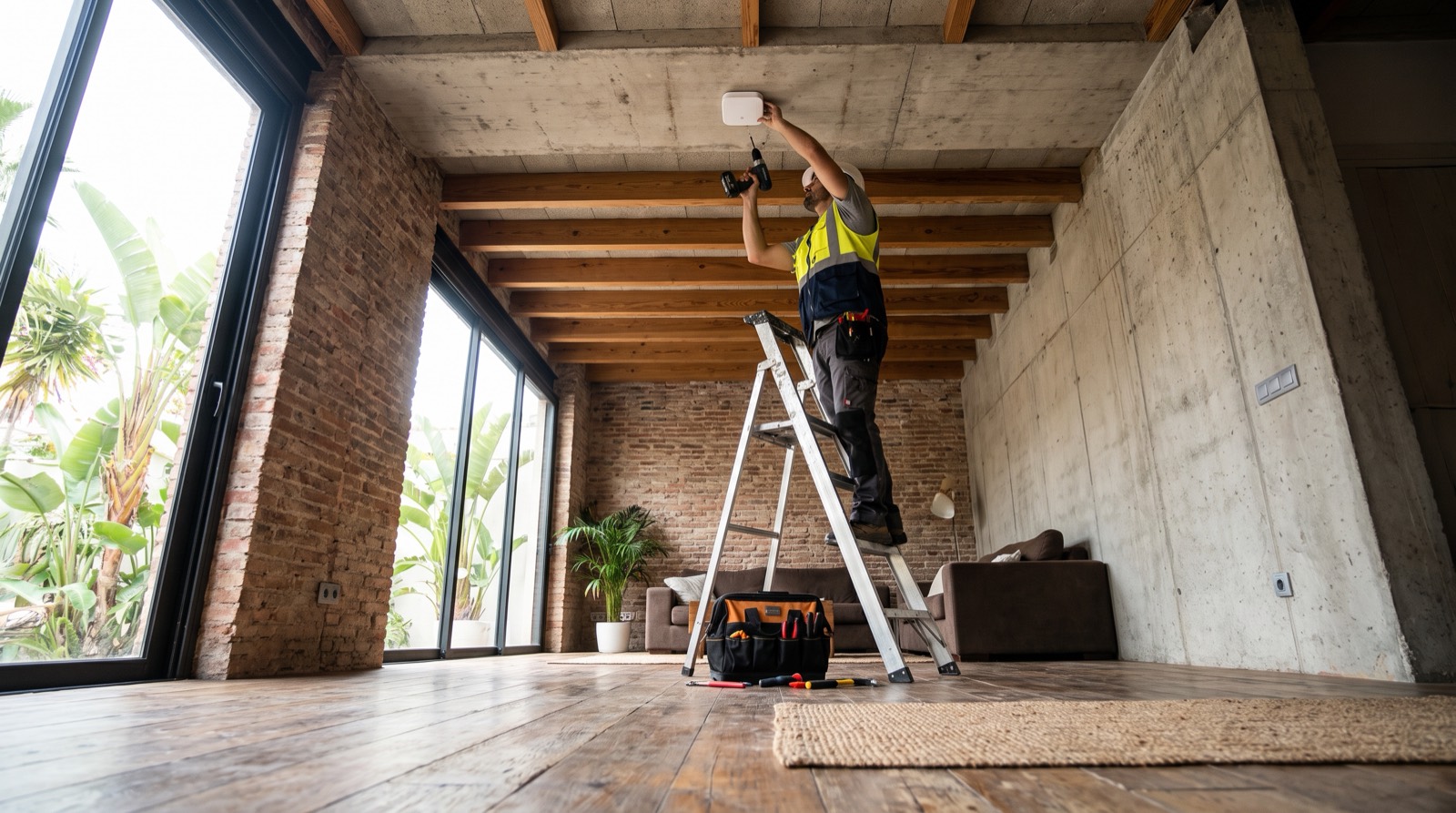
Install presence sensor Malaysia guide for trade: the 3-4 m mounting height, 5 x 6 m coverage, IPX5 limits, and why a 2.7 m condo ceiling fails the maths.
Tell us about your space. Our B2B team will reply within one business day with a recommended setup and quotation.
WhatsApp us →
[email protected]
+603-5880 5486