






Aqara Studio Platform Explained: Spatial Intelligence for Buildings
Aqara Studio platform explained for integrators: the three deployment models, protocol support, space management, visual automation and what stays on site.
Answer up front — KNX is the right answer for a wired commercial building with a professional commissioning budget, and Aqara is the wrong one for that project. Aqara is the right answer for a retrofit, a wireless-first new build, or a handover upgrade that must go in without chasing walls. The deciding question is not a feature comparison. It is whether the building is being wired anyway: KNX is a wired bus, Aqara a wireless mesh with local-first control running on the hub.
This is for developers and integrators choosing a building automation platform for a Malaysian project. Aqara is distributed in Malaysia by Synchroweb Technology (M) Sdn Bhd, the official Aqara distributor, so the Aqara side of this comparison is written from the inside. The KNX side is written with respect, because where KNX wins, it wins properly.
Neither platform is the general answer. Each suits a building with a particular shape.
KNX is a wired standard. It is installed as a bus, and the bus becomes part of the building. Once it is in the walls and ceilings, every device on it is addressed through the bus rather than through radio.
Aqara is wireless-first and local-control-first. Devices are mostly Zigbee sub-devices reporting into a hub, with Thread and Matter alongside, and Wi-Fi devices for cameras and mains-powered equipment. The hub holds the automations, and they run on the hub.
That structural difference produces the labour profile, the commissioning effort, the disruption during installation, and who can service the system in year ten.
| KNX | Aqara | |
|---|---|---|
| Topology | Wired bus run through the building | Wireless mesh, hub-centric, with some wired and PoE devices |
| Wiring decision | At construction or during a major refit | At device placement |
| Control runs | On the installed system, locally | On the hub, locally, with edge failover on the high-capacity hubs |
| Retrofit | Expensive and disruptive | Straightforward |
| Who commissions it | A KNX-trained commissioning engineer | An Aqara-trained installer, with local hub configuration |
No figures are given here, because any number depends on your building. What follows is the shape of the cost drivers, which is what you can plan against.
In a wired KNX project, the labour dominates.
In an Aqara project, the device count and the configuration effort dominate.
The practical difference: the KNX budget is committed before you own a single device, as cable and engineering hours. The Aqara budget is committed as you go, as devices and configuration. For a fixed budget and a phased handover, that matters more than any per-point figure.
Both platforms need commissioning, and the difference is the skill required rather than the hours.
KNX commissioning is a defined craft with a trained base. The integrator configures the bus, designs the addressing, writes the logic, then tests it against the client's own functional description. In a market where KNX has been established for decades, there are engineers who do this daily. For a client who wants a 30-year wired standard with a trained base behind it, that is a genuine advantage.
Aqara commissioning is configuration plus verification. Devices pair to a hub, rooms and zones are defined, automations are built, and everything is then tested on site against the same functional description. The radio work is different in kind from bus engineering: you are verifying coverage and range rather than continuity of a conductor.
Neither is automatic, and the failure mode is identical: automations never tested against the way the building is actually used at 9am on a Monday.
Aqara's local-first behaviour is real and published. The Hub M200's specification states that local automations keep running offline, and the Hub M3 runs edge computing with automation failover. A rule that turns a corridor light off at 11pm should not depend on a datacentre.
But a wired KNX installation does not depend on the internet either. The bus runs the building, and presenting local control as an Aqara-only advantage would be misleading. The genuine Aqara advantage is narrower: the local control arrives without the cable, and a wireless mesh goes into an existing building without opening walls.
Where the two diverge on resilience is a different point. A wired bus, once installed, has no battery and no radio link to fail. An Aqara installation has radio links, device batteries, hub power and firmware in the path — which is why hub power resilience comes from PoE on the Hub M3 and the Hub M200.
Longevity runs in KNX's favour, and it is the strongest argument for it. A wired building system specified at construction is part of the building. It has no batteries to cycle, no radio links to re-pair, and it is not tied to the commercial fortunes of any device manufacturer. That is why a client who wants a 30-year wired standard wants it.
Aqara's longevity story is different, and it is honest to say so. Devices are individually replaceable, which is an advantage over a single failed bus segment. But the estate has moving parts a wired system does not: battery devices needing scheduled replacement in a hot climate, firmware to manage, an app and a cloud that can change, and a hub that eventually needs replacing. The Motion Sensor P1 is published at up to five years of battery life and the Smoke Detector at up to ten years. Those are device-specific figures, not a general guarantee.
After-sales is where the procurement question really lives. KNX has a large trained base of engineers and a long-established service ecosystem. Aqara needs local support, and the way to de-risk that is contractual:
That generalises: a building that only one integrator can service is an asset only for as long as that integrator exists.
A comparison that only lists wins is a brochure. Here is where KNX is the better answer.
If the project is any of those, choose KNX and commission a KNX-trained engineer. That is not a loss for anyone.
| Your project | Choose | Why |
|---|---|---|
| Existing building, cannot chase walls | Aqara | No structural work; the mesh fits the building |
| Greenfield where cabling is being removed anyway | Aqara | No bus to run that you do not need |
| Handover upgrade in a condo or landed development | Aqara | An upgrade, not base-building work |
| Multi-site rollout, serviced apartments, hotel rooms | Aqara | Repeated room types, one device layer |
| New commercial building with the bus already in the drawings | KNX | The wiring decision is already made |
| Large industrial or campus site with long runs | KNX | Radio coverage is a design risk there |
| Client requires a long-established open wired standard | KNX | The trained base and published practice |
| Occupancy analytics and roll call across a site | Aqara at the device layer, with the site layer above it | Room questions against building questions |
| A building that already has a BMS | Aqara Studio or AqaraLink as the integration surface | The device layer must talk to the BMS |
When a building genuinely needs the device layer to talk to a BMS or a tenant application, the integration surfaces are Aqara Studio and the AqaraLink developer platform. The AqaraLink English documentation at opendoc.aqara.com sets out the API surface, the authorisation models and the messaging options — point to it for the exact calls, because the authorisation model you choose in week one shapes your data model for the life of the project.
Two honest notes. First, the dedicated hub-integrated hardware for Aqara Studio is not listed as a Malaysian-channel product, so confirm availability with us. Second, an integration surface does not change the physics: the devices still need radio coverage, power and a place to live.
Aqara is room-level; Omaya is site-level. Aqara presence sensors answer "is anyone in this room right now". Omaya answers "how is this building being used, who is in it, and what needs attention" — with people, devices, environment and space streams, roll call and lone-worker check-in, panic buttons and fall alerts, dwell time and peak hours, and if-this-then-that automation across the site. A room-by-room device list means Aqara; a building operations question means both.
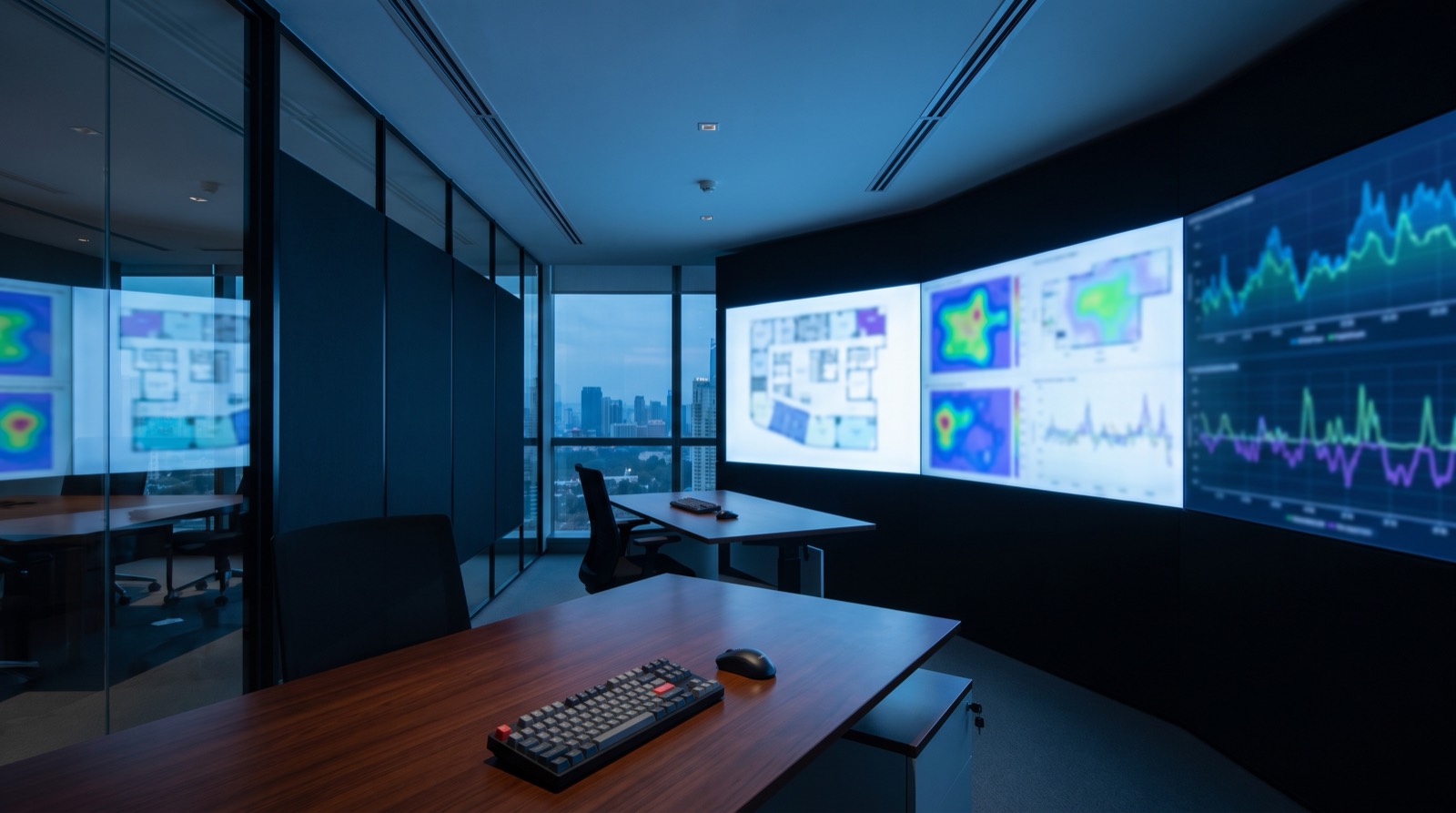
Aqara Studio platform explained for integrators: the three deployment models, protocol support, space management, visual automation and what stays on site.
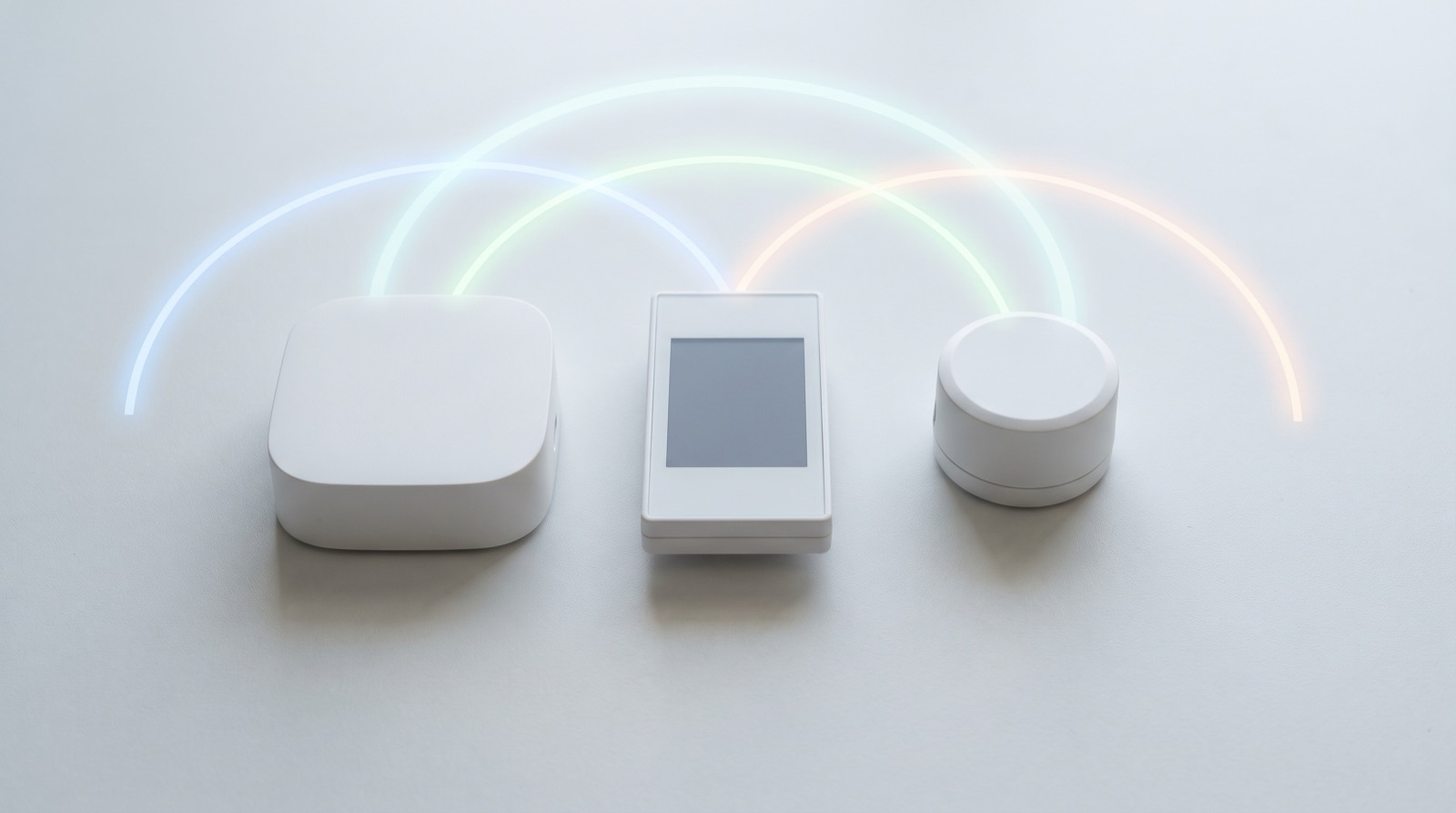
Matter vs Zigbee vs vendor API smart home integration compared on engineering effort, local execution, ecosystem breadth and vendor lock-in for your build.

AqaraLink developer platform API explained for integrators — cloud modules, message push, virtual accounts, App SDKs and the Matter path. Malaysia support.
Tell us about your space. Our B2B team will reply within one business day with a recommended setup and quotation.
WhatsApp us →
[email protected]
+603-5880 5486