



Spatial Intelligence for Senior Living, Care and Education in Malaysia
Smart elderly care home Malaysia and adaptable classroom spaces: presence-based signals in senior living, occupancy-driven teaching spaces, and honest limits.
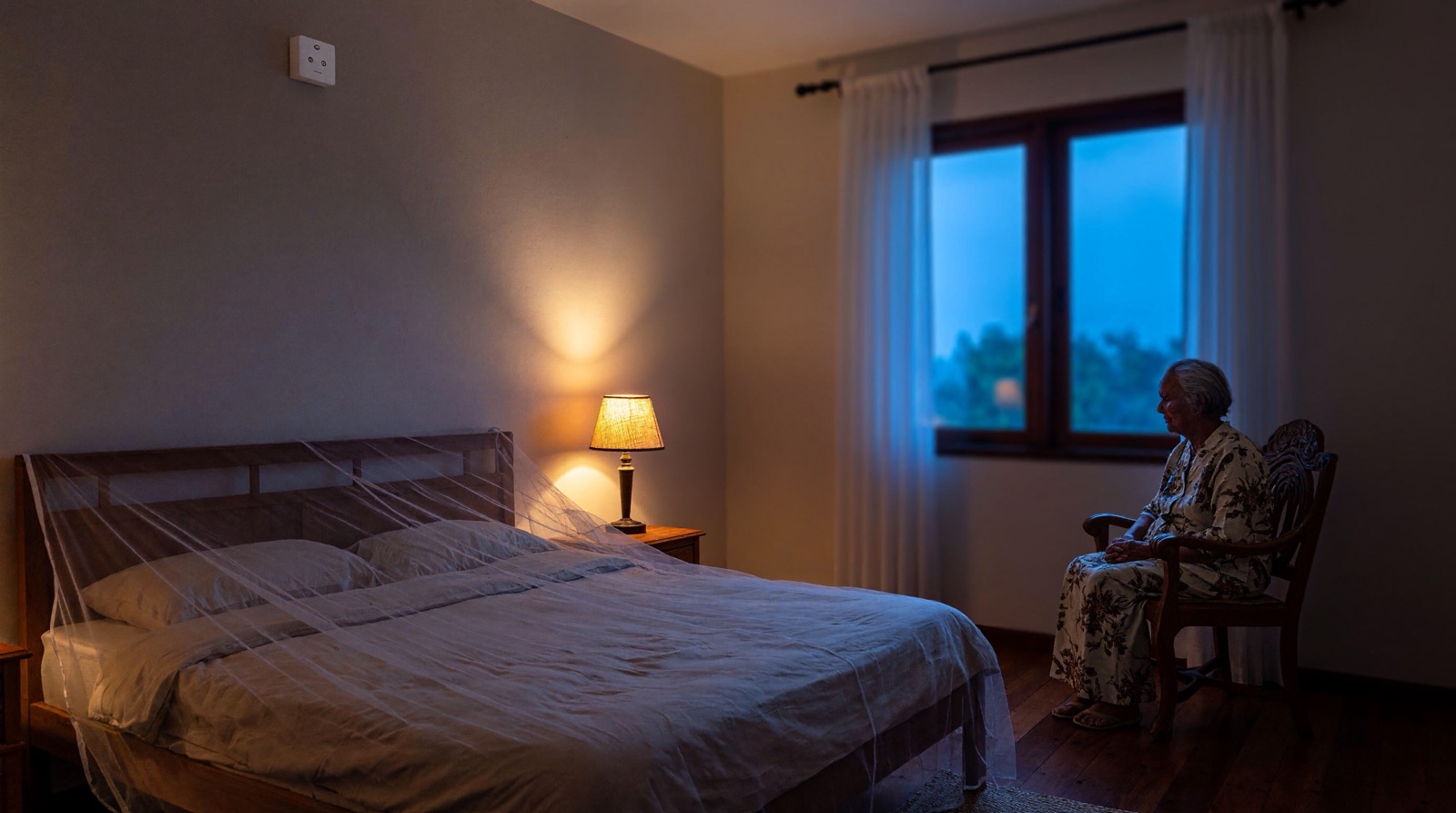
Answer up front — Aqara's spatial sensors can do three useful things for an older person living alone: raise an alert when a fall is detected, report how many people are in a room, and measure dwell behaviour such as time spent in one place. The FP400 is the model with a published specification for this, and Aqara also announced an FP400 Pro in September 2026 aimed at assisted living and elder care, without publishing a specification sheet for it. Two honest constraints come with all of this. First, a fall-detection sensor is a notification, not a medical device, and it is not a substitute for a personal alarm or a response service. Second, monitoring a family member's movements in their own home raises a data protection question that you should settle with the person before you install anything, not afterwards.
This page is for an adult child arranging care for a parent in Malaysia, or for an operator running a residential care space. It is written to be useful about what these sensors do and, just as importantly, about what they do not do.
Aqara's fall detection is a radar-based inference. The sensor observes a change in a person's position and movement pattern that is consistent with a fall, and it raises an alert.
It is not a medical device, and Aqara says so directly for the FP2's fall detection mode: the function is for notification purposes only. The same caution applies to any of the newer models.
That distinction is not a disclaimer for lawyers. It changes what you build around it. A fall alert tells you something happened. It does not tell you how bad it was, whether the person is conscious, whether they need a doctor, or whether they are still on the floor. If someone does not answer, the alert has to be followed by a human going to look. That means the system is only as good as the response path behind it, which is a staffing and reachability question before it is a technology question.
Spatial Multi-Sensor FP400. Aqara's most advanced published presence sensor: 60 GHz millimetre-wave radar with a 4T4R MIMO antenna array, tracking up to 10 people in real time, a 0.5 m zone grid, and up to 8 custom zones. It detects posture, so it can tell standing from sitting from lying down. Aqara's announcement states simultaneous fall detection when side-mounted, real-time headcount, and dwell analytics including average dwell time and walking distance. Power is USB-C 5 V 1 A, it speaks Thread and Zigbee, the protection rating is IPX5, and the operating range is −10 °C to +50 °C. For the full configuration you need the Aqara Home app version 6.4.1 or later and a hub on version 4.5.70 or later; the compatible hubs Aqara lists are the M3, M200, M100, G350 and G410, and the M1S, M2, G2H Pro and G3 are explicitly not compatible. A third-party Thread Border Router also works, with zones, sensitivity and absence delay configured in the Aqara Home app, sharing up to 8 zone occupancy sensors to your Matter platform.
Spatial Multi-Sensor FP400 Pro. Announced alongside the FP400 in September 2026 as Aqara's assisted-living and elder-care version of the sensor. Aqara has not published a specification sheet for it yet, so ask us what it does in practice and whether it can be supplied here before you build a project around it.
Presence Sensor FP2. Its fall detection mode is a ceiling-mount function, and Aqara describes it as detecting a fall and alerting you through the app, with the explicit note that it is not a medical device and is for notification purposes only. It also needs no Aqara hub, which matters in a home where adding a hub is the part you do not want to explain to a parent.
Fall alerts. The headline feature, and the one to treat most carefully. Fall detection is most reliable when the sensor is side-mounted and the room is a defined space such as a bedroom or a living room, and least reliable when the space is open, cluttered, or shared with a pet.
Headcount. Knowing that one person is in the bedroom and two are in the living room is quietly one of the most useful signals for an elderly person living alone. It is also the signal that has privacy implications, which is why the next section exists.
Dwell analytics. Average dwell time and walking distance give a picture of daily routine: sleeping hours, time in the kitchen, how much movement happens through the day. For a care arrangement this can be a genuinely useful conversation starter about how a parent is managing, provided the person knows it is being measured and has agreed to it.
Here is where the practical friction sits, and it is worth being concrete because it decides whether the project happens.
A fall-detection sensor needs mains power. The FP400 is USB-C powered. That means a socket near the ceiling or high on the wall of a bedroom, which in an older Malaysian terrace may mean a new outlet run, and in a rented or strata-managed property may mean a permission conversation with an owner or management corporation.
The alternative is a battery-powered model, and the FP310 — Aqara's newer battery presence sensor — is the one to ask us about for that case, although its published features do not include fall detection.
Placement matters more than usual here. A sensor that is mounted where a wardrobe door blocks it, or where a ceiling fan runs across it, will miss falls and report movement that is not there. The commissioning step is not optional when the consequence of a missed alert is a person on the floor for hours.
Aqara's radar sensors do not capture images and do not record audio. That is the practical reason they suit a bedroom: there is no camera in the room.
What the sensor produces instead is a picture of behaviour. A report saying "one person in the bedroom at 03:12, lying down, no movement for 40 minutes" is personal data about a specific person, and under the Personal Data Protection Act 2010 (Act 709) — as amended by the Personal Data Protection (Amendment) Act 2024 (Act A1727), gazetted 17 October 2024 and fully commenced by 1 June 2025 — the organisation holding it is the data controller.
In your own home this is a conversation rather than a compliance project. Tell your parent the sensor is there, say what it does and does not do, and let them decide. If they cannot decide for themselves, whoever is legally authorised to decide for them is the person to ask.
Where the duty changes is when you are not the resident. A care home, a sheltered housing scheme or an employer monitoring staff are data controllers for other people's data, and the requirements for that are set out in our smart building tender specification article.
Every fall-detection system has a false alarm rate, and every family finds its own pattern. A large dog standing up quickly, a chair knocked backwards, someone lying down fast to reach something on the floor, a ceiling fan. Your response path needs to assume some of these will be false alarms, which means a response protocol that does not panic the person being monitored every time the fan runs.
It also needs to assume the opposite: that a genuine fall may not be detected. A fall that does not involve a change of position — a slip where the person catches themselves on the way down and stays upright, or a collapse that happens out of the sensor's field — will not raise an alert. No radar sensor on the market solves that, and any supplier who tells you otherwise is selling something else.
If the person's needs include medication supervision, personal hygiene assistance, or a genuine response time requirement, a sensor is an addition to a care arrangement, not a substitute for one. There are personal alarm and emergency response services in Malaysia for exactly this, and they are worth comparing against a sensor-only approach before you commit to one.
A sensor earns its place when the question is "how is this person doing through the day when nobody is there to see" — not when the question is "who will come if something happens in the next ten minutes".
The FP400 is a current Aqara product, but our Malaysian availability for it is not confirmed — confirm with us. The FP400 Pro has been announced but has no published specification sheet, so we cannot commit to it for a project yet. If you need this capability now, we will tell you what can actually be supplied in Malaysia and what it will and will not do.
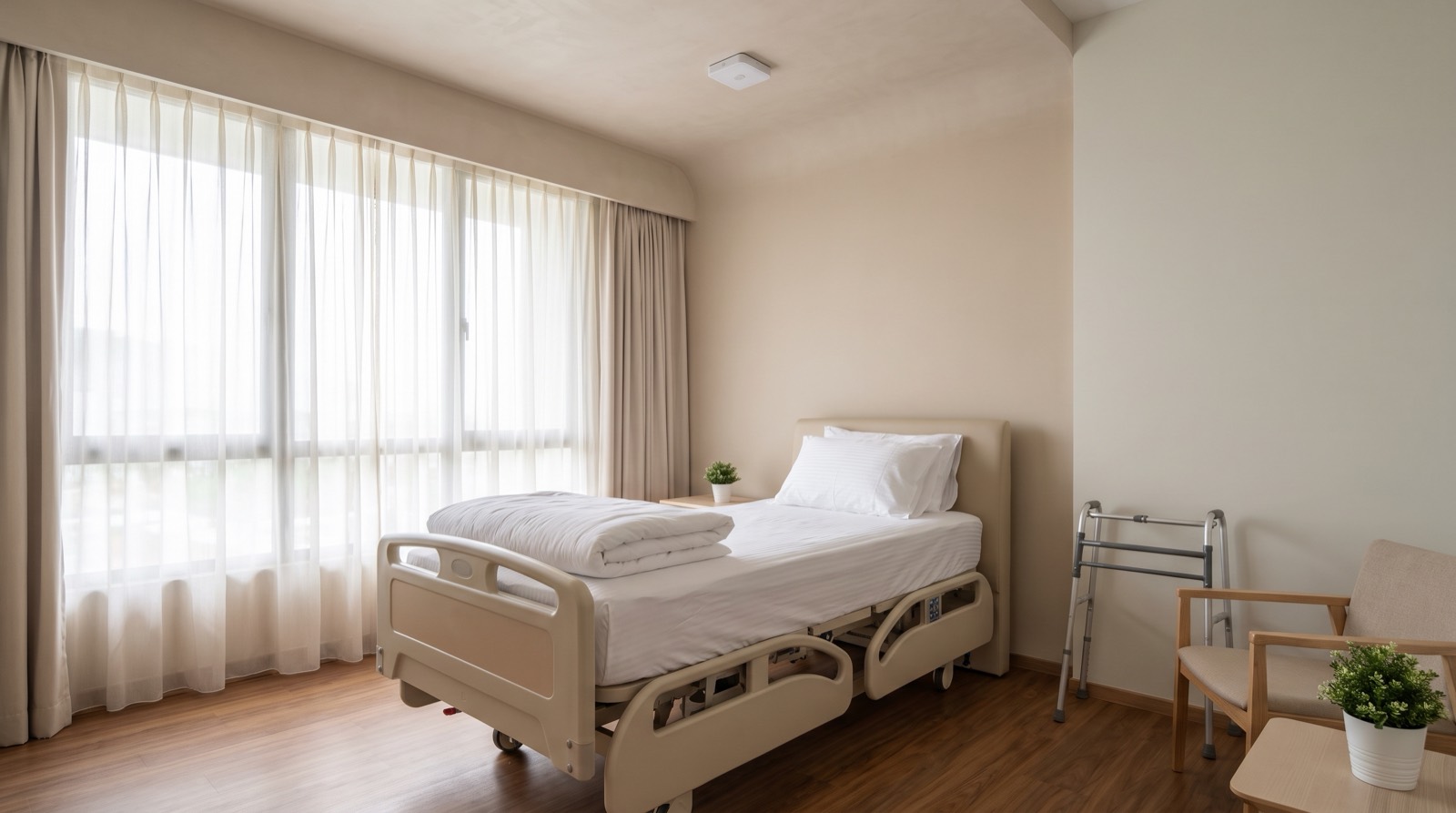
Smart elderly care home Malaysia and adaptable classroom spaces: presence-based signals in senior living, occupancy-driven teaching spaces, and honest limits.
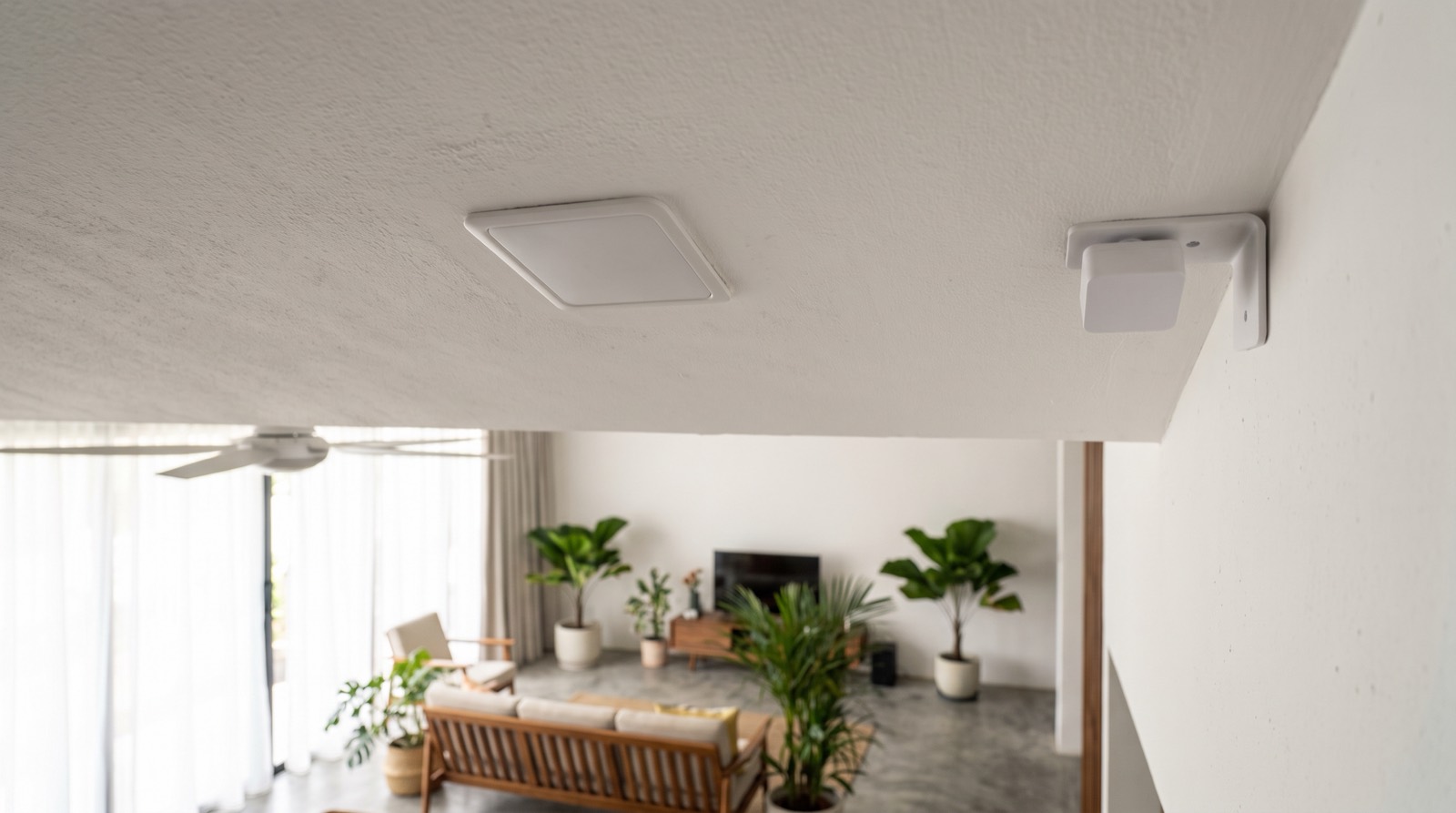
Aqara FP2 vs FP400, FP1E and FP300 compared: Wi-Fi, Zigbee or Thread, power, coverage, IP rating and what each one disables, as at September 2026.
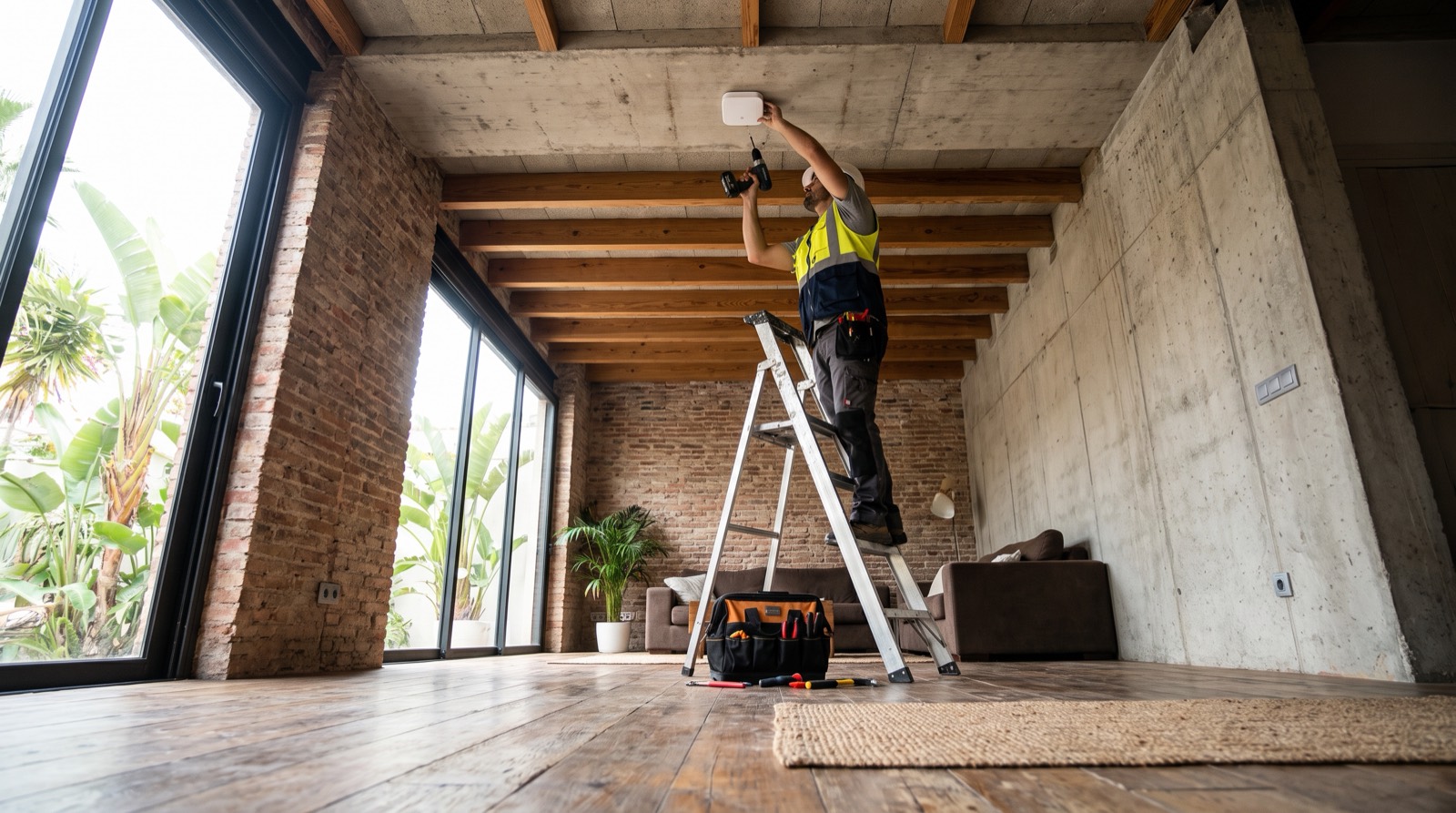
Install presence sensor Malaysia guide for trade: the 3-4 m mounting height, 5 x 6 m coverage, IPX5 limits, and why a 2.7 m condo ceiling fails the maths.
Tell us about your space. Our B2B team will reply within one business day with a recommended setup and quotation.
WhatsApp us →
[email protected]
+603-5880 5486