







Presence Sensor vs Motion Sensor: What Actually Changes in Your Home
Presence sensor vs motion sensor explained: why PIR stops working when you sit still, what mmWave radar adds, and the Thread limits buyers are not told.
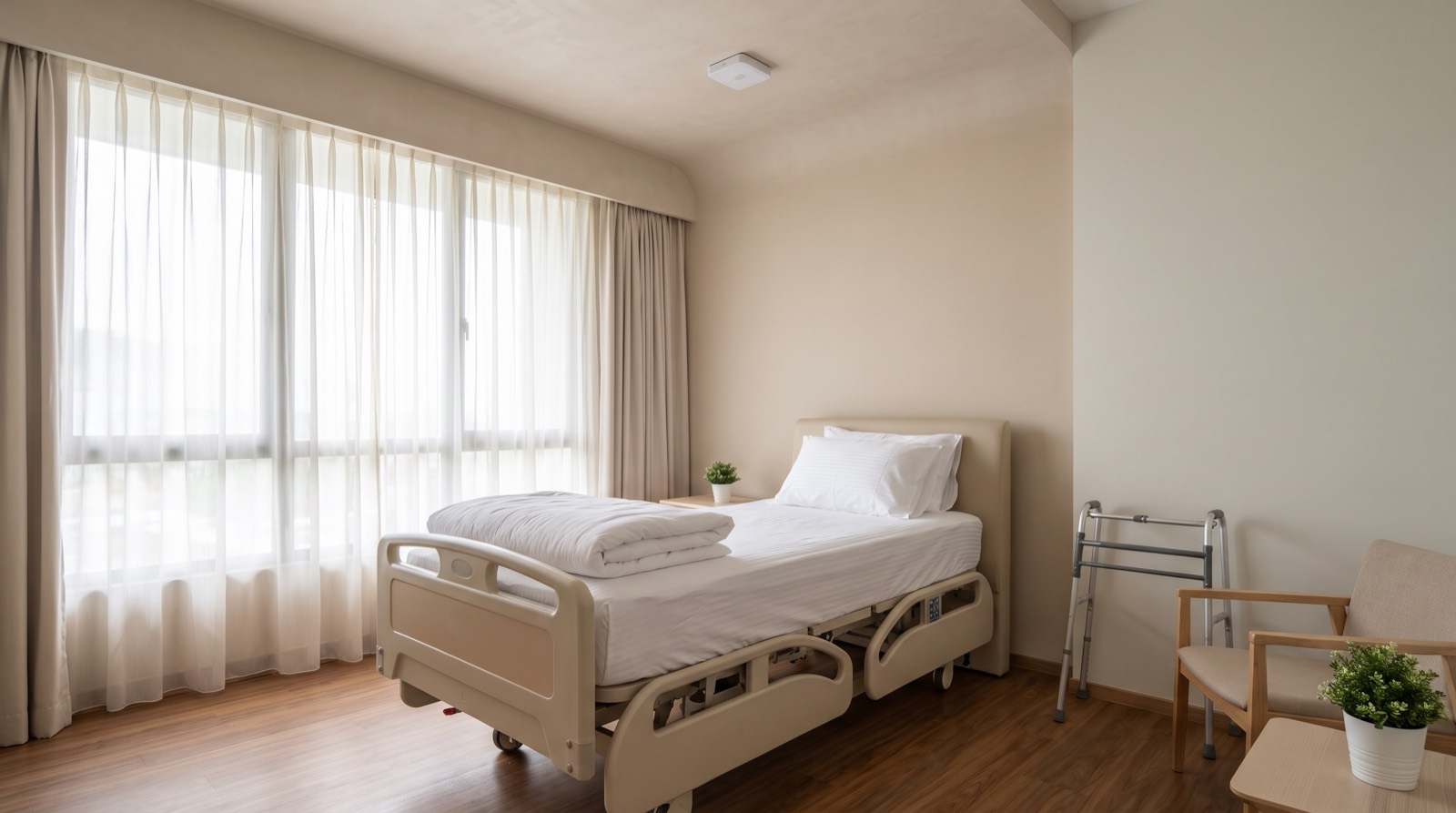
Answer up front — Aqara positions its Spatial Multi-Sensor FP400 Pro specifically for assisted living and specialised elder care, and the reason is a specific technical capability: it can distinguish a person standing, sitting and lying down without a camera in the room. That posture distinction is what makes a fall-adjacent signal possible in a bedroom where a camera would be unacceptable. It is a signal for staff to notice and investigate, not a medical device and not a replacement for a care response. In education, the same spatial intelligence makes teaching spaces adaptable — switches, lighting, curtains and thermostats responding to how a classroom is actually used — which also serves the energy-reduction case Malaysian institutions are measured on. FP400 availability in Malaysia: confirm with us. Do not assume it is on the shelf at a local store.
Senior living and education are the two verticals where the social case is strongest and the temptation to overclaim is strongest. That combination deserves a post that is explicit about both what the technology does and what it is not.
Most presence detection answers one question: is anybody here? In a bedroom, that question is often not the right one.
A person who has fallen in a bedroom may not move. A motion sensor reports the room as empty, because nothing is moving in it — which is exactly the correct reading of a motion sensor and exactly the wrong answer to the question being asked. The absence of movement is indistinguishable from the absence of a person. That ambiguity is why the common household advice has always been to put a call button within reach of the bed.
The Spatial Multi-Sensor FP400 addresses the ambiguity differently. It uses 60 GHz mmWave radar with an upgraded AI sensing algorithm, so it detects presence independently of movement rather than inferring it. It tracks the real-time position of up to 10 people simultaneously, covers up to 10 m depth × 8 m width in a roughly 860 sq ft area with a 120° wide field of view, and divides a room into up to 8 zones.
The capability that matters for elder care is zone and posture. The sensor can divide a room into zones and distinguish whether a person is standing, sitting or lying down.
| Room state | What it tells staff | What it is |
|---|---|---|
| Standing | Someone is upright and moving in the room | A routine occupancy state |
| Sitting | Someone is in the room but not moving much | A routine occupancy state — also what a person reading looks like |
| Lying down in a normal sleeping position | Resting | Expected at night; not an alert by itself |
| Lying down where someone did not expect to be, and sustained | Something may have happened | A reason for a person to check |
| No presence detected, when presence was expected | Anomaly worth checking | A gap in the picture, not a diagnosis |
That last distinction is the honest one. The sensor tells you a state is unusual. It does not tell you why. A resident who has fallen looks, to the radar, like someone lying on the floor. So does someone lying on the floor for another reason, and so does a visitor sitting on the bed.
The privacy argument is the other half of this. No camera means no images, no footage, no retention policy for images and no lens pointed at a private room. In a care setting — where residents may be cognitively impaired, where dignity is a legal and ethical matter, and where a family may be reluctant to accept monitoring in a bedroom — that difference is frequently the deciding factor in whether the technology is acceptable at all. Our post on cameras and doorbells, placement and privacy covers that trade-off generally.
Three things will decide whether this works in a specific building, and all three are physical rather than commercial.
Mounting height. Aqara's recommended installation height is 3–4 m, and the coverage changes meaningfully with height. At a 3 m mounting height, the sensor covers up to 5 × 6 m for motion and 4 × 5 m for presence directly below the sensor. That geometry is the whole design conversation for a bedroom. We set it out in full in installing Aqara presence sensors: mounting height and placement.
The hub. The FP400 is not compatible with every Aqara hub. Aqara's published matrix lists currently supported hubs as M3, M100, M200, Doorbell Camera Hub G410 and Camera Hub G5 Pro; Thermostat Hub W200, MagicPad S1, Panel Hub S1 Plus and Camera Hub G350 as support coming during 2026; and M2, M1S, M1S Gen 2, E1, Camera Hub G3, Smart Video Doorbell G4 and Camera Hub G2H Pro as not supported. Experiencing FP400 features requires an M3, M100 or M200 hub on at least firmware 4.5.70, and compatibility varies by model, region and firmware. An existing M2 installation cannot simply take one. Our full hub compatibility guide covers this in detail.
Environment. The unit is IPX5, rated −10 °C to 50 °C and 0–95% RH non-condensing, and mounts on a side, a corner or the ceiling. It is powered over USB-C at 5V and speaks Thread and Zigbee.
There is a further limitation worth knowing before anyone integrates a sensor into a third-party platform. An Aqara hub is essential when the FP400 is integrated into a third-party Matter platform in Zigbee mode. Over Thread, the sensor exposes only one overall presence sensor and one illuminance sensor — the per-person and zone data is not available — and a pre-configured third-party Thread Border Router is required. If your plan depends on the zone and posture data, that data path has to be the Aqara path.
Aqara announced FP400 global availability on 16 September 2026. The listed retail channels were Aqara's own store and Amazon in Belgium, Canada, France, Germany, Italy, Ireland, Netherlands, Poland, Spain, the UK and the US. Malaysia is not in that list. Availability in Malaysia — confirm with us. Do not assume it is on the shelf at a local store. A care operator or developer should treat this as a conversation about product fit and supply route before it is treated as a line item.
The education case is less dramatic and, for a Malaysian institution, more immediately fundable, because energy reduction is something schools, colleges and universities are actually measured on.
A teaching building is a set of rooms used in genuinely unpredictable patterns. A lecture hall is full for fifty minutes and empty for ten. A tutorial room is booked by timetable but occupied by whoever turned up. A classroom used for evening classes sits conditioned and lit for most of the afternoon with a handful of students in it. A studio, a hall and a library each behave differently again.
Timers and fixed schedules handle none of this well, because they assume the timetable rather than the occupancy. The infrastructure is not exotic — switches, lighting, motorised curtains and thermostats — but it is what makes the space respond to how it is actually being used:
| Element | Responds to | Practical effect |
|---|---|---|
| Lighting | Whether the space is occupied, and to what kind of activity | Lights on when the room is in use, off when it is not |
| Motorised curtains | Time of day and occupancy | Daylight used when there is daylight; glare managed when there is not |
| Thermostats | Whether anyone is in the space | The conditioning load tracks actual use rather than the timetable |
| Room state | Booking against actual occupancy | Rooms that are booked but empty can be released; rooms in use but unbooked can be found |
The last row matters more than it looks. In a teaching building, the space is the scarce resource and it is genuinely hard to know where it has gone. Live occupancy state answers the question that room booking systems structurally cannot: the room is not free just because nobody reserved it, and it is not occupied just because somebody did.
For the institutions reading this, the honest framing is that this is an operating-cost and space-utilisation project, not a teaching-innovation project. That framing is also the one that gets funded.
Our post on energy metering and ESG reporting for Malaysian buildings covers the measurement and reporting side, which is what turns this from a facilities project into something reportable.
Also worth stating plainly: it does not claim a confirmed Malaysian price or Malaysian stock for the FP400, FP400 Pro or any hub in the matrix above, and it does not claim compatibility with every Aqara installation. Confirm both with us before you build a design around it.
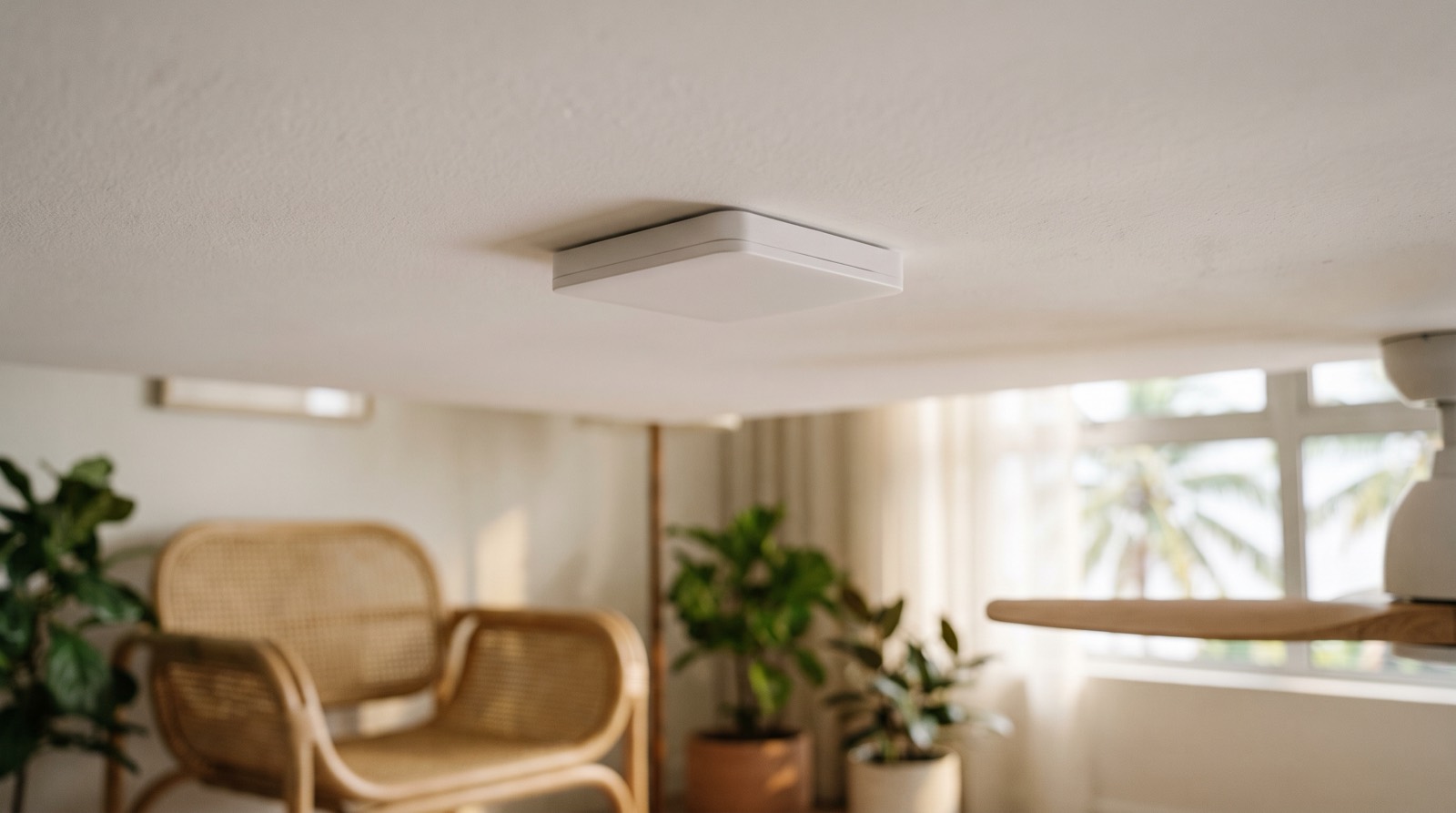
Presence sensor vs motion sensor explained: why PIR stops working when you sit still, what mmWave radar adds, and the Thread limits buyers are not told.
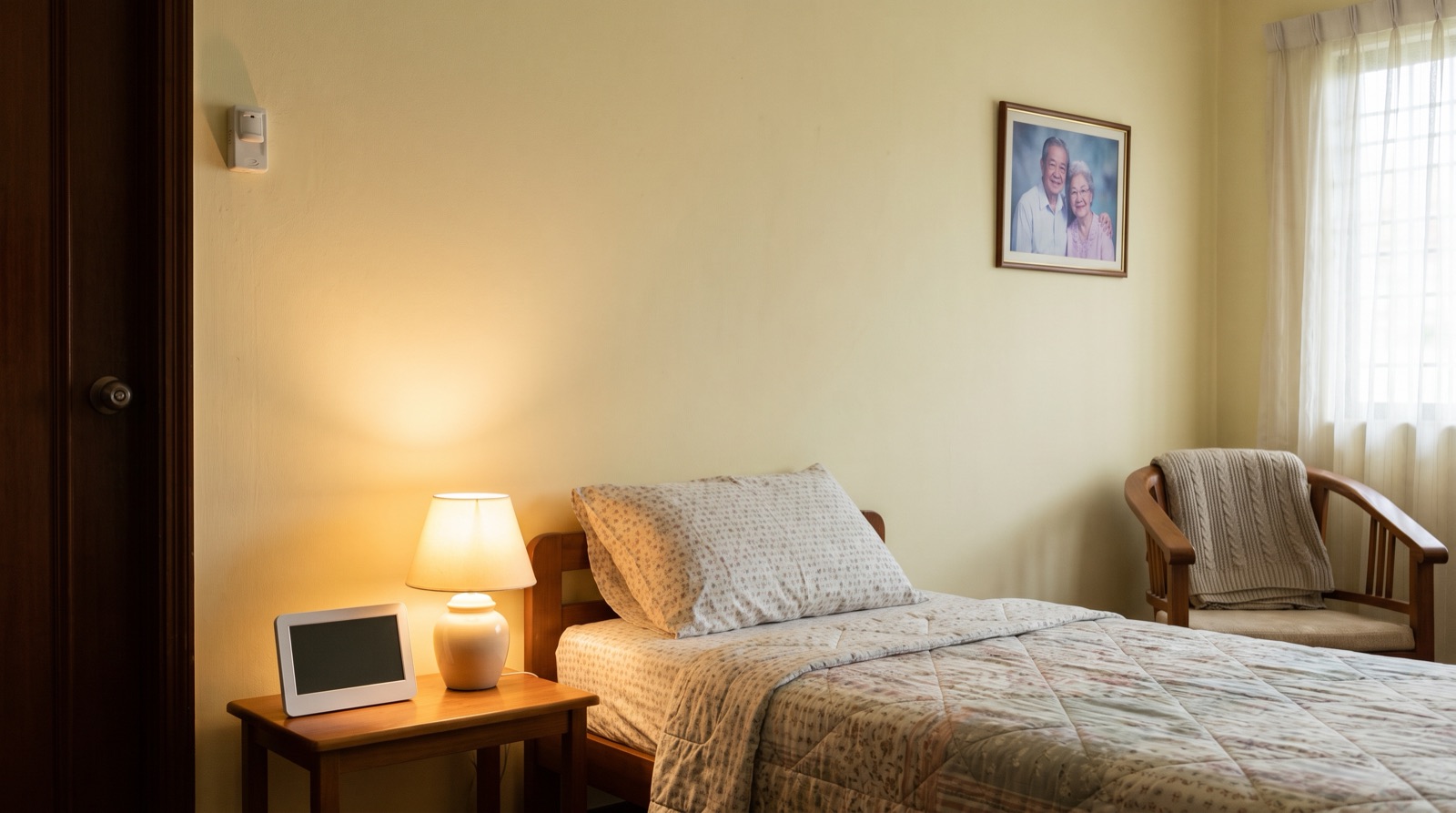
Smart home elderly parents safety Malaysia: what a corridor motion sensor can and cannot tell you, and how to set it up without ever damaging family trust.
Spatial intelligence deployment model compared for Malaysia: hub-integrated, edge-deployed and cloud-hosted, covering data residency, outages and workload.
Tell us about your space. Our B2B team will reply within one business day with a recommended setup and quotation.
WhatsApp us →
[email protected]
+603-5880 5486