







Does Your House Have a Neutral Wire? A Malaysia Smart Switch Guide
A neutral wire smart switch Malaysia guide: how to check whether your box has a neutral, why loop-in wiring leaves it empty, and what to do next about it.
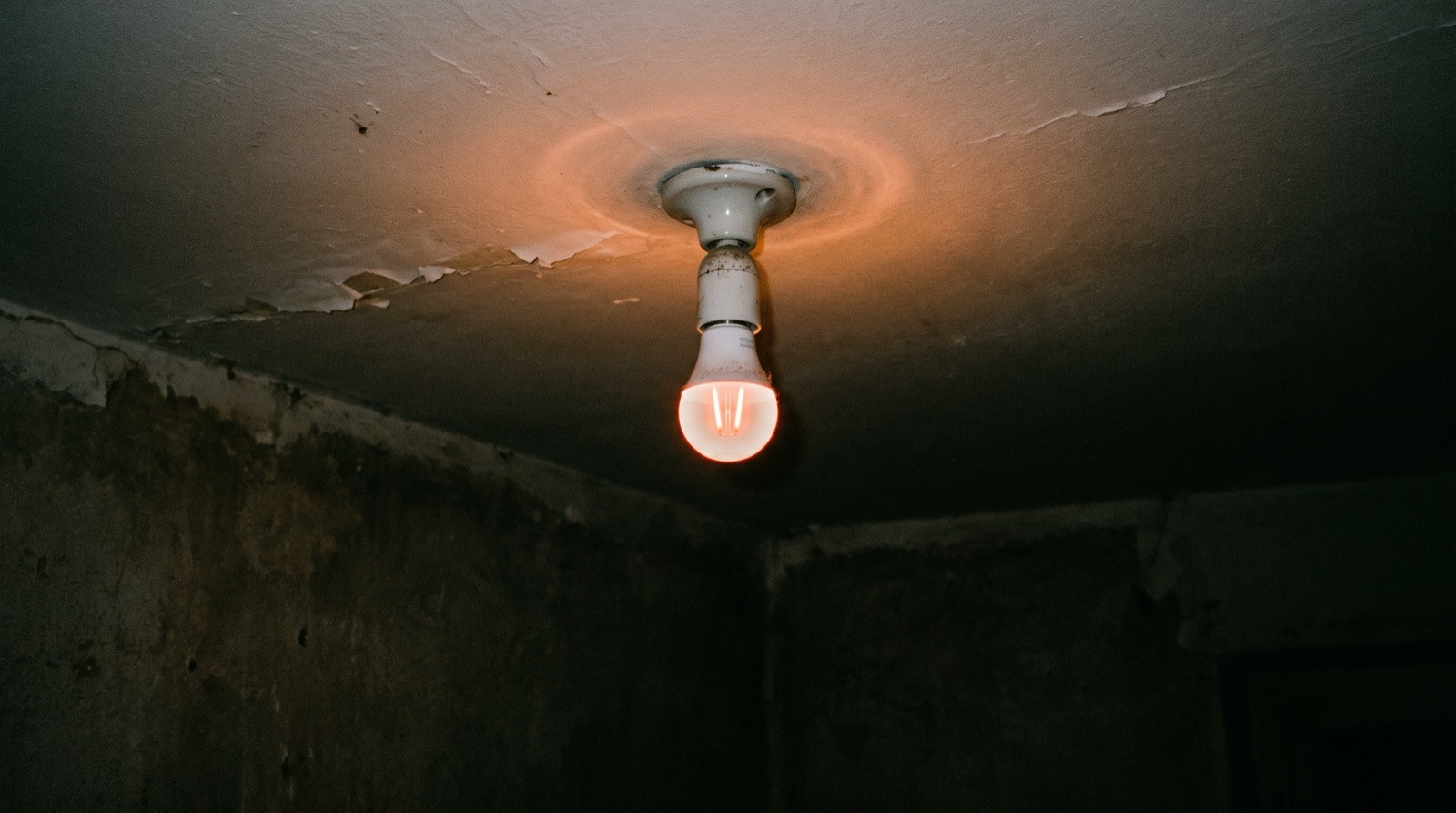
Answer up front — A bulb that flickers, buzzes or stays dimly lit when the switch is off is almost always the trickle current that a no-neutral smart switch sends through the load to keep itself powered. The switch is not faulty. You fix it by fitting an anti-flicker capacitor, by meeting the switch's minimum load, or by leaving one non-smart bulb on the circuit as a permanent load.
You install the switch. The light comes on. The app finds it, the automation works, everyone is pleased.
Then you walk into the room at night and the bulb is glowing — a faint orange smudge you can just see in the dark. Or it flickers, gently, like a candle. Or it pulses every few seconds.
The first assumption, every time, is that the switch is a bad unit. It is usually not.
A no-neutral smart switch has no neutral to power itself from. So it borrows: a very small current is pushed through the lamp circuit, down through the bulb, and back, purely to keep the switch's own electronics alive while the light is off.
A filament lamp shrugs this off. An LED lamp does not, for two reasons.
First, the LED driver. Every LED bulb and LED downlight has a small driver board inside it. That driver is built to be switched fully off. Feed it a trickle current and you can get a faint glow, a buzz, or intermittent flicker, depending entirely on the driver design.
Second, the load is too small. The amount of current a no-neutral switch needs is small but not zero. A single 5W LED downlight may not be enough to keep the switch's electronics stable. The symptom is not only a glowing bulb — it is also a switch that drops off the network, an automation that fires at 2am for no reason, and a light that does not respond when you tap it in the app.
Some LED drivers are simply incompatible with this current. No capacitor will fix a driver that was never designed to tolerate it.
A small capacitor fitted across the load gives the trickle current somewhere to go, and it stops the glow and the flicker in most cases.
This is the first thing to try, and it is cheap. It is also the fix that has the most variables: the right capacitor depends on the lamp and the driver, and it is closer to trial and error than to science. If it does not clear the glow on the first fitting, the problem is more likely the driver or the load than the capacitor.
Anything that connects to the mains should be fitted by a registered wireman. In Malaysia, fixed electrical work is governed by the Electricity Supply Act 1994 (Act 588) and must be carried out by a wireman registered with Suruhanjaya Tenaga. Check for a SIRIM label and Energy Commission approval on anything mains-powered you buy.
If the circuit is carrying too little power for the switch to stay stable, add load. The cheapest way is to leave one ordinary, non-smart bulb on the same circuit as a permanent ballast.
The same reasoning applies at the other end: if a whole room is downlights, replacing some of them with higher-wattage fittings gives the switch something to hold on to. For a room you are doing anyway, that is a better outcome than a room full of LED lamps that flicker.
Sometimes the honest answer is that the circuit is wrong for a no-neutral switch. Lights sharing a loop with a fan, a dimmer or a mixed set of old and new fittings produce the most stubborn flicker cases.
At that point you have two better options: rewire a neutral to the switch box, or move the control to a relay module at the ceiling rose where the neutral already exists. Both are covered in the no-neutral options guide linked below. Neither is a failure — they are the correct answer for a circuit that was never going to be happy.
The flicker problem is specific to lighting circuits driven by a switch that is powering itself from the load.
Air conditioners and water heaters are a completely different case. They are high-load, and they have their own circuits in the consumer unit. They do not produce the ghost-glow behaviour, and they should not be put on a lighting-style no-neutral device.
For those, the Aqara Smart 20A Switch H1 (SEA Version) is the relevant product, rated for aircon and water heater loads. Check the current rating and the exact model with us before you commit, and make sure the wireman sizes the circuit correctly. A 20A device on an undersized circuit is its own problem.
| What you see | Most likely cause | What to do |
|---|---|---|
| Faint glow with the light off, on one bulb | No-neutral trickle current | Anti-flicker capacitor across the load |
| Faint glow that stays on every bulb | Incompatible LED driver, or load too low | Test a non-smart bulb on the circuit to isolate it |
| Light flickers when dimmed, works fine at full | Existing dimmer in the circuit | Do not use a smart switch on that circuit; use a relay module or replace the dimmer |
| Switch goes offline periodically, automations misfire | Load below the switch's minimum | Add load, or rewire for a proper neutral |
| Buzzing that continues with the light off | LED driver reacting to the trickle | Capacitor; if it persists, change the lamp or the driver |
| Light stays on at 100% with the switch off | Wiring fault or wrong switch type, not a flicker issue | Have a wireman check the box before buying anything |
That last row matters. A light that will not switch off is not a no-neutral quirk. It is a wiring fault or the wrong device, and it needs a wireman, not a replacement switch.
If you are keeping one non-smart bulb on the circuit as a permanent load, an ordinary bulb does the job — test it on the circuit before you settle on it. If you would rather make the lamps themselves smart, a smart bulb such as the Aqara LED Bulb T2 stays powered and is controlled over the air instead of by cutting the supply. Ask us which option suits the circuit.
The flicker is a symptom of a decision made at the box, not at the lamp.
If you already know a circuit has no neutral, the two ways to sidestep the whole class of problem are: rewire a neutral to the switch, or put the smart control at the ceiling rose. Both of those give the device a proper, permanent power supply, and neither depends on the load cooperating. The third way — a no-neutral switch — works well on a simple, single, well-behaved lighting circuit. It is worth the trade-off only when the circuit is simple.
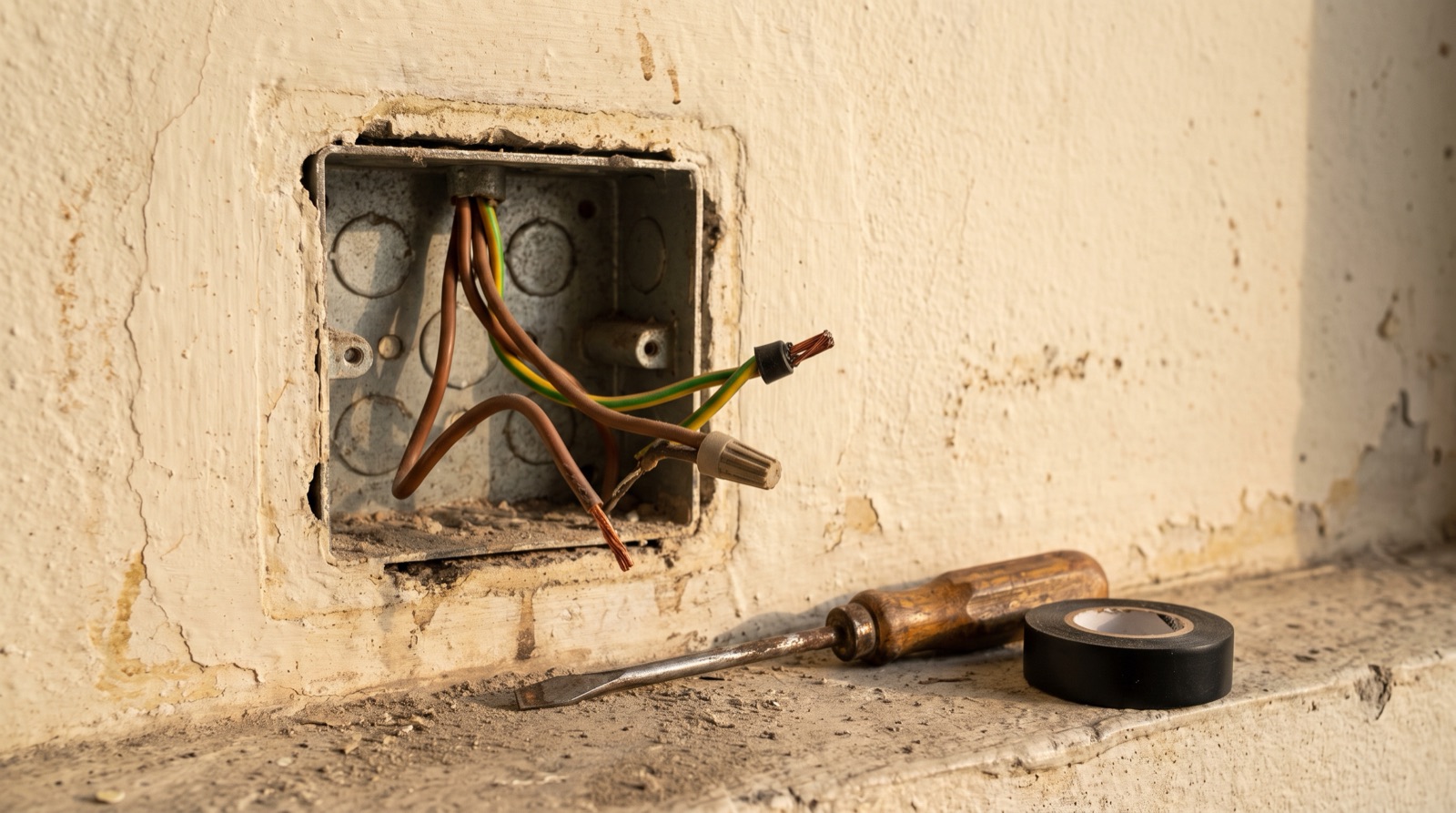
A neutral wire smart switch Malaysia guide: how to check whether your box has a neutral, why loop-in wiring leaves it empty, and what to do next about it.
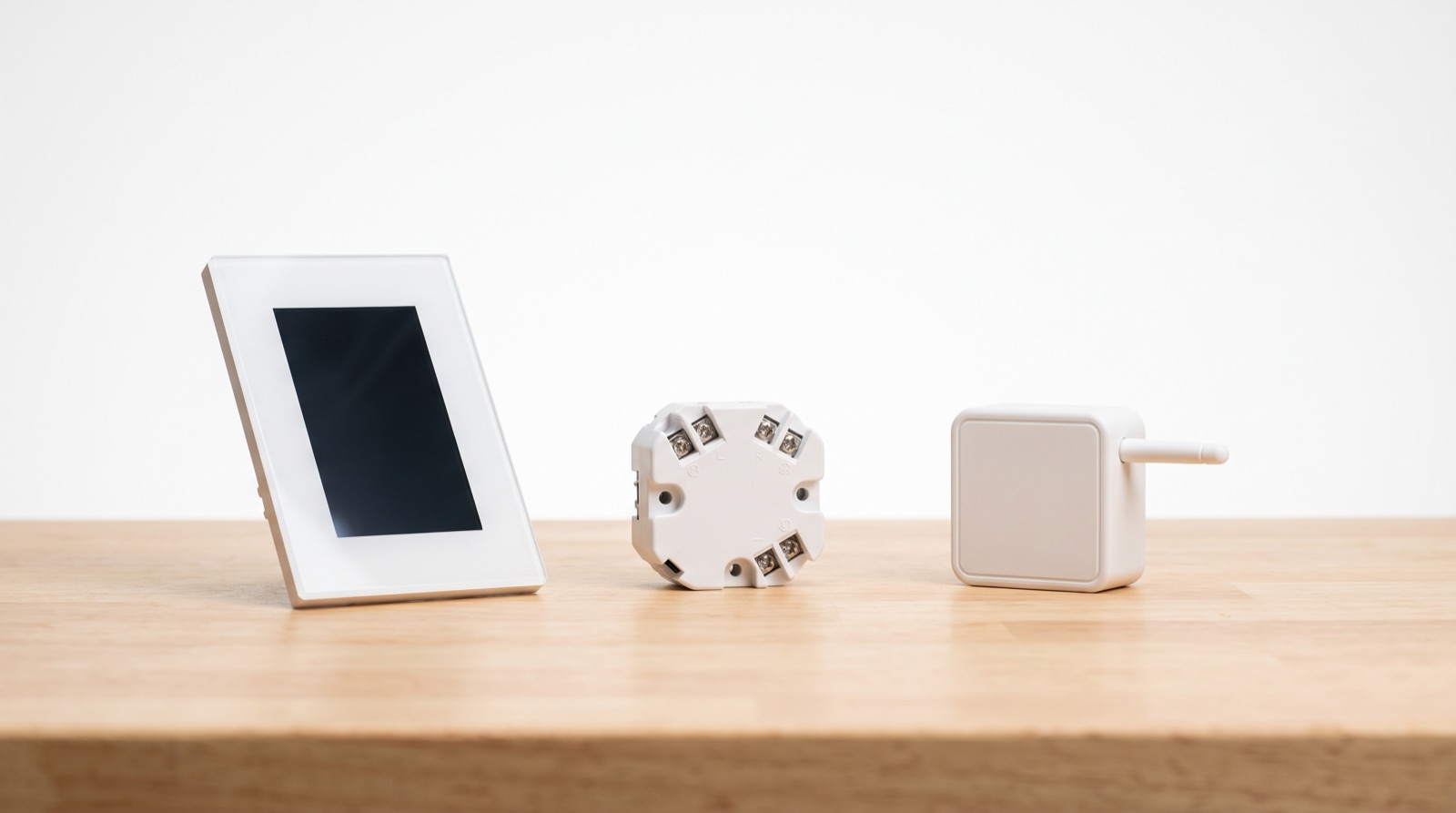
No neutral smart switch Malaysia: three honest routes when the box has no neutral - a no-neutral switch, a rewire, or a relay module at the ceiling rose.
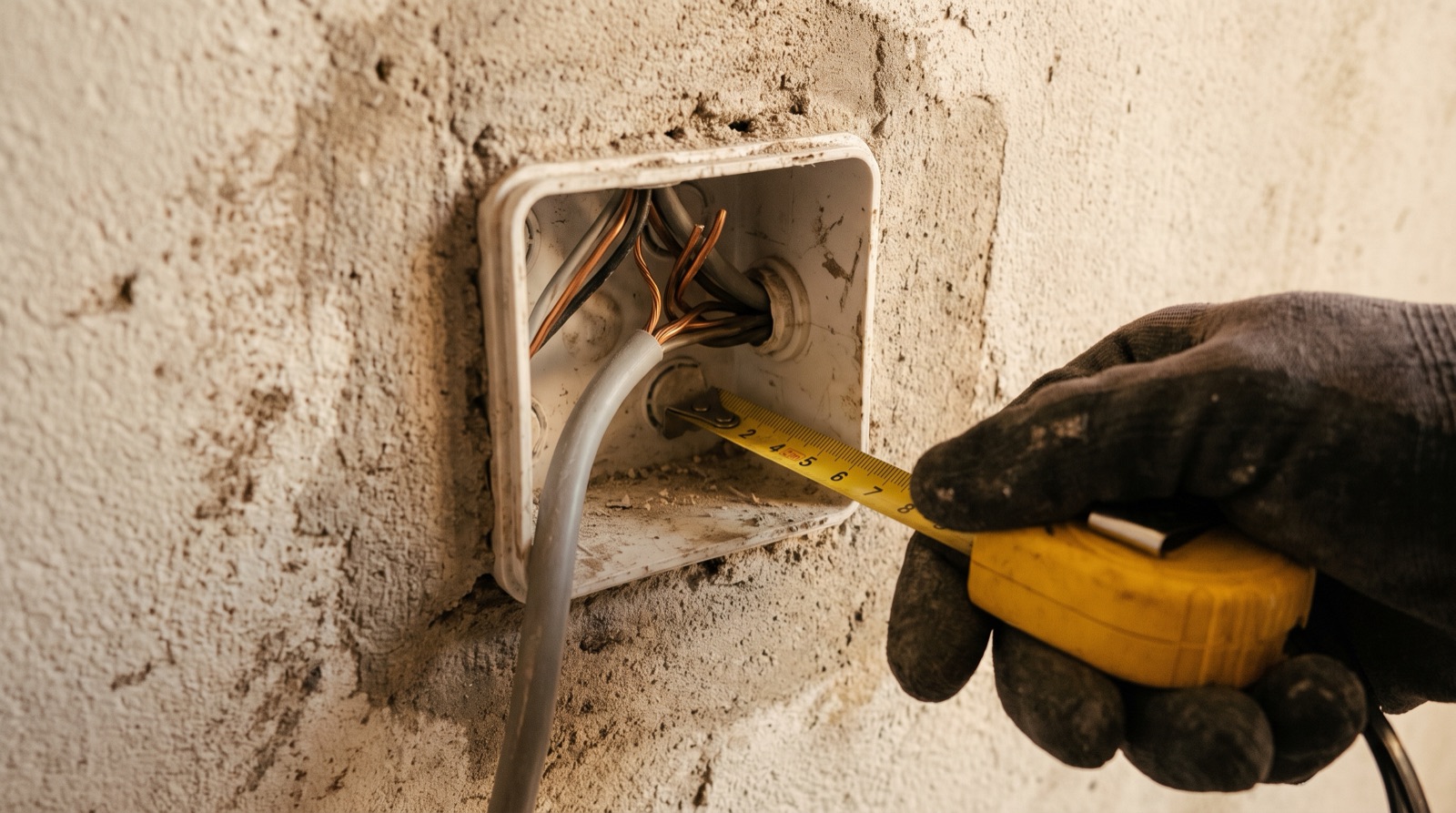
Smart switch back box Malaysia: shallow boxes are the second most common install failure after the neutral. How to measure the depth and the gang count.
Tell us about your space. Our B2B team will reply within one business day with a recommended setup and quotation.
WhatsApp us →
[email protected]
+603-5880 5486