







Does Your House Have a Neutral Wire? A Malaysia Smart Switch Guide
A neutral wire smart switch Malaysia guide: how to check whether your box has a neutral, why loop-in wiring leaves it empty, and what to do next about it.
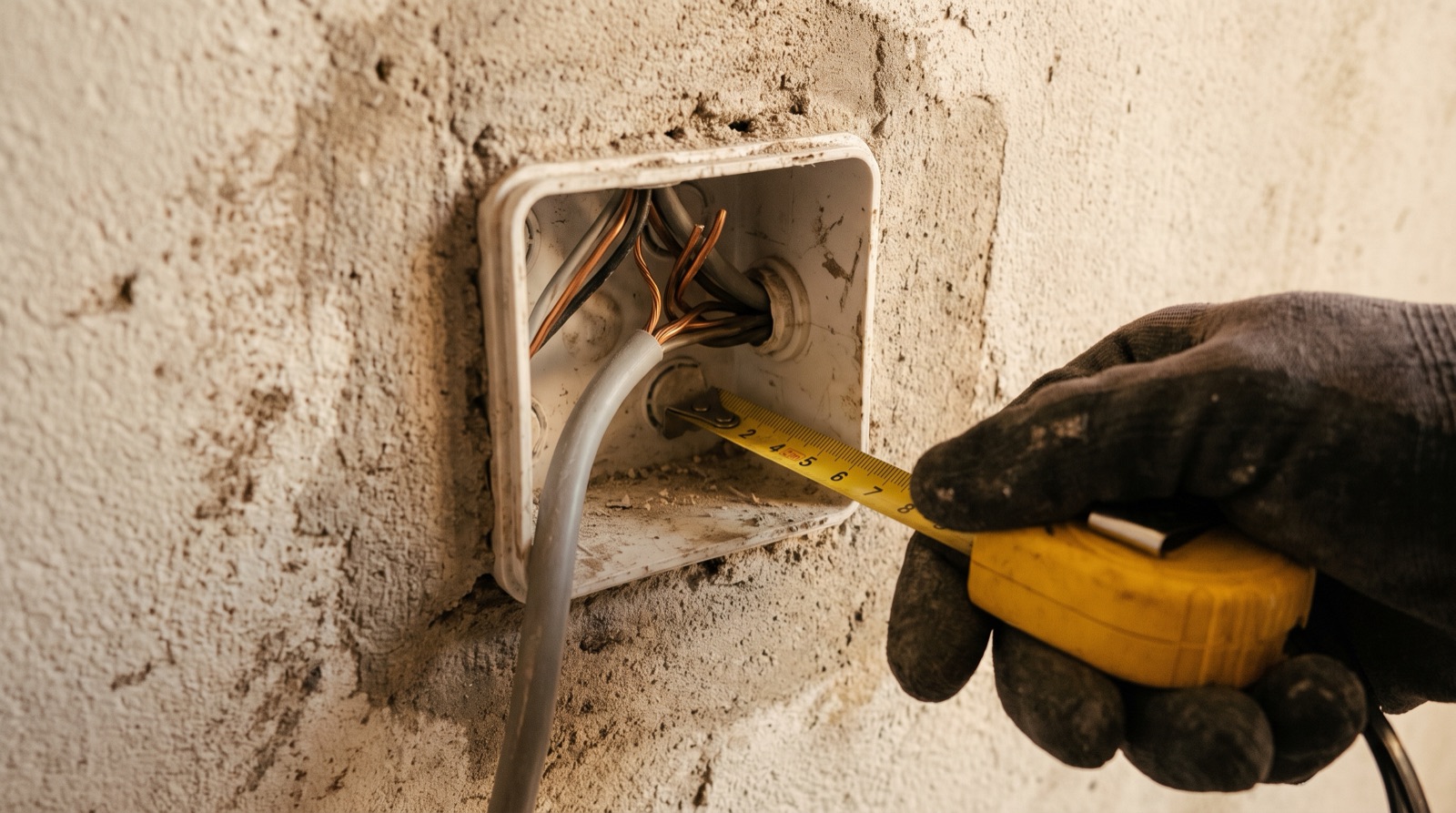
Answer up front — Many Malaysian back boxes are too shallow for a smart switch module once the existing conductors are pushed back in, even when the plate looks the right size. The failure shows up at install, not on the shelf. A site survey records the internal depth, the gang count and the conductor entries, so you know before anything is ordered whether you need a deeper box, a different module, or a surface-mounted panel.
You solved the neutral problem. The wireman runs a neutral, the box has live, neutral, switched live and earth, and everything is ready. The switch arrives. It goes into the box and the faceplate will not sit flat — or worse, it will not go in at all, because the conductors are already taking up the space where the module needs to be.
This is the second most common install failure in Malaysia after the neutral, and it is a purely physical problem. No amount of app configuration fixes it.
The standard box most Malaysian switch plates are built around is the 86 mm (8.6 cm) square back box. That format is compact, and it was specified for a mechanical rocker switch — which is a very small object.
A conventional smart switch is not a small object. It is a module with a relay, a power supply, a radio and a processor behind the rocker, and it needs to sit inside the box with the wires folded in around it. Where the old switch fitted with 20 mm to spare, the new one may need three times the internal depth.
The awkward cases:
You do not need to open the box to get a useful first reading, but the number is approximate until somebody opens it with the power off.
Write the numbers down. They are the difference between a ten-minute install and a wasted order.
| What the survey finds | What it means | The way through |
|---|---|---|
| Deep box, one gang, few conductors | Standard fit for a conventional smart switch | Fit the switch. Straightforward. |
| Shallow box, one gang, tight packing | Module will not sit flush with conductors inside | Deeper box, a shallower module, or a surface-mounted panel |
| One gang box, three-gang switch | Wrong physical footprint | Match the gang count to the existing box, or replace the box |
| Multi-gang box on a loop-in circuit with no neutral | Two problems at once | Resolve the neutral first, then re-measure the depth — a deeper box may still be needed |
| Plaster board box with almost no depth | Access is behind the plaster | Decide between cutting into the partition or a surface-mounted panel |
This one catches people more often than depth does.
If your existing plate has one switch and you buy a two-gang module, it will not sit on a one-gang box. If your plate is two switches and you buy a single-gang module, you will have a hole in the wall. The gang count has to match the box, not the number of lights you want to control.
The reverse also matters: a one-gang box is fine for a one-gang module, and a wider multi-gang module needs the matching multi-gang box behind it.
In the Aqara Malaysian range, the Panel Switch S100 (MP-K04D) is built around the 86 mm box — 8.6 cm square — in a three-gang format, grey or white, with Wi-Fi and Apple HomeKit support. The Smart Wall Switch Z1 Pro is a Zigbee switch built for the Southeast Asian wall box format, in several gang configurations. Confirm the current range and the plate format with us, and check the physical dimensions against your box before ordering.
If you have a gang count that nothing on the shelf matches, that is a real answer, and the survey will tell you so before you spend anything.
Two escape routes, and they are not equal.
Replace the box. The wireman cuts out the existing box and fits a deeper one — or a surface-mounted metal box on the face of the wall. It is a straightforward job on a brick wall, and it is the cheapest fix. On a plaster board partition it means cutting into the partition, which is more disruptive than it sounds.
Go surface-mounted. A wall panel that sits on the surface of the wall and does not need a box at all. It avoids the chasing completely, at the cost of the plate standing proud of the wall — fine in a utility area, obvious in a living room. Ask us which panels in the current range suit surface mounting before you plan around one.
The point of a proper survey is that the answer is written down before anything is bought. A surveyor working through your switch points records, for each one:
Five minutes per room, and it removes every expensive surprise from the project.
Measuring your own box is fine at the front of the wall. Anything past the faceplate — touching conductors, reaching into the box, rewiring it — is fixed electrical work. In Malaysia that must be done by a wireman registered with Suruhanjaya Tenaga, under the Electricity Supply Act 1994 (Act 588). A botched connection is a shock and fire risk, and unlicensed mains work that causes damage can void your home insurance.
Use a registered wireman, and check that any mains-powered product carries a SIRIM label and Energy Commission approval.
If the plate fits but the face does not sit flat, you need a deeper box. If the plate does not fit at all, you need the right gang count. If neither is possible, go surface-mounted. None of these are judgement calls — they are measurements, and the measurements are cheap to take before the shopping.
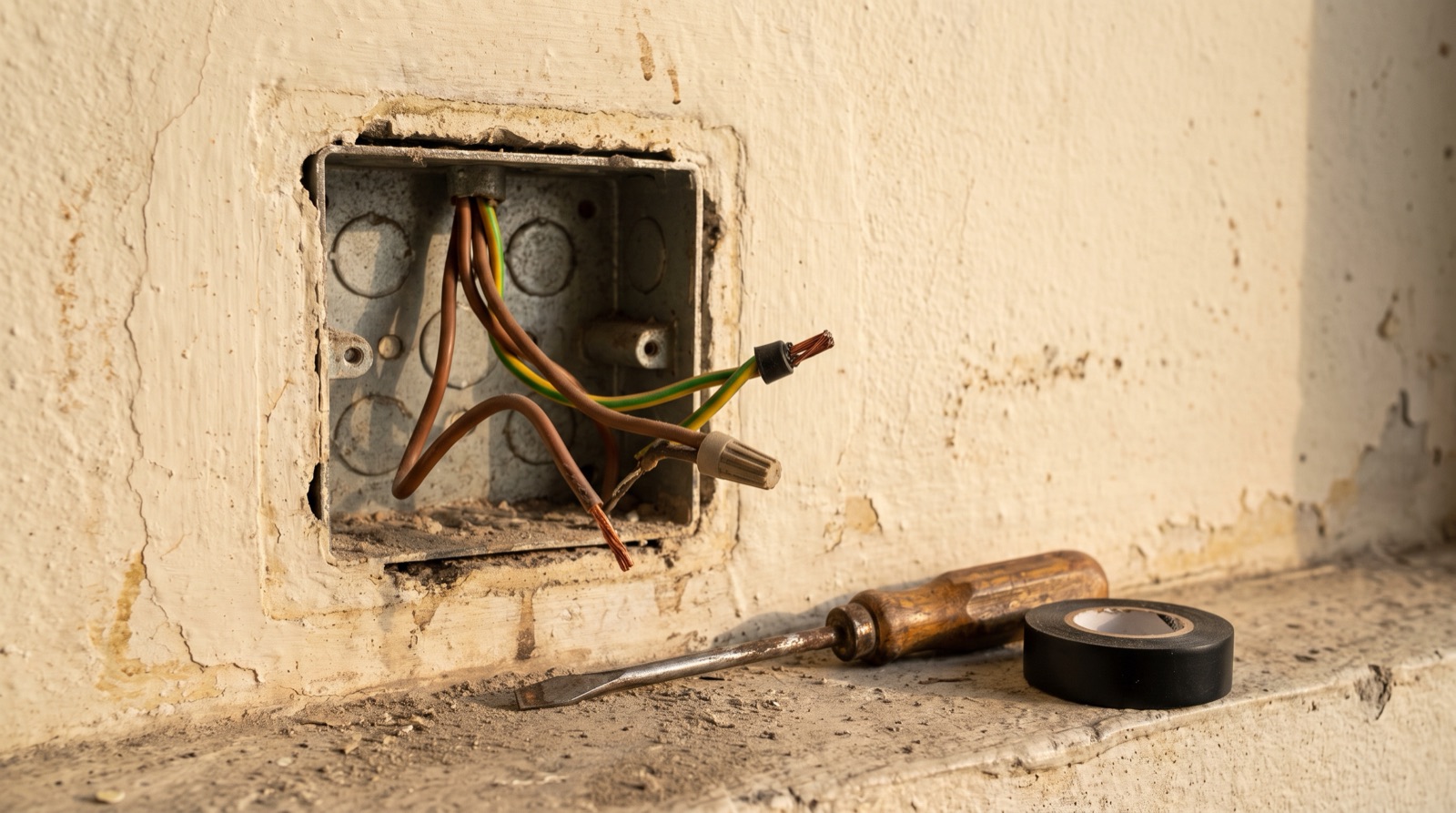
A neutral wire smart switch Malaysia guide: how to check whether your box has a neutral, why loop-in wiring leaves it empty, and what to do next about it.
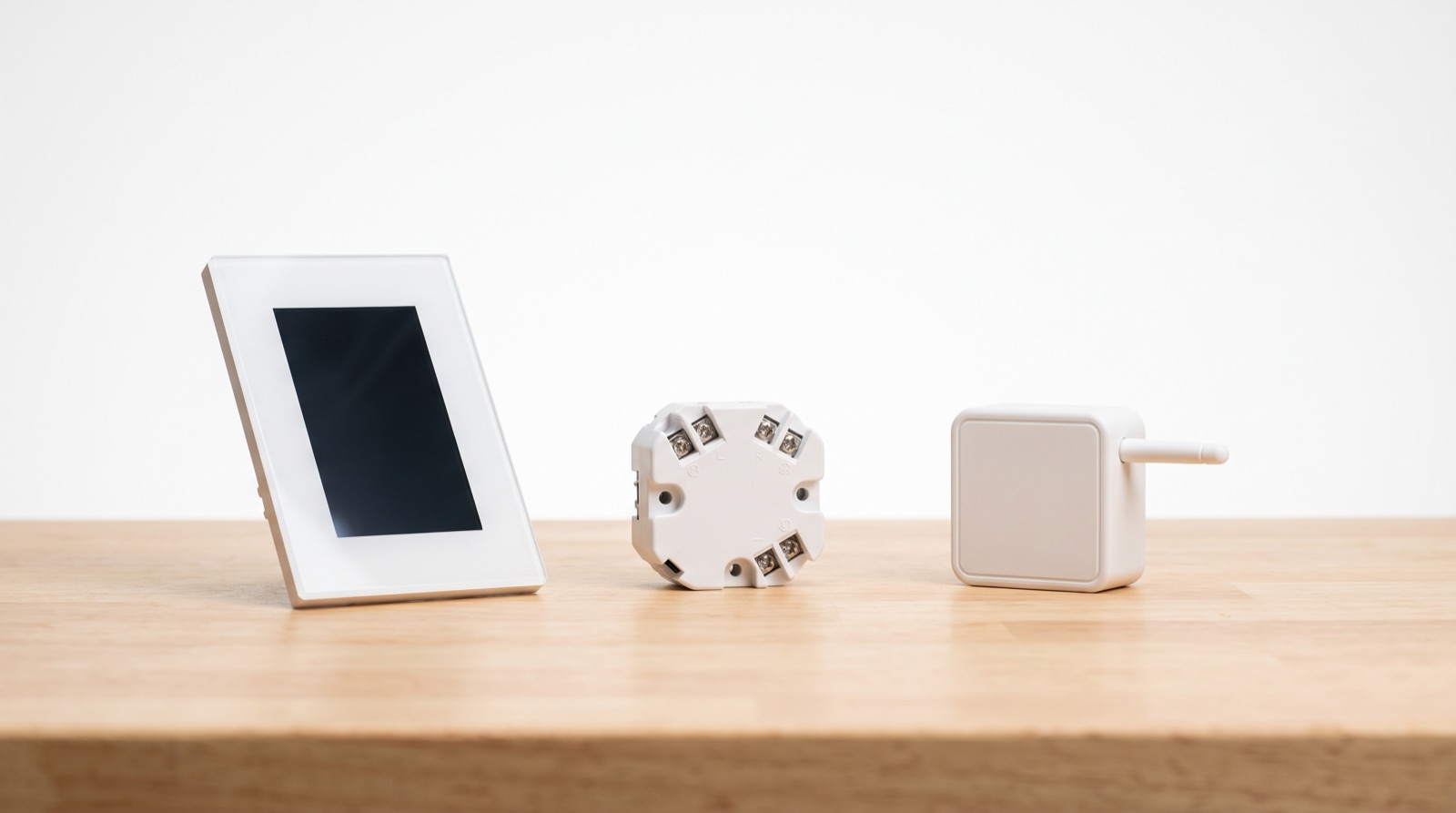
No neutral smart switch Malaysia: three honest routes when the box has no neutral - a no-neutral switch, a rewire, or a relay module at the ceiling rose.
Smart home retrofit Malaysia house type: what is easy, what is painful, and what it costs to start - terrace, shop lot, walk-up and new high-rise unit.
Tell us about your space. Our B2B team will reply within one business day with a recommended setup and quotation.
WhatsApp us →
[email protected]
+603-5880 5486