







Do you actually need a smart lock in Malaysia? Doors and gates
Smart lock Malaysia buying guide covering the Aqara D200i, U400 and U200 Lite, plus door thickness, battery failure and what your condo management allows.
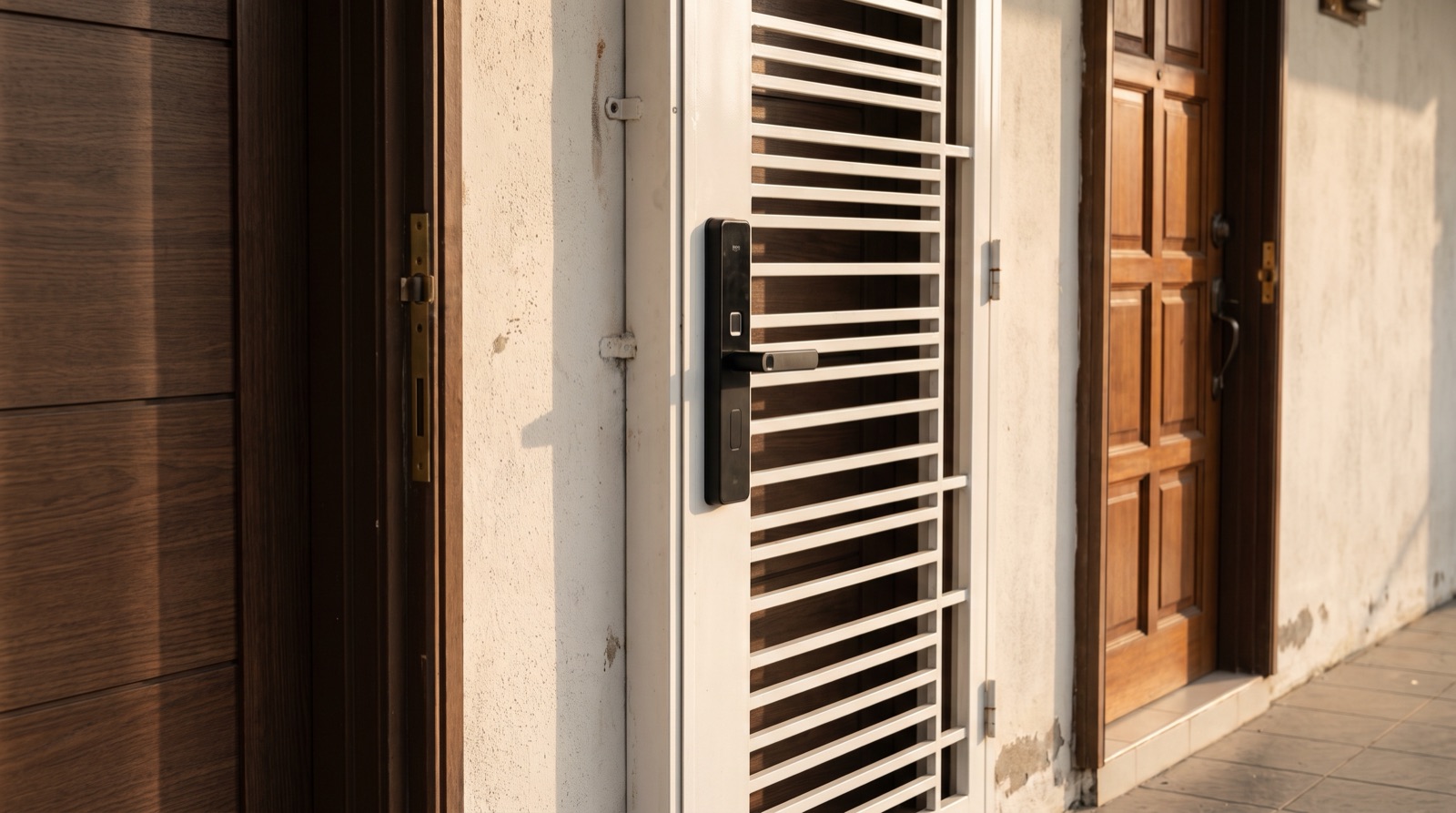
Answer up front — A smart lock install is a different job on each of three door types in Malaysia. A solid wood door usually takes a mortice lock cut cleanly. A metal security door is usually a retrofit onto the face, and the door face and handle position decide whether it works. A panelled door often needs a replacement leaf. Before anything else: check door thickness, frame clearance and whether there is a working manual override, and get condo management's written permission before you touch a main door.
Most of the callbacks in this category are not lock faults. They are door faults nobody checked before the lock arrived. At the survey, open the door and look at the edge, not the face — the edge tells you what the door is made of, how thick it is and what is already in it.
| Door type | Common in | Typical approach | What decides it |
|---|---|---|---|
| Solid wood | Landed and terrace main/back doors | Mortice the lock into the leaf, spindle through | Door thickness; solid core or hollow-core slab |
| Metal security door | Almost all Malaysian landed houses | Retrofitting onto the door face | Face thickness, existing handle position, swing direction |
| Panelled / composite | Condo main doors, newer replacements | Often a replacement leaf, or surface retrofit if the stile allows | Is there a solid stile wide enough, and clear space for the handle |
| Gate / grille | Car porch, side gate, letterbox | Surface mount on grille, padlock-style device | Bar diameter, mounting material |
These three decide whether the lock fits. Measure at the survey, not on install day.
Door thickness. Measure the leaf at three points — top, middle, hinge side — not once. Doors are not uniform, and one that has been planed or has swollen at the bottom gives three different answers. If the thickness varies enough to matter, that is a door to replace or to shim, and the client should hear it at survey stage.
Frame clearance and condition. Measure the gap between leaf and frame stops, and the gap at the strike side. The spindle has to travel freely and the bolt has to throw into the keep without the door being pulled or pushed — a door that must be manhandled to lock will still be manhandled in six months, and the client will blame the lock. Check the door closes on its own from half open, that the hinges are not sagging, and that the latch or deadbolt engages cleanly in the door's natural position. A smart lock on a door that does not close properly is a smart lock reported as failing. Fix the door first; it is almost always cheaper.
Dimensions, spindle sizes and cut-outs: do not take them off a drawing or a previous job. Confirm the cut-out, spindle and door thickness range for the specific model against the current datasheet before you commit the order.
Go mortice when the door has a solid stile wide enough for the lock body, the door is thick enough for the through-bolts, the client wants the cleanest look, and the existing lock is already being replaced.
Go retrofit (onto the door face) when the metal security door cannot be cut without compromising it, the thickness is outside the mortice range, the stile is too narrow, or cutting the door is something the client will not accept.
Replace the leaf when the panelled door has no usable stile, is badly warped, or cannot take a retrofit the client will live with. Say so early — a replacement door plus a mortice lock beats a surface-mounted lock on a panelled door that looks bolted on for ten years. On a metal security door, cutting can affect its rating, alignment and seal: that is a conversation with the client about their door, not a decision to make quietly on the day.
On a retrofit, the face of the door is the design canvas and the client will judge the result on it.
A frequent and avoidable decision point: the existing metal security door may have a single-cylinder deadbolt, a double cylinder, or a lever-and-bolt set. Ask what the lock is replacing and what stays. If it replaces the whole set, the deadbolt behaviour changes — no keyhole if the battery dies, and a different feel on the inside thumbturn. If it is added alongside the existing deadbolt, confirm the two can physically coexist on that leaf before ordering. Do not assume a mortice lock preserves the old deadbolt's behaviour; the client's mental model of "my door is still secure if the smart thing fails" needs correcting at the survey.
Every smart lock will have a day when the batteries are flat. That is the design, not a defect, and the client needs it on install day, not at 11pm on a Sunday. Cover four things: the mechanical key is real and overrides the electronics — show the client where it is stored, hand it over, record it in the handover, because "in the drawer" that nobody knows which drawer is the failure case; battery warnings become the client's responsibility once they leave, and saying so plainly is not being preachy; when it dies, fit the key, get in, change the batteries — give them the honest outage duration for that model from its documentation rather than a battery life figure from memory; and agree the key count, who holds them, and whether they want a restricted set.
A client told "if it dies you use the key, and the key is in this specific place" does not call you at midnight. A client told "it basically never happens" does.
| Model | Best fit | Watch point |
|---|---|---|
| Aqara Smart Lock D200i | Main door where the client wants face recognition alongside fingerprint, PIN and NFC; infrared camera works in the dark | Full-length mortise body, so the door must take the cut-out; runs on a replaceable rechargeable battery, so agree the charging routine; and a privacy conversation the client must be part of |
| Aqara Smart Lock U400 | Main or side door where the client wants it to unlock as they approach, with no biometric enrolment at all | Approach unlocking needs the position set properly at commissioning, and it will unlock for anyone approaching |
| Aqara Smart Lock U200 Lite | Classic doors, interior doors, secondary doors where the client wants the simplest durable option | Fewer unlock methods; check it meets what the client actually needs |
Ask us for current pricing, stock and specification before you quote.
The D200i records and performs face recognition, and in Malaysia the Personal Data Protection Act 2010 (Act 709) applies to that. Do not assert specific obligations, amendments, phase dates or penalties from memory — that is not something to improvise on a doorstep. Instead, before the order: tell the client plainly that the device performs face recognition, has an infrared camera and works at night; explain that enrolled faces are stored on the device and anyone in front of it can be captured, so the household must decide what happens with visitors, domestic helpers and delivery riders; recommend they confirm the compliance position for their own household before the system goes live; and record in the handover that they were informed in writing and what they decided.
For the wider picture — SIRIM labels, Energy Commission approval, the Act 447 registration requirement and the PDPA side — see SIRIM, Suruhanjaya Tenaga and PDPA compliance.
This is the part integrators leave to the client, and it is where the install gets judged. Enrol the client in front of you, on the actual lock, in the actual lighting — a fingerprint enrolled in a demo on a table behaves differently from a finger on a cold metal reader in a wet morning. Enrol every household member who will use it, including the sceptics and especially anyone with less typical fingertips: children, older users and rough or worn fingers may need two or three attempts and a different finger. Add a second finger per person where the model supports it, test every enrolled finger on every unlock method at the actual door in the dark and in daylight, and show the client how to delete a fingerprint — a household that cannot revoke access is a household that stops using the feature. Record the enrolled user count in the handover.
For a condo main door, a metal security door at a ground-floor unit, or a common-area door, get written permission from the management corporation before ordering anything. Some buildings restrict what may be fitted to the main door, some require a specific fire-rated or escape-compliant door assembly, and some will not accept a retrofit at all. A lock fitted without permission is a lock the client has to remove at their own cost. Raise it at the survey, get the response in writing, and attach it to the job file. The condo-side integration view is in integrating Aqara into condo property management.
Per door: door type and thickness measured, approach used, handle and keypad positions as installed, mechanical key count and where they are stored, battery type, enrolled users and how to add or remove them, written management permission where applicable, and the client's acknowledgement of the face-recognition disclosure where a biometric model was fitted. The general commissioning sheet and walkthrough process are in smart home commissioning and handover testing. If the client has not yet decided whether a lock is worth it, that argument is in do you actually need a smart lock in Malaysia — read it before the survey, not after.
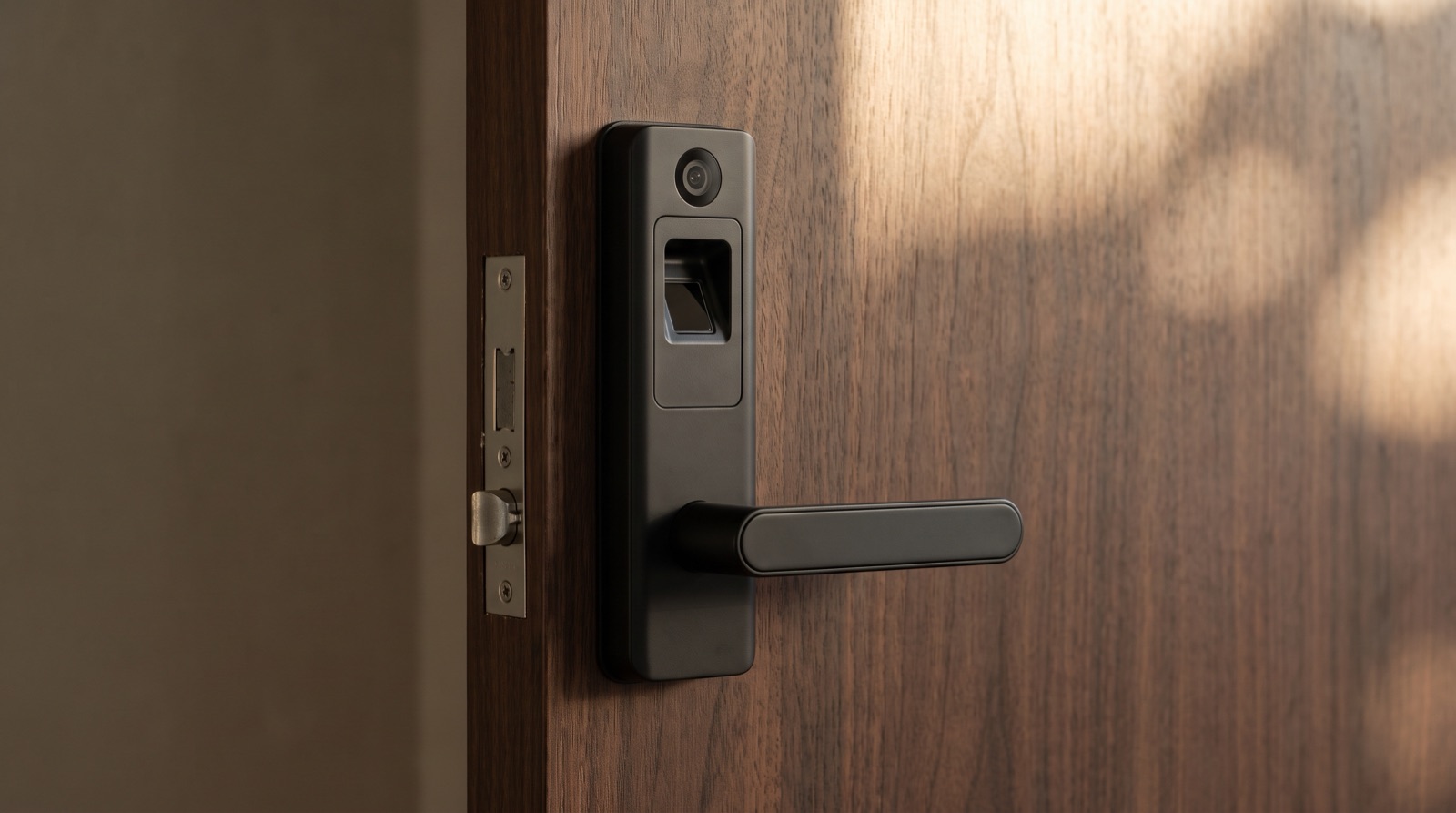
Smart lock Malaysia buying guide covering the Aqara D200i, U400 and U200 Lite, plus door thickness, battery failure and what your condo management allows.
A sirim smart switch malaysia compliance guide — what to check before buying mains-powered gear, who may do the wiring under Act 447, and where PDPA applies.
A smart home commissioning checklist Malaysia guide: a per-room test sheet, cold-start automation checks, load tests, board marking and handover pack.
Tell us about your space. Our B2B team will reply within one business day with a recommended setup and quotation.
WhatsApp us →
[email protected]
+603-5880 5486