







Smart Building Capex, Opex and Service Charge in Malaysia: Who Actually Pays
Smart building capex, opex and service charge in Malaysia explained: the landlord and tenant boundary, capital or operating spend, and a responsibility matrix.
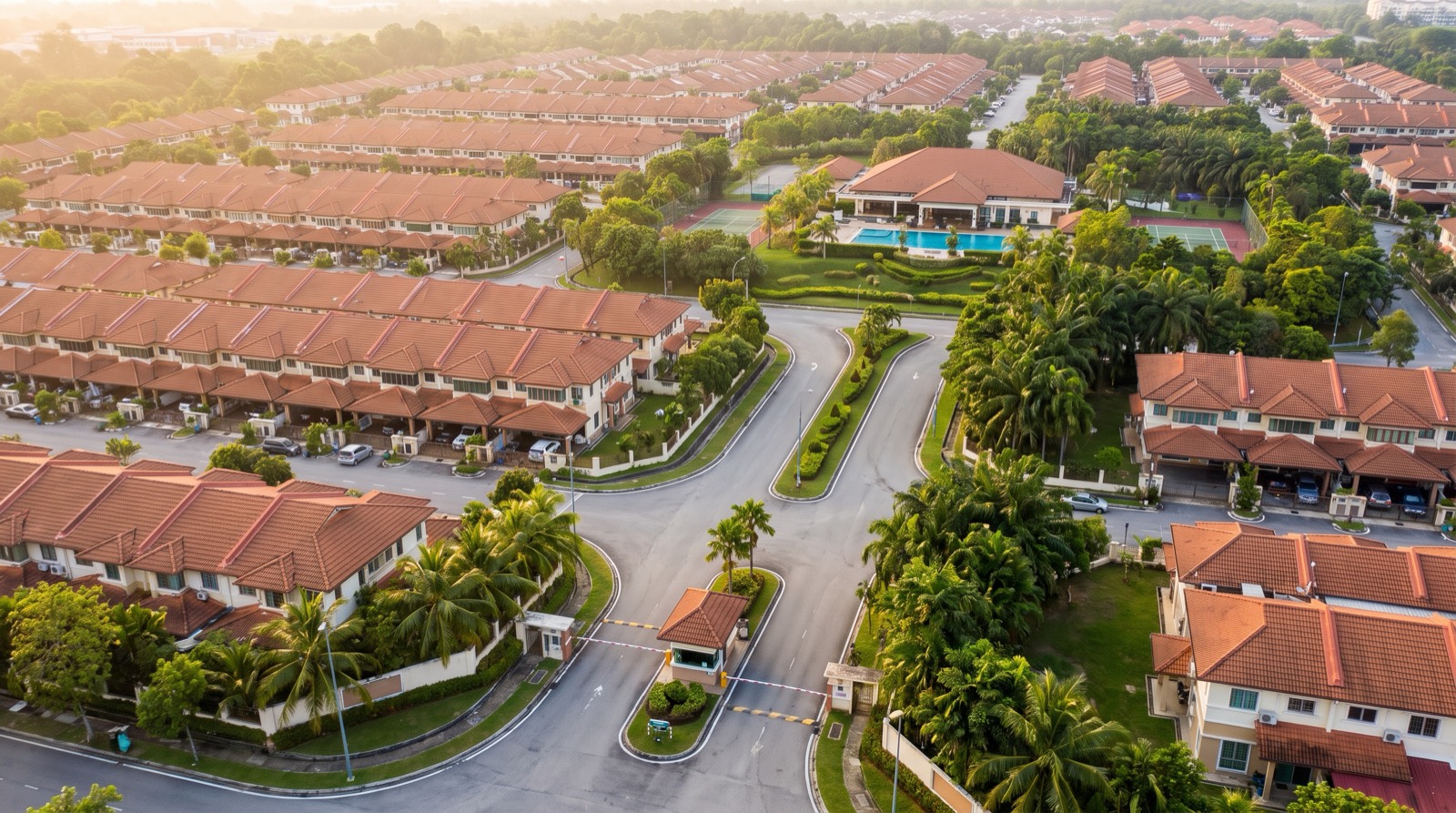
Answer up front — A township's smart infrastructure has to survive the developer leaving, and that is the whole design constraint. Gate access, guard-house operations, common-area lighting and landscape, and clubhouse and pool areas each have a different owner and a different replacement cycle, and the handover documentation is what decides whether any of it keeps working. Turnover, not technology, is the failure mode that ends township systems.
The show unit is a display problem. A township is not — it is a maintenance problem wearing a sales problem's clothes.
A gated community scheme accumulates infrastructure that nobody lives in: a guard house operating around the clock, a vehicle barrier, perimeter and landscape lighting, a clubhouse, a pool plant room, a multipoint tap or comms room, and a car park. Each of these runs on a schedule, each has a consumable, and each was specified by somebody who will have left the project before the last resident moves in.
The design question is not "how do we make this smart". It is who is holding the screwdriver in year seven.
| Zone | Who owns it after handover | What automation is realistic | What fails first |
|---|---|---|---|
| Main gate and vehicle barrier | Management corporation, with an operator on shift | Visitor logging, access credentials, a notification when the barrier faults | Anything the barrier vendor owns, which is not our scope |
| Guard house interior | Management corporation | Lighting and aircon that respond to whether anyone is at the desk | The desk PC and the visitor log, because nobody updates them |
| Perimeter and landscape lighting | Management corporation | Time and astronomical schedules, plus fault reporting | Lamp drivers and photocells, which are ordinary maintenance |
| Clubhouse and pool | Management corporation, on a booking system | Occupancy-driven aircon and lighting in the hall | Water-side equipment, which has nothing to do with sensors |
| Car park and visitor bays | Management corporation | Occupancy-driven lighting at low levels | Floodlights on a timer that somebody set once |
| Inside the house | The resident | Almost anything they want | Their own doing |
| Open drains, play areas, roadside verges | Often nobody, or the local authority | Very little without a named owner | Whatever nobody owns |
Read the last row carefully. In a township the most visible automation is usually in the zones with the least named accountability, and the zones with the clearest ownership are the ones a developer is tempted to leave alone.
Be precise about what is and is not in scope. The vehicle boom barrier, the intercom, the visitor management system and the card readers at the gate are a different procurement from the smart-home and building devices in the houses. They come with their own vendor, their own maintenance contract and their own failure modes.
What the residential side can usefully contribute is the guard house interior itself — often a small, hot, poorly ventilated room occupied for a twelve-hour shift, and a good candidate for occupancy-driven aircon and lighting, a temperature and humidity reading, and a local hub that keeps working when the fibre drops.
Two honest constraints:
Visitor data at the gate is personal data. A log with names, plate numbers and timestamps raises questions under Malaysia's Personal Data Protection Act 2010 that the operator should settle with someone qualified to advise on it, before the system goes live rather than after.
This is where a township quietly spends money every month, and where the case for scheduling is straightforward.
The failure mode is not "the lights are wrong". It is that landscape and perimeter lighting is almost never re-timed after a landscape redesign, a road regrading or a change to the surrounding street lighting, so a scheme runs three different lighting philosophies at once and nobody can say which is intentional.
Worth specifying at design stage: an astronomical or time-based schedule with a defined override, a documented manual override at the guard house, and — most usefully — a fault report that reaches a person. A light that fails silently on a perimeter path is a safety matter, and it stays a safety matter until somebody is told.
For the plant room and pump house, a scheduled temperature and humidity reading is cheap and genuinely useful. For drainage and monsoon response, say plainly that we automate what we can see and cannot promise a response to a storm that takes the site offline.
Clubhouses are the most over-specified zone in most townships and the easiest to get right with very little technology.
The realistic scope is narrow: occupancy-driven aircon and lighting in the function hall, so the room is not cooled for a booking that was cancelled, and a record of whether the space is actually used.
Two limits worth stating. A presence sensor in a hall tells you the hall is occupied. It does not tell you how many people are in it, who booked it, or whether the booking was honoured. And pool and water-side plant is out of scope for room automation entirely — it has its own controls, its own specialists and its own regulatory considerations.
The honest output is a booking-versus-attendance number, and that is worth more to the management corporation than any lighting scene.
A township has to resolve this in writing, in the sales document, before the first handover.
A resident will install their own hub, pair their own phones, and expect their house to work without asking anyone. That is not a conflict in itself — Aqara's room-level hardware is designed to sit inside one home, and the common parts can run on a completely separate system with separate hubs and separate credentials.
The conflict is about the two things that cannot be separated:
| Question | The answer that works |
|---|---|
| Does the shared system reach inside the house? | It should not. Keep the boundary clean |
| Who owns a device in the common parts? | The management corporation, always, with a named contact |
| Who owns a device inside a house? | The resident, from the day they take possession |
| What happens when a resident resells? | The resident removes their own devices; the common parts are untouched |
| Can a resident automate the gate or car park from home? | Only if the corporation has explicitly allowed it and someone maintains it |
| What does the developer leave behind? | Documentation, not hardware, is the durable asset |
The line that gets crossed is the gate. If residents are told they can open the gate from their phone, then the gate system becomes a shared system that individual households now depend on, and when it fails at 11 p.m. the management corporation answers to 300 households instead of one.
There are two turnovers, and developers tend to prepare for the first and forget the second.
Organisational turnover. The project team leaves. The building passes to the management corporation, or to a facilities contractor, or — for a large township — to an operator appointed years later by a committee. The knowledge of how the system was configured, why a particular automation exists, and which device does what, leaves with the people who built it. This is solvable, but only with documentation written at the time.
Resident turnover. A township resells houses for thirty years. A house sold in 2038 comes with whatever the previous owner left — sometimes nothing, sometimes a half-installed system, sometimes a hub with a stranger's phone number on it. If your sales material implied a smart home, the resale conversation is where the mismatch surfaces.
A third turnover that gets missed: device turnover. The U300 runs on 4 × AA batteries, so a battery swap is a resident task with a date attached. Battery-powered sensors are the same. Any handover document that does not say who replaces batteries, and when, has not finished the job.
A short list, and it is the list we would want to receive:
At township scale the question stops being "is this room occupied" and becomes "which of our sites needs attention tonight".
Synchroweb's Omaya platform works across four streams — People, Devices, Environment and Space — and the two that matter most for a township's turnover problem are Devices and Environment. Device inventory with health, firmware, last-seen, battery and location means a failing sensor somewhere in a 2,000-unit scheme becomes a named item on a list instead of an anecdote from a resident. It is described as covering twelve gateway vendors on one screen, and it integrates with Dusun IoT access points and Mokosmart and Minew sensors — which matters when a township has inherited equipment from more than one previous vendor.
That is a different job from the sensors inside a house, and it is the job that survives the developer leaving.
Smart building capex, opex and service charge in Malaysia explained: the landlord and tenant boundary, capital or operating spend, and a responsibility matrix.
Smart building bulk device deployment in Malaysia: pilot a floor first, keep asset records, treat turnover and firmware as operations, and hand over properly.
A show unit smart home package malaysia guide: what the demo proves, what the buyer inherits at handover, and what the management corporation inherits.
Tell us about your space. Our B2B team will reply within one business day with a recommended setup and quotation.
WhatsApp us →
[email protected]
+603-5880 5486