







BMS and Smart Building IoT in Malaysia: Where Aqara Ends, Omaya Begins
BMS Malaysia and smart building IoT explained: Aqara is room-level, Omaya is site-level. Where each one ends, and why a building needs neither everywhere.
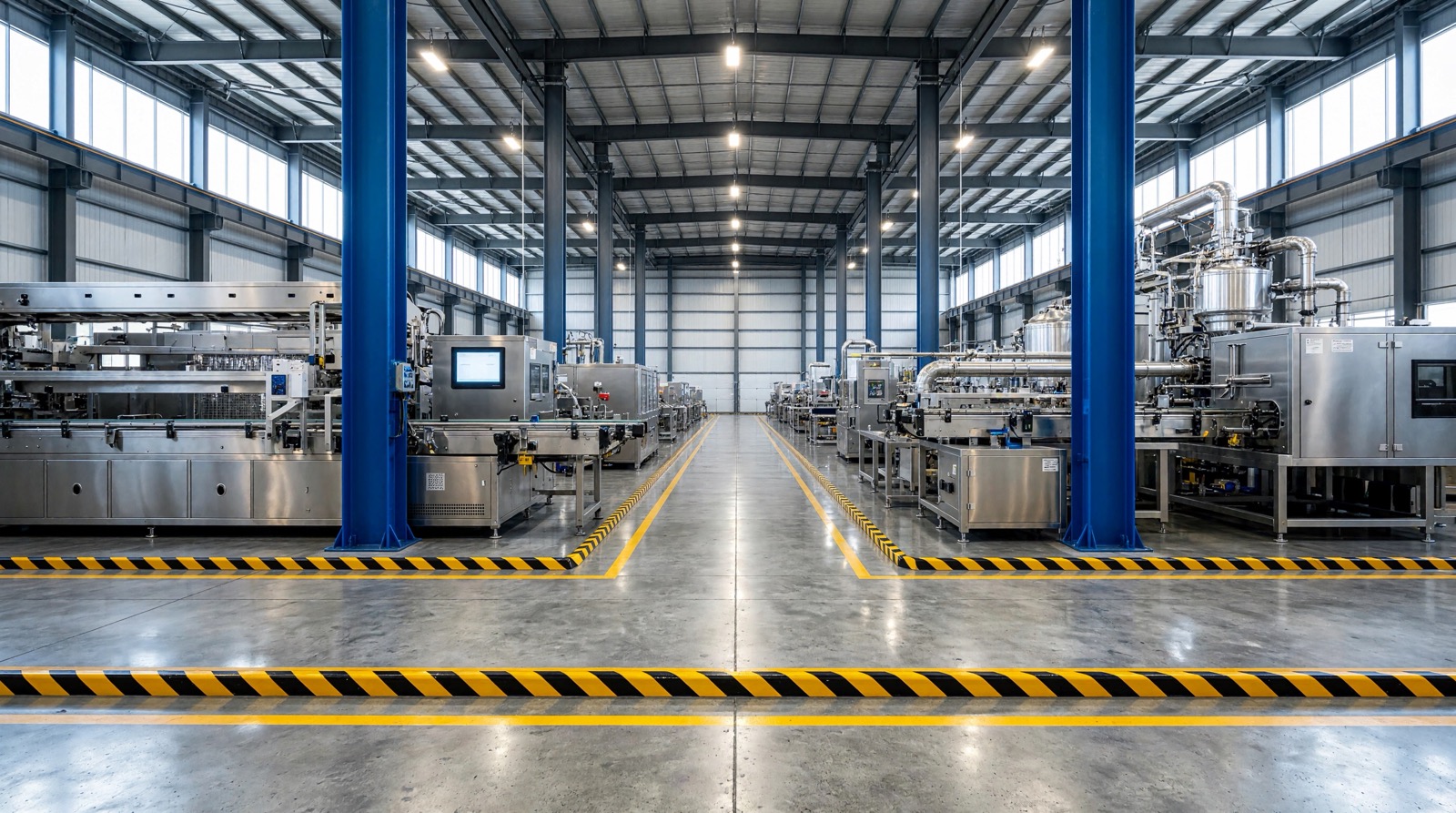
Answer up front — Aqara is a room-level product line, and a factory floor is not a room. What Aqara covers in an industrial site is useful: lighting and high-bay lighting control, loading-bay and access control, perimeter door and gate monitoring, environment monitoring for temperature, humidity and water leak, presence sensing in equipment areas, and occupancy-driven energy control in the offices and canteen attached to the plant. What it does not cover is equally clear: machine condition monitoring, vibration analysis, process control, and anything needing a certified industrial I/O bus. A smart system here does not replace a certified fire alarm, a machine guard interlock or a safety-rated system.
This is for a plant manager, facilities lead or owner-operator deciding whether an industrial site can be instrumented usefully, and what to instrument first. It includes the boundary, because a buyer told a consumer smart-home line covers the plant floor will find out the hard way.
Aqara devices answer a room-level question: is this space occupied, what is the temperature in it, is that door open. That is meaningful on a plant, but it is a different question from "is the plant running well".
A factory is also not one space: a production hall, machine bays, stores, a loading bay, offices, a canteen and a plant room, each with different light, heat and rules. Instrumenting them as one is how projects go wrong.
| Area of the site | Aqara coverage | Notes |
|---|---|---|
| High-bay and area lighting | Lighting circuit switching and scheduling | Limits in section 5 |
| Loading bay and shutters | Contact sensing, scheduling, access events | No shutter motor control |
| Perimeter doors and gates | Contact sensors, gate locks, cameras | Section 8 |
| Plant room and stores | Temperature, humidity, water leak | Strong coverage |
| Equipment areas | Presence and motion sensing, object monitoring | Placement decides |
| Offices and canteen | Occupancy-driven lighting and air-conditioning | Clearest return |
| Machine condition and process control | Not covered | Needs certified instrumentation |
If a proposal mixes these with Aqara devices, ask which of the four is doing the machine work. Usually a certified system is doing it and Aqara is doing the building.
A smart building system does not replace a certified fire alarm system, a machine guard interlock, a safety-rated control system, emergency lighting or a certified gas detection installation. Those are life-safety systems, certified and inspected as such.
Aqara does publish smoke and gas detectors: the Smoke Detector has an 85 dB alarm and a battery stated at up to ten years, and the Smart Gas Detector watches for methane with an 85 dB siren. Treat them as supplementary alerting devices. Aqara publishes no certification status for these models — confirm with us and with your fire safety consultant — and they do not join a certified fire alarm network.
Aqara is the room-level layer. It puts a light on when somebody walks into an aisle, reports the storeroom at 34 °C, records the loading bay shutter opening at 3 a.m., and keeps working locally when the site link drops.
Omaya is the site-level layer. Synchroweb's own platform answers what a room device cannot: how the site is used across shifts, who is in which zone, which devices are unhealthy, and what needs attention tonight. Published capability includes roll call, lone-worker check-in, panic buttons, after-hours intrusion detection, environment monitoring with evidence-ready logs, and 30 report types — plus 12 or more gateway brands on one screen and any LoRaWAN gateway via ChirpStack.
The rule of thumb: a room sensor is an input; a site platform is what makes an input useful. Aqara presence versus Omaya occupancy sets that boundary out in full.
If the high-bay lighting sits on a contactor board, the automation belongs at the board, not at the luminaire.
This is the failure mode that gets a project withdrawn six months later.
A motion sensor in a production hall does not distinguish a person from a forklift. The Motion Sensor P1 detects movement across approximately 170° at about 7 m, with three sensitivity levels and a detection timeout adjustable from 1 to 200 seconds, and it reports illuminance so a rule can run only when the hall is dark. A conveyor or pallet truck will trigger it. The Motion and Light Sensor P2 is the Thread-based equivalent, with a built-in illuminance sensor, needing no Aqara hub where a Thread border router is present.
The Presence Sensor FP2 goes beyond movement — it splits a room into zones and detects up to five people at once across a room of up to about 40 m², with a built-in light sensor. It connects over Wi-Fi 2.4 GHz and Bluetooth 4.2 and needs no hub. It is a room instrument, and a production hall is not a room.
So: do not put presence-driven lighting control on an aisle where machinery moves. Put it where a person is the only moving thing — the office, the canteen, the walkway to the gatehouse. Installing Aqara presence sensors: placement covers the geometry.
After-hours intrusion, denied badge and lone-worker check-in are covered in access control and after-hours operation.
A plant runs shifts, and the automation has to know which one is running. Two mechanisms do that without a full site platform: a time schedule per shift pattern, and an occupancy signal that overrides the clock — the office is occupied at 22:00 because somebody is in it.
A first phase that tends to survive contact with reality:
On the production line itself. If the requirement is to know whether a machine is healthy, this product line is the wrong instrument. Nothing here reads vibration spectra, motor current, thermography or process setpoints.
In a hot, dusty, high-bay hall. The published operating ranges are the constraint. The FP2 stops at 40 °C and the Single Switch Module T1 at 35 °C. A plant room in the afternoon can exceed both, and a consumer sensor in that position fails in a way that looks like a network problem.
Where nobody owns the alerts. Instrumentation does not create an operating discipline. If no one owns the alerts, after-hours intrusion notifications will train the duty engineer to ignore them. Decide who acts before you install.
Tell us about the plant and we will propose a site survey and a phased scope, including the parts we think you should not instrument.

BMS Malaysia and smart building IoT explained: Aqara is room-level, Omaya is site-level. Where each one ends, and why a building needs neither everywhere.
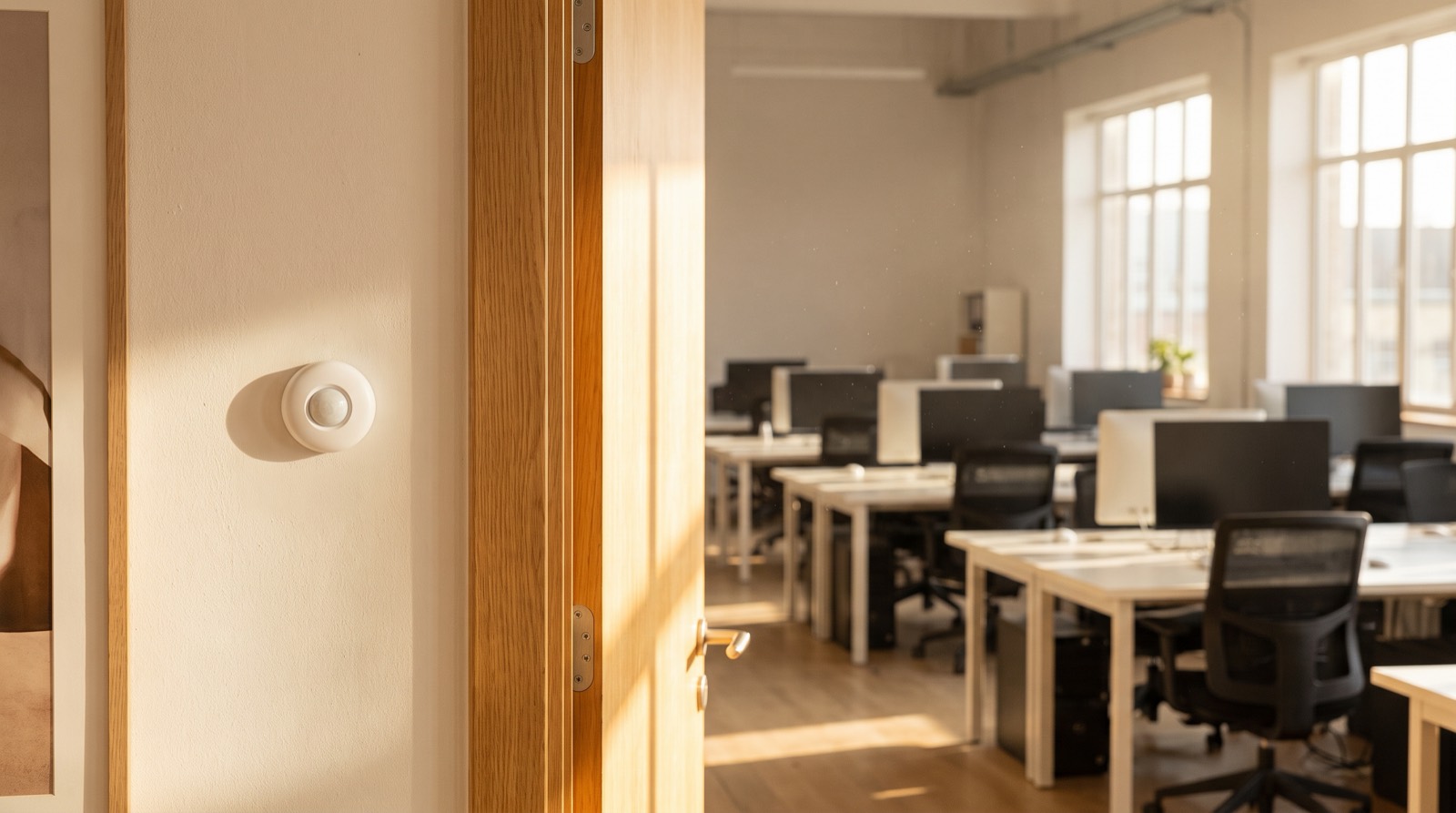
Aqara presence vs occupancy analytics: room sensors answer is anyone in this room, site-level platforms answer how a site is used. Neither replaces the other.
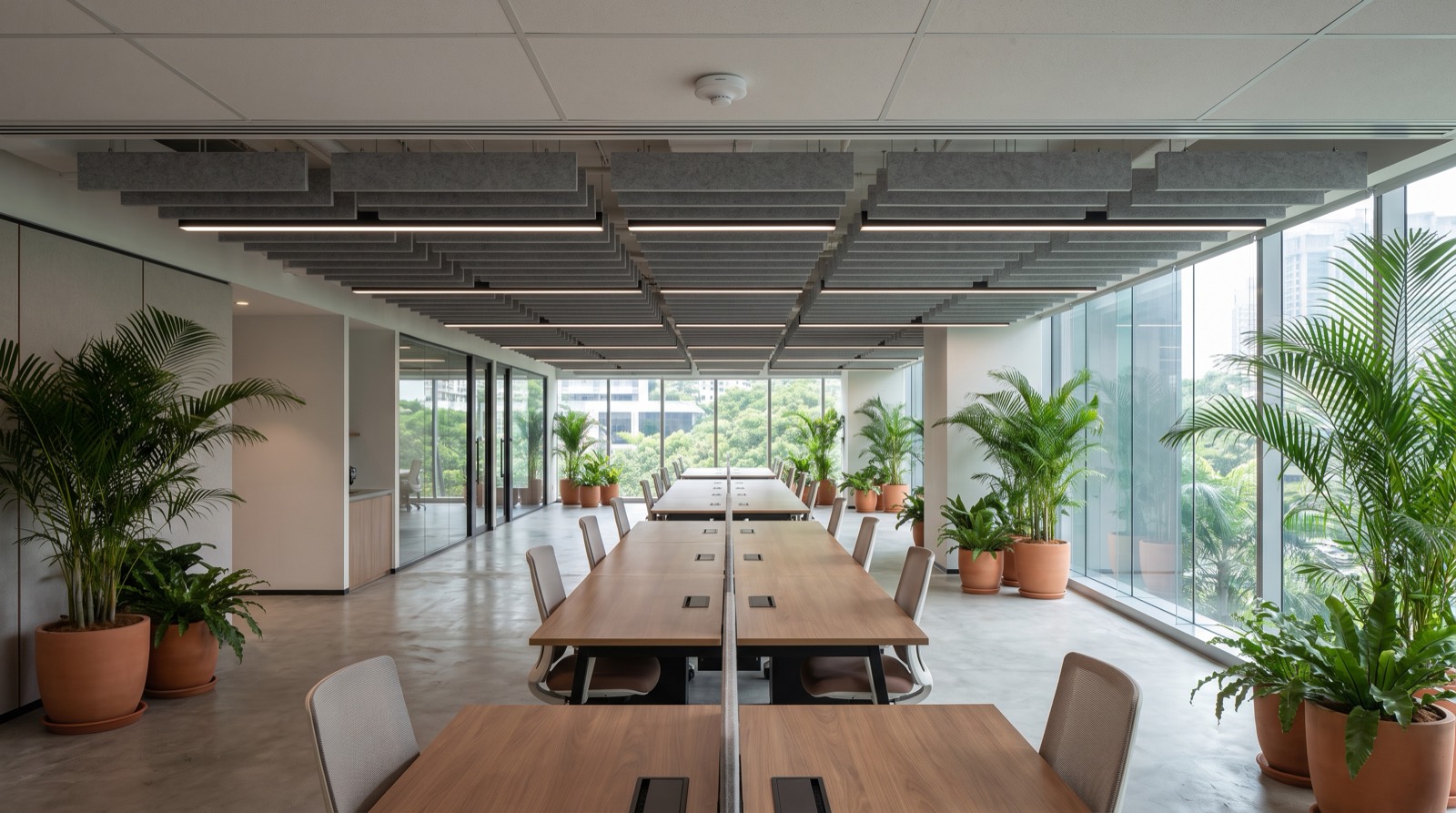
Office occupancy sensor Malaysia: a buyer's guide comparing PIR and mmWave, coverage maths at 2.7 m and 3.6 m ceilings, and the PDPA questions to ask.
Tell us about your space. Our B2B team will reply within one business day with a recommended setup and quotation.
WhatsApp us →
[email protected]
+603-5880 5486