







Smart Hotel Room Automation in Malaysia: What Operators Actually Buy
Smart hotel room Malaysia guide: the device decisions per guest room, what the guest controls against what staff control, the cooling load and PDPA duties.
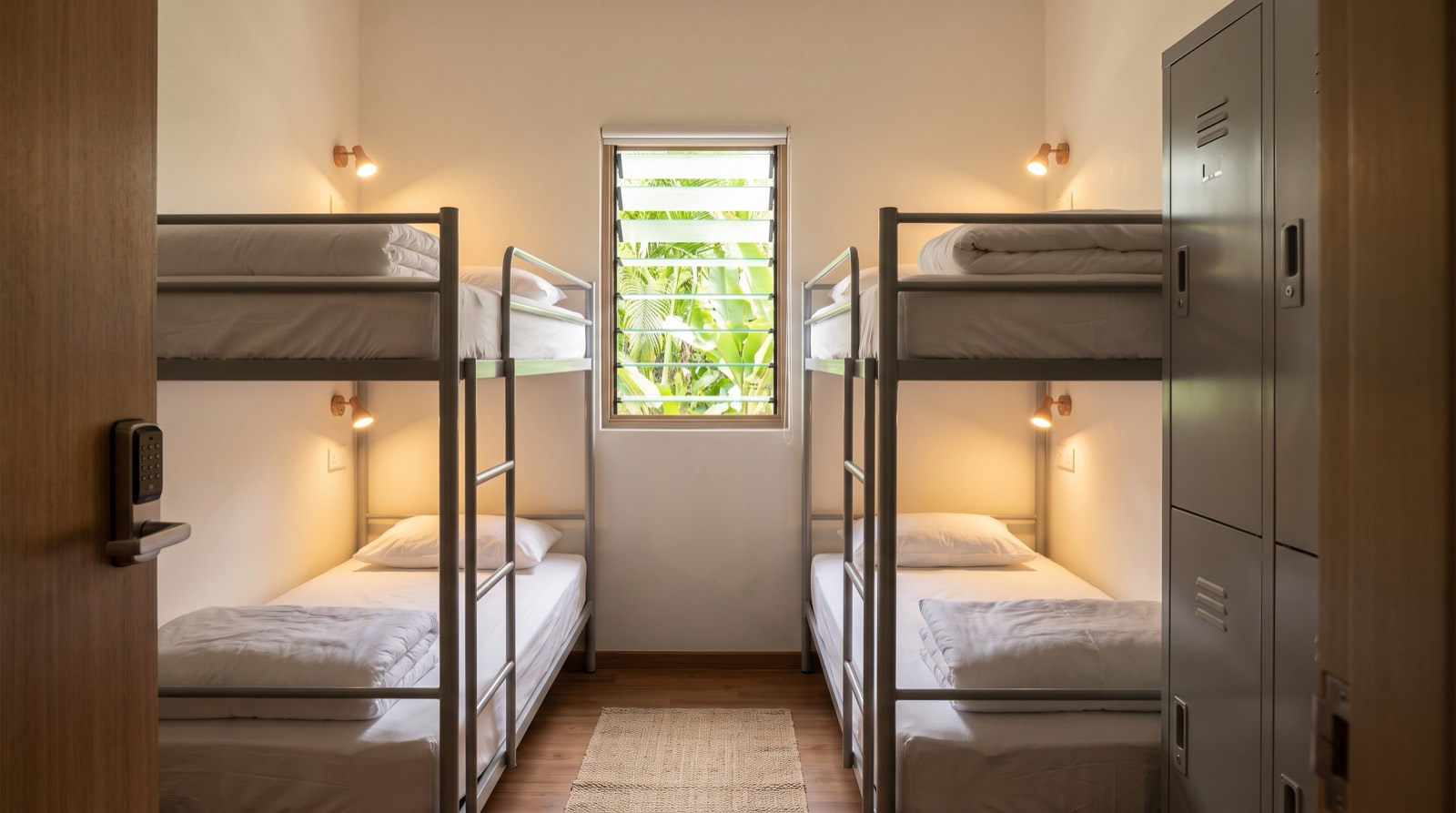
Answer up front — Hostel and student accommodation is not a hotel with cheaper rooms. It has very high turnover, very thin per-bed margin, shared facilities that carry most of the running cost, and a customer who will not pay a premium for anything. The payback is in the common areas, not the rooms — because an unattended shared kitchen, study room, common room, laundry or corridor runs its lighting and air-conditioning for whoever happens to be in it, and one person switching it on for ten is the normal failure mode. We do not publish payback figures for this segment, because they depend on your actual building and occupancy.
Our smart hotel room post covers what goes inside a guest room where there is one occupant and a service standard to hold. This is a different economic problem, and applying hotel logic to it is the most common mistake.
| Hotel | Hostel / student accommodation | |
|---|---|---|
| Occupant per room | One | Two to eight, unrelated to each other |
| Revenue basis | Per room per night | Per bed per night, at a thin margin |
| Length of stay | Typically short | A term, an academic year, or a gap-year stretch |
| Turnover pressure | Moderate — housekeeping has a routine | High — constant arrivals, departures, re-cleaning |
| Customer expectation | Service and consistency | The basics, reliably, at the lowest price |
| Premium willingness | Pays for the room | Pays almost nothing extra |
| Cost concentration | The room | The shared spaces |
| Who controls the switches | The guest | Guests, visitors, cleaners, housemates — often nobody |
Two consequences follow, and they drive every decision in this post.
First, anything that only improves the room is hard to monetise. A student is not going to pay more for a motorised curtain in a four-bed dorm. The room has to work well enough that the reviews do not mention it, and then you look for the money elsewhere.
Second, the shared spaces are where the hours and the energy go, and they are the part of the building everyone forgets to budget for.
This is the central argument of this post. Walk a typical building and the pattern is consistent:
| Zone | Why it wastes money | What actually changes it |
|---|---|---|
| Shared kitchen | One person cooks, lights and air-conditioning run for the hour | Presence-linked lighting and cooling on the air-conditioning and lighting circuits |
| Common room / lounge | Left running after the group goes out | Presence sensing with a defined absence period |
| Study room / quiet pod | The highest-energy room per person, used in bursts | The clearest case for occupancy-driven control |
| Laundry | Lights left on, doors propped, running overnight | Simple presence-linked lighting, no fancy logic |
| Corridors and stairs | Lit continuously because switch positions are inconvenient | Occupancy-based lighting rather than a time schedule |
| Lift lobby / entrance | Always on for access reasons | Needs design work, not just a sensor — and often a policy change first |
The failure mode is identical in every one of them: one person switches something on for themselves, and nobody switches it off. Schedules do not fix this, because a schedule cannot tell the difference between a shared space in use and a shared space abandoned. Presence can.
Two design cautions. First, air-conditioning in a shared Malaysian space should usually be limited, not switched, because a hot, humid common room is unusable and you will generate complaints instead of savings. Cut the lighting, the small appliances and the extraction first. Second, you need an absence period, not an instant-off rule. People leave a study room to get lunch. Our post on presence sensor vs motion sensor covers why that distinction decides whether a system is trusted or disabled within a fortnight.
Student accommodation has a genuine, structural need for unstaffed arrival: a night-shift reception desk is expensive relative to a bed-night, and arrivals genuinely happen at 2am after a late flight, a long bus, or a late exam.
What the hardware does well here is access windows. The Aqara U300 (keypad plus fingerprint, 4 × AA, Thread + Bluetooth + NFC) or the U200 Lite (NFC, Thread + Bluetooth, rechargeable Li-ion around six months) can carry credentials that are valid for a defined period and expire on their own. That directly removes the failure case of a guest overstaying a booking or a departing student keeping a code.
The honest limits are the same ones we set out in access control, security and after-hours operation:
On lockers: the steel lockers in most dorms are already mechanical, and they are cheap to replace with electronic ones. Decide whether that is worth it for your building — it usually is only worth it where the current process for broken keys generates real cost.
Turnover pressure is genuinely higher here, and it is not just about speed. Four unrelated occupants in one room create more variation than one guest in a room: bedding left in different states, bins filled at different times, the window open in one bed's opinion only.
What helps:
For the per-berth control that does matter — the reading light and the socket at each bed — this is where the lighting design matters more than the intelligence. A switched reading light at each berth, individually controllable, solves the real complaint in a dorm, and it needs no sensors at all. Do that first.
We do not publish a payback period for this segment. We would be guessing, and the guess would not survive contact with your building.
The logic, however, is worth stating plainly, because it is different from the hotel case:
What we need from you to size anything at all:
We cover the shared-cost and ownership question in more detail in common areas, tenant space and who pays.
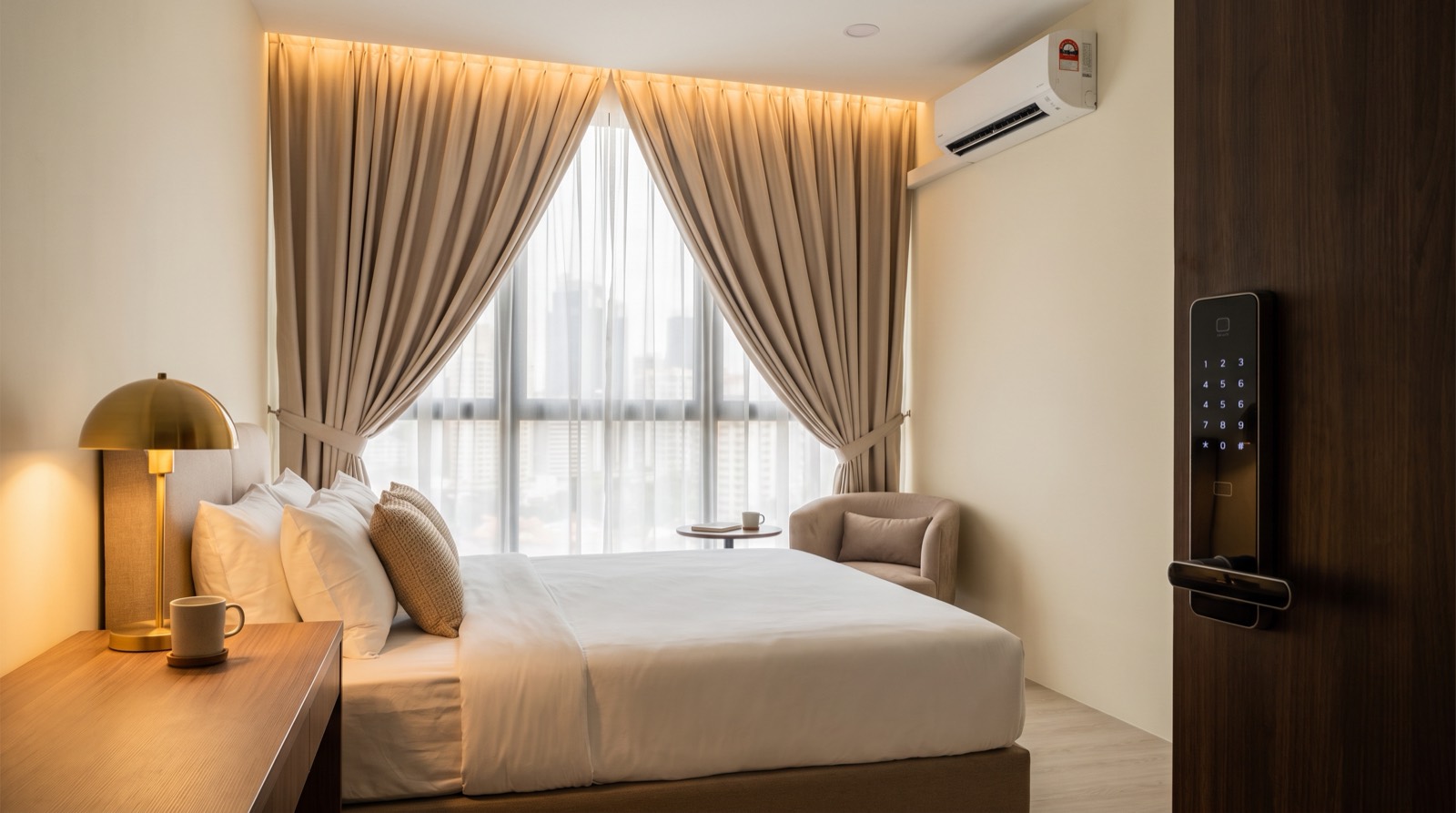
Smart hotel room Malaysia guide: the device decisions per guest room, what the guest controls against what staff control, the cooling load and PDPA duties.
Smart building capex, opex and service charge in Malaysia explained: the landlord and tenant boundary, capital or operating spend, and a responsibility matrix.
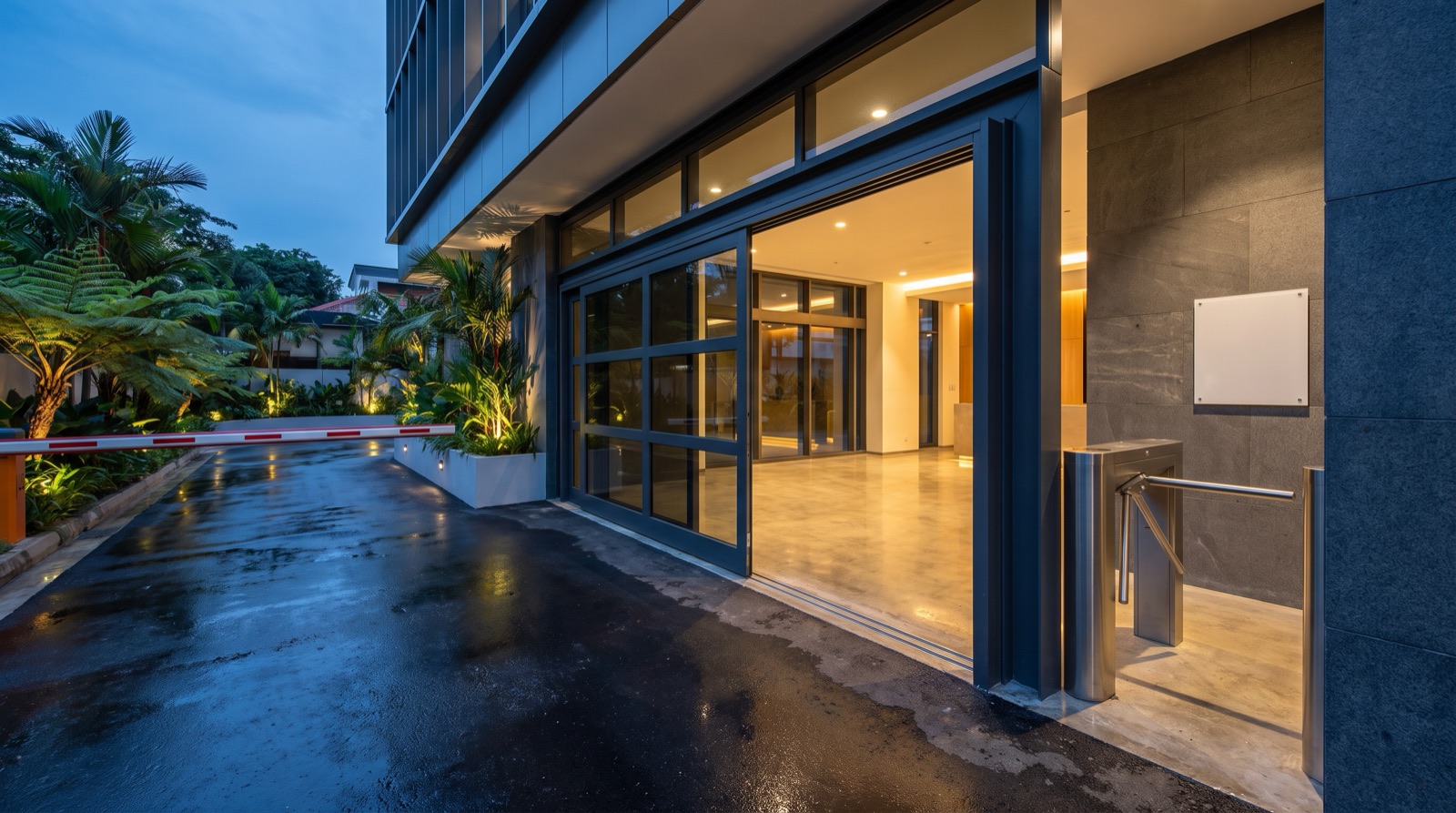
Commercial access control for smart buildings in Malaysia: which doors to automate, how presence sensing cuts after-hours cost, and the limits of CCTV integration.
Tell us about your space. Our B2B team will reply within one business day with a recommended setup and quotation.
WhatsApp us →
[email protected]
+603-5880 5486