







Smart hotel Malaysia: what operators actually ask the team
Smart hotel Malaysia: the AqaraLink Industry Application Platform for hotels, serviced apartments and offices, and the operational questions operators ask.
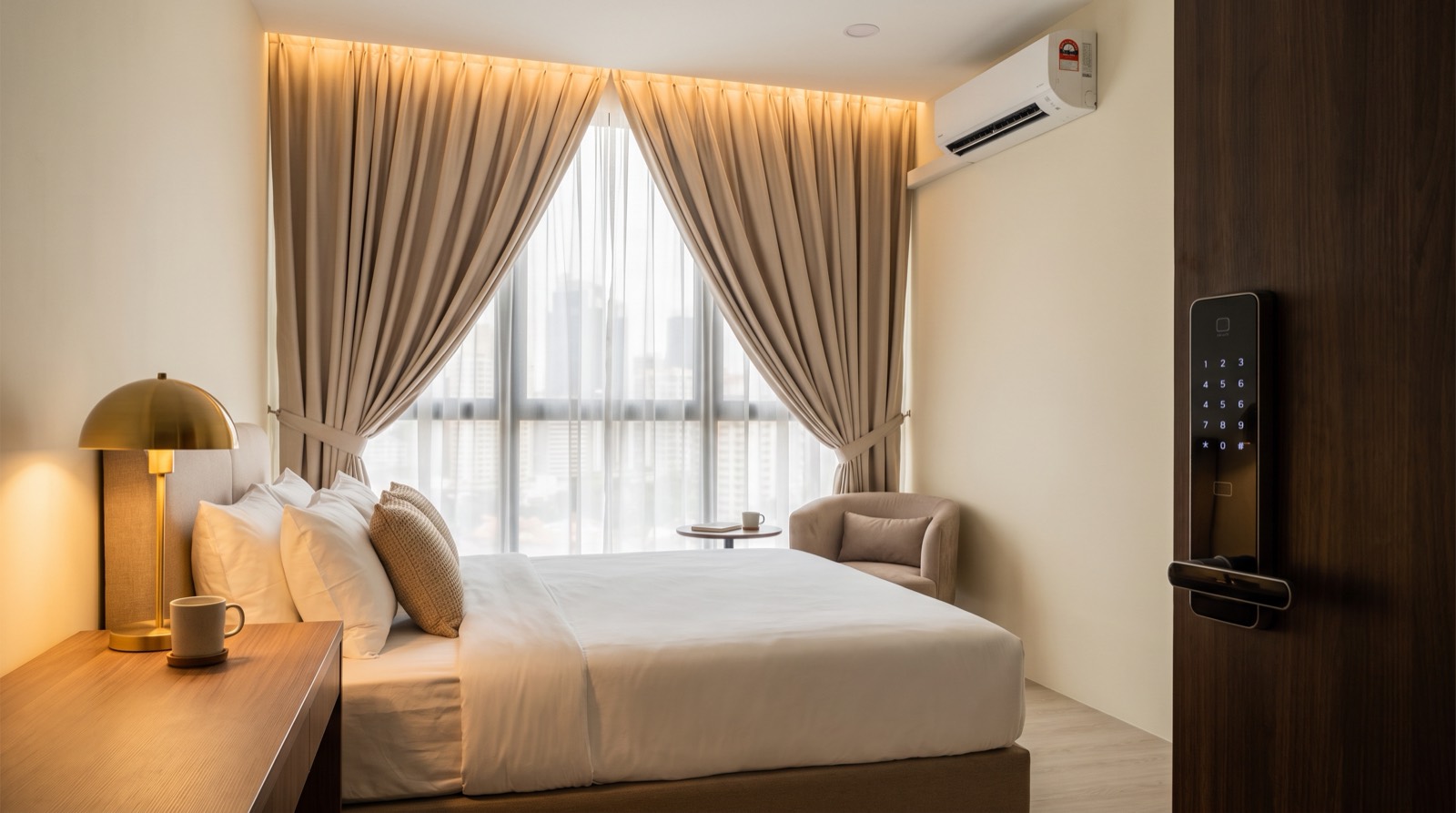
Answer up front — For a Malaysian hotel, the room-level decision is which devices physically go into the room, what the guest may touch, and what the operator keeps out of the guest's hands. Most operators start with lighting, air-conditioning and curtains, add presence sensing to drive the cooling policy, and put access control on the door only where the security case justifies it. The guest controls ambience; staff control policy, room status and energy limits. Cooling is the load that makes this commercial, and the payback sits in the hours between checkout and housekeeping finishing — not in guest satisfaction. We do not publish project pricing or payback figures, because those depend on a site survey of your room stock.
Two other posts already cover adjacent ground: hotels, serviced apartments and offices is about the AqaraLink industry platform, and spatial intelligence for hospitality Malaysia is about occupancy as the operational primitive. Neither tells an operator which box goes on which wall.
A hotel buys a room, not a room's worth of gadgets. The useful unit of thought is the repeatable room: same door, same switch plate, same aircon, same window treatment. Decide what goes into that room, multiply, and you have a scope. Everything that varies by room — door thickness especially — is a survey item, not a catalogue item.
The commercial consequence is that the specification has to survive being built 200 times. Anything that depends on a technician judging correctly under time pressure will not.
Six functions, and a specific decision on each. The wrong product in the wrong row is the commonest cause of a project that is installed then quietly ignored.
| Function | Documented Aqara option | Check this first |
|---|---|---|
| Air-conditioning | IR bridging via Hub M200 | Only one IR aircon bridges into Matter AC mode on the M200 |
| Lighting | Light Switch H2 US | 110–240 VAC, max 10 A resistive; neutral for power monitoring |
| Curtains | Curtain Driver E1, Track or Rod (CM-M01) | 0.2 N·m torque; no Thread on either variant |
| Presence | Presence Sensor FP2 (PS-S02D/E) | Zone features require wall mounting |
| Door | Smart Lock U300 or U200 Lite | No door thickness is published for any Aqara lock |
| Hub | Hub M100, M200 or M3 | M3 is 127 + 127; M200 is 40 + 40 |
The split unit is almost never replaced to make it smart — it is retrofitted through infrared, and Aqara's documented route is IR bridging from a hub. The constraint that changes room design: the Hub M200 can bridge only one IR air-conditioner into Matter AC mode. A standard guest room with one unit is fine; a serviced apartment unit with a bedroom unit and a living-area unit cannot be brought under Matter AC control from a single M200. Also: the M200 has no built-in microphone, so voice needs a separate Voice Mate H1, and the 5V⎓2A USB power adapter is not included.
The H2 family is per-market, not one product, and only two variants have readable text specifications.
Light Switch H2 US is Thread + Zigbee + Bluetooth, 110–240 VAC 50/60 Hz, max 10 A resistive, 119 × 74 × 42 mm, 0~40 °C. That voltage range suits a Malaysian 240 V supply. Note the 10 A resistive ceiling — LED load and dimming compatibility covers how that meets a modern lighting load — and the 0~40 °C range, which matters in an unconditioned corridor.
Presence Switch H2 US has built-in mmWave and is specified at 120 VAC. That is not a Malaysian 240 V circuit and should not be installed on one as published.
Both require a neutral wire for power monitoring. Without one you are looking at a relay module — see which smart home retrofit is realistic in Malaysia.
Both E1 variants are Zigbee 3.0 only, no Thread, 0.2 N·m torque, non-replaceable built-in lithium.
| Variant | Size | Rating published |
|---|---|---|
| Track (CM-M01) | 145.7 × 96 × 46 mm | No IP rating and no operating temperature stated |
| Rod (CM-M01) | 140.5 × 96 × 44 mm | IP20 — indoor only — and 0~45 °C |
Aqara also lists a Curtain Controller C3 and a Curtain Controller SEA. Both pages are empty stubs with no published specification, and we will not invent numbers for them. If one is offered as a specified line item, ask for the datasheet first. See motorised curtains and blinds installation.
The FP2 is the natural fit for a guest room. Its verified constraints belong in your commissioning checklist:
The U300 (keypad plus fingerprint, 4 × AA, Thread + Bluetooth + NFC) or the U200 Lite (NFC, Thread + Bluetooth, rechargeable Li-ion around six months) are the realistic options. The U400 is the flagship, and its headline feature carries a hard dependency: UWB hands-free unlock requires a select iPhone or Apple Watch AND a Thread-enabled Apple home hub — so you are deciding which guests can use it.
The constraint that decides projects in a hotel stock: Aqara publishes no door thickness figure for the U200 Lite, the U300 or the U400. A building with doors from three decades of refurbishment will have mixed thicknesses, and a lock that does not fit is the most common failed purchase here. Measure every door first — see smart lock installation across door types.
Prices change and a project outlives any single one, so this is how to choose. Four questions decide it: which protocol each device speaks, because mixing them means more hubs and a commissioning plan; mains or battery, because a battery lock means teaching housekeeping the swap; door thickness, covered above and the one that kills retrofits; and local support, because a hotel needs a local party to call when a unit fails. See rolling out smart devices at scale.
This split is usually argued as a philosophy. Treat it as a physical decision instead: which control surfaces exist in the room, and which exist only on a staff screen.
| Control surface | In the guest room? | Guest can | Staff can |
|---|---|---|---|
| Lighting switches | Yes | Scenes, brightness, circuits | Policy, schedules, fault state |
| Temperature | Yes | Set point within an operator-set range | The range, and the override |
| Curtains | Yes | Open, close, stop | Schedules tied to light and time |
| Room state and occupancy history | No | Nothing | Live state, turnover routing |
| Energy policy and fault log | No | Nothing | Limits, overrides, history |
Three rules belong in the commissioning document:
Cooling is the dominant controllable load in a Malaysian guest room for most of the year, which is why occupancy-driven control is commercially material here rather than marginal.
| Situation | What a timer does | What presence-driven control does |
|---|---|---|
| Guest arrives to a room switched off | Guest waits, or complains | Room pre-cools, if an advance signal exists |
| Guest steps out for four hours in the afternoon | Cooling runs for nobody | Cooling stops; the room is genuinely unoccupied |
| Guest is in the room but still and reading | A motion sensor reports empty | Presence reports occupied |
| Room empty through the hottest part of the day | Cooling runs, or the room must recover from hot | Maintenance state, not on or off |
Two warnings. The advance signal for pre-cooling usually comes from your property management system, not from the sensor — the sensor knows someone is there, not that someone is on their way. And in a humid climate, switching a room off completely can leave it uncomfortable for a long time afterwards; a returning guest finding a hot room costs more than the energy you saved. The correct design is a maintenance state, not a binary off.
We do not publish a payback period, and you should be sceptical of anyone who gives you one without walking the building. The case sits in a narrow window: between a guest vacating and housekeeping finishing. In Malaysia that window runs through the hottest part of the day, exactly when a room is empty and still cooling. The same logic applies to corridors, lift lobbies and back of house — routinely excluded from a "smart room" budget, and where the wasted hours accumulate.
It does not sit in guest satisfaction. You cannot pay back a lighting scene, and any business case that tries is borrowing from the wrong column. Sizing it honestly needs room count by type, occupancy by hour, your tariff structure, whether your property management system emits arrival and departure events, and door types measured in the existing stock.
At room level the useful observation is this: identity does not come from the sensor. It comes from the room number.
An FP2 reporting "Room 1204: occupied" is, on its own, a state about a space. It becomes personal data the moment you join it to the property management system, because the PMS knows who is in 1204. The compliance boundary is the join, not the device.
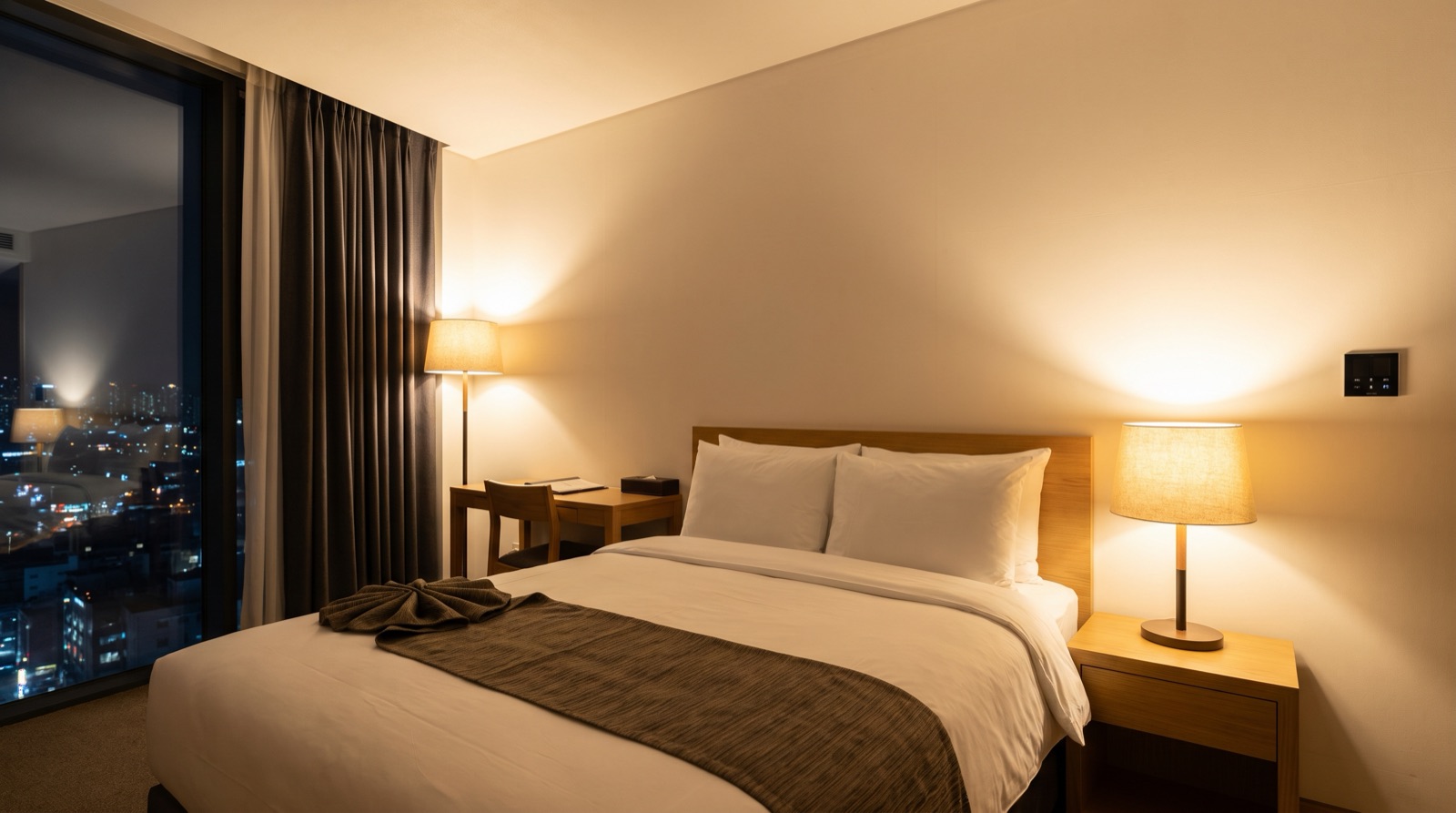
Smart hotel Malaysia: the AqaraLink Industry Application Platform for hotels, serviced apartments and offices, and the operational questions operators ask.
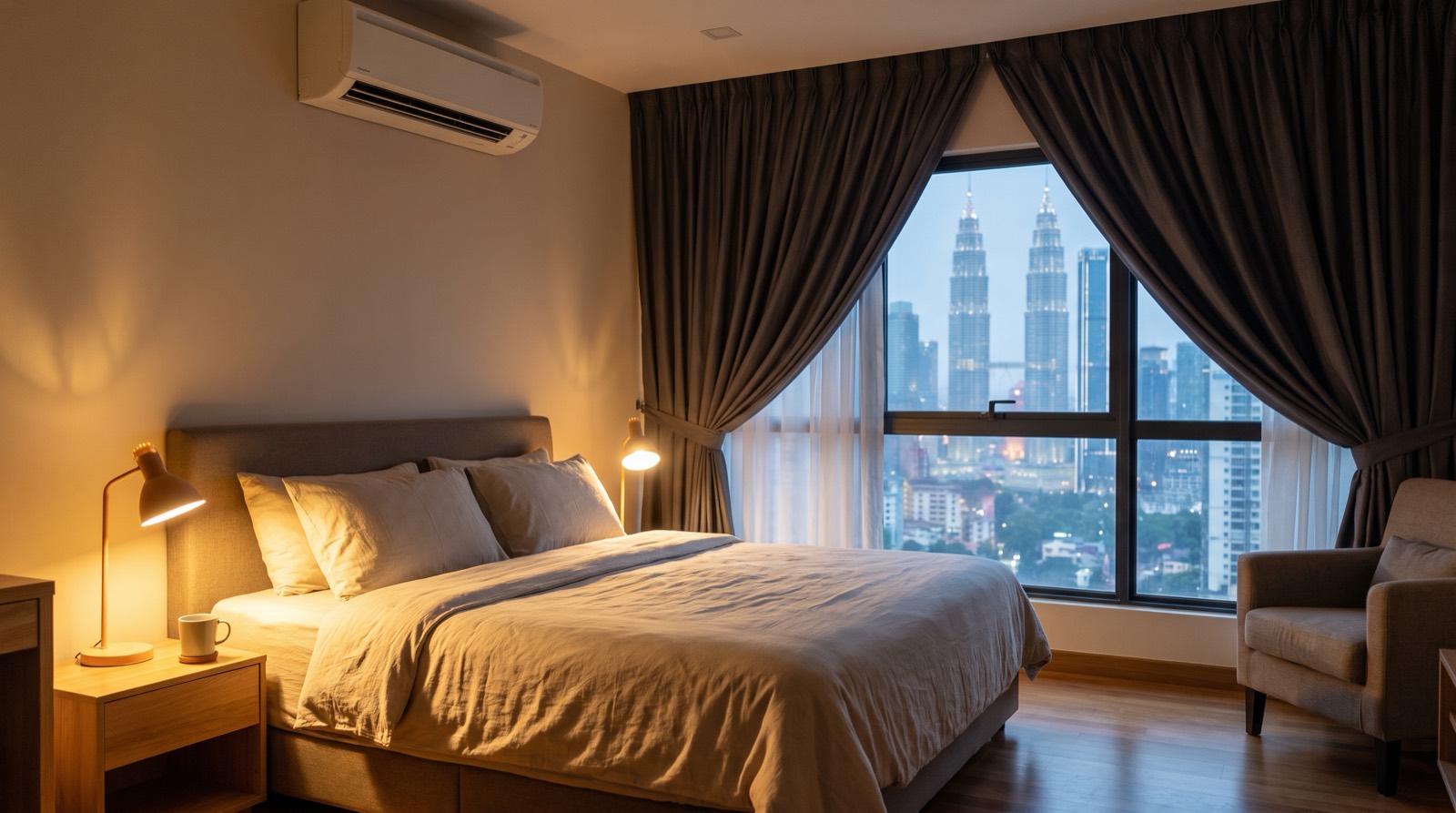
Smart hotel Malaysia explained through occupancy: after-hours energy cost, real room turnover, the guest and operator split, and PDPA for occupancy data.
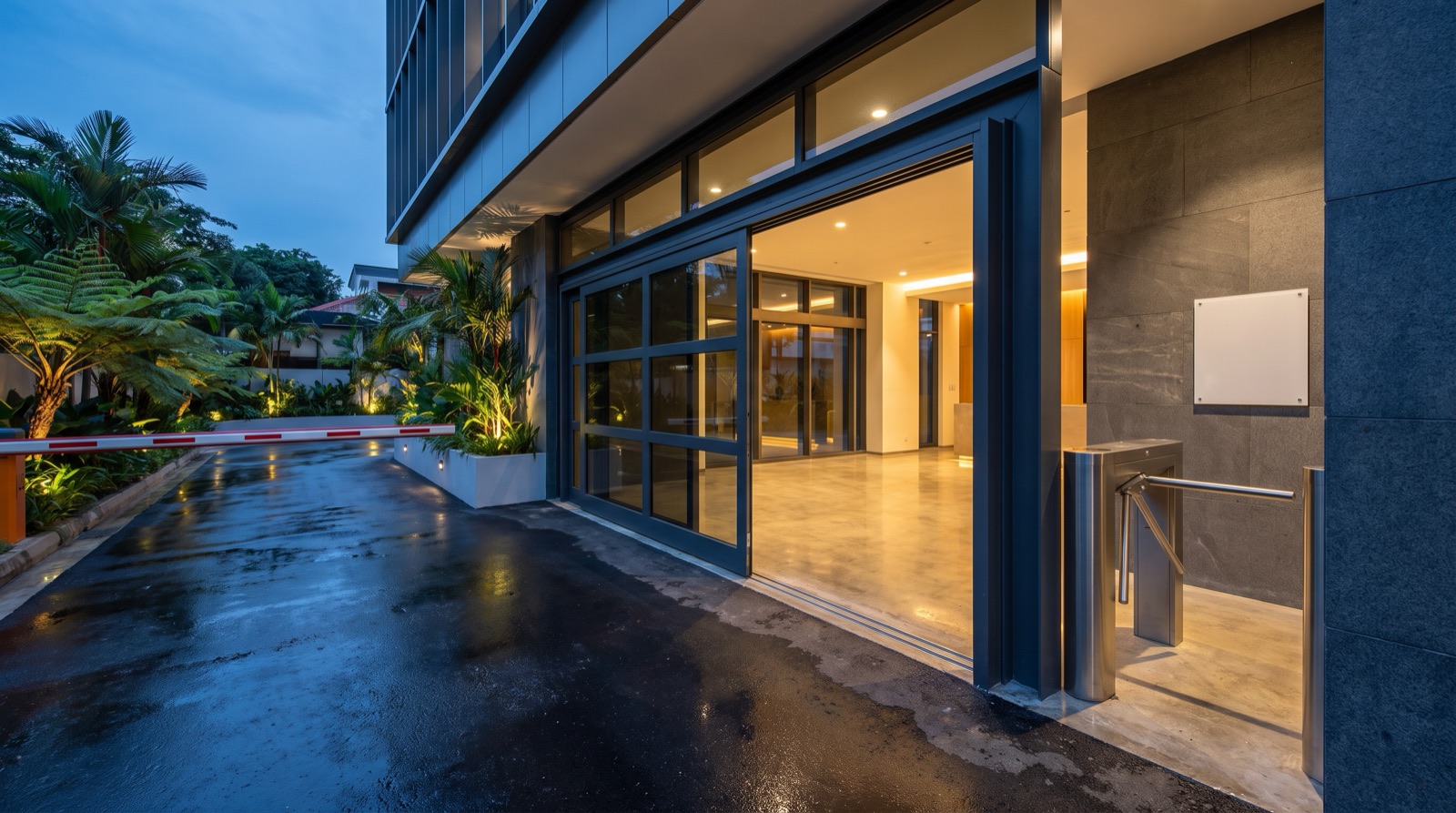
Commercial access control for smart buildings in Malaysia: which doors to automate, how presence sensing cuts after-hours cost, and the limits of CCTV integration.
Tell us about your space. Our B2B team will reply within one business day with a recommended setup and quotation.
WhatsApp us →
[email protected]
+603-5880 5486