







Chasing walls for a smart home in Malaysia: when to rewire
Chasing wall smart home guidance for Malaysian concrete and brick homes: when to chase, when to use surface conduit, and what to pull while the walls are open.
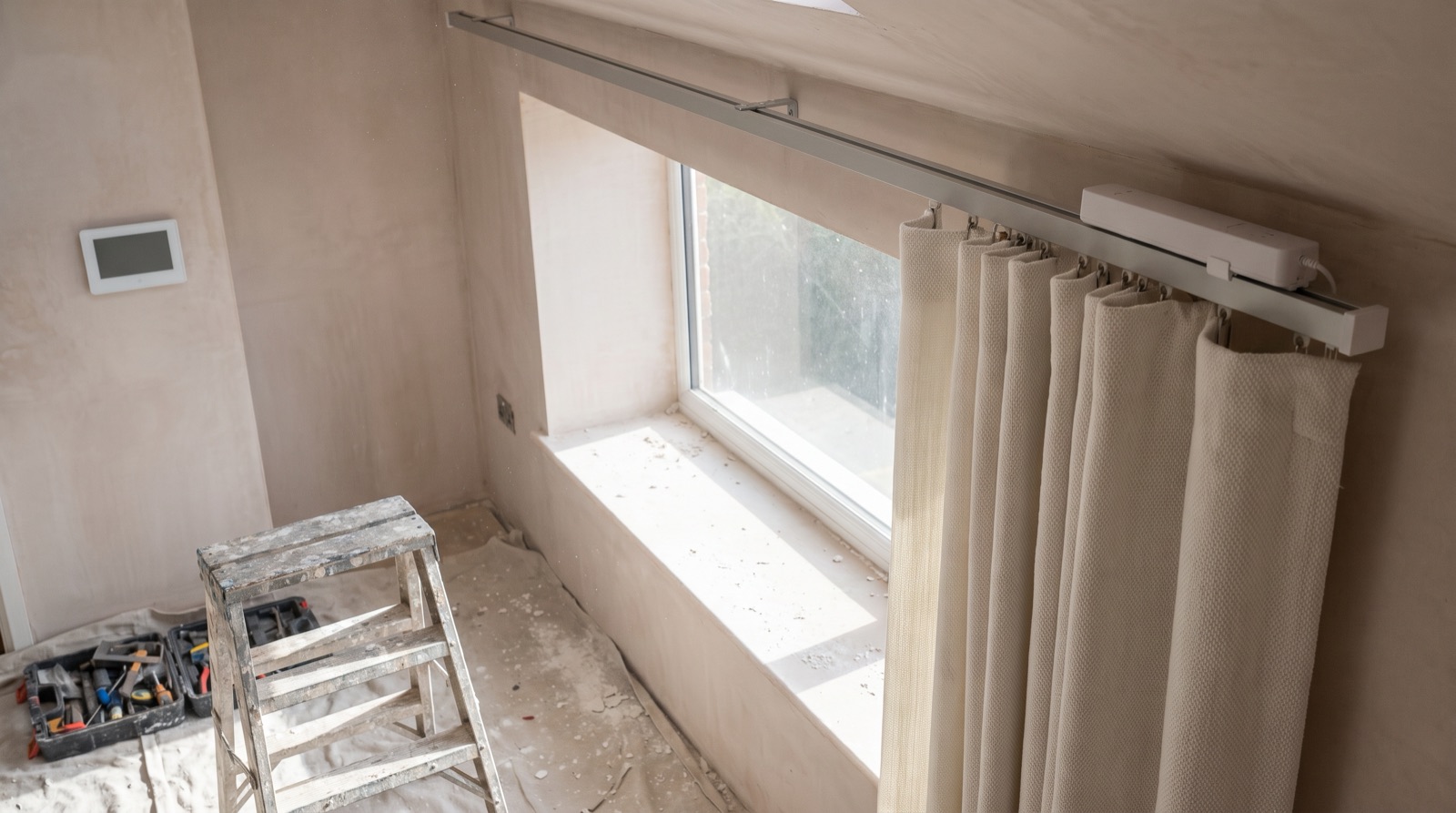
Answer up front — Motorised curtains fail on install far more often than in service, and almost every failure is one of three things: the track is surface-fixed when the window needed a recess, there is no power outlet at the window for a mains track motor, or the fabric is heavier than the motor can pull. Decide first between a mains-powered track motor (such as the Aqara Curtain Controller SEA Version or C3) and the battery-powered Curtain Driver E1, which clips onto an existing track or rod with no wiring. Run the two-minute pre-install check before you unbox anything, confirm the model's force and track-length limits against the current datasheet, and you will avoid most of the callbacks.
A curtain motor is the only device in a typical Aqara install that combines electronics, a moving mechanical part, a fabric load and a building detail. Four things can go wrong and only one of them is a product fault.
The most common by a distance, for a mains track motor, is no power at the window. Curtains go at the window. Power outlets in Malaysian homes go at desk height, at the TV wall, at the bedhead. Almost never at the curtain head. If you arrive with a mains motor and no outlet, the options are: surface trunking along the reveal, a new socket behind the curtain pelmet, or asking the client to accept a cable run from an existing outlet. The last looks temporary and lives there for six years. Raise it on the survey, cost it, and decide before the install day — not on it.
| Option | Power | Best fit | Watch for |
|---|---|---|---|
| Mains track motor (Curtain Controller SEA Version, Curtain Controller C3) | Mains, needs a supply at the curtain head | New track, renovation, pelmet box, heavy or wide curtains | Supply at the window is a wireman job; plan it before the ceiling closes |
| Curtain Driver E1 (Track or Rod Version) | Rechargeable battery, USB-C | Retrofit onto an existing U- or I-rail track or rod, no wiring | Existing track must be straight and in good condition; the client has to recharge it |
| Roller Shade Controller T1S / Roller Shade Driver E1 | Mains tubular motor / rechargeable battery | Roller blinds | Tube size and blind type — check the datasheet |
If there is no outlet and the client does not want wall work, the battery Curtain Driver E1 is the honest answer rather than a trailing cable. If the window is being rebuilt anyway, a mains track motor with a proper supply is the cleaner long-term install.
Run this before you unbox anything. If any line fails, you have a problem to solve on the spot, not a return visit.
| # | Check | How | Fail means |
|---|---|---|---|
| 1 | Is there power at the window? | Look for an outlet at or near the curtain head, on the correct side of the track | For a mains motor, trunking or a new socket is a different job — scope it now, or switch to the battery Curtain Driver E1 |
| 2 | Is the window recessed or surface-mounted? | Stand back. Recess = track inside the reveal. Surface = track on the wall above the frame | Sets the whole track choice, see below |
| 3 | Ceiling height and pelmet drop | Measure from the window head to the ceiling, and to the top of any existing pelmet or valance | Too little drop and the motor does not fit. Do not force it |
| 4 | Where does the existing chain hang? | Left, right or centre; is it looped, pleated, or a separate blind | Decides hand and pull direction. See below |
| 5 | Fabric weight and fullness | Heavier fabric and higher fullness = more pull. Not by eye alone | If the fabric is at the limit, tell the client before you buy |
| 6 | Existing hard rod or track | Metal pole, existing track, or bare wall | Determines whether you reuse or replace |
| 7 | Is anyone home who can reach the switch? | The motor is usually operated from a wall switch at the door | If not, the client will want a remote or an app, not a pull |
| 8 | Brick, concrete or plasterboard above? | Decide before you fix the track | Fixing into plasterboard needs the right anchors — see chasing advice below |
Recessed window with enough head drop. The clean install — the track sits inside the reveal or in a pelmet box, and it is what the client is imagining when they buy a curtain driver. Achievable in a landed house with a normal ceiling height.
Recessed window with a pelmet or valance already there. Measure the cavity, not the window. A pelmet built for a manual rod may not have the internal depth the motor needs, and you may be looking at removing it or building a new boxed pelmet — joinery, and it should be quoted as such.
Surface-mounted window, no recess. The track goes on the wall above the frame. It works and it looks acceptable, but check that the head drop fits the motor body, that the wall is a surface you can fix into (masonry, not plasterboard without proper anchors), and that the client accepts a visible track. Many will, if you say it plainly at survey stage.
Reusing an existing metal pole. Workable on a suitable track, but check it is straight, the runners are the right type, and it is not a light duty pole that will bow when the fabric is drawn. A bowed track looks like a failed install.
Track length and motor force: this post does not quote newtons, kilograms or maximum track length, because those figures differ by model and revision. Confirm the exact rating for the specific motor or Curtain Driver E1 you are fitting against the current datasheet before you tell a client what their fabric will weigh.
This is the single most common install-day confusion, and it is entirely avoidable. The hand designation tells you which side the motor body sits on, and therefore which way the curtain travels when it opens. A wrong hand does not break anything — it means the curtain opens the wrong way, and on a fixed window you may physically not be able to swap it back without re-hanging.
Decide the hand from three things, in this order:
Pull direction also matters. The fabric can be set to draw one way or the other relative to the track, and a pleated or wave-fold heading has its own required direction. A fabric pulling against its heading stacks unevenly and looks broken — and the client will not describe it as "the heading is backwards". They will say the curtain is faulty.
A curtain motor is not a winch. The heavier the fabric and the fuller the heading, the more the motor has to pull, and there is a limit.
| Fabric situation | What it does to the load | How to handle it |
|---|---|---|
| Thin sheer, low fullness | Lightest case | Comfortable. This is the easy install |
| Standard blackout, normal fullness | Normal case | Within design range for most windows |
| Heavy velvet or thick blackout, high fullness (large pinch pleat, triple fullness) | Meaningfully harder | Check the datasheet rating before you commit |
| Two layered curtains sharing one track, or a sheer plus blackout pair | Roughly doubles the pull | Check the datasheet; may need separate tracks |
| Floor-length on a long track, several windows on one driver | Pushes the limit | Recommend a second motor per window, and say so at quote stage |
Fullness is the variable people forget. The same cloth at double fullness is far harder to move than at single, and clients often change their minds about fullness after the motor is in. Say what the driver is rated for, say what their current fabric weighs in the context of that rating, and let them decide with the number in front of them.
This conversation belongs at the survey, and it is frequently the difference between a happy client and a refund. The mechanical chain is the client's muscle memory: two years of pulling that cord is two years of reflex. Remove it and the automation is not yet dialled in, or the app is not on their phone, or it does not fire for a week while they are away — and they will reach for a cord that is not there.
Say this to them: we are keeping the chain or cord as a manual override, or removing it if you prefer a clean look — your call, and we will leave the track so a conventional curtain can go back on if you change your mind. The smart control will be from your phone and, if you want, a wall switch by the door; you will not need to reach the window. The first week, the app is the interface and the chain stays as your backup. Do not remove the mechanical control as a "cleaner" gesture and then spend a call-out putting it back because the client felt exposed.
The limits are what stop the motor driving the fabric into the head or onto the floor. Set them by hand on the motor for the specific window, following the current calibration procedure for your model. Do not assume a default from a previous job — every window is a different travel distance, and a default set from a 1.2-metre window on a 3-metre window is how a motor ends up at the stops every time.
Before you calibrate, make sure:
Calibrate, then run the full travel three times open and three times closed, and watch the whole travel. A limit that is slightly short will leave the fabric sitting proud; one that is slightly long will drive it into the stop. Adjust it while you are there.
Add a block to the commissioning sheet per motorised window: window, track type, hand, pull direction, travel calibrated, outlet location, and any client instruction about the existing chain. The test rows for the cold-start and app-pairing checks are in smart home commissioning and handover testing.
Fitting the track, building a pelmet, chasing a wall for the supply or cutting into masonry is not a plug-in task. Fixed electrical work in Malaysia belongs to a wireman registered with Suruhanjaya Tenaga under the Electricity Supply Act 1990 (Act 447). If the outlet does not exist, that is a wireman job, priced separately, and it belongs on the survey sheet — the method is in how to survey a Malaysian home before quoting. For what a motorised window adds to a quote, see what a smart home costs in Malaysia; for getting the supply to the window without wrecking the wall, see chasing walls for a smart home in Malaysia.
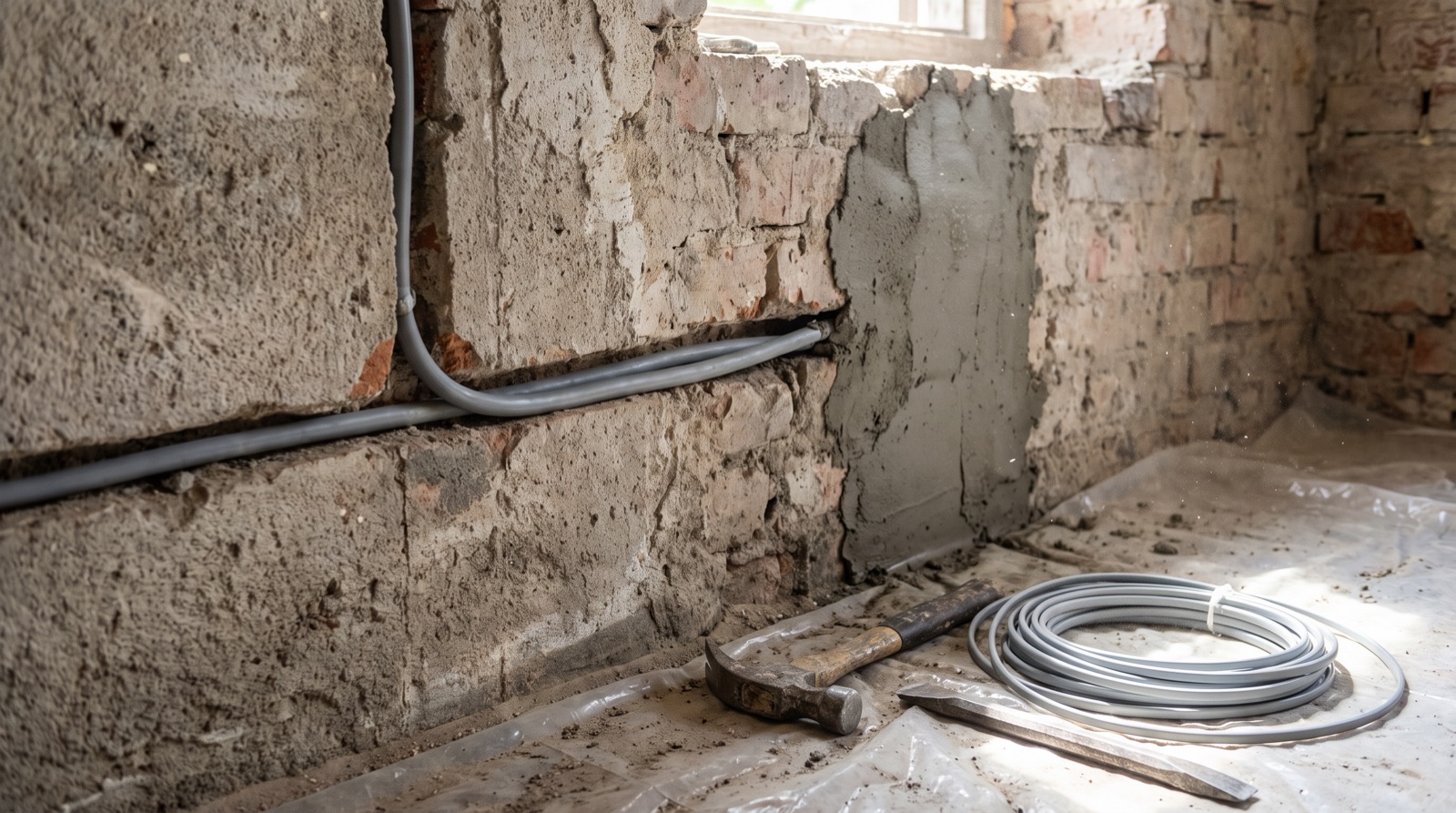
Chasing wall smart home guidance for Malaysian concrete and brick homes: when to chase, when to use surface conduit, and what to pull while the walls are open.
Smart home cost in Malaysia: rough RM500, RM2,000 and RM10,000 budget bands, what each one typically covers, and why installation labour is a separate line.
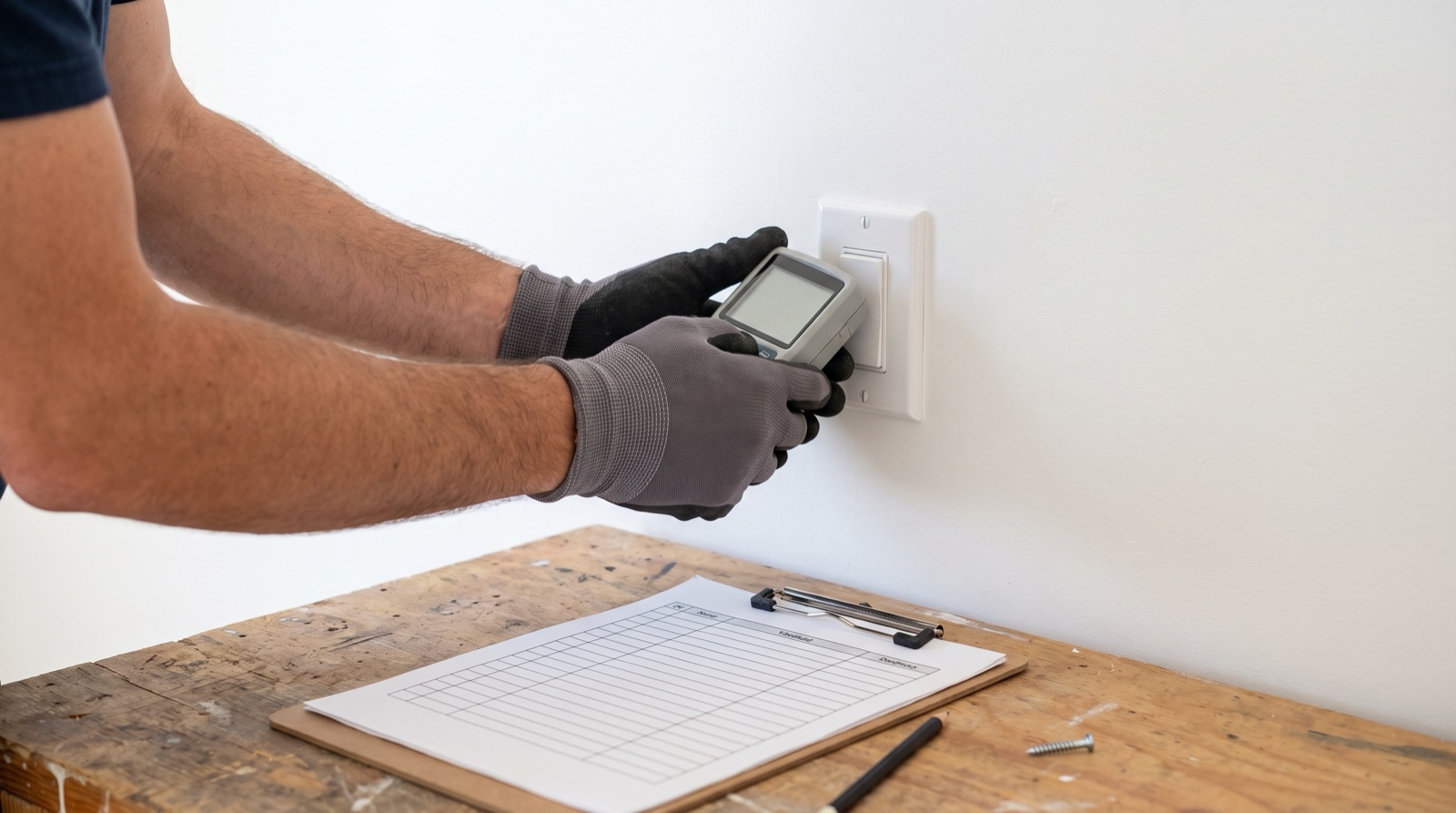
A smart home commissioning checklist Malaysia guide: a per-room test sheet, cold-start automation checks, load tests, board marking and handover pack.
Tell us about your space. Our B2B team will reply within one business day with a recommended setup and quotation.
WhatsApp us →
[email protected]
+603-5880 5486