







Does Your House Have a Neutral Wire? A Malaysia Smart Switch Guide
A neutral wire smart switch Malaysia guide: how to check whether your box has a neutral, why loop-in wiring leaves it empty, and what to do next about it.
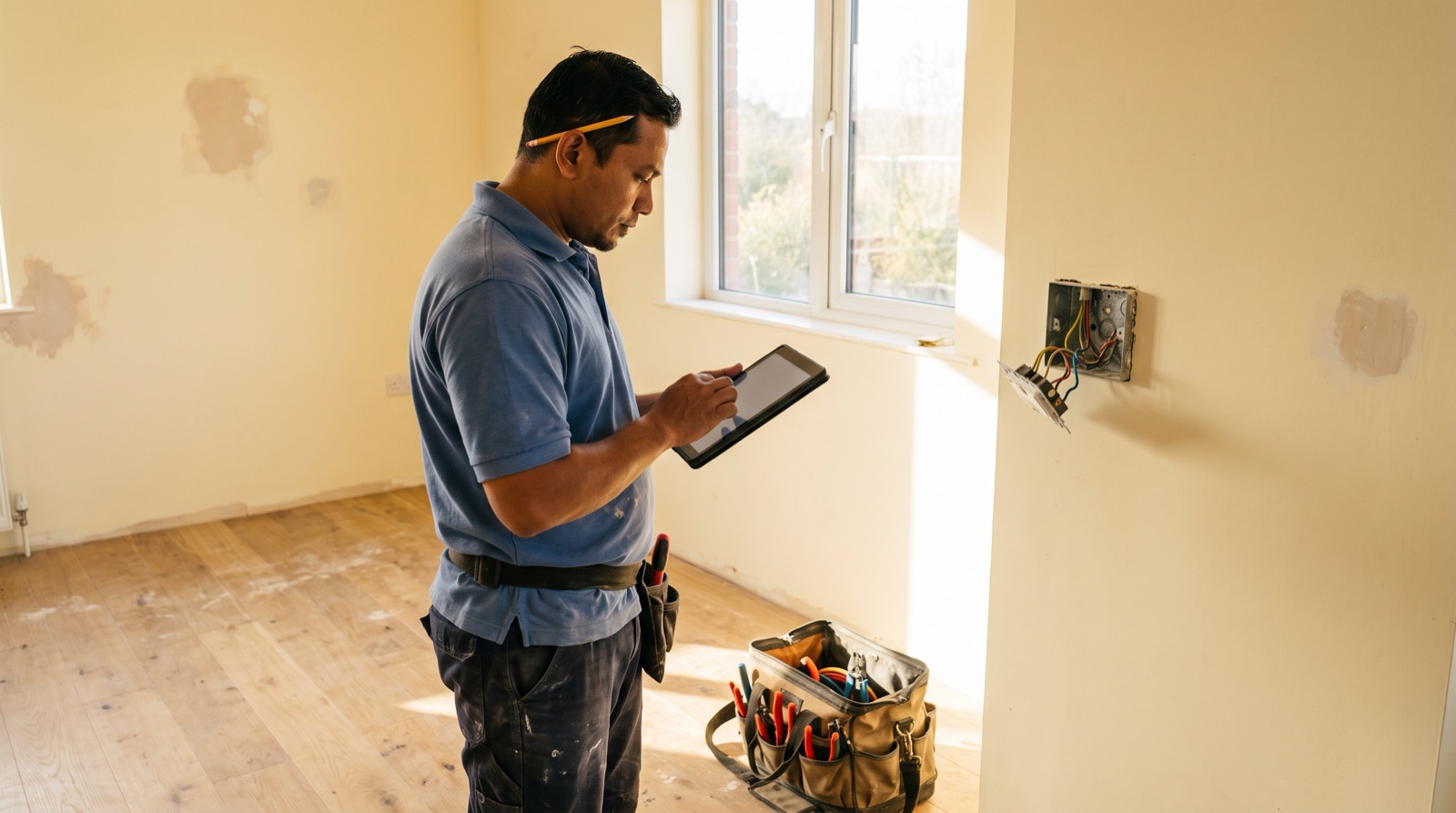
Answer up front — A smart home site survey in Malaysia means opening every switch box and recording what is actually inside: neutral present or absent, back box depth, box and conductor condition, and which circuit it sits on. You must survey every position, not just the ones being converted today, because a house can have a neutral at the kitchen switch and none at the bedroom switch. All fixed electrical work must be done by a wireman registered with Suruhanjaya Tenaga under the Electricity Supply Act 1994 (Act 588).
Malaysia runs 230V single-phase mains. Most lighting is loop-in wired at the ceiling rose: live and neutral both arrive at the light point, and only a switch wire — switched live — drops down to the wall. That means the switch box typically holds live and switched live, and no neutral.
A conventional smart switch needs a neutral to power its own electronics — the Wi-Fi radio, Zigbee transceiver, microprocessor and indicator LED — while the load is off. Without one, you are not installing a product, you are gambling on the circuit.
Homes wired before roughly 2000 are the highest risk, and Malaysian homes are not internally consistent. A kitchen extension done in 2012 may have a neutral. The bedroom circuit original to 1996 will not. Guessing per-house is the mistake; guessing per-room is a bigger mistake.
Back box depth is the second constraint and it is independent of the neutral. A smart module plus the existing conductors may simply not go into a shallow Malaysian back box, no matter how good the product is.
Bring: a non-contact voltage tester, a continuity and insulation tester, a steel rule or depth gauge, a torch with a headlamp, a marker, a camera, the room-by-room survey sheet below, and blank plates or blanking plugs to leave the house as you found it.
Tell the homeowner you will be opening boxes. If they are nervous about drilling, say it plainly — a survey is non-destructive apart from removing switch plates. There should be no chasing on a survey visit.
Safety first: isolate and prove dead at the board before anything enters a box. Prove the tester on a known source before and after. Do not rely on the labels written on a consumer unit — they are frequently wrong, sometimes left over from a previous owner.
One row per switch position. Not one row per room. A three-gang switch is three positions.
| # | Room / position | Gangs | Neutral present? | Box internal depth | Box condition | Conductor condition | Circuit / board ref | Load type (LED/halogen/CFL) | Action needed |
|---|---|---|---|---|---|---|---|---|---|
| 1 | Living room — main | 1 | Yes / No | ___ mm | Metal / PVC / plaster | OK / brittle / discoloured | MCB ___ | Drop-in / rewire / relay | |
| 2 | Living room — fan + light | 2 | Yes / No | ___ mm | MCB ___ | ||||
| 3 | Kitchen — main | 1 | Yes / No | ___ mm | MCB ___ | ||||
| 4 | Kitchen — downlights | 1 | Yes / No | ___ mm | MCB ___ | Mostly LED | |||
| 5 | Master bedroom | 1 | Yes / No | ___ mm | MCB ___ | ||||
| 6 | Bedroom 2 | 1 | Yes / No | ___ mm | MCB ___ | ||||
| 7 | Bathroom — fan | 1 | Yes / No | ___ mm | MCB ___ | ||||
| 8 | Staircase | 1 or 2 | Yes / No | ___ mm | MCB ___ | ||||
| 9 | Gate / car porch | 1 | Yes / No | ___ mm | MCB ___ | ||||
| 10 | Front door / porch | 1 | Yes / No | ___ mm | MCB ___ |
Add rows as needed. Leave nothing blank — a blank reads as "not checked", and that is the failure this whole exercise exists to prevent.
A neutral is the conductor that sits near the live side of the meter. At the box, trace each conductor back. The feed from the ceiling rose is switched live. The feed that comes from the board, past the meter, is the incoming live. If a third conductor is present and is not a switch wire, and it is at near-neutral potential when the circuit is live and the load is off, you have a neutral.
Confirm it properly: isolate, then test continuity between the suspect conductor and neutral at the board, then re-energise and confirm it reads as expected under load. Do not identify a neutral by colour alone. Old installations were re-coloured, and red and black have been used inconsistently for decades in this country.
If there is no neutral, you have three routes, and only one of them is a lighting-wall decision:
The honest comparison is in the no-neutral decision table.
Remove the existing switch, then measure the internal depth of the box with a rule, faceplate off. Record the number. Do not estimate and do not assume it matches a datasheet drawing.
Malaysian 86mm gang boxes are common, but depth varies a lot with age and with whether the box is set into concrete or brick. If the depth is marginal, say so in the findings sheet and price the option of replacing the back box with a deeper one — that is a different job from a drop-in swap and must be quoted separately.
Also record the box type: metal, PVC, or a plaster-composite box bedded in. A metal box needs earth bonding treatment that a PVC box does not, and that changes the fitting work.
Look at the screws and the plastic. A brittle, brown or crumbling box, stripped screw threads, or a plate that moves in the wall is a finding, not a detail. A box with no screw ear left for the earth conductor is a finding.
On the conductors: insulation colour, insulation still flexible or gone brittle, conductor brightness or darkened oxidation, conductor CSA and whether it is copper or something else. If you find mixed conductor sizes, tinned copper, or older stranded conductors, stop treating it as a drop-in and quote for conductor replacement on that position.
Also note how many conductors are trying to leave the box. A depth problem is usually a crowding problem first.
Every position gets a board reference. Identify it properly: isolate one MCB at a time, confirm the circuit is dead at the ceiling rose, then restore and verify. Record the MCB number and, if there is a ring or RCD, which device protects that circuit.
Record which socket circuit, if any, shares the lighting circuit. Old lighting circuits are sometimes shared with a 13A socket outlet, and that affects load and nuisance-tripping decisions later.
Homeowners frequently say: "Just do the living room now, the bedrooms later." That is a reasonable budget decision and a bad survey decision, because stage two is quoted blind.
Survey all positions in one visit. Mark each row Stage 1, Stage 2 or Not required. The extra time is minutes; the cost of finding three bedroom boxes with no neutral in a different house from the one you quoted is a rework.
The survey is only real when it exists in writing. Issue a one-page findings sheet, room by room, using the table above, with:
Get it acknowledged before you leave. That document is what determines whether a product will work, and it is what the homeowner can show a future contractor when they sell the house or change wireman. A survey without a written record is a conversation.
For the aircon and water heater positions, the lighting switch is the wrong device entirely — that is covered in the LED load and dimming compatibility matrix, and the products are listed in the installer resource hub.
Fixed electrical work in Malaysia must be carried out by a wireman registered with Suruhanjaya Tenaga, the Energy Commission, under the Electricity Supply Act 1994 (Act 588). Opening a box, chasing a wall and terminating a neutral are fixed electrical work. Plug-and-sensor work is not — that is a genuinely different category, and the division is covered in the SIRIM, Suruhanjaya Tenaga and PDPA checklist.
If the homeowner wants to do it themselves, that is your call to decline politely. A botched neutral is a fire and shock risk, and DIY mains work can void home insurance.
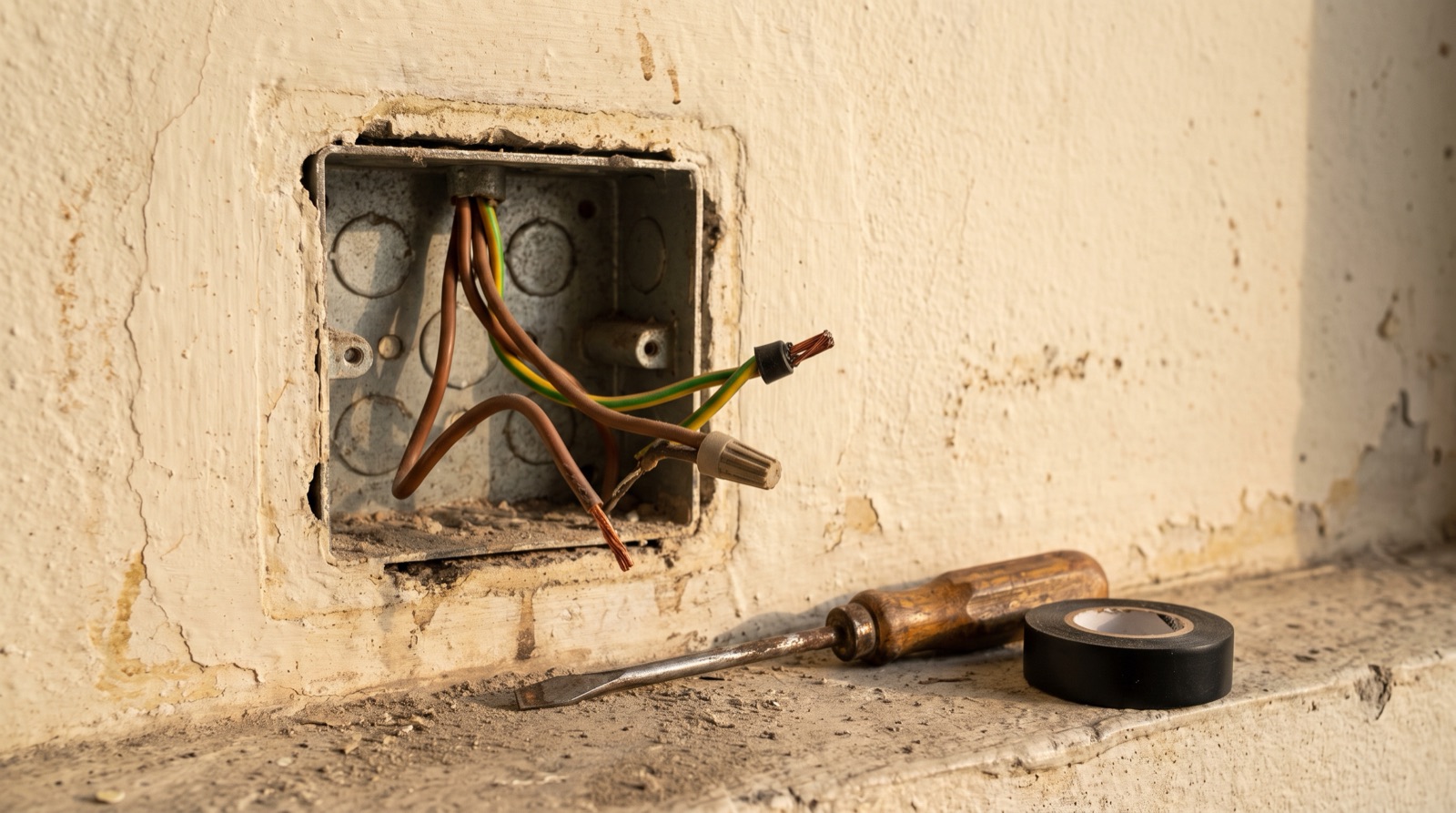
A neutral wire smart switch Malaysia guide: how to check whether your box has a neutral, why loop-in wiring leaves it empty, and what to do next about it.
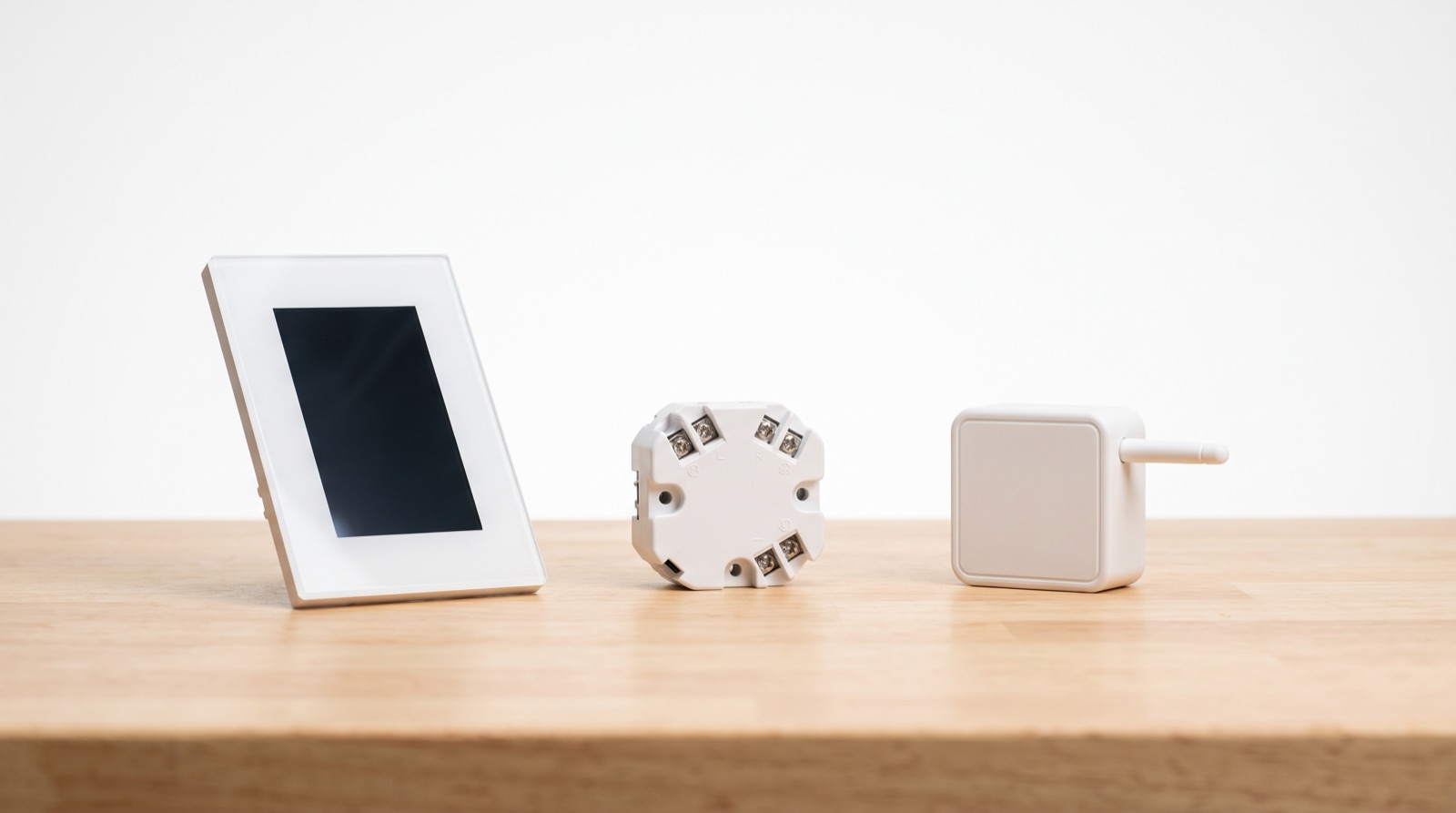
No neutral smart switch Malaysia: three honest routes when the box has no neutral - a no-neutral switch, a rewire, or a relay module at the ceiling rose.
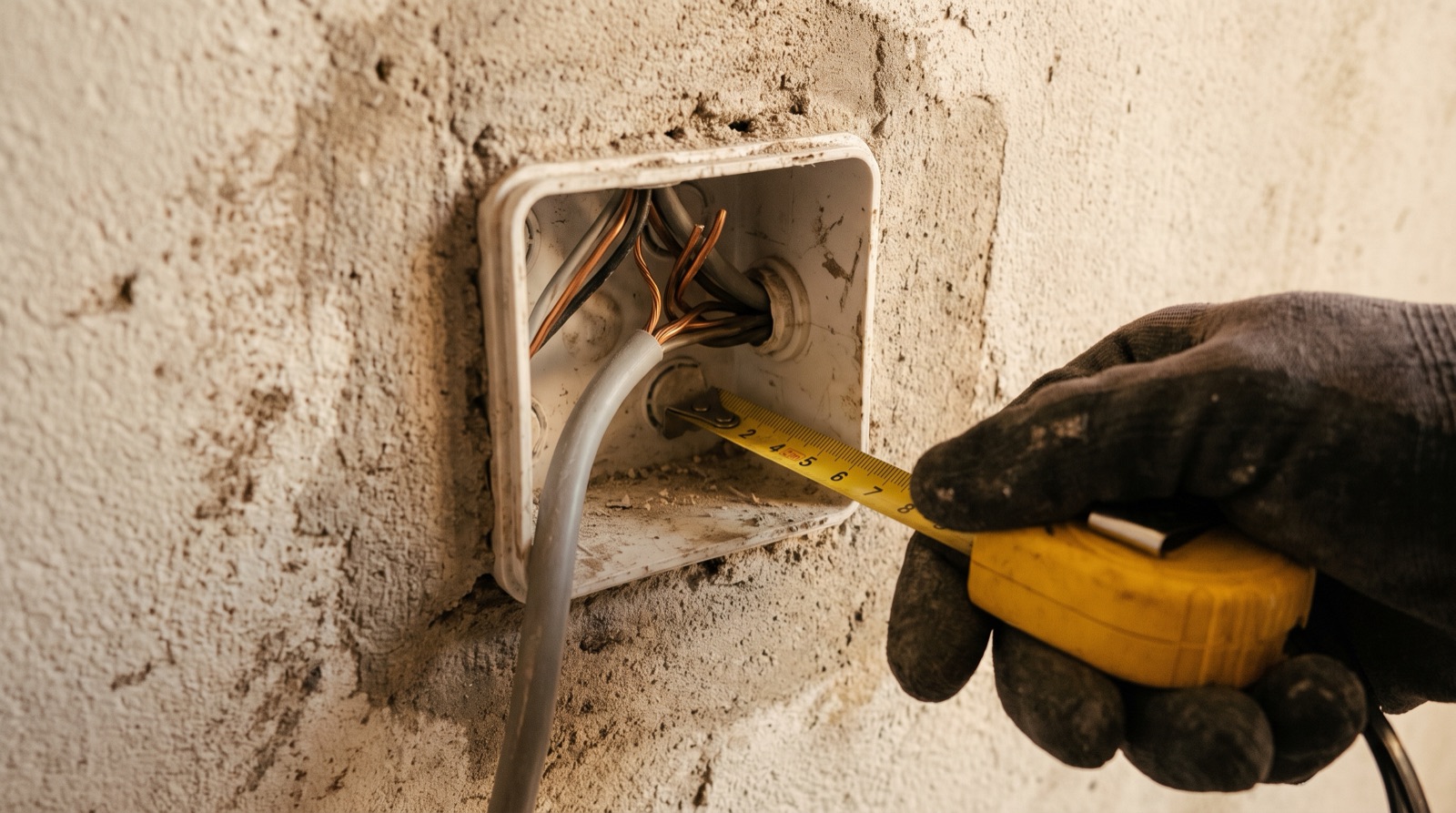
Smart switch back box Malaysia: shallow boxes are the second most common install failure after the neutral. How to measure the depth and the gang count.
Tell us about your space. Our B2B team will reply within one business day with a recommended setup and quotation.
WhatsApp us →
[email protected]
+603-5880 5486