







Smart Home Site Survey Malaysia: A Room-by-Room Checklist
A smart home site survey Malaysia checklist: how to record neutral presence, back box depth and circuit ID at every switch position, before you quote.

Answer up front — A device list is not a quotation. Structure the quote in separate blocks — devices, labour by position, first fix, second fix, commissioning and handover — plus consumables, and state the number of positions in each room so the labour is checkable. Anchor every line to a dated site survey and give the client a written variation clause. The structure is below. The rates are yours to set — do not take a number from anyone else's quote, including ours.
Put a client on the hook for a quote that reads like a shopping list, and every hour you spend on site is a deduction from a fixed number. You lose three ways at once: the hours are unbilled, the client believes the total is fixed, and there is no written record of what was actually in scope on the day you looked at it.
The fix is not a bigger number. It is a structure that makes the number checkable — so that a variation is a variation, and a return visit is a return visit, and neither one is a negotiation you are already losing.
Also be clear with the client about what a device price is. A Panel Hub S1 Plus, a Motion Sensor P1, a Water Leak Sensor T1 — those are hardware lines, and none of them is labour. The quote is where labour lives. For current device pricing, ask us rather than working from a number you saw somewhere else.
| Block | What goes in it | Why it is separate |
|---|---|---|
| 1. Devices | Every item, with quantity, and whether it is supplied, supplied-and-programmed, or client-supplied | Shows the client the hardware cost on its own, so the labour line is not read as margin |
| 2. Labour — by room or zone | Each room, with the number of positions in that room stated | Turns labour from an opinion into a count the client can check against their own house |
| 3. First fix | Chasing, conduit, new or deeper back boxes, network runs, any DB or circuit work | Usually the other trade on site while the wall is open. Two trades, two invoices, no argument later |
| 4. Second fix | Fitting devices, terminating, pairing, app setup, scene building | The part that is entirely yours and entirely dependent on first fix being right |
| 5. Commissioning and handover | A named line, with a named hour count | Commissioning is not a favour. It is the deliverable, and it is where the margin lives or dies |
| 6. Consumables | Cable, conduit, saddles, glands, trunking, blanking plates, screws, labels, adhesive | Small money, and the fastest way to lose it |
Two of these do the heavy lifting. Labour by room, with positions counted is what turns a fixed number into an estimate the client can sanity-check themselves. And commissioning as a named line is what stops it being treated as something absorbed into the device price.
Every one of these has eaten a job:
The trap is this: three tiers, and your actual recommendation buried in the middle one. The client reads a recommendation from a paid contractor as "this is what he would have done if it were free", and they take the cheap one. Then the job you really wanted is the job you did not get, and the job you did get is the one with the most risk.
What works instead:
Unquoted work becomes a dispute. Every installer knows it. The remedy is a clause, agreed before the work starts:
Any work not recorded on the site survey dated [date] and referenced in this quotation is a variation. Variations are priced before work proceeds, confirmed in writing by the client, and invoiced separately. This quotation is valid for [period] and assumes [stated assumptions].
That single paragraph does more for the job than any discount you could offer. It also protects the client, which is worth saying out loud — the survey reference means the client can see what was agreed, and if something was missed at survey they can point at it.
Three supporting pieces:
A shape you can adapt, with your own rates:
Handover is the product. A client who can run the system, understands what it does not do, and has a name to ring does not generate a complaint. A client who has a set of devices and a folder nobody explained does. Budget the handover as a deliverable, write the record, and it is also your defence later — the commissioning record is the evidence that the automation worked on the day you left.
For the device side of the cost conversation and what a realistic package looks like, what a smart home costs in Malaysia sets out indicative budget ranges for the hardware. Labour sits on top, and that is exactly the line this post exists to make visible.
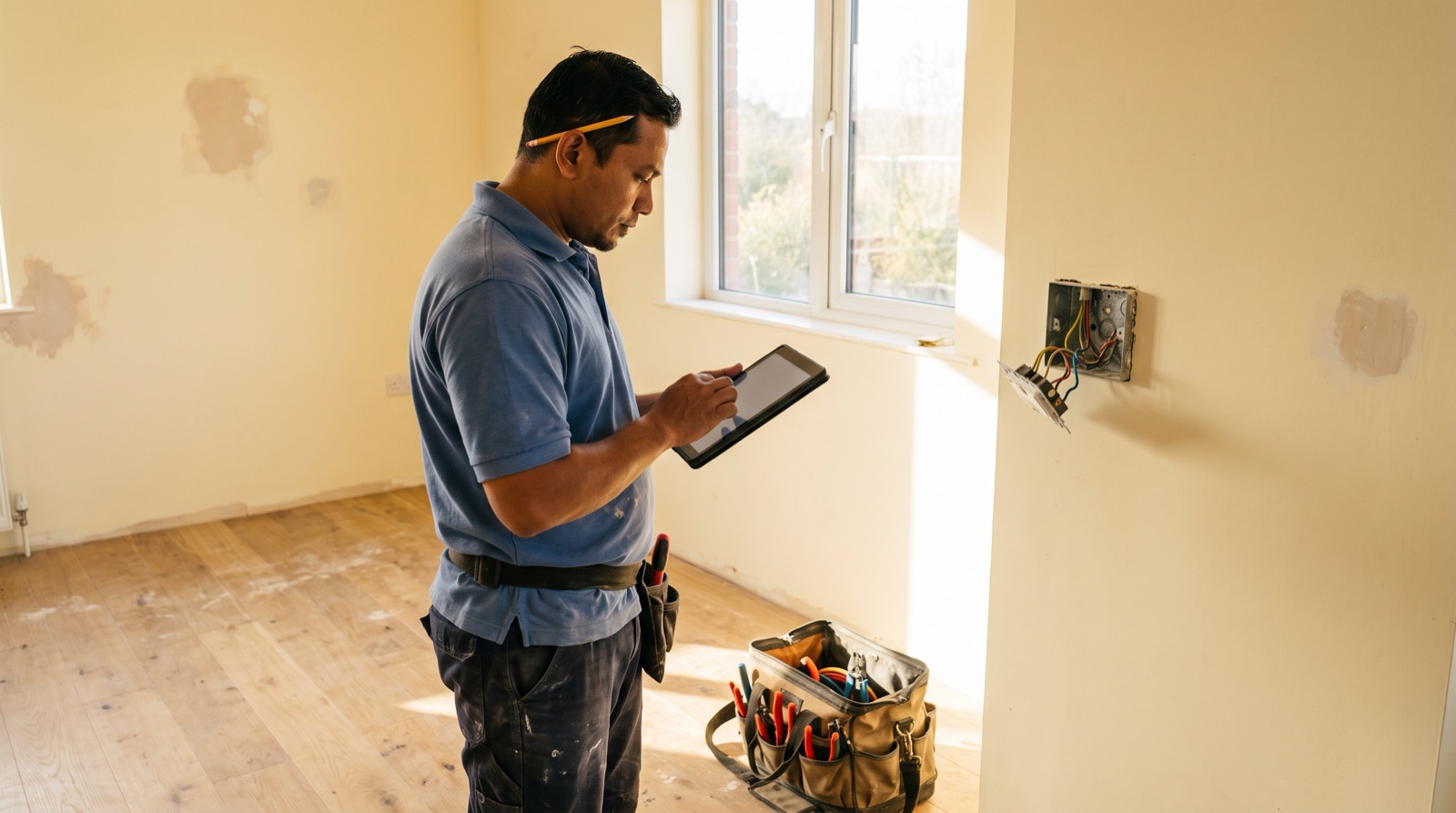
A smart home site survey Malaysia checklist: how to record neutral presence, back box depth and circuit ID at every switch position, before you quote.
Smart home cost in Malaysia: rough RM500, RM2,000 and RM10,000 budget bands, what each one typically covers, and why installation labour is a separate line.

From the official Aqara Malaysia distributor: the current range, which products need a neutral, back box and gang needs, aircon loads and local support.
Tell us about your space. Our B2B team will reply within one business day with a recommended setup and quotation.
WhatsApp us →
[email protected]
+603-5880 5486