







Smart Switch for Aircon and Water Heater in Malaysia: 20A Circuits
A smart switch for aircon and water heater in Malaysia needs a 20A device on a dedicated circuit, with inrush testing and isolator advice for installers.
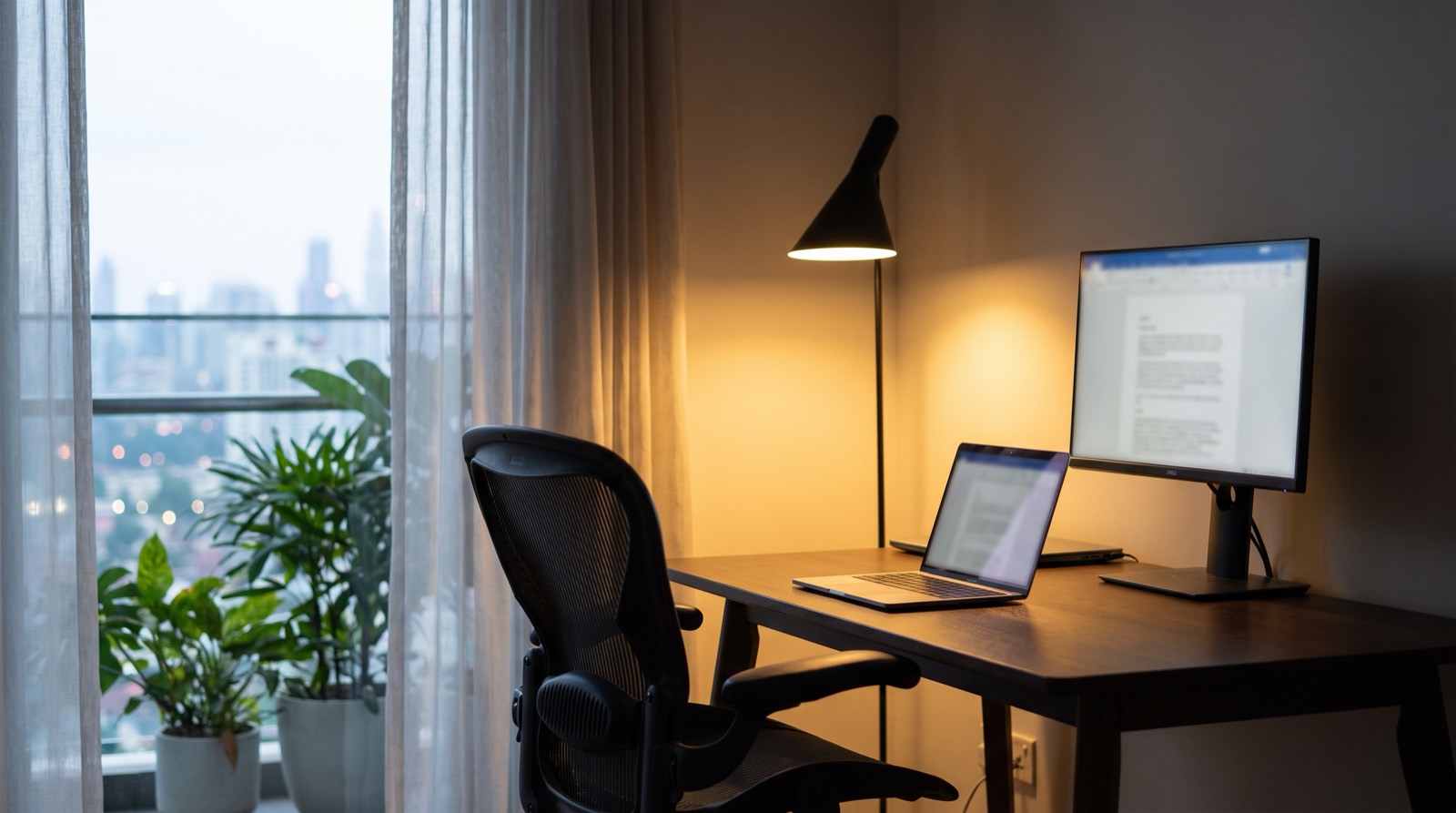
Answer up front — For a home office in Malaysia, three things change a working day more than any gadget: the quality and colour temperature of your light, whether you can control the aircon rather than guess at it, and scenes that switch the room on when someone is genuinely present rather than merely moving. Aqara's 2026 lighting range gives tunable white from 2,000K to 9,000K, and mmWave presence sensing can tell sitting apart from standing — but a presence sensor in a room where you are employed raises a privacy question worth settling with your employer before you install it.
Hybrid and remote work stopped being exceptional in Malaysia several years ago, yet most smart-home conversations still skip the room people spend eight hours in — at a desk, under a ceiling designed for sleeping, not for a screen.
The rest of your house can be automated around your absence. Your home office has to be right while you are sitting still in it, and most sensors behave differently when you stop moving.
| Variable | The common failure | What a good setup changes |
|---|---|---|
| Light | One fixed ceiling light, left on all day at whatever temperature it arrived with | Separate control of task light and ambient light, and colour temperature that shifts through the day |
| Aircon | Set-and-forget at 22°C from 9am to 6pm, or a wall-mounted remote you have to get up to | Control you can reach, and a way to trim the room rather than run the whole system |
| Presence | A motion sensor that switches the room off the moment you stop moving to read | Detection that still sees you when you are seated and still |
Everything else in a home office — robot vacuums, coffee machines, blinds — is nice. These three are what you notice at 4pm on a Thursday.
A typical Malaysian home office has a single ceiling light and, if the occupant is serious about screens, a desk lamp. Both are usually at a fixed colour temperature, and that is the missed opportunity.
Colour temperature is measured in kelvin: around 2,000K is warm and orange, 9,000K is cool and blue-white. That wide range is what a work room needs.
| Moment | Problem with a fixed setting | Where to set the tunable white |
|---|---|---|
| 9am, room still cool from night | A single cool-white light feels clinical and hard to wake up to | Mid-range, closer to 4,000K, warming as the morning goes |
| 2pm, blinds half down | Warm light plus daylight reads muddy and yellow on screen | Match roughly to the daylight coming in, so the two do not fight |
| 7pm, last hour | The same cool light you had at noon is now harsh on tired eyes | Low range, 2,000K–3,000K |
| Two-hour video call at night | Overhead light is the worst possible light for a camera-facing person | Kill the ceiling light, keep a bias light or a lamp behind the monitor |
Three products from the September 2026 wave suit this room. The Floor Lamp T1 carries RGBIC colour with up to 1,000 lm of white across eighteen individually controllable zones, plus that 2,000K–9,000K tunable white range. The LED Downlight T2 has an ultra-thin profile for low ceilings and comes in a tunable-white-only version up to 1,200 lm — the honest choice for a room that does not need colour. The LED Strip T2 is the under-cabinet and behind-the-monitor option: 108 LEDs per metre, eighteen zones every three metres, trimmable to length.
All three run Thread and Zigbee, are Matter-enabled, and work with Apple Home, Home Assistant, Amazon Alexa, Google Home, SmartThings and Homey. Pricing was not announced at the launch event in September 2026 and there is no confirmed Malaysian price. Confirm with us before you plan a budget around them.
If your office already has downlights, this is not necessarily a case for replacing them. A smart switch or dimmer module cannot shift colour temperature — a standard wall dimmer only dims. If kelvin through the day matters to you, that is a luminaire decision, not a switch decision.
Heat, humidity and rainfall push nearly every Malaysian household toward aircon, and in a home office that doubles as a study nook, the aircon is often the most-used appliance in the room.
The problem is rarely that it cannot be controlled. It is that the control is an infrared remote at the door, or an app that stops working when the internet drops. Malaysian research on smart home adoption flags exactly this: without a connection, users have limited or no access to their appliances. An aircon you can only reach from the cloud is one you cannot turn down when a fibre outage hits in a tropical downpour.
This is why local-first matters more in Malaysia than in places with temperate summers. Control, automation and the decision-making should happen on your own network, in your own home. If the internet drops, the lights and the aircon should still respond.
Aqara's Thermostat Hub W200, announced at CES 2026, is built around "adaptive temperature" guidance developed with Apple. Adaptive Temperature uses an iPhone to adjust the thermostat based on activity states such as home, sleep, away and extended away. That is a different idea from a timer: the question stops being "what time should the aircon turn on" and becomes "who is actually in the room".
There is no confirmed Malaysian price for the W200. Confirm with us.
Before any of this, check what is on the circuit. Aircon, water heater and heavy kitchen loads usually need their own circuit and a 20A supply. We covered that in detail in aircon, water heater and 20A circuits.
Here is the honest problem with a home office and a motion sensor. A motion sensor detects movement. You are at a desk, so you are not moving. After the timeout expires, the room turns off — or the automation you wrote for "leaving the room" fires while you are still sitting in it. This is the commonest reason people conclude presence sensing is pointless in an office.
A presence sensor is a different device. Aqara's FP400 Spatial Multi-Sensor uses 60 GHz mmWave radar with an upgraded AI sensing algorithm. It tracks the real-time position of up to ten people at once, covers up to 10 m depth by 8 m width with a 120-degree field of view, divides a room into up to eight zones, and distinguishes standing, sitting and lying down. It has no camera, which is the privacy argument Aqara makes against connected cameras in the room.
The coverage geometry matters more than the headline numbers. Recommended mounting height is 3–4 m; at 3 m the sensor covers up to 5 × 6 m for motion and 4 × 5 m for presence directly below. That is the figure to check against your room — if the sensor sits high in a corner of a standard condo ceiling, the usable zone is smaller than the headline suggests.
Three limitations you should know before you buy anything:
The hub question is covered in zigbee, Wi-Fi or Matter: choosing a hub, and the fitting work that decides whether a dimmer can be used at all is in LED load and dimming compatibility.
If you are employed and work from home, a presence sensor in your office is not only a light sensor. It is a record of when you were at your desk, how long you were there, and — with an mmWave unit that distinguishes posture — what you were doing.
That record is about you, not about the room. And that means two conversations, not one.
The first is with yourself. Decide what you are comfortable having in your home network and what you are not. Data held locally on a hub you own, with no camera pointed at your desk, is a materially different thing from the same data on someone else's cloud. Know which you are building before you buy anything — and if you wire the system into a third-party platform, know that it changes the answer.
The second is with your employer. Some employers ask what technology is present in a home office, whether meetings can be recorded, or whether screens are monitored as a matter of policy. A presence sensor that logs your working hours is adjacent to all of that, and the honest position is that you should raise it rather than install it quietly. An undisclosed device turning into a workplace issue is not worth the automation you gain.
Malaysia's Personal Data Protection Act 2010 (Act 709) sets out principles around how personal data is collected and used, including notice and purpose limitation. We are not lawyers and this is not legal advice — but the practical point stands independently of the statute: data about your work pattern is personal data about you, and it deserves a deliberate decision.
There is a version of this that avoids the problem entirely, and for many home offices it is the better build: use a desk presence method that is local and visible — a desk lamp, a physical switch, a contact sensor under the desk, or a smart button you press when you start. You get the room-on-room-off behaviour, and the record stays something you chose to create.
Related: smart home and your electricity bill for what an aircon running all day costs, and why your smart device keeps dropping off if reliability becomes the issue.
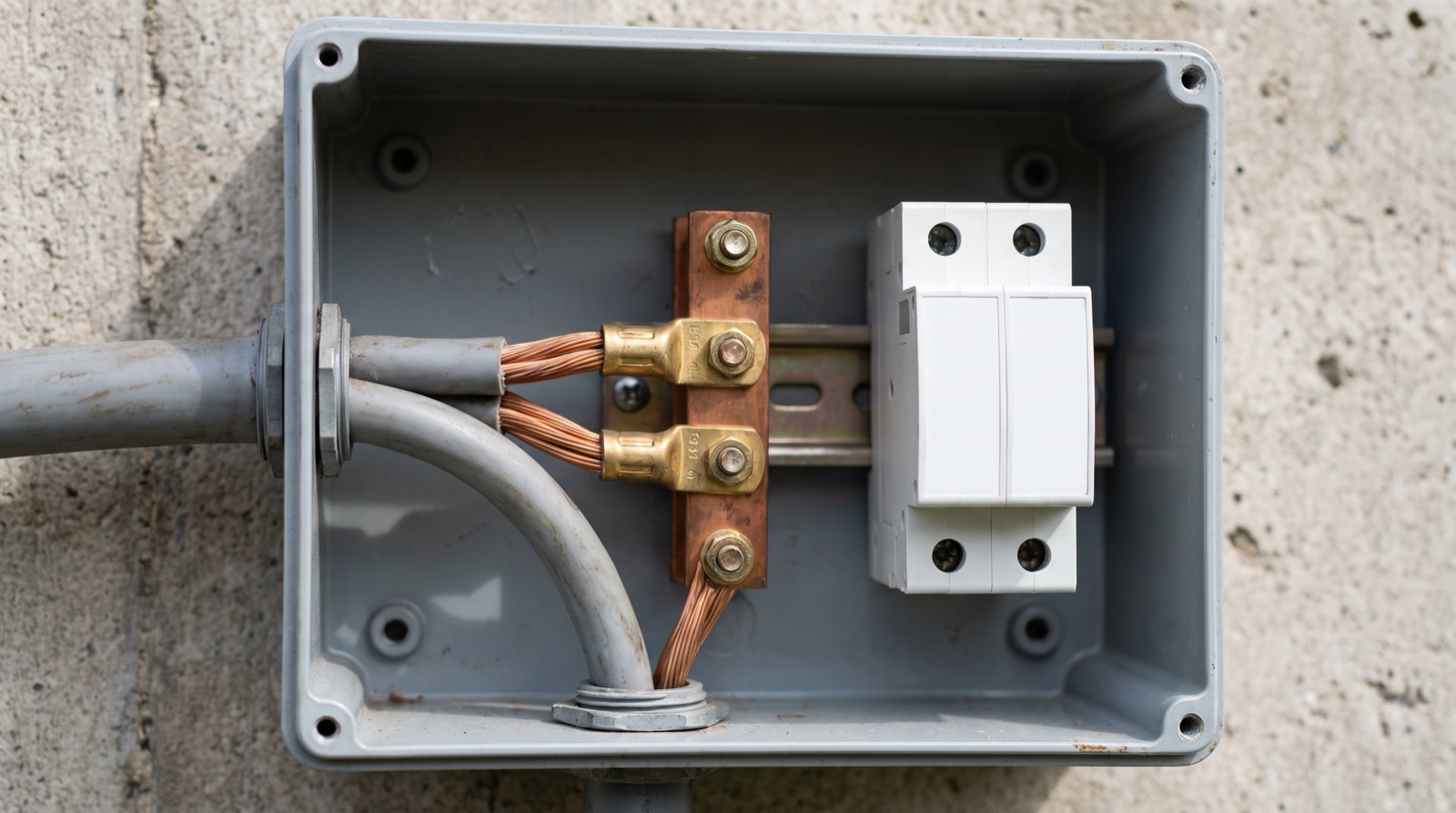
A smart switch for aircon and water heater in Malaysia needs a 20A device on a dedicated circuit, with inrush testing and isolator advice for installers.
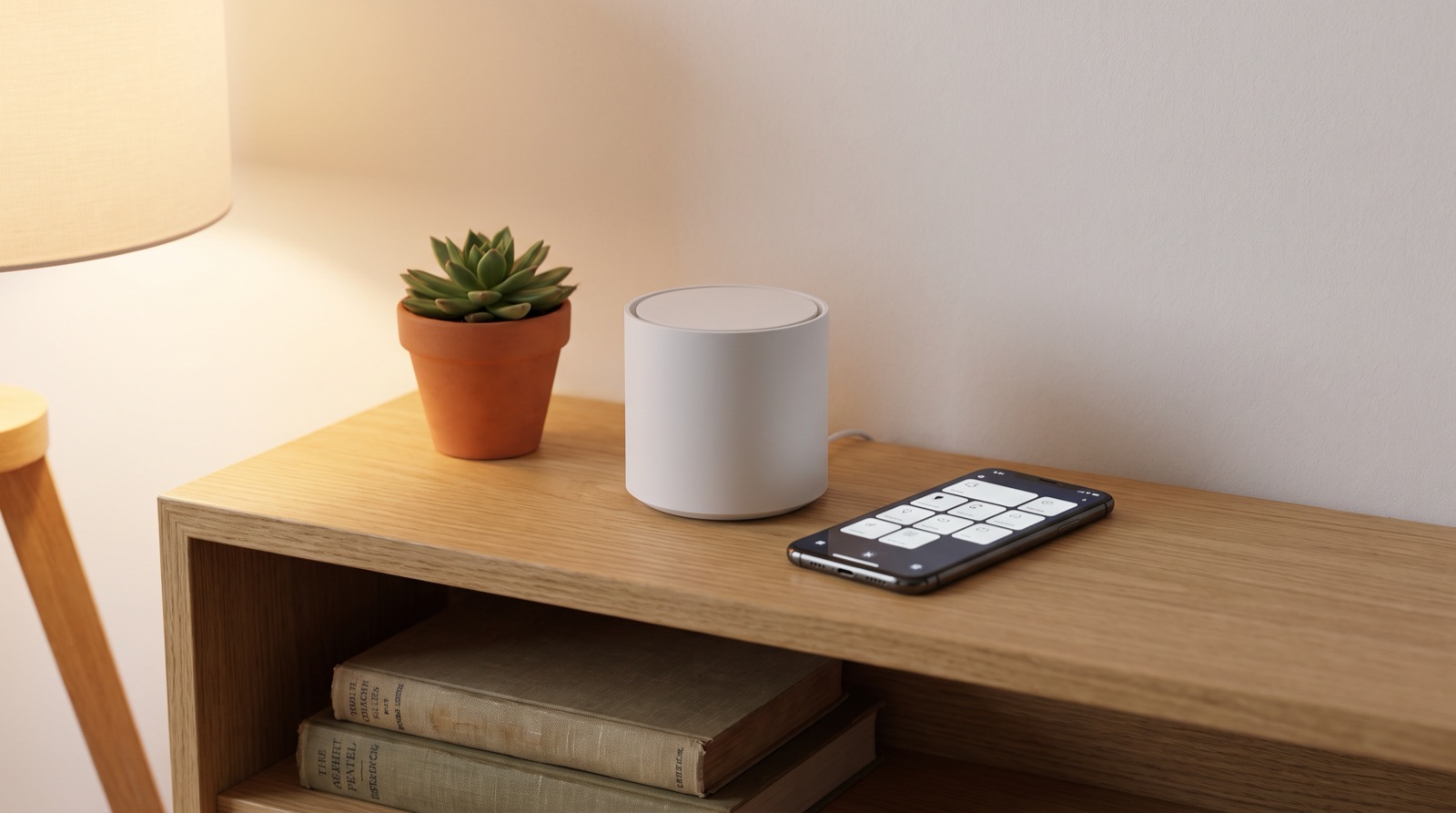
Zigbee vs Wi-Fi vs Matter smart home in Malaysia compared. Learn why local control matters, what a hub does, and what actually happens when the Wi-Fi drops.
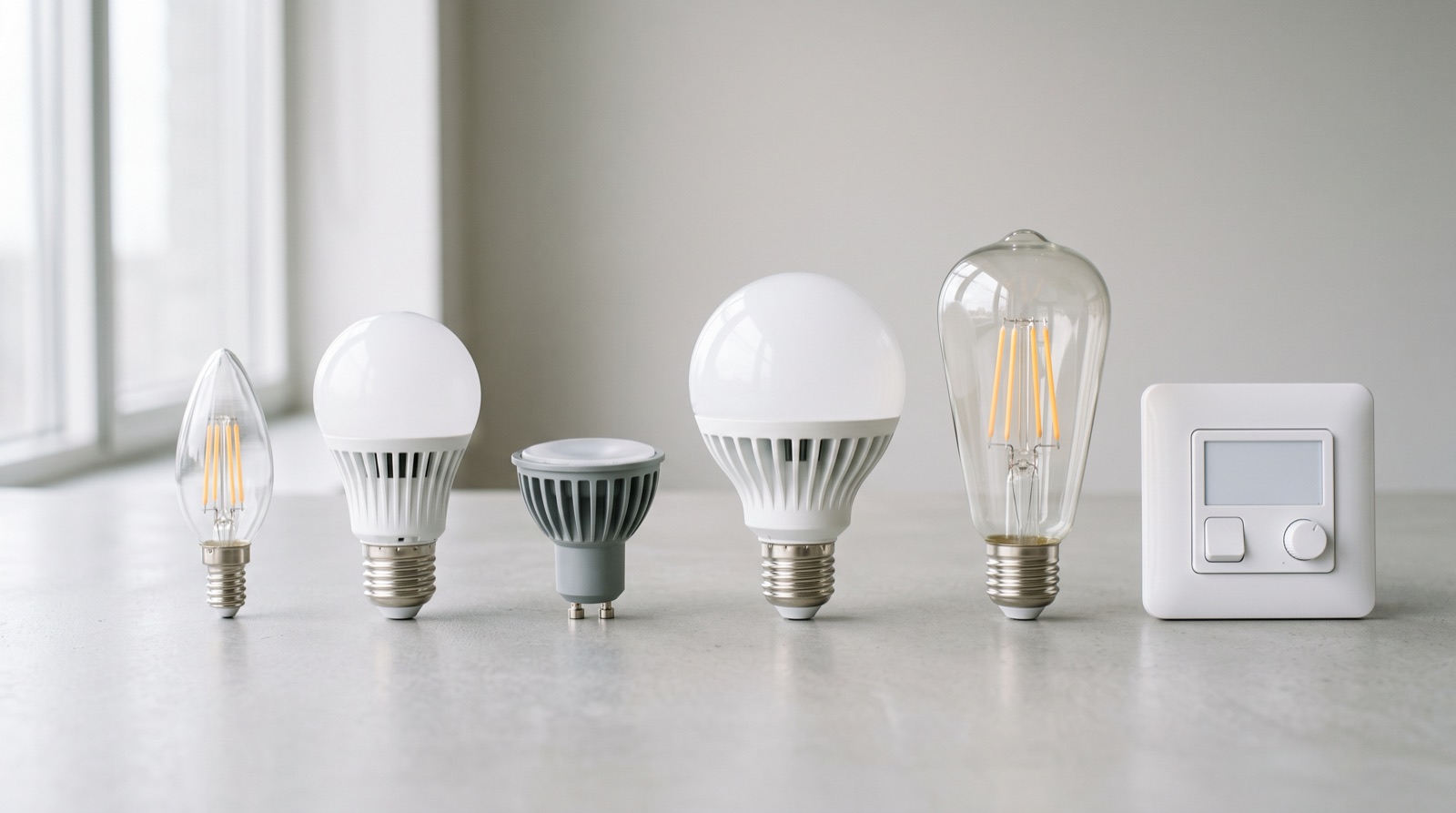
A smart dimmer LED compatibility guide: minimum load, driver behaviour, flicker causes, the 20A rule for aircon and water heaters, and the capacitor fix.
Tell us about your space. Our B2B team will reply within one business day with a recommended setup and quotation.
WhatsApp us →
[email protected]
+603-5880 5486