






Aqara Home App Guide Malaysia: Setup, Pairing and Sharing
An Aqara Home app guide for Malaysia: what the app is for, how to pair devices to your hub, how to name rooms, and how to share your home with family safely.
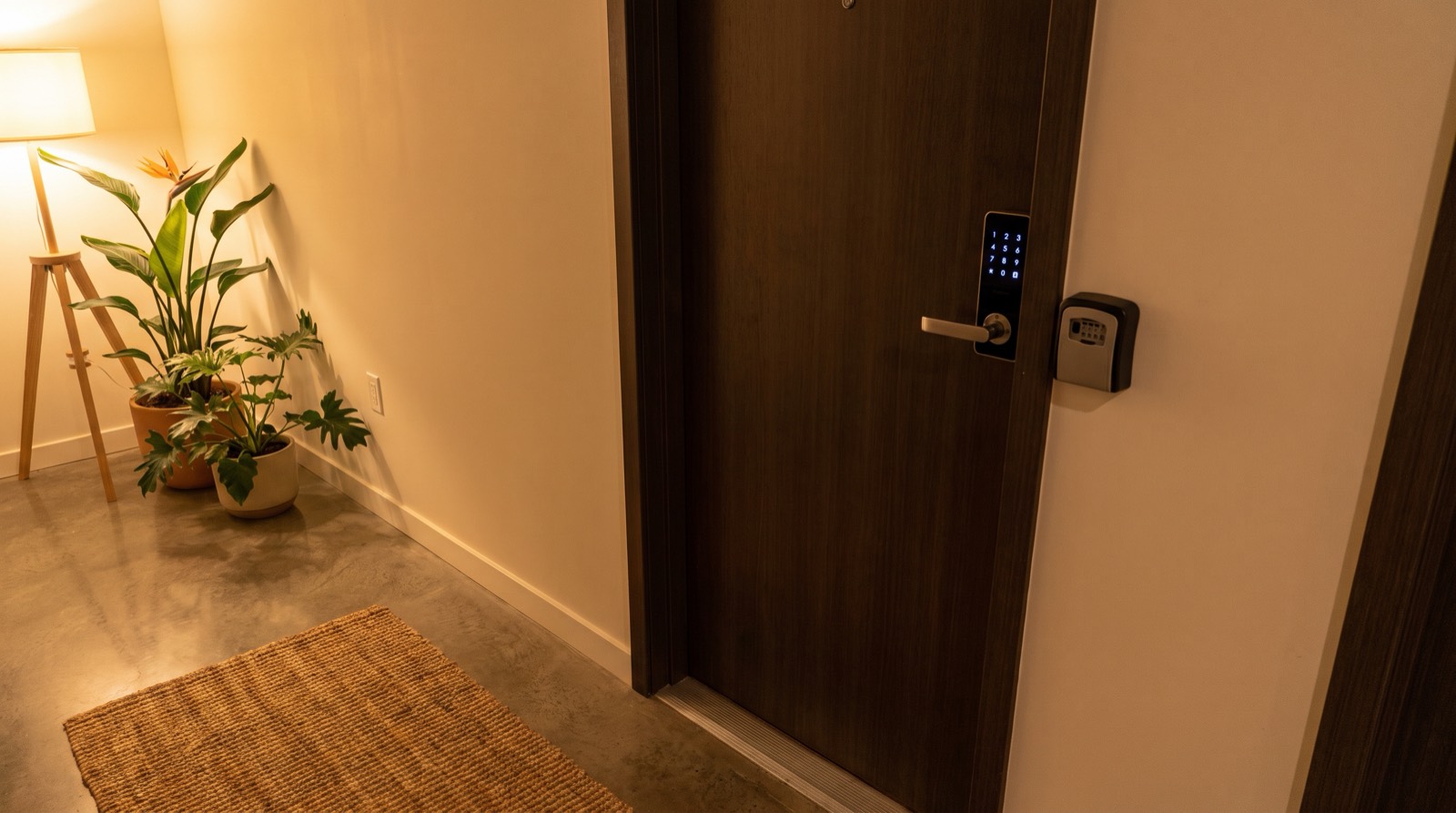
Answer up front — A smart lock is the right tool for a short-let because it changes when someone can get in, not who you trust. Issue a credential that begins at check-in and stops at checkout, and a guest who overstays loses access at an hour you chose rather than at an hour you discovered. What a smart lock does not do is manage a guest you cannot reach, or secure anything other than the door it is fitted to.
There is already an article on this site about giving someone access to your house without lending them a physical key. That is a household problem: the people coming through your door are people you know, the schedule is roughly predictable, and the worst outcome is an awkward conversation.
A short-let is an operator problem, and the difference is not cosmetic.
| Household lending | Short-let operator | |
|---|---|---|
| Who is the stranger | Nobody — friends, family, cleaner | A different person every few days, many of them never met |
| Trust model | Character-based | Time-boxed access |
| What you are managing | Who let themselves in | Who is owed entry, and when that entry stops |
| Main failure | Forgotten code | Expired code for someone who has not left |
| When you are not there | Rarely | Most of the time |
| Who cleans | The person you chose | Often a different person from a different company |
In a household you are managing relationships. In a short-let you are managing a timeline, and a timeline is something a lock can actually enforce.
The reason short-let hosts keep going back to physical keys is not sentiment. It is that the key handover is a person-to-person event, and it does not scale past a handful of properties.
What a lock replaces is not the key. It is the handover. The entry sequence becomes: booking confirmed → credential issued → credential active at the stated time → credential expires at the stated time. Nobody has to be awake at 2am for a landing that was rebooked after midnight.
That is worth real money in a market where check-in times run late and arrivals are spread across the evening rather than clustered in the morning. The point is not that a lock automates hospitality — it automates the door.
The useful primitive is not "a PIN". It is a credential with a validity window.
Expiry is the part that changes behaviour. A code that stops working on a defined date removes the argument about whether the guest should have left. It does not remove them from the property — it removes their ability to re-enter it.
Two honest limitations before you build a workflow on this:
Which credential types each lock exposes varies by model and by app version. Aqara's lock apps issue and revoke codes; the precise set of scheduling options available to you depends on which lock you have and which build you are running. Confirm what your model actually exposes before you promise a guest a time window — and see how Aqara Home pairing and sharing work.
Expiry is not enforcement. A code that expires stops a key from turning. It does not stop someone already inside from staying, and it does not retrieve a key the guest kept.
This is the case that makes hosts nervous, so let it be concrete.
A guest cancels at 11pm and you are asleep an hour away. Without a lock you have a problem: a physical key may already be in their possession, and there is no version of this where you know. With a time-boxed credential, the code for that stay simply never becomes active, or stops being active, and nothing about the door state has to be negotiated at midnight. You revoke one item in an app.
A guest overstays is harder, and no lock fixes it. You extend a window or you do not. What the lock gives you is a clean boundary to argue from: access ended at this time, and the record shows it. That is a different conversation from a key that is somewhere in a bag.
Where a lock genuinely cannot help: a guest who is on site, has not left, and is refusing to leave. At that point you need the people and the process, not a credential — the management corporation if the unit is in a condominium, the local authority, and in extremis the police. Automating the door does not replace any of that.
Say this plainly, because it is the most common over-claim in this category: a smart lock manages access. It does not police a guest.
The lock is responsible for one thing — deciding whether a presented credential is valid at this moment, and recording what happened. Everything beyond that is a human process: check-in communication, house rules, cleaning schedule, what you do about a person who will not leave.
A short-let's real security boundary is also much wider than the door. It typically includes the car porch, the perimeter fence, the gate, and often the water tank roof — a known issue for ground-floor Malaysian units. A lock on the main door is one layer of that. The rest is covered in what actually protects a Malaysian home while you are away, and the camera decisions — including the privacy ones — in camera and doorbell placement and privacy.
| Model | Protocols | Power | Unlock | Notes that matter for a short-let |
|---|---|---|---|---|
| U200 Lite | Thread + Bluetooth | Rechargeable Li-ion 7.4 V 2000 mAh, about 6 months | NFC | Quiet mode, gyro auto-lock and timed auto-lock are disabled by default and Aqara Home only |
| U300 | Thread + Bluetooth + NFC | 4 × AA, no rechargeable option; USB-C emergency port 5 V | Keypad + fingerprint | Works from a flat battery via the emergency port; no IP rating published |
| U400 | Matter over Thread | Rechargeable Li-ion, about 6 months, USB-C in-situ, warns at 20 % | UWB hands-free, fingerprint | 50 fingerprints, 98.6 % recognition rate; UWB unlock needs a select iPhone or Apple Watch and a Thread-enabled Apple home hub |
| U100 | Zigbee 3.0 + Bluetooth | — | Dead bolt | Included here for completeness; the protocol differs from the three above |
Two things follow from that table.
Protocol decides your hub. The U200 Lite's Matter ecosystem support requires a Matter Controller AND a Thread Border Router. The Hub M3, M200 and M100 are Controllers with Thread Border Routers. The Hub M2 is a Matter Bridge only — it has no Thread radio at all, so it is the wrong box for a Thread lock. That distinction is covered in full in how to choose a Zigbee, Wi-Fi or Matter hub.
The U400's headline feature has a dependency chain. UWB unlock — your phone acting as a digital key as you approach — requires a select iPhone or Apple Watch and a Thread-enabled Apple home hub such as a HomePod mini or Apple TV 4K. For a guest arriving cold with a random phone, that is a poor thing to hang a self check-in on. A keypad and a fingerprint reader are the boring answer, and boring is correct at 2am. The full UWB picture is in keyless entry, UWB and smart locks.
Buy through the local channel. Stock sourced outside the Malaysian channel can look cheaper, but what you lose is the local support path: when a battery dies at midnight in a KL unit and nobody can help you, a unit with no local backing is a stranded host. Details in buying Aqara in Malaysia safely.
Airbnb hosts ask this more than almost any other question, so here is the honest answer rather than a number to quote.
Aqara publishes no door thickness figure for the U200 Lite, the U300 or the U400. Their specification tables omit it entirely, and the help-centre FAQ pages are JavaScript-only with no readable text. We are not going to source a range from a retailer listing or a forum thread and present it as fact.
A lock that does not fit its door is the most common failed purchase in this category, and it is not refundable once the spindle is out of the door. Confirm fit with us before you buy, and read smart lock installation across door types for what actually has to be measured.
If your short-let sits in a condominium or a strata scheme, there is a question to settle before the lock, not after it: what does your management corporation permit on the main door?
Some schemes regulate what may be altered to the entrance door, and the answer is scheme-by-scheme. Before you order anything:
Getting this wrong is expensive and slow in a way that no amount of product research protects you from. Condo rules and management permissions covers how to frame the question.
Ranked honestly, the lock is third or fourth:
Talk to us about a short-let setup. Bring the unit address or the door type and we will tell you what fits, what your management corporation is likely to ask, and what it costs before you commit. Talk to the team
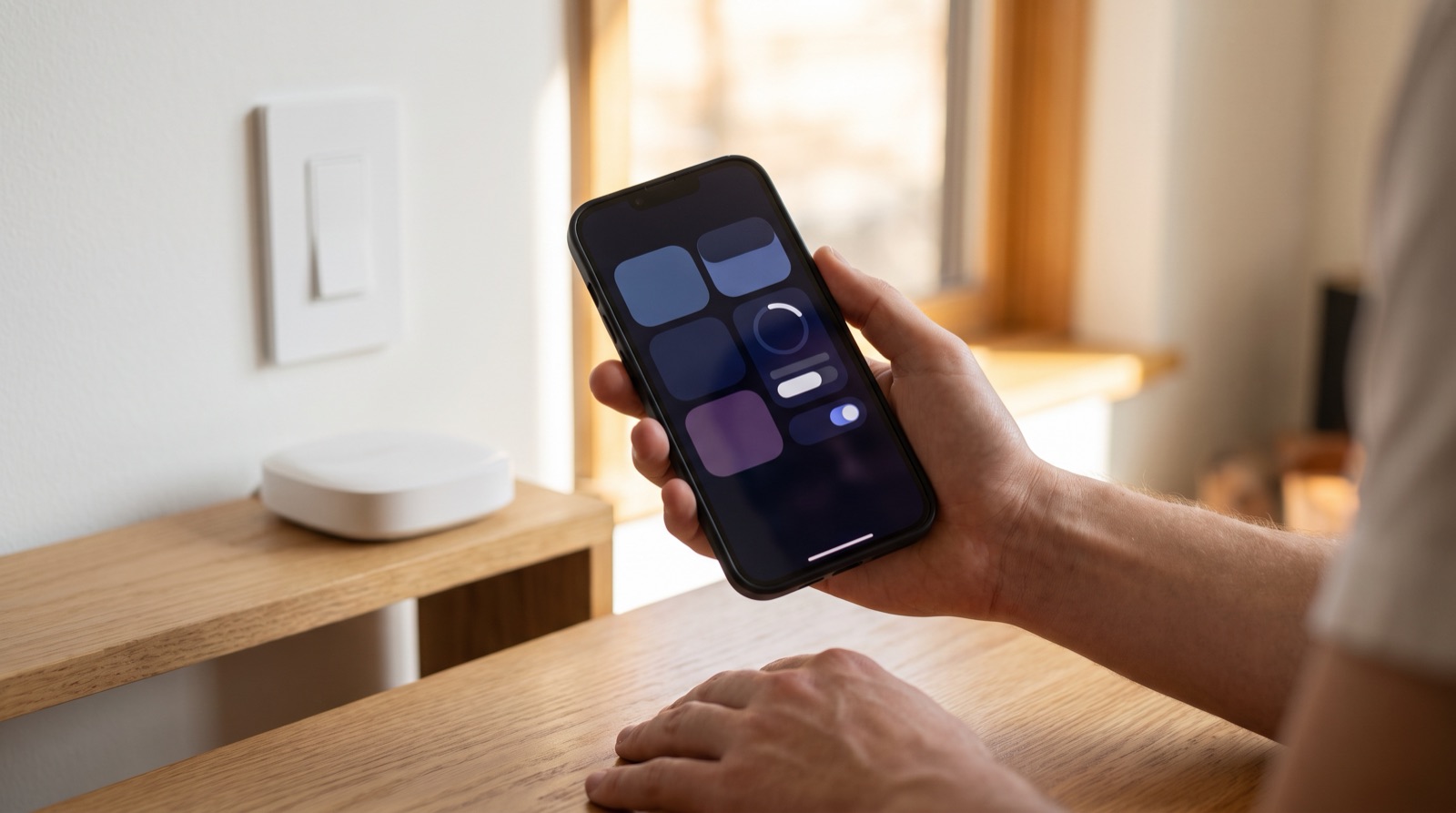
An Aqara Home app guide for Malaysia: what the app is for, how to pair devices to your hub, how to name rooms, and how to share your home with family safely.
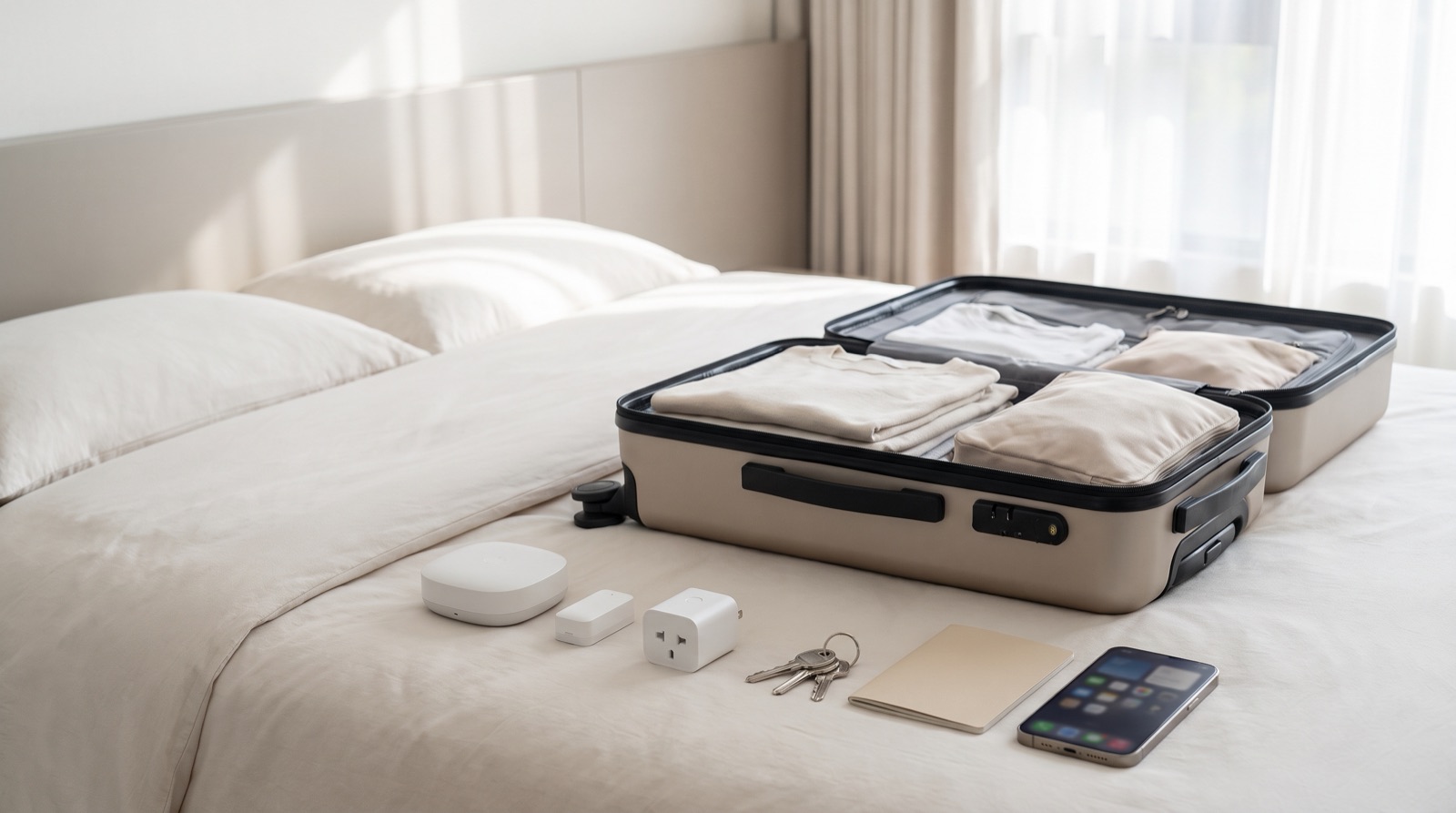
Home security while travelling Malaysia: what sensors tell you from another country, what they cannot, and what to set up before you fly out from KLIA.
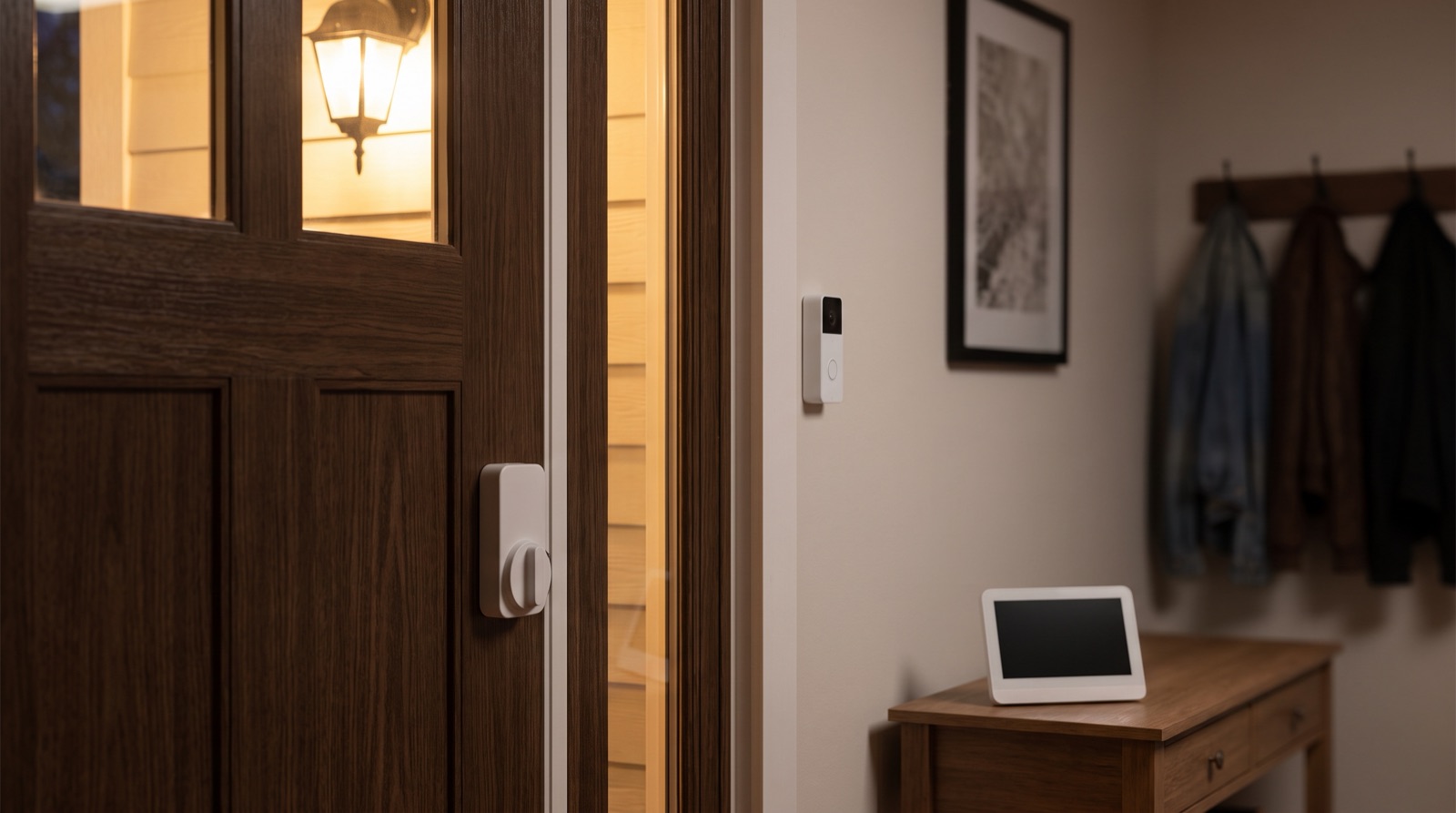
Smart doorbell camera Malaysia placement, field of view and PDPA privacy, with Aqara doorbells and camera hubs explained for homeowners.
Tell us about your space. Our B2B team will reply within one business day with a recommended setup and quotation.
WhatsApp us →
[email protected]
+603-5880 5486