







Smart Home Site Survey Malaysia: A Room-by-Room Checklist
A smart home site survey Malaysia checklist: how to record neutral presence, back box depth and circuit ID at every switch position, before you quote.
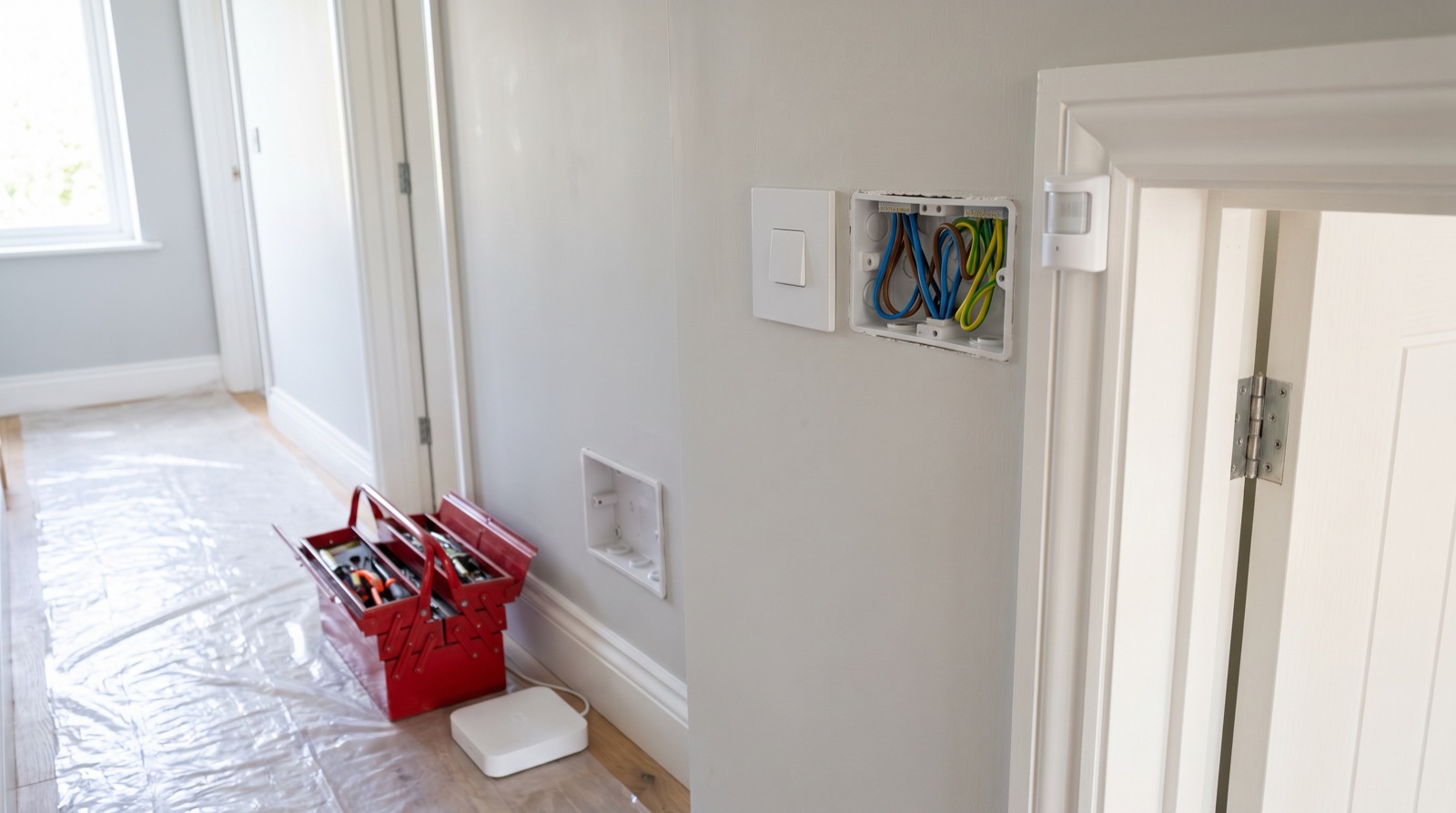
Answer up front — Ten stages, in order: enquiry and qualification call, site survey, written quote, product selection, ordering, installation, first fix and making good, commissioning, client walkthrough, handover pack. Two of them — the survey and the written quote — are the ones that prevent the other eight going wrong. Everything else is execution, and execution is only hard when those two were skipped.
This is the post to bookmark. It is the process, in order, with what happens at each stage, who owns it, and what document comes out of it. If you are a wireman, an automation installer, or a main contractor who subcontracts automation, this is the shape of a job that runs properly.
| # | Stage | What happens | Who is responsible | The output you keep |
|---|---|---|---|---|
| 1 | Enquiry and qualification call | Find out what the client is actually trying to fix, not what device they think they want. Ask what is already installed, what has been tried, whether the job is a renovation or a finished house, and whether the decision is final | You | A short written summary of the enquiry, back to the client the same day |
| 2 | Site survey | Room by room. Open the boxes. Record neutral present or absent, box depth, conductor count, existing switches and fittings, hub position and signal, and the ceiling situation. Count every position | You, with a registered wireman if mains work is likely | An annotated position list — the single most important document in the job. See how to survey a Malaysian home before quoting |
| 3 | Written quote | Devices, labour by room with positions counted, first fix, second fix, commissioning, consumables. Anchored to the dated survey, with a variation clause | You | A signed quote referencing the survey by date |
| 4 | Product selection | Every device chosen against the survey findings, not against what is on the shelf. The switch in room 3 is a no-neutral decision because the survey said there is no neutral in room 3 | You | A device schedule mapped to the position list |
| 5 | Ordering and lead time | Order the full schedule in one go, including spares of the most failure-prone type. Confirm the supply lead time on the day you order and pass that to the client in writing | You, with Synchroweb for stock and lead time | An order confirmation, and a date you can actually hold |
| 6 | Installation | Devices fitted, terminated, and checked one at a time. Fixed mains work is done by a Suruhanjaya Tenaga-registered wireman — Act 447 | Registered wireman for mains; you for the rest | A working system, position by position |
| 7 | First fix and making good | On a renovation this happens in the main contractor's programme, not yours: chasing, conduit, new or deeper back boxes, network runs, trunking, making good | Main contractor and electrician, per your first-fix list | Photos of every closed position, and a signed-off first-fix list |
| 8 | Commissioning | Pairing, scenes, automations, naming, and testing. Not a favour — a deliverable with an hour count against it | You | A commissioned system that passes the walkthrough. See commissioning and handover testing |
| 9 | Client walkthrough | Sit with the client, on their phone, with their own account. Go through every scene. Show them what to do, what not to do, and how to add a device | You | A client who can operate it without you |
| 10 | Handover pack | The document set the client keeps: device list with model and where it is installed, how to operate it, who to call, what is and is not covered, warranty route, and the survey and quote as the record of scope | You | The pack. It is the end of your liability and the start of your reputation |
Stage 2, the survey, and stage 3, the quote. Everything else in the table is execution. Execution is only hard when the first two were rushed.
The survey is where the cost is either found or invented. A house wired before roughly 2000 can have a neutral at the kitchen switch and none at the bedroom switch two rooms away, because parts were wired or altered at different times. Malaysian wiring is not consistent, and the only reliable answer is to open the boxes and look. A quote built on an assumption about neutrals is a quote you will revisit on installation day, and a client does not enjoy hearing the number has moved.
The survey is also where the box depth, the conductor count and the existing fittings are recorded. A smart module plus the existing conductors may not go into a shallow Malaysian back box. Finding that on a survey is a line in the quote. Finding it on installation day is a callback, a plaster repair and a bad review.
The quote is where the survey gets turned into something checkable. Structure it in blocks — devices, labour by room with positions counted, first fix, second fix, commissioning, consumables — and anchor it to the dated survey. The counting is what makes it checkable: a client can walk their own house and count the switch positions, so they can tell whether the number is sensible. That is the whole argument against the quote looking padded. How to quote a smart home project covers the structure in full.
Do not promise a delivery or an installation date you do not control. We do not publish a supply lead time, and neither should you — not in a brochure, not in a first reply, not as an assumption in a tender.
What you can do is useful and honest:
It will happen. Someone moved a switch, someone added a socket, someone painted over an access panel. The handling is what separates a professional from an amateur:
A client told on day two of a two-day job is usually fine. The same client told on day nine is not, and neither are you.
Two habits separate a job that gets recommended from one that gets forgotten.
Handover pack. The device list, how to operate it, who to call, what is covered and what is not, the warranty route, plus the survey and quote as the record of scope — laid out in full in the customer handover pack. Hand it over on paper or as a PDF, and walk the client through it — stage 9 is not optional and not a phone call.
A named contact. A phone number that a human answers, in Malaysian time. The installer resource hub has the specification and compatibility detail you need when something does not behave, and commissioning and handover testing has the test list to run before you hand over at all.
If the job was a renovation, add one more item to the pack: the as-built position list, updated for anything that moved during first fix. That is the document that stops the next tradesman opening a wall and finding something nobody can explain.
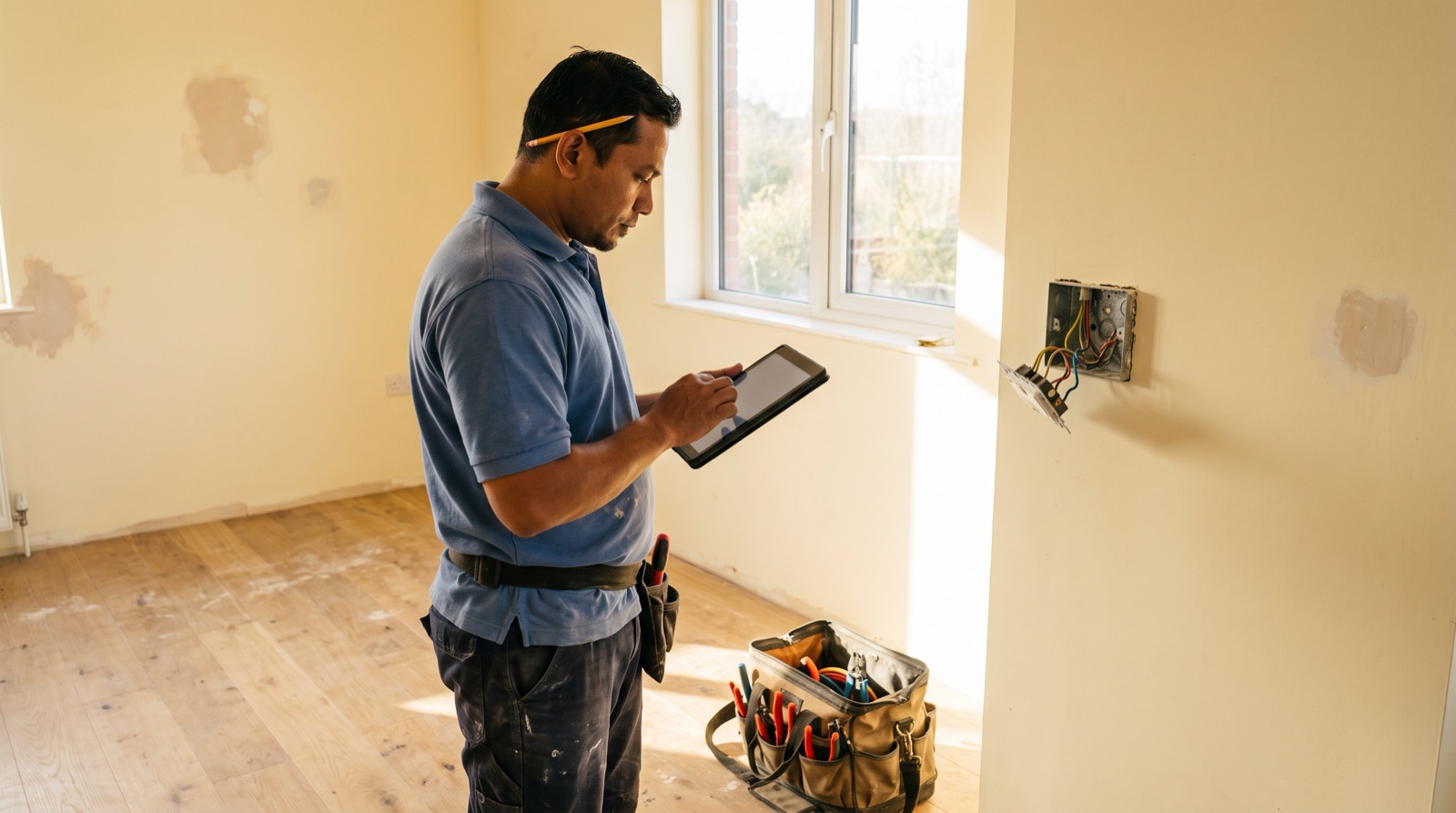
A smart home site survey Malaysia checklist: how to record neutral presence, back box depth and circuit ID at every switch position, before you quote.

From the official Aqara Malaysia distributor: the current range, which products need a neutral, back box and gang needs, aircon loads and local support.

What belongs in smart home handover documentation in Malaysia: device list, hub account, plain-language automations, manual override, spares and warranty.
Tell us about your space. Our B2B team will reply within one business day with a recommended setup and quotation.
WhatsApp us →
[email protected]
+603-5880 5486