







Smart Switch for Aircon and Water Heater in Malaysia: 20A Circuits
A smart switch for aircon and water heater in Malaysia needs a 20A device on a dedicated circuit, with inrush testing and isolator advice for installers.
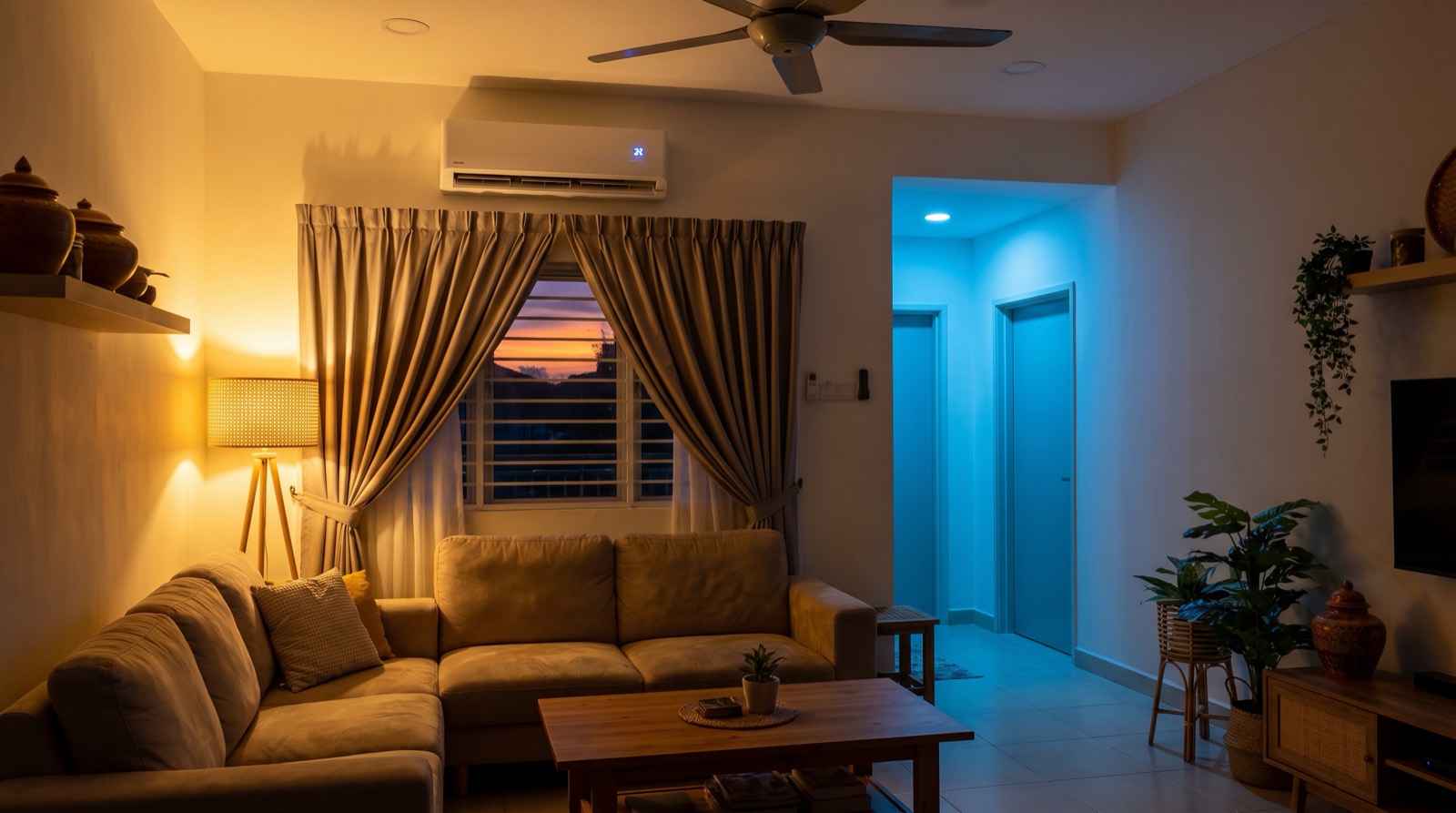
Answer up front — Automate in this order: the aircon and the water heater, because they are the biggest loads in the house and they run unattended. Then the monsoon response, which does work nobody thinks to do manually. Then curtains against the afternoon sun, lighting scenes, and the gate at night. Automate last anything whose failure you would not notice — and if a rule still needs you to open the app, it is not an automation.
There is already a post on what to automate first. That one was generic. This one is Malaysian, specific, and ordered by how quickly you feel the difference — and it ends with the cases where automation is the wrong tool.
| Rank | Automate | Why it ranks here | Effort |
|---|---|---|---|
| 1 | Aircon and water heater | Largest loads, run while nobody is home, highest absolute saving | Medium — needs the right circuit and, for IR, the right hub |
| 2 | Monsoon response | Does something at 3am that you would never do manually | Low–medium |
| 3 | Curtains against afternoon sun | Cuts cooling load and glare before the aircon even kicks in | Medium — motor plus a hard window |
| 4 | Lighting scenes | The most visible, the least measurable | Low |
| 5 | The gate at night | Safety, not convenience | Low |
| — | Anything that fails silently | Automate last, or never | High |
Start here because of a simple fact about Malaysian houses: the aircon runs more hours than any other appliance, and the water heater runs at exactly the wrong time — early morning and late night, when nobody is in to notice it.
Two circuits, two different problems:
Aircon. If you want to control it from a wall switch, you need to know what is on that circuit and what the switch is rated for. Aircon circuits are not lighting circuits and the switch you need is not the one you already have on the wall. The wiring questions are covered in aircon, water heater and 20 A circuits.
If you would rather not touch wiring, infrared bridging is the alternative — with an honest caveat: on the Hub M200, only one IR air-conditioner can be bridged into Matter AC mode. If you have three bedrooms and an IR hub, one of them gets it. The M3 and M200 both carry IR blasters; the M100 has no IR, and neither does the M2.
Water heater. The highest-return automation in most Malaysian homes, because its schedule is almost always wrong — full hot water all day because nobody wanted to think about it at night. Two automations worth having: kill it when the last person leaves, and confirm it is off before you sleep. The circuit matters more here than anywhere else, so check your consumer unit before choosing a switch.
Both of these run locally on your hub. Both keep working when the internet drops. Neither needs a subscription.
This is the automation nobody builds and everybody, eventually, wishes they had.
The logic is a sensor plus a decision, not a schedule:
The last one is the practical one. A power cut during a storm that silently leaves the water heater on and the aircon running is the kind of thing that shows up on a bill. Reasoning and placement are in monsoon and outdoor sensor placement.
Between roughly two and five in the afternoon, direct west sun is the single biggest contributor to a Malaysian living room being hot — and by the time the aircon thermostat notices, the room is already loaded.
Curtains closing on a schedule, before the heat arrives, does two things: blocks the gain, and keeps the room usable when the aircon has not started. The motors:
| Motor | Protocols | What to know |
|---|---|---|
| Curtain Driver E1 — Track (CM-M01) | Zigbee 3.0 only, no Thread | 0.2 N·m, 145.7 × 96 × 46 mm. Built-in lithium, not replaceable. No IP rating and no operating temperature stated on the spec page |
| Curtain Driver E1 — Rod (CM-M01) | Zigbee 3.0 only | 0.2 N·m, 140.5 × 96 × 44 mm, IP20 — indoor only, 0–45 °C |
Two products, one of which is explicitly indoor-only, and Zigbee only on both — so a Thread-only setup cannot use them. Fitting detail is in motorised curtains and blinds installation.
An honest note about a name you may see: Aqara also lists a Curtain Controller C3 and a Curtain Controller SEA. Both of those product pages are empty stubs — H1 only, zero spec table. We will not invent specifications for them. The E1 is the documented option; confirm the others with us before ordering.
The most visible automation and the one most likely to be abandoned, because scenes get set once and never adjusted.
Three that survive contact with real life in Malaysia:
Scenes are also where neutral wire bites: power monitoring requires a neutral wire. If your house predates rewiring, read LED load and dimming compatibility first, since an LED circuit and a dimmer are a mismatch waiting to happen. Design reasoning is in designing smart lighting scenes.
Not the aircon, not the lights. The thing people leave unlocked.
Two automations: the gate locks on a schedule after the last person is home, and the front lights come on as someone approaches rather than all night. The trigger for "someone approaches" is presence, and here the protocol matters — a Zigbee presence sensor, or the FP2 on Wi-Fi, works; an FP1E is Zigbee only and needs an Aqara Zigbee hub. Reasoning in installing presence sensors.
Here is the honest half of the list.
Automate last: anything that fails silently. A leak that runs for six hours with nobody in the house, a water heater that stops, a freezer that warms, a gate that did not lock. Every one of these is a thing you want to notice, and an automation that notifies you about a sensor which is itself broken is worse than no automation, because it teaches you to ignore the channel.
Automate last: anything with a safety consequence you cannot see. Gas, hot water valves, anything on a life-support path. Those want a physical interlock, not a rule in an app.
Never automate away your manual path. If the front door only opens from an app, you have built a worse door than the one you had.
And the test that catches most of them:
Automations that still need a finger on the app are not automations. If a household member has to open the app to get the routine benefit, what you built is a remote control — which is useful, but is a different product and should be judged as one.
Talk to us about what is worth automating in your house. Tell us your biggest loads, your ceiling heights and what you already have installed, and we will tell you which of these five is worth doing first — including when the honest answer is that none of them are, yet. Talk to the team
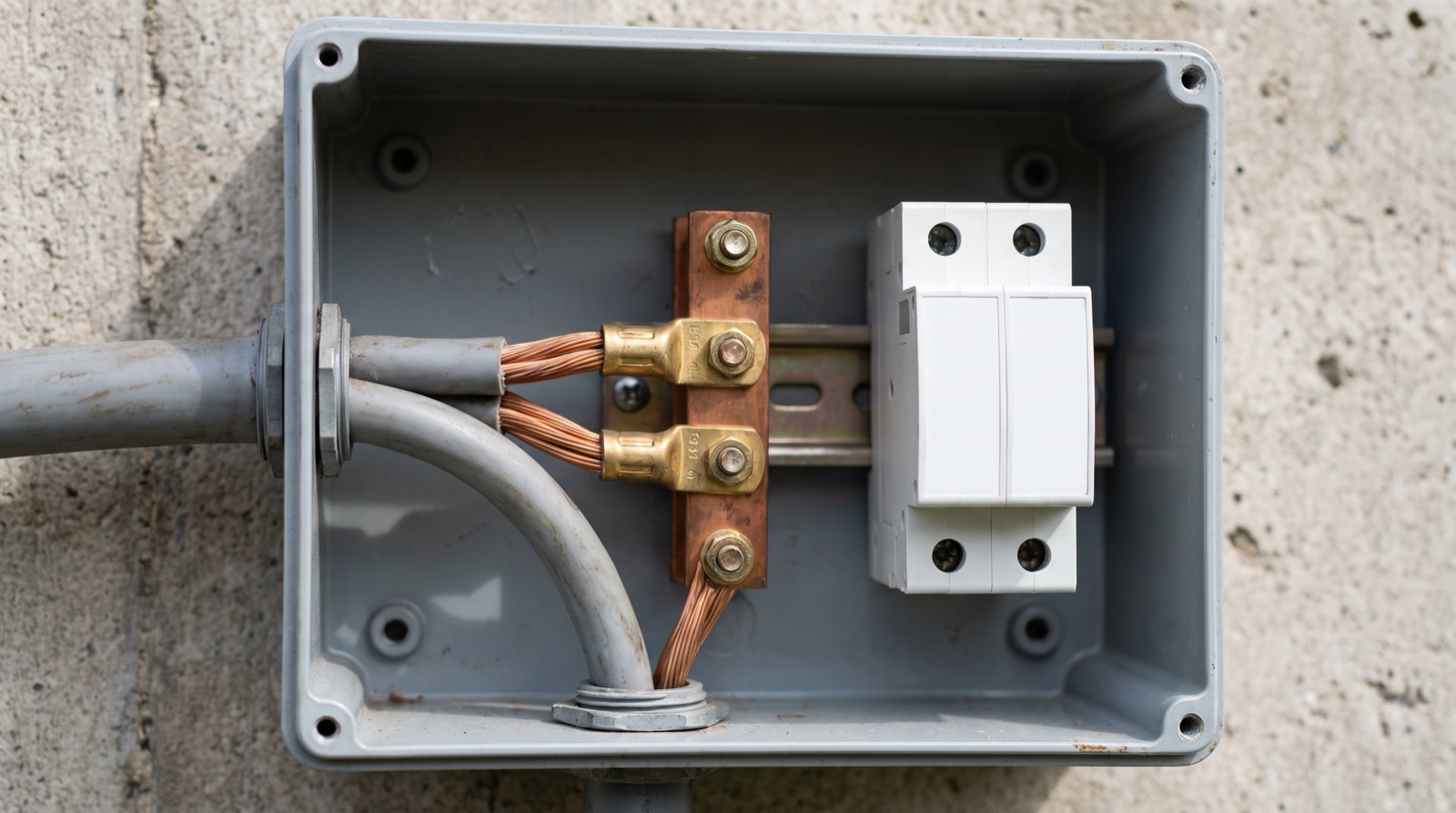
A smart switch for aircon and water heater in Malaysia needs a 20A device on a dedicated circuit, with inrush testing and isolator advice for installers.
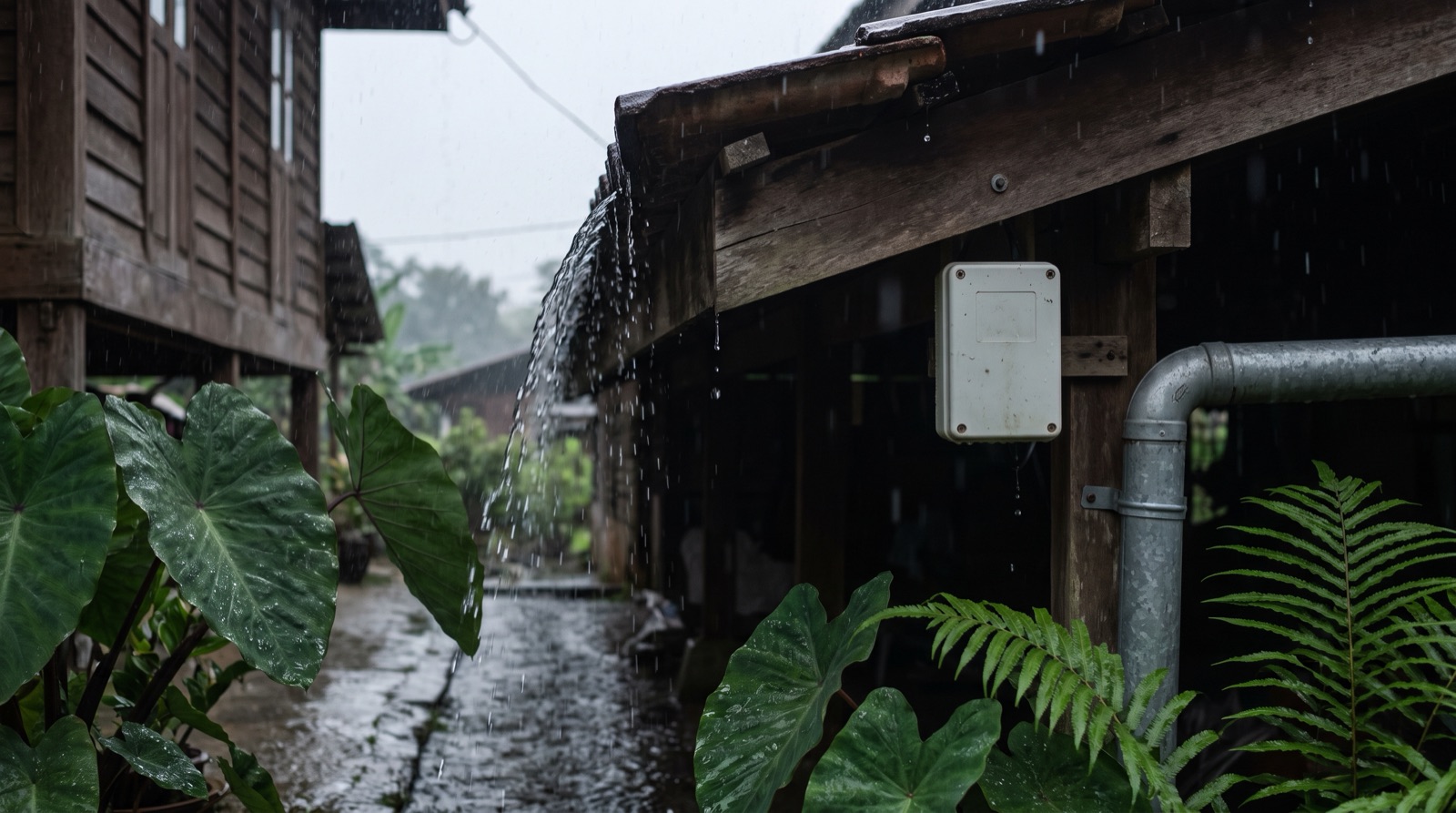
Smart home outdoor sensor Malaysia guide: monsoon sun, rain and humidity, what an IP rating means, why a car porch is not a sheltered spot, and flood advice.
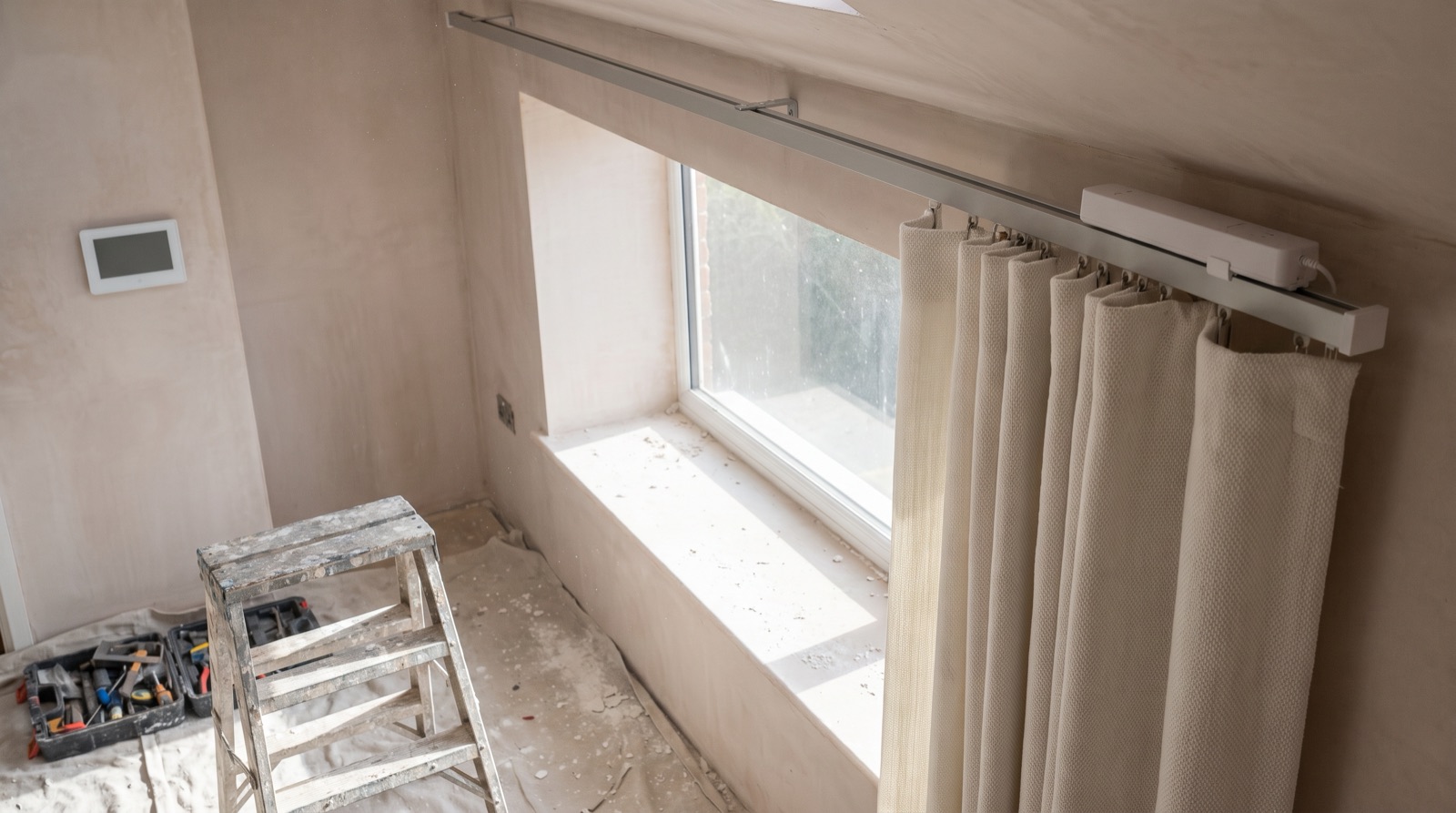
Motorised curtain installation in Malaysia: mains track motor or battery Curtain Driver E1, power at the window, hand and pull direction, fabric weight and calibration.
Tell us about your space. Our B2B team will reply within one business day with a recommended setup and quotation.
WhatsApp us →
[email protected]
+603-5880 5486