







Smart Home Site Survey Malaysia: A Room-by-Room Checklist
A smart home site survey Malaysia checklist: how to record neutral presence, back box depth and circuit ID at every switch position, before you quote.
Answer up front — Almost nobody buys a smart home as a standalone product. They buy it attached to a job you are already on: a new build, a rewire, a kitchen renovation, a security installation. Win the work you are already trusted with, demonstrate it live in ninety seconds, and let trade referrals do the rest. No marketing budget is required.
Smart home is a side service, not a shop. Nobody wakes up wanting to buy Zigbee. They wake up wanting the hallway light on when they walk in with shopping, the fan on when the maid leaves, the door unlocked when their parents visit, and the aircon off when everyone has gone out. The product is downstream of that sentence.
The single biggest mistake an installer makes is treating smart home as a new business to go and find customers for. It is not. It is an attachment rate on work you are already qualified to win. The electrician already has the trust and the keys. The security installer already has the client's worry on their side. The interior designer already has the client's taste and the renovation contract.
Attach it to that. The client's objection is never "is this good technology" — it is "is this going to cost me more and delay my handover". Both answers are in your existing relationship.
| The job you already do | The moment smart scope attaches | Who is already trusted |
|---|---|---|
| New build or major rewire | At the first-fix stage, before the walls close. This is the cheapest moment and the only one where neutral runs and box depth are free decisions | The main contractor and the owner |
| Kitchen or bathroom renovation | When the client asks "can the lights do something", or when you are chasing the wall for new sockets | The renovation contractor |
| Security / CCTV installation | When the client asks about door opening alerts, or wants the doorbell added to the alarm panel | The security installer |
| Aircon servicing or replacement | When the client is already annoyed about forgetting to switch it off | The aircon technician — who has a repeat-customer list you do not |
| Curtain / blind replacement | When the motor is being chosen, not after | The curtain supplier or decorator |
| Repainting / touch-ups | When a plate is being changed anyway | The painter, the handyman |
| Post-renovation snag visit | When a client says "we never redid the switches" | Whoever they call first |
Notice what the table says: the last two rows are the ones most people miss. A switch change is a fifteen-minute job that most electricians walk away from. That is a free demonstration sitting in a client's house.
A brochure is a promise. A demonstration is evidence. The difference is worth the ten minutes of setup.
The rule: demonstrate one thing, in the client's house, on the client's phone. Not a showroom. Not a video. Not a catalogue you leave behind. Put the app on their own phone, add them to your demo hub, and trigger one scene. That is the whole sale.
What to demonstrate, in order of how well it lands:
What not to demonstrate: hub internals, protocol names, model numbers, and any feature you cannot guarantee in their house.
Referrals are how a small installer gets steady work without a marketing budget. The loop is not complicated, it is just not usually run deliberately.
| Source | What they want | What you give them | What you ask for |
|---|---|---|---|
| Electricians / wiremen without smart capability | To not turn down a smart home enquiry | A named person to send it to, and a return referral if it goes elsewhere | An introduction at every site where the client mentions it |
| Interior designers | A client who is not disappointed that their render cannot be built | A pre-construction conversation, before the switch layout is drawn | "Call me before the switch layout is finalised" |
| Renovation / main contractors | Fewer snags, fewer callbacks, a client who is happy at handover | A written scope, a fixed position list, a clear handover document | Being named in the tender as the smart scope |
| Property agents (new or renovated units) | A talking point that lifts the unit's appeal | A short walkthrough of a finished install | Being the installer they recommend after key collection |
| Security installers | Cameras plus door alerts in one app | Integration, not a fight over who owns the doorbell | Every alarm job where the client mentions the door |
The mechanism that makes this work is dead simple and almost nobody does it: after every job, ask the client who else they know who is renovating. Not a marketing request. A genuine one, at the kitchen table, while the demo is still fresh in their head. Homeowners know other homeowners. That is the channel.
Working with interior designers and renovation contractors goes deeper on the trade side of that loop.
You will get asked about something you have not fitted before. What you do in that thirty seconds decides whether you look competent or reckless.
Do not guess. Say: "I have not fitted that one specifically, but I will check the specification and come back to you by tomorrow with a straight answer." That sentence does three things: it keeps your integrity, it keeps the job, and it gives you a deadline you can meet.
Then actually meet the deadline. Send one message: what it needs at the wall, whether their existing wiring supports it, what it costs, and any limitation. If the answer is "this is not the right product for your situation", say that too — and point them at what is.
The alternative — trying it on the day and improvising — is how a job turns into a callback, a bad review, and a client who tells their whole neighbourhood. The trade runs on word of mouth. One botched job costs you the street.
Callbacks are not bad luck. They are scope that was never checked. Nearly all of them trace back to two moments: the survey and the quote.
| Callback you will get | What actually caused it | The filter that stops it |
|---|---|---|
| "The light won't go off" | The switch needs a neutral the box does not have, or the box is too shallow | Open the box and look, room by room, before you commit |
| "It works but the bulb flickers" | LED driver incompatible with the device, or load below minimum | Match the lamp to the load; see fixing LED flicker and ghost glow |
| "The app says offline" | Hub placed badly, or behind a metal cupboard | Place the hub deliberately; test signal in every room before you leave |
| "The curtain stops halfway" | Track too long or too heavy for the motor, or the motor not suited to the track | Measure the track and the fabric and check the motor's stated limits before ordering |
| "It worked then stopped" | Battery device, battery flat, or the hub lost it | Agree who replaces batteries and when, in writing |
The filter for all five is the same: a written position list, room by room, before anything is ordered. Every position, every existing switch, every ceiling rose, annotated with what you found when you looked. That one document is what separates a job that runs from a job that unravels, and it is also what protects you when the client changes their mind halfway. The installation process from enquiry to handover shows where it sits.
You do not need one. What you need instead:
What you do not need: a website, a logo, a showroom, a salesperson, or a device you cannot yet install.
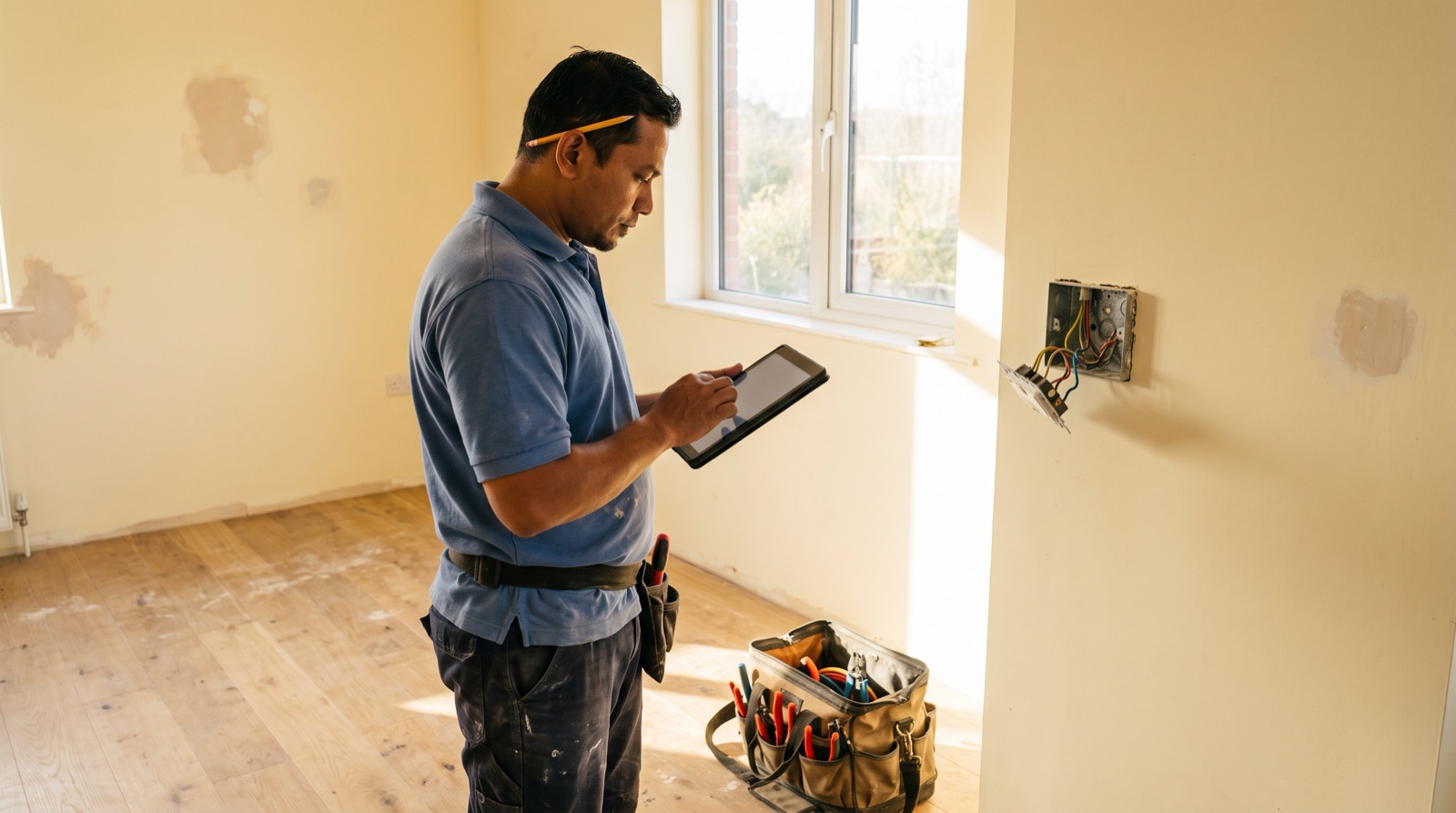
A smart home site survey Malaysia checklist: how to record neutral presence, back box depth and circuit ID at every switch position, before you quote.
Want to be an Aqara installer in Malaysia? Who the partner program suits, what the work involves day to day, and how to apply as a wireman or integrator.

From the official Aqara Malaysia distributor: the current range, which products need a neutral, back box and gang needs, aircon loads and local support.
Tell us about your space. Our B2B team will reply within one business day with a recommended setup and quotation.
WhatsApp us →
[email protected]
+603-5880 5486