







Does Your House Have a Neutral Wire? A Malaysia Smart Switch Guide
A neutral wire smart switch Malaysia guide: how to check whether your box has a neutral, why loop-in wiring leaves it empty, and what to do next about it.
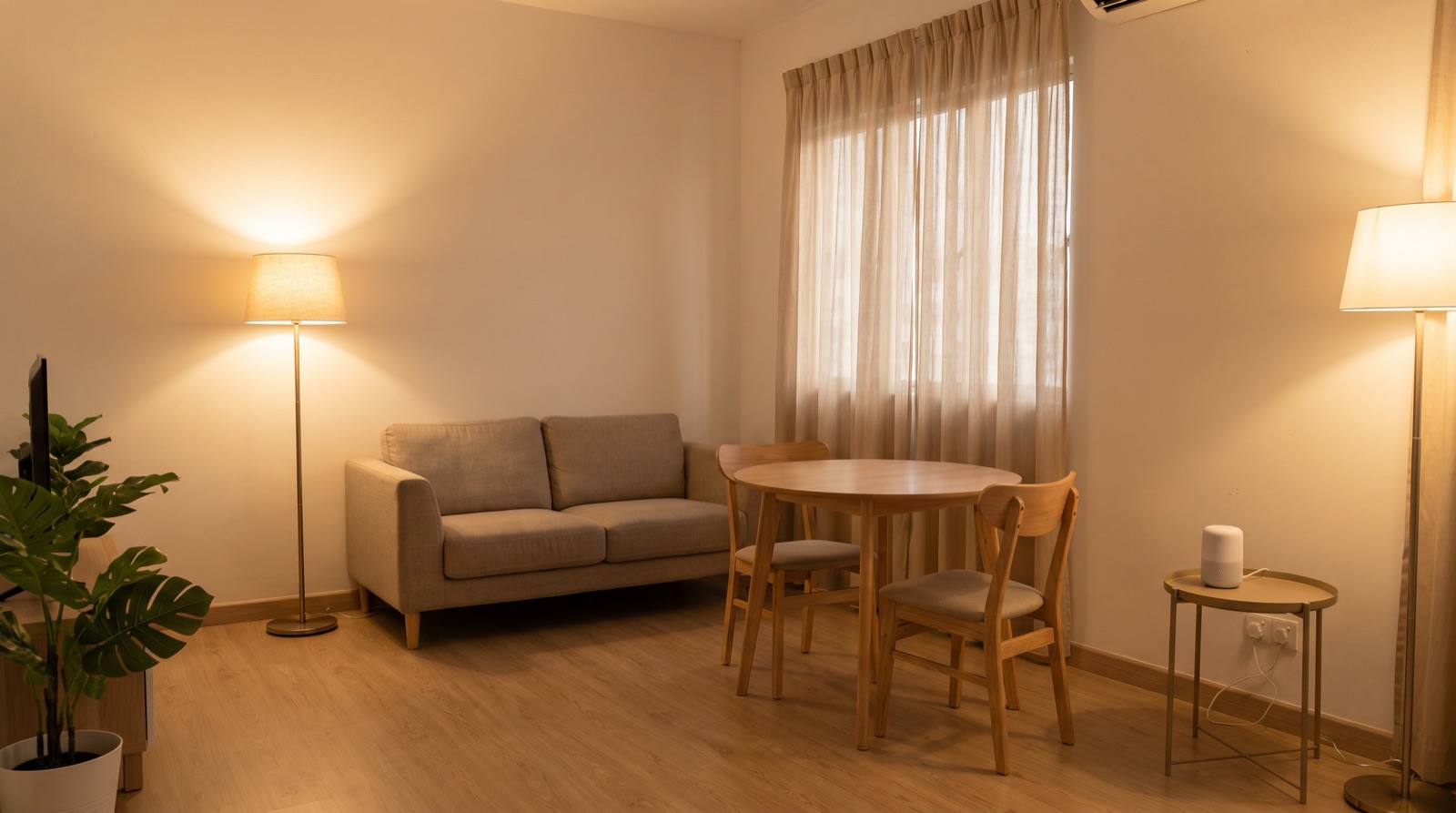
Answer up front — Most of a smart home is wireless, battery-powered or plug-in, and a tenant can install all of it on day one without asking anyone: a hub, sensors, smart bulbs, smart plugs and a doorbell. What a tenant must not do is chase walls, replace switch plates, or touch the main door of a condo they do not own. The right frame is not "smart home or no smart home" — it is which devices are reversible, which need written permission, and what you reset before you hand the keys back.
Almost every piece of advice online about smart home assumes you own the place. That assumption quietly rules out half the country, because a lot of urban Malaysians rent — a landed house in a town area, a condominium unit, a walk-up flat — and expect to move eventually.
Here is the useful part: Aqara's range is mostly wireless Zigbee devices, battery sensors, bulbs and plug-in modules. Zigbee sensors do not need a switch wire, do not need a neutral, and do not need a hole in a wall. That is a different product category from a smart switch, and it is the category that happens to be renter-friendly.
So the honest answer is that a rental can have a genuinely useful smart home. The limits are real, but they are about walls and permission, not about technology.
| Device | Wall work | What it does |
|---|---|---|
| Hub (e.g. Hub M100, M200 or M3) | None | Holds your automations, runs them locally |
| Motion Sensor P1 | None, adhesive or screw fixing | Movement in a corridor or hallway |
| Door and Window Sensor P2 | None, adhesive fixing | Door opened, window opened |
| Presence Multi-Sensor FP300 | None, battery powered | 5-in-1 wireless sensing — presence, plus temperature, humidity and light |
| LED Bulb T2 | None | Replaces the bulb, not the switch |
| LED Strip T1 | None if surface-fixed | Strip lighting for a TV wall or kitchen |
| Power Plug H2 UK | None | Controls one socket, e.g. a standing fan |
| Ceiling Light T1M | Replaces the existing fitting at the rose | Needs a fitting that suits your ceiling, and swapping a ceiling fitting is fixed electrical work, so treat it as a landlord-permission item |
Ask us for current pricing and stock before you buy.
The rule underneath the table: if it is battery-powered, wireless, or plugs into a socket, it is almost certainly reversible. Tape, peel and stick on the sensor, screw it in, unplug it and you are back to a normal flat.
This is the part that gets tenants into arguments at move-out, so be blunt about it.
The line is simple: if it damages the fabric of the building or changes something the landlord installed, it needs permission. If it sits on a shelf, a window ledge or a free-standing plug, it does not.
You may be reading this and thinking: I am not going near a switch plate, so the neutral problem does not apply to me.
It still applies, in two ways.
First, a smart bulb is not as simple as "screw it in and forget the switch". The old wall switch still cuts the power to that fitting. If someone in the house flips the light off at the wall, the smart bulb goes dead and stops answering the app. You need a plan for that — for example, leaving a non-smart bulb in place on the switches that get used carelessly, or accepting that those points stay manual.
Second, on the day you do get permission for something — and many tenants eventually do, for a lock or a curtain track — the neutral and back box question decides which device is even suitable. That question is covered properly in Does your house have a neutral wire?, and the three honest options are in No neutral, rewire, or relay module. The short version: a no-neutral device is not a free pass. It still needs a lamp that cooperates, and the LED flicker and ghost glow problem is explained in Fixing LED flicker and ghost glow.
You do not have to solve that today. You just have to know it is coming, so you buy against the answer rather than against a product photo.
Motorised curtains are the one item on the list that most renters want and most landlords hesitate about. The issue is not the motor, it is how the track is fixed — into the wall, the soffit or the pelmet.
If your unit already has a suitable curtain track or rod, the Curtain Driver E1 is the renter-friendly option: it is a battery-powered unit that clips onto the existing track or rod, with no wiring and nothing drilled. Check that your track type is supported before you buy. A new track, or a mains track motor such as the Curtain Controller (SEA Version) or C3, is a different conversation, because that means fixings and power. Ask in writing, describe the exact fixings, and offer to remove and patch on move-out — that is usually what the landlord is worried about, not the curtain motor itself.
A WhatsApp message saying "ok can install" is not enough, and it is not for you either. Ask for something short that records:
Fixed electrical work in Malaysia must be done by a wireman registered with Suruhanjaya Tenaga, under the Electricity Supply Act 1990 (Act 447). That applies in a rental exactly as it applies in your own house, and it is the landlord's call who does it.
If the answer is no, you have not lost anything. A tenant-only smart home is a real thing and most of it works.
This is the step everyone forgets, and it is the step that makes a landlord agree next time.
Budget an hour for it. Do it before you hand the keys over, not after.
If you want the shortest path to a working smart home in a flat you do not own, the order that works is in which smart home retrofit is realistic in Malaysia — it is written for owners, but the sequence applies. And when you are ready to buy, the current range with spec sheets and compatibility notes is in the resource hub.
Start with a hub, one motion sensor in the corridor, one door sensor, two or three smart bulbs, and a Power Plug H2 UK for the fan. That is a working system in an evening, with zero landlord involvement and zero holes.
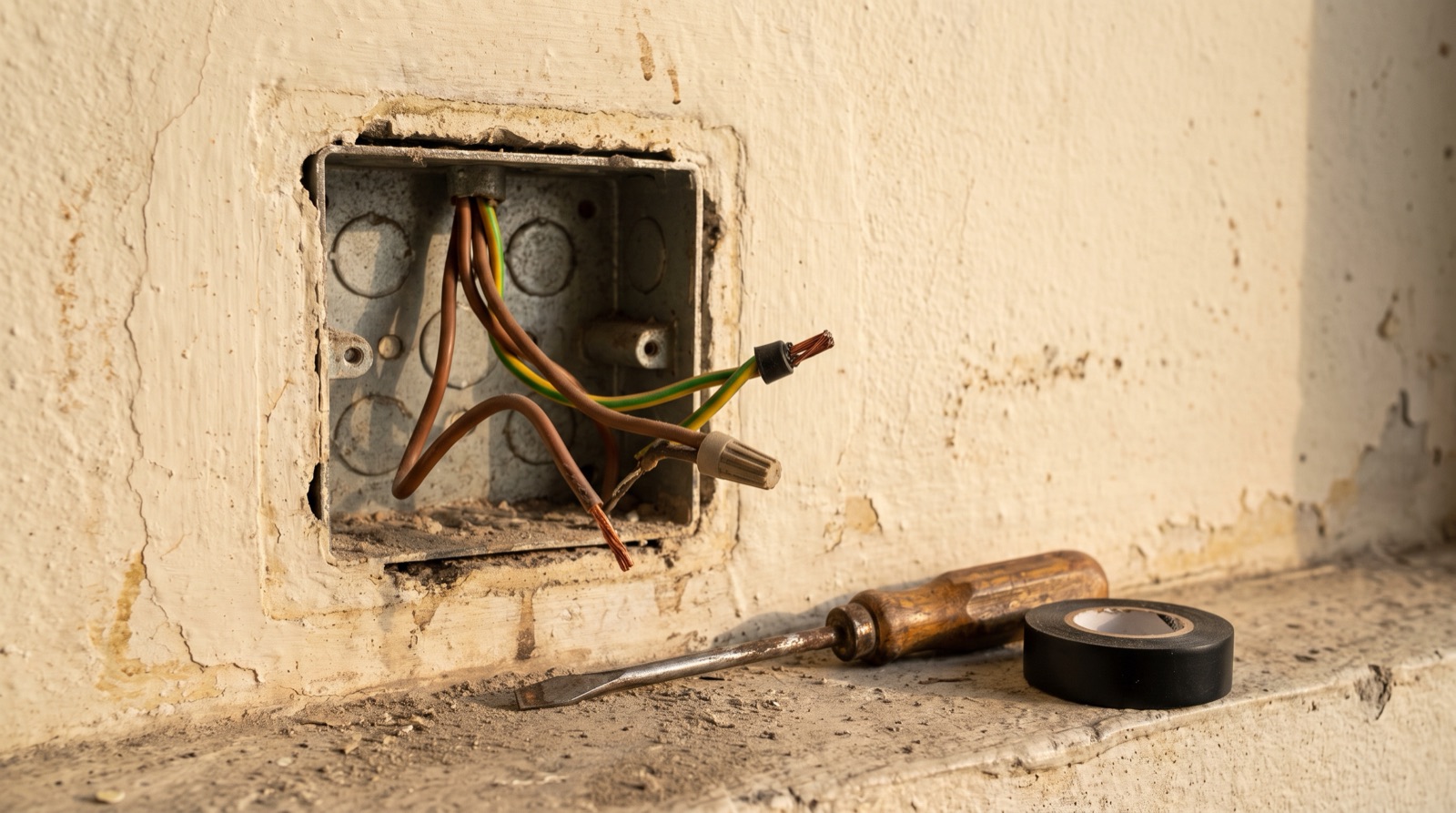
A neutral wire smart switch Malaysia guide: how to check whether your box has a neutral, why loop-in wiring leaves it empty, and what to do next about it.

Smart home retrofit Malaysia house type: what is easy, what is painful, and what it costs to start - terrace, shop lot, walk-up and new high-rise unit.

From the official Aqara Malaysia distributor: the current range, which products need a neutral, back box and gang needs, aircon loads and local support.
Tell us about your space. Our B2B team will reply within one business day with a recommended setup and quotation.
WhatsApp us →
[email protected]
+603-5880 5486