Answer up front — The useful overlap between a home solar system and a smart home in Malaysia is load behaviour and measurement, not energy trading. Aqara publishes no grid-tied controller, no inverter interface and no energy-management product for the Malaysian market, so nothing in the Aqara range controls an inverter or reads your generation. What you can do is measure what your home actually draws, shift the two loads that dominate — the aircon and then the water heater — towards the hours your panels are producing, and cut standby and lighting loads when nobody is home. A smart home does not make a solar system generate more.
This is for a Malaysian homeowner who already has a rooftop solar PV system, or is considering one, and is weighing whether adding a smart home on top is worth doing. It is worth doing for some things and not for others, and the line between them is a product boundary rather than a matter of taste.
1. The two purchases are separate
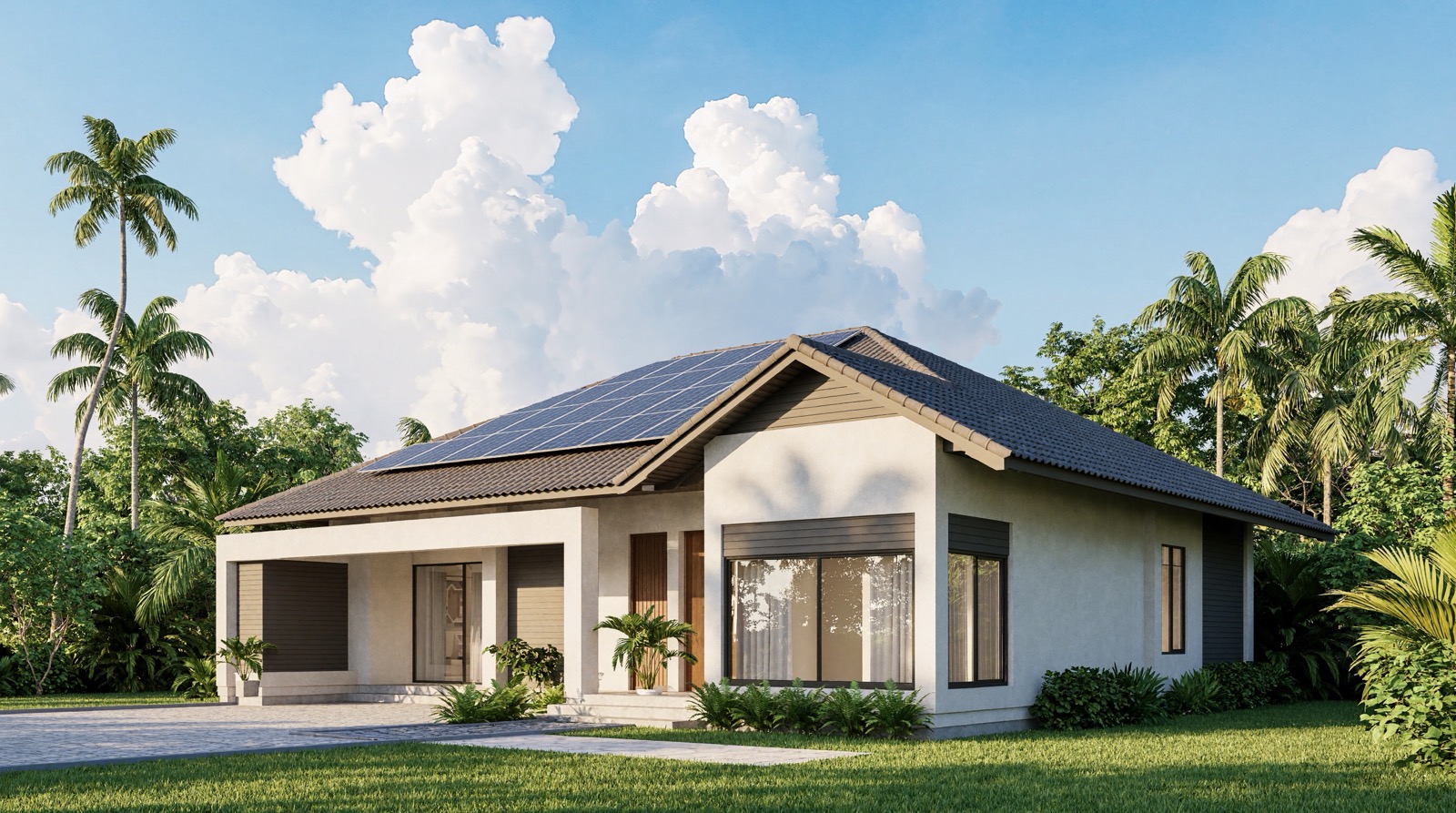
A rooftop solar PV system is an electrical generation project. It is designed around an array, an inverter, the distribution board and the metering arrangement, and it is installed and tested by people whose job is generation.
A smart home is a control and monitoring layer. It decides when loads run, and — with the right devices — it can report what those loads drew.
They meet in exactly one place: your lighting and appliance circuits. That is where a smart home can help a solar system, and it is also the limit of what it can do. A smart home does not add generation, does not add storage, and does not change what your panels produce on a cloudy afternoon. The physics of the array and the inverter is unaffected by anything you automate downstairs.
One thing to say early, because it is where these two subjects get mixed up: if someone offers to connect your inverter to a smart home app, that is not an Aqara product. Aqara publishes nothing of that kind for the Malaysian market. Confirm it with us before you let anyone fit it.
2. The honest product boundary
Here is what Aqara publishes that is relevant to a household with solar, and where the line sits:
| Aqara does publish | Aqara does not publish for Malaysia |
|---|
| Devices that switch loads — relay modules, wall switches, smart plugs | A grid-tied controller |
| Devices that report power use — smart plugs, the 20A aircon and water heater switch, in-wall switch modules | An inverter interface of any kind |
| Presence and motion sensing to decide when a load should be off | An energy-management product |
| Schedules and scenes that run from a hub, locally | Anything that reads or dispatches generation |
Read that as a boundary, not a gap. It means an Aqara-based home can shift and measure load, and cannot touch the solar side of the installation. We also publish nothing about how generated energy is exported or credited — that sits with the utility, the installer and your metering arrangement. We make no claim about feed-in mechanisms, and no Aqara device you fit will change one.
3. The two loads that dominate a Malaysian home
Named Malaysian market research consistently attributes household demand for climate control to persistent heat and humidity, and describes most Malaysian smart home installations as centred on lighting, blinds and air conditioning with limited appliance connectivity. In practice, the order of loads in a typical Malaysian home is stable enough to design against:
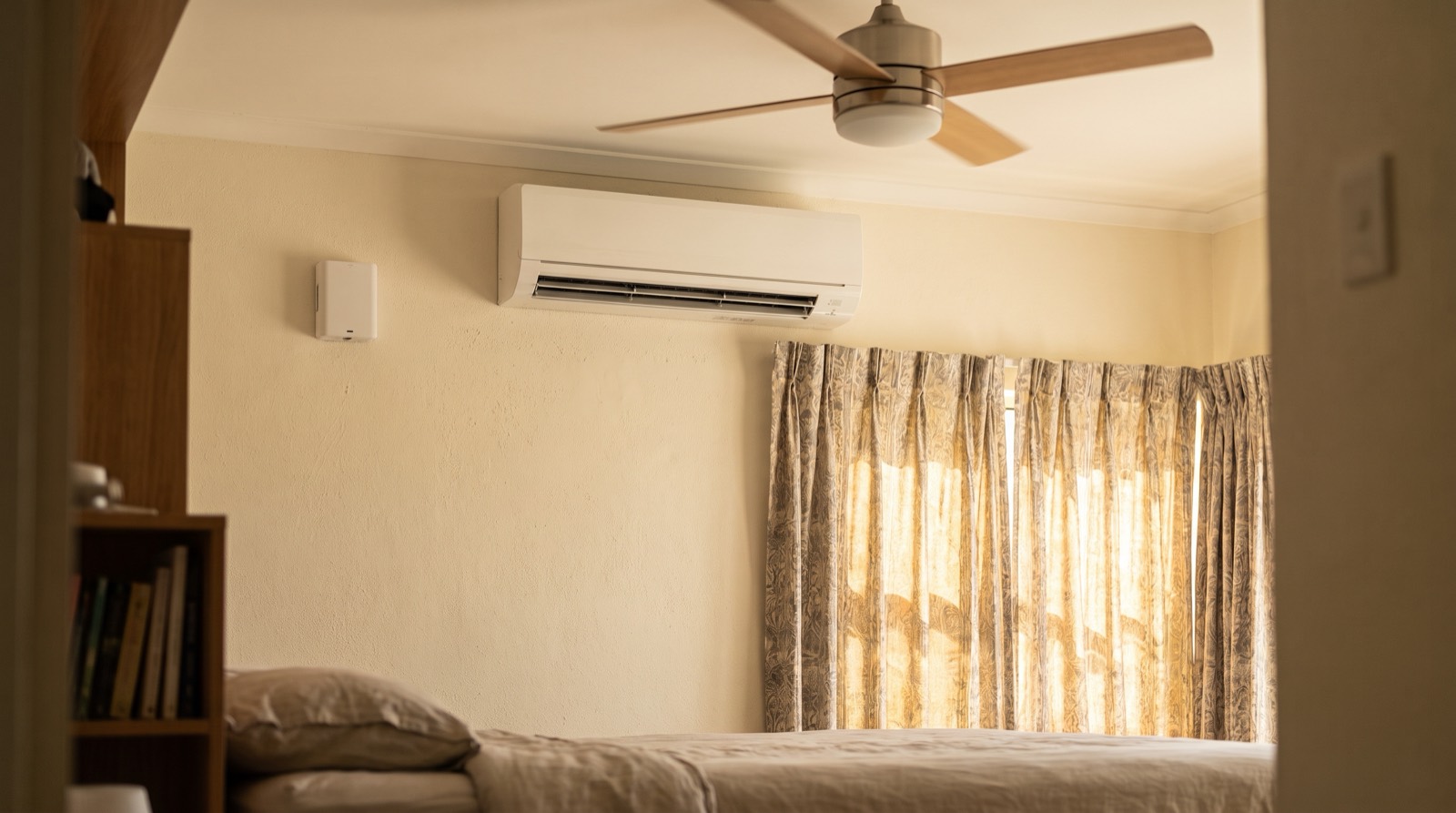
- Air conditioning, first. The compressor is the largest controllable load in the house, and in this climate it is rarely optional.
- The water heater, second. An immersion element runs at a fixed high power for a fixed time, which makes it unusually easy to shift.
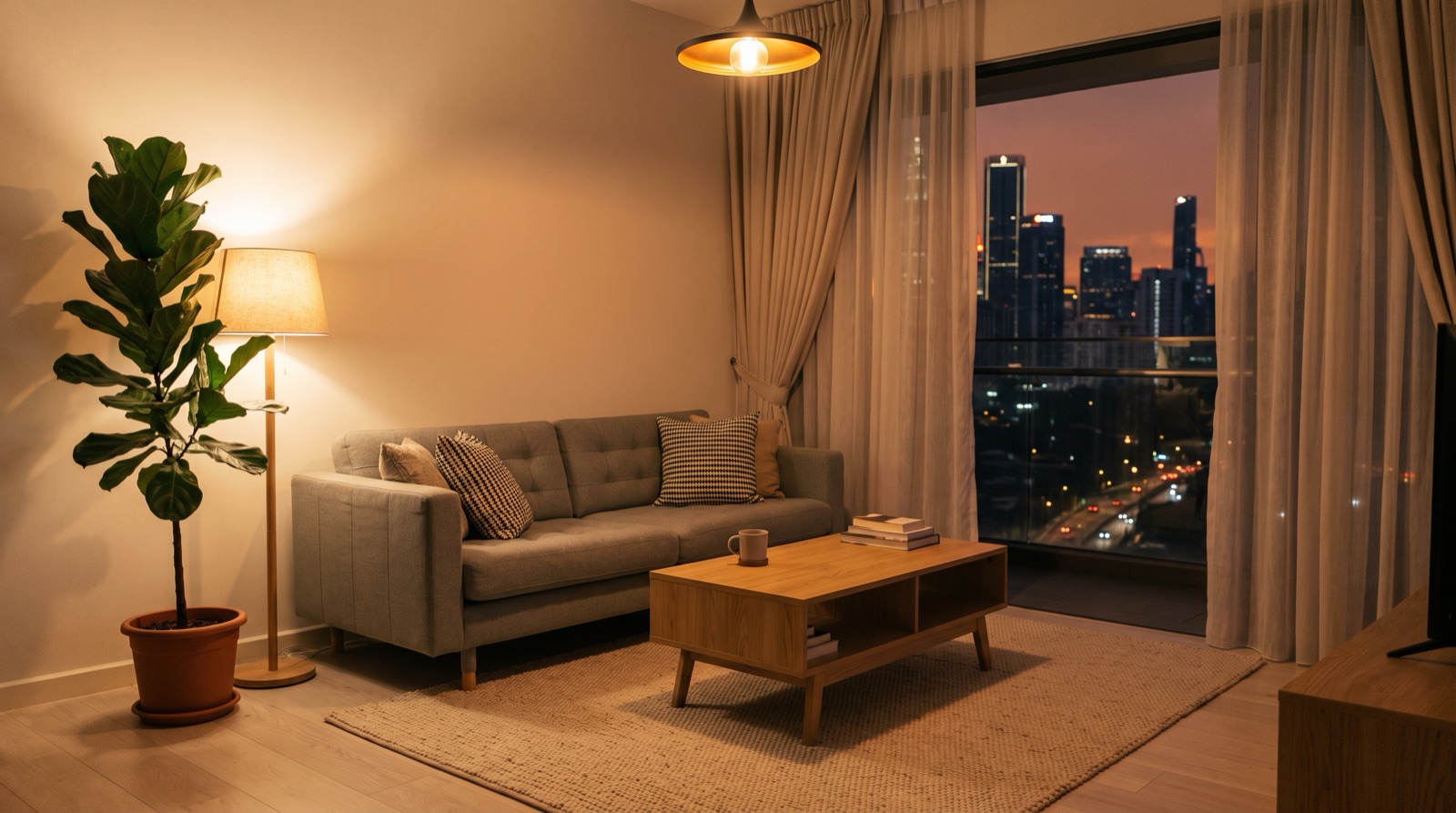
- Lighting and standby loads, third. Individually modest, collectively persistent, and the easiest to remove without changing how you live.
We deliberately do not print a percentage split for these, because any split we printed would be somebody else's house. How to find out your own is in smart home and your electricity bill.
4. Measurement needs power monitoring, and power monitoring needs a neutral
This is the part most people miss. To know what a circuit is drawing, the device has to measure current and voltage, and to do that properly it needs a neutral to reference against. A device with power monitoring therefore assumes a neutral wire is present at the point you fit it. In a wall box without a neutral, you have switching only.
The Aqara devices that do report power use, and where they fit:
| Device | Where it fits | What it reports |
|---|
| Smart 20A Switch H1 (SEA version) | The dedicated aircon or water heater circuit | Energy use of that circuit |
| Single Switch Module T1 (with neutral) | Behind an existing lighting switch | Energy use of the controlled load |
| Dual Relay Module T2 | Behind an existing switch, two channels | Energy use and power memory |
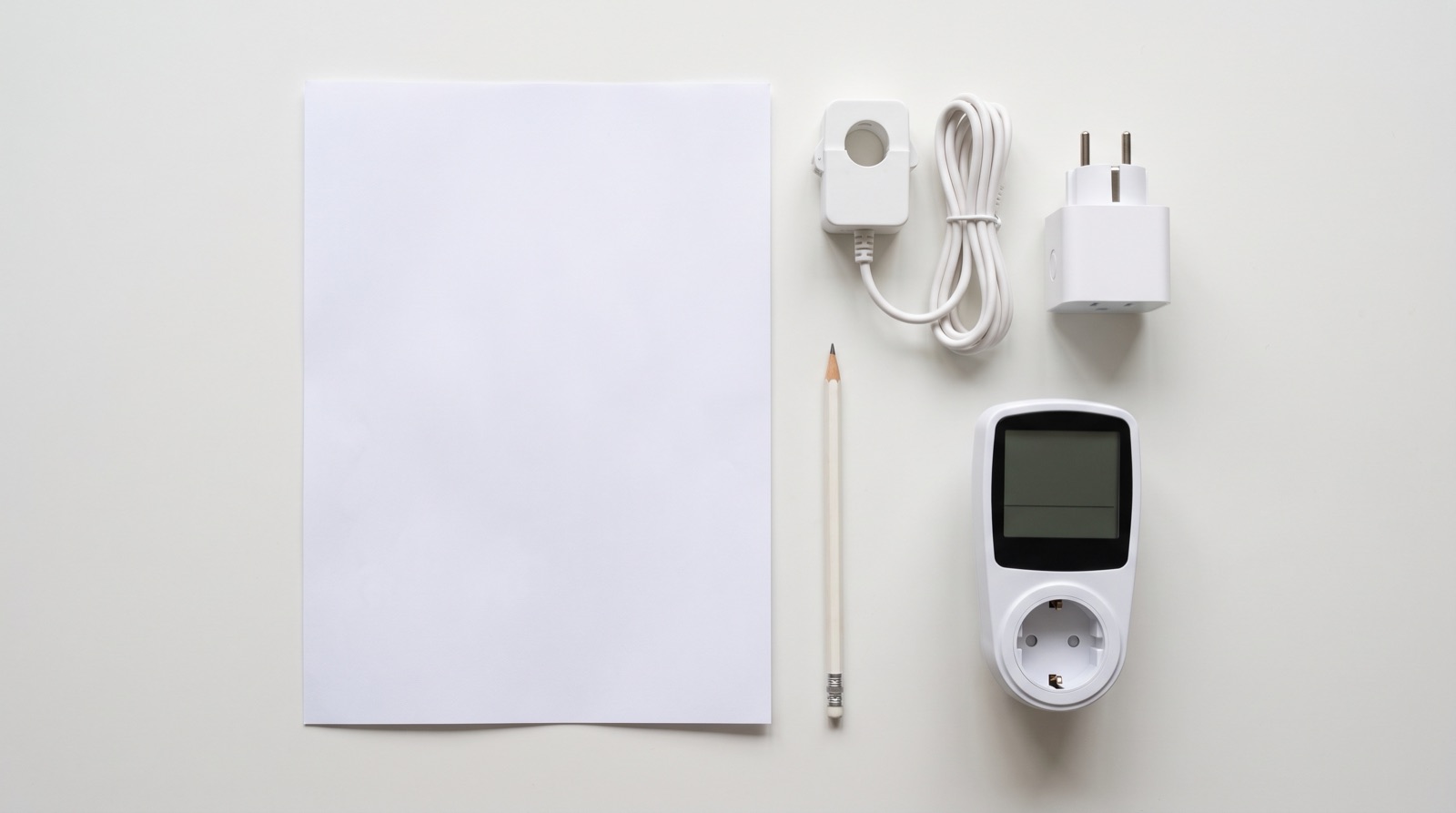
| Power Plug H2 UK | A three-pin socket, the type used in Malaysia and the UK | Energy use of the plugged appliance |
Two caveats worth stating. A plug's reading is a comparison tool — useful for comparing two similar states of the same appliance — and not a billing-grade meter. And sub-metering a circuit does not change what your utility meter records at the supply; it tells you which part of your own consumption moved.
Before buying any of these, check the wall boxes. Does your house have a neutral wire? is the fastest way to find out, and the aircon, water heater and 20A circuits article covers the heavy-load side properly.
5. Presence sensing for the loads you forget
The cheapest energy in any home is the load you never switch off: the television in standby, the hallway light left on, the aircon running in a room that has been empty since lunch. This is where presence sensing earns its place, and where a solar system makes it slightly more interesting, because an idle load during the middle of the day is also energy you did not need.
- The Presence Sensor FP2 is the tool for a room where somebody is sitting still. It covers a room of up to about 40 m², detects up to five people at once, carries a built-in light sensor, connects over Wi-Fi without a hub, and is rated IPX5 with USB-C power. A plain motion sensor will switch the light off under a person reading on the sofa; this one will not.
- The Motion Sensor P1 is the corridor and staircase answer: about 170° of coverage at roughly 7 metres, with a light sensor so the automation only fires when it is dark. It is a Zigbee device and works through a hub.
- The Motion and Light Sensor P2 is the newer option for new work or for a retrofit where you want illuminance as well as movement. It runs on two CR2450 cells and connects natively over Thread, so it can join a Matter setup without an Aqara hub. The P1 and P2 compared sets out that network difference, which is the real decision between them.
The limit is worth being clear about: all of these answer "is this room occupied". None of them answer "what is this person doing", and none of them measure anything. If you want to know what a load drew, that is the previous section.
6. Shifting a load into the solar window
The idea is simple and worth doing carefully: if your panels are producing from mid-morning to mid-afternoon, run the loads that can tolerate it during those hours rather than at night.
The water heater is the easy one. A fixed element on a fixed timer, shifted by a few hours, changes when the energy is drawn without changing anything about the hot water you get. A scene on a 20A switch handles it, and the same switch reports what that circuit used, so you can see whether the shift worked.
The aircon is the difficult one, and the reason is behavioural. Shifting cooling into the middle of the day means running a compressor in an empty house, which is usually the opposite of what you want. The workable version is narrower: keep the temperature setpoint where you want it, use presence to switch off the room you are not in, and avoid the schedule that runs a bedroom unit all afternoon because nobody turned it off. Shift the standby and lighting loads around the solar window instead.
Be honest about the mechanism. You are not commanding the inverter. You are setting a clock and hoping the weather holds, and the generation curve on your roof changes with cloud cover every week. A fixed midday timer is a reasonable guess, not a dispatch. The way to make it honest is to measure: shift one circuit, leave everything else alone, and read the numbers over comparable periods. That method is set out in smart home and your electricity bill.
And note what this does and does not touch. Shifting a load changes when energy is used, not how much the appliance consumes while it is running. If your arrangement credits exported energy, changing your own consumption pattern changes how much you have left to export — but the arithmetic and the mechanism belong to your installer and your utility, not to a smart home, and we make no claim about them here.
7. Where this stops working
- There is no Aqara solar product. No inverter control, no generation reading, no export management. If a page tells you otherwise, it is describing something that does not exist.
- The smart home does not make the solar system generate more. Generation is a function of the array, the inverter and the weather.
- Shifting is a guess until you measure. A timer in the middle of the day is a reasonable assumption about your generation curve, and your curve moves with the cloud.
- A battery-equipped system keeps its own logic. Charge and discharge decisions belong to the inverter and its settings; nothing in the Aqara range advises them or overrides them.
- Where your load is, not where your panels are, decides the value. A home whose big loads all run at night has less to shift than one where the home office and the washing machine run through the middle of the day — that case is covered in smart home for the home office.
What this page does not claim
- No solar integration, no inverter interface, no energy dashboard.
- No feed-in or export mechanism, and no arithmetic about it.
- No generation figure, no savings figure and no payback number.
- No claim that every Aqara product is available in Malaysia — availability varies by SKU, and the current list is on which Aqara products are available in Malaysia.