







Installing Aqara Presence Sensors: Mounting Height and Placement
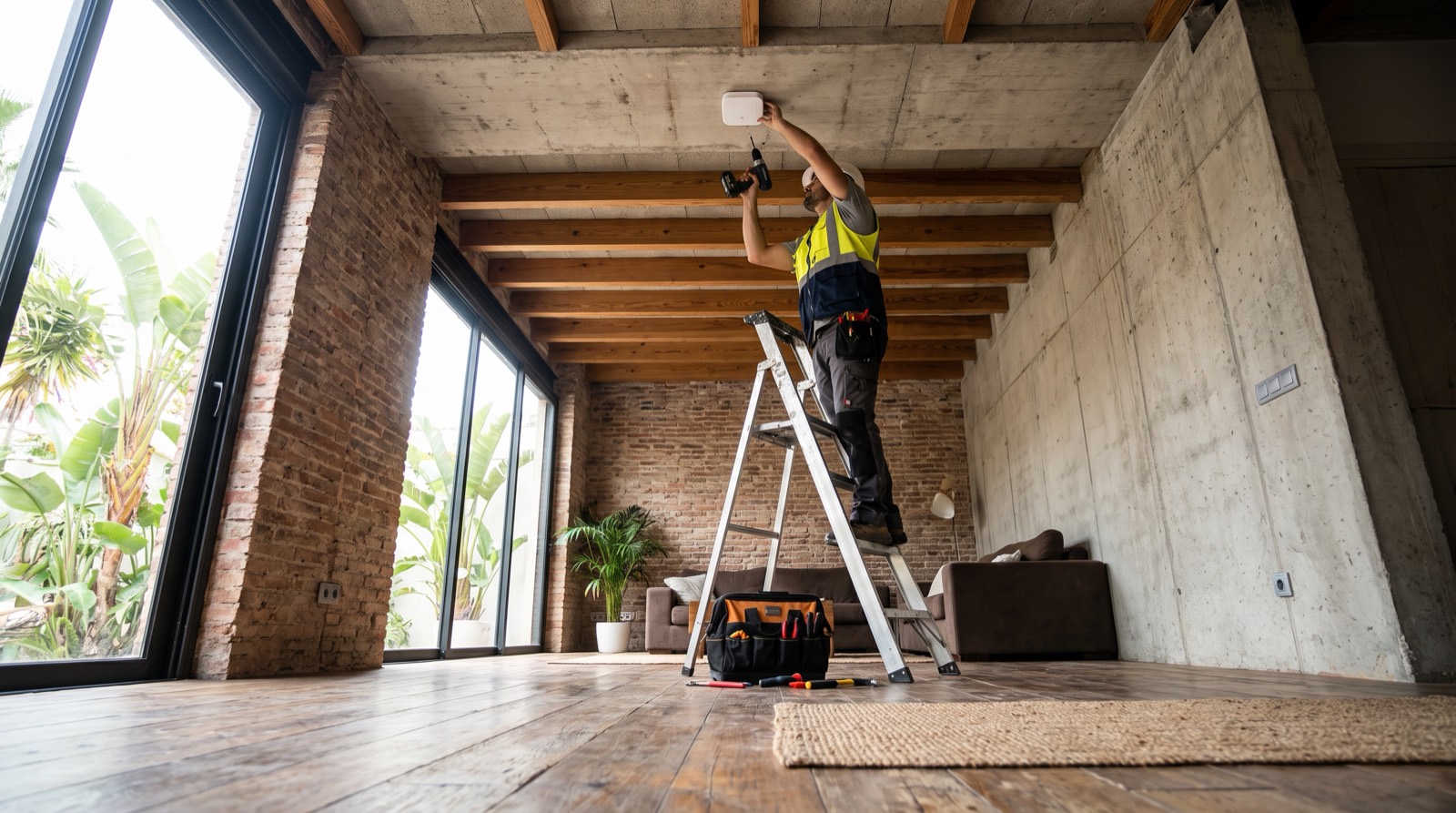
Install presence sensor Malaysia guide for trade: the 3-4 m mounting height, 5 x 6 m coverage, IPX5 limits, and why a 2.7 m condo ceiling fails the maths.
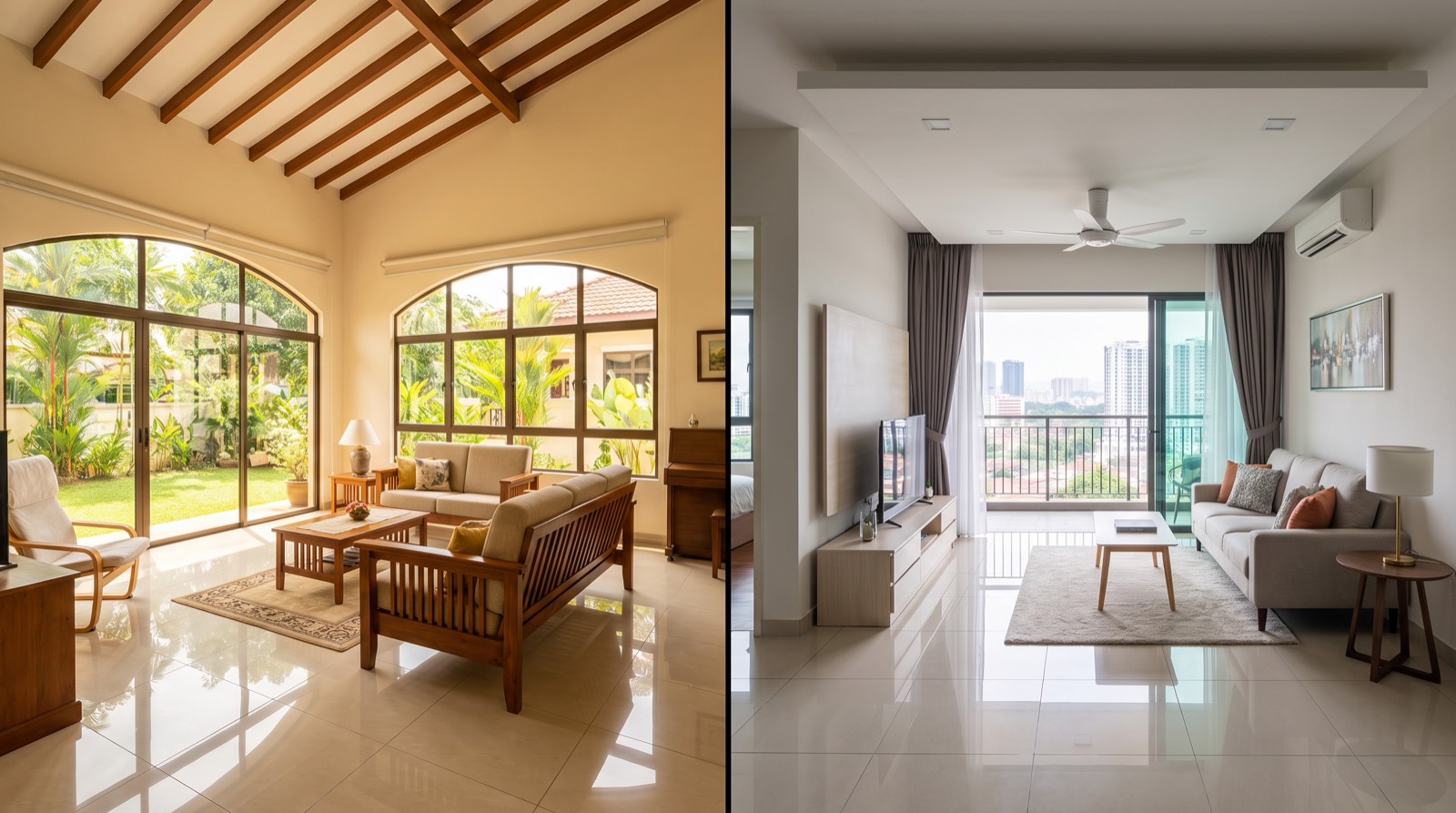
Answer up front — Ceiling height is the variable people forget, and it changes your sensor choices more than anything else. Aqara's FP400 wants a 3–4 m ceiling; at 3 m it covers 5 × 6 m of motion and 4 × 5 m of presence directly below. A 2.7 m condo ceiling is a different problem. Beyond that: the landed house gives you wall space, the freedom to run cable and a car porch; the condo gives you rules, shared corridors and often less room on the wall.
There is already an article on which smart home retrofits are realistic in Malaysia. This one is narrower and deeper: the two variables that genuinely fork between house types, and the permission question that only one of them has.
| Landed house | Condominium | |
|---|---|---|
| Ceiling height | Often enough for ceiling-mounted mmWave | Frequently around 2.7 m |
| Wall space | Yours to use | Yours inside, but often tight |
| Running cable | Practically unrestricted | Restricted — drilled chases in common areas can be a rule matter |
| Car porch | Common, and the most demanding outdoor environment | Rare |
| Gate / guard house | Often your own front gate | Shared, and controlled by the management corporation |
| Corridors and common areas | Not applicable | Someone else pays for and controls |
| Main door alteration | Yours to decide | Governed by the scheme |
Read that last row again before anything else, because it is the only one that can invalidate a purchase.
This is the part that catches people out, because presence sensors are usually chosen for their coverage figure without anyone checking what height they are being mounted at.
The FP400's published coverage is conditional on mounting height. Side mount covers 10 m × 8 m. Corner mount covers 7 × 7 m. Ceiling mount is specified for a 3–4 m ceiling, and at 3 m it gives 5 × 6 m of motion detection and 4 × 5 m of presence detection directly below. Aqara notes corner mounting may need third-party accessories and recommends corner for full coverage.
The FP2 has no height specification to lean on — it has a mounting-mode trade-off instead. It covers up to 40 m², and its 30 zones across 320 cells and multi-person tracking are powerful. But zone positioning and multi-person detection require wall mounting. So in a tall room where you would obviously prefer a ceiling mount, the FP2 gives up the thing you wanted it for.
And the trade-off runs the other way too: FP2 fall detection requires a ceiling mount and disables most features, including zone positioning and presence detection. Turning it on in a low-ceilinged room is the sensible place for it, because you get to mount it where it was meant to go — but you give up zones either way.
| Ceiling condition | What it changes |
|---|---|
| 3 m or above | FP400's ceiling spec is in scope: 5 × 6 m motion, 4 × 5 m presence directly below |
| Around 2.7 m | FP400's ceiling coverage claim does not apply. Ceiling mounting is off the table for it; a landed-style corner or side mount or a different sensor is the honest answer |
| Under about 2.6 m | You are looking at corner or side mounting, and the coverage maths needs doing against the actual room |
| Any height, wall mount | FP2 zones and multi-person become available |
| Any height, ceiling mount | FP2 fall detection becomes available, at the cost of zones and presence detection |
Before you assume a room is tall enough, measure it. Our other note on installing presence sensors covers the placement mechanics, and presence sensor vs motion sensor covers whether you are solving the right problem.
Wiring availability is not really a house-type question — it is an age question — but it is where landed and condo projects diverge in cost, because a landed house gives you more room to solve it.
Power monitoring requires a neutral wire. That is true of Aqara's own wall switches, and it applies to any switch where you want to know what the circuit is drawing. Also relevant: for the Light Switch H2 US, the minimum load is 5 W with no neutral and unlimited with a neutral present.
Two honest warnings. First, power monitoring is the feature people miss — a switch that will only work, never report, is a different product from the one you may have been pricing. Second, a US variant wall switch is 120 VAC; check before assuming it suits a Malaysian 240 V circuit.
Start with does your house have a neutral wire?, then no-neutral rewiring or relay modules, then will a smart switch fit my back box — that last one is the most common reason a quote changes after a site survey.
A landed house's car porch is the most demanding place to put anything, and it is also the most honest test of whether a product was specified for Malaysia or for a showroom.
| Product | IP rating | Outdoor verdict |
|---|---|---|
| FP2 | IPX5 | Documented, and the most protected of the presence range |
| FP400 | IPX5 | Documented — but not confirmed as a Malaysian-channel product |
| FP300 | None stated | Not rated for outdoors on the published spec |
| FP1E | None stated | Not rated, and the page carries placeholder copy |
| Curtain Driver E1 — Rod | IP20 | Indoor only |
IPX5 is water-resistance, not waterproofing. Monsoon is a different problem from rain: humidity inside an enclosed porch, condensation running down a wall, and a ceiling that gets no ventilation. Our note on monsoon and outdoor sensor placement covers the placement reasoning.
We are not going to invent your scheme's rules, because they genuinely vary and a wrong claim here is worse than no claim. What we can do is tell you the questions to put, in writing, before you order anything:
Put those four questions in writing and keep the replies. Condo rules and management permissions covers how to frame them so you get a usable answer rather than a "please refer to the rules" notice.
Book a site survey before you plan either home type. Ceiling heights, back box depths, neutral wire positions and circuit loading all have to be seen to be answered, and a survey is how you find out before you buy rather than after. Talk to the team
Install presence sensor Malaysia guide for trade: the 3-4 m mounting height, 5 x 6 m coverage, IPX5 limits, and why a 2.7 m condo ceiling fails the maths.
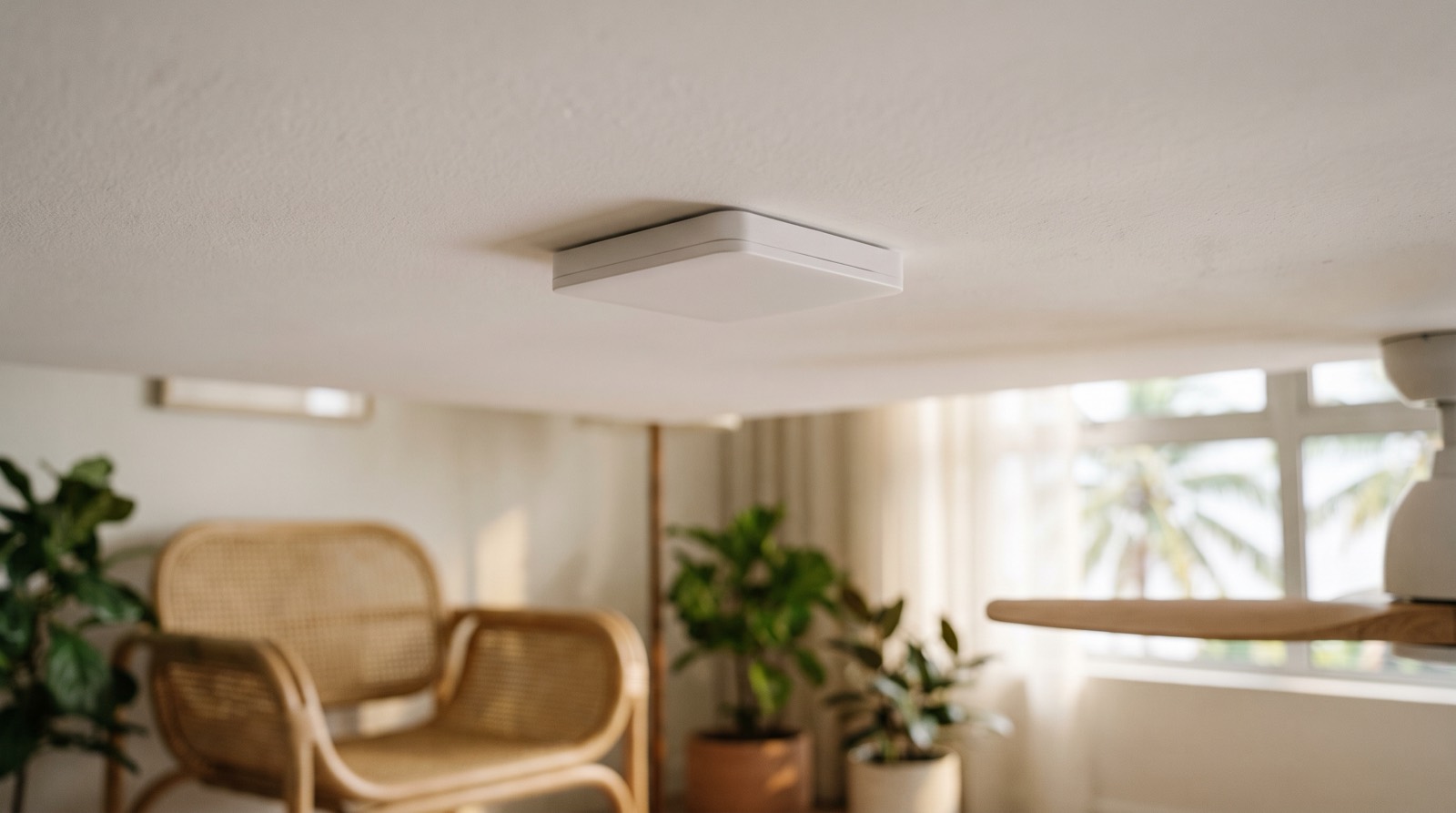
Presence sensor vs motion sensor explained: why PIR stops working when you sit still, what mmWave radar adds, and the Thread limits buyers are not told.
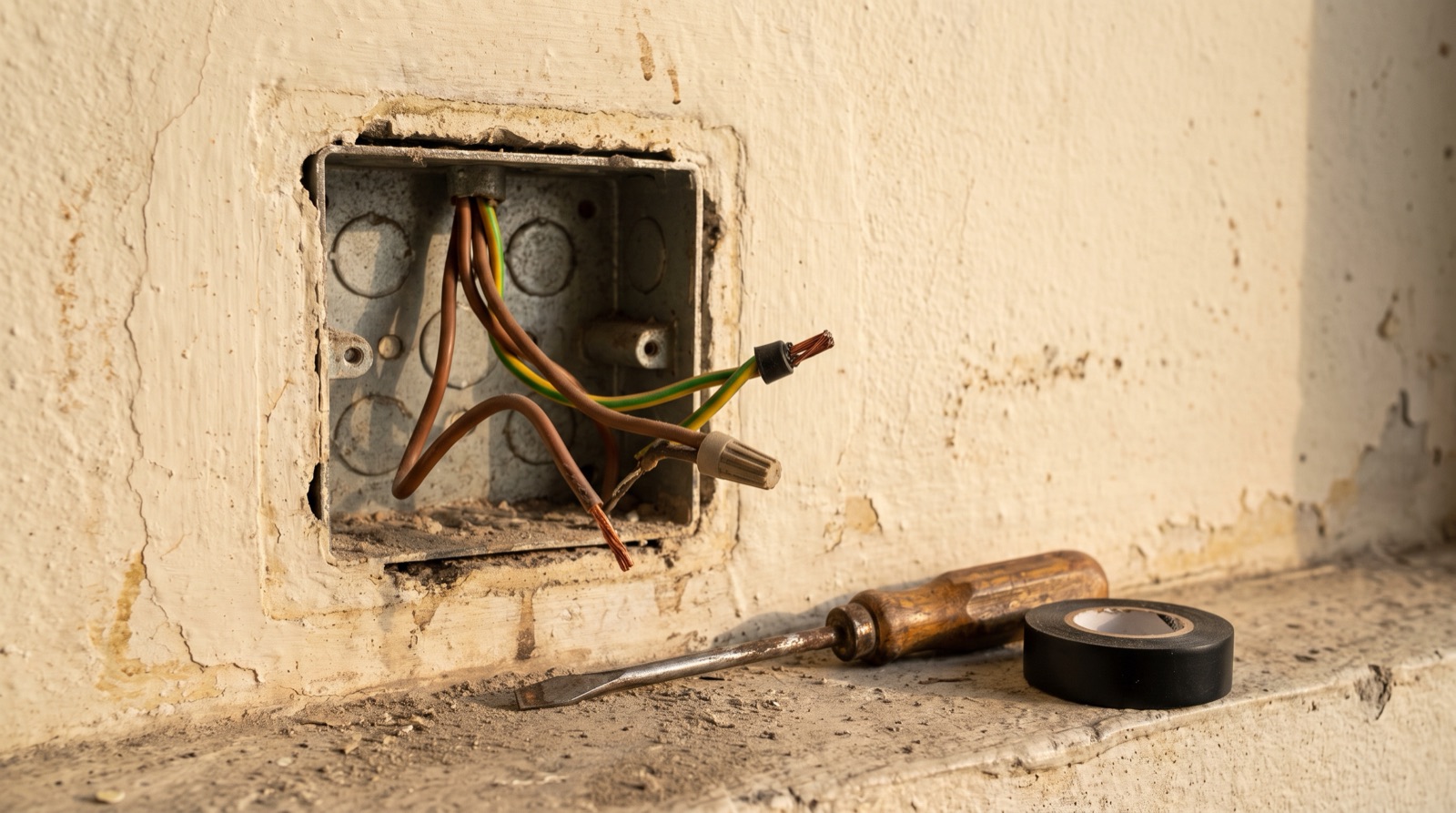
A neutral wire smart switch Malaysia guide: how to check whether your box has a neutral, why loop-in wiring leaves it empty, and what to do next about it.
Tell us about your space. Our B2B team will reply within one business day with a recommended setup and quotation.
WhatsApp us →
[email protected]
+603-5880 5486