







Smart Home in a Landed House vs a Condo: What Actually Changes
A smart home landed house vs condo Malaysia comparison built on the variable people forget: ceiling height, neutral wire, porch weather and management rules.
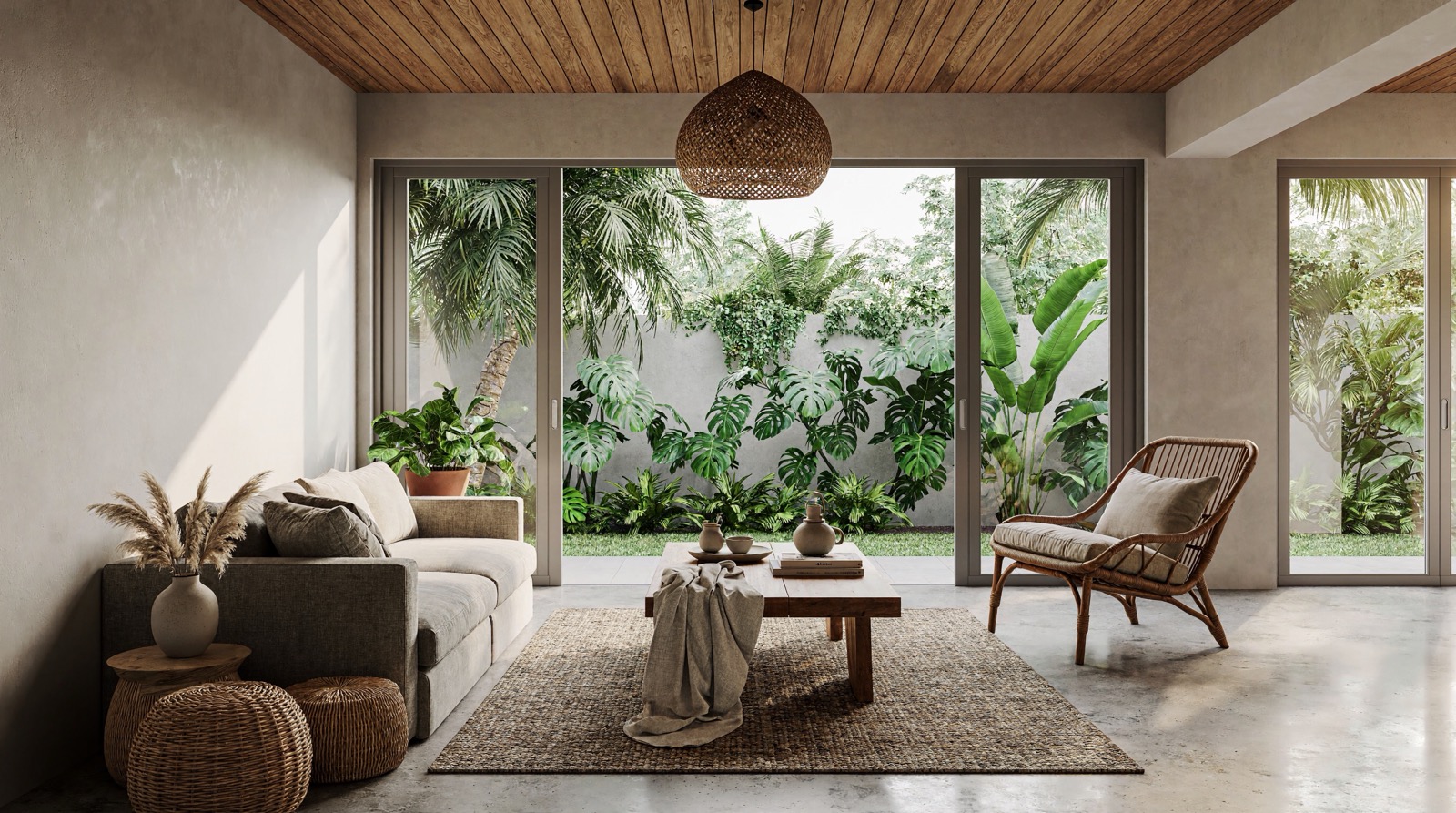
Answer up front — Yes, you can get a properly installed smart home in the Klang Valley, but the building type sets the scope before any device does. A 1990s terrace often has no neutral wire, which limits what the lighting circuit can report. A high-rise condo needs the management corporation's approval before anything is cut. A new landed house may already have conduit waiting. An outdoor sensor in a car porch needs a device whose published temperature range and ingress rating genuinely cover that spot. Synchroweb is based in Puchong, Selangor, and our coverage is strongest in the Klang Valley and limited outside it.
This is for homeowners and landlords in Kuala Lumpur and Selangor deciding whether a smart home is worth doing and who should do it. It is deliberately local: the wiring, the building rules and the weather here differ from other parts of Malaysia, and a generic guide will not tell you which of them decides your project.
The Klang Valley is not one housing type. It is four, and each one has a different first conversation.
| Housing type | What it usually means for the install |
|---|---|
| Older 1990s three-storey terrace | Wired in the 1990s, through-switches only, neutral often missing, no conduit |
| Newer landed house | Pre-laid conduit in most cases, but check the back boxes and the cable the builder actually ran |
| High-rise condo | Management corporation approval, shared services, common-area rules, a limited usable wall |
| New township development | May ship a smart-home option; check what is provided and what is left for you to add |
The wrong order of operations is to buy devices first and survey the building afterwards. The right order is the one in how to survey a Malaysian home before quoting — walk the building, open the boxes, then scope the work.
Much of the older terrace stock around Kuala Lumpur, Shah Alam, Klang and Petaling was wired in the 1990s, when the convention was a straightforward through-switch carrying live and switched live, with no neutral at the switch. That single fact changes your product list.
Before you agree anything, look inside a box. Does your house have a neutral wire? is the five-minute check that shapes the entire project, and it is worth doing before you speak to an installer.
For heavier circuits, Aqara's Smart 20A Switch H1 is built for the Southeast Asian wall box format and the loads this country actually runs — water heaters and air-conditioners. The Smart Wall Switch Z1 Pro is the SEA-format premium switch, available in several gang configurations and colours.
Newer landed houses in the Klang Valley often arrive with pre-laid conduit, which changes the economics of the job. It does not remove the survey.
Check three things on site:
For a new build, the in-wall option is worth looking at: Aqara's Panel Hub S1 Plus is an in-wall touchscreen with relay channels, a Zigbee hub and a Matter controller, running on 200–240 V, 50/60 Hz, maximum 8 A resistive. That is cleaner than bolting modules behind finished switches.
In a condo, the technical survey is the easy part. The approval decides your timeline.
Before the installer opens a wall:
Condo rules and management permissions sets out what usually gets asked and in what order, and smart home in a new launch condo covers the case where the developer has already built something in. Do not assume a condo is easier than a landed house because the wiring is newer. The rules are the harder part.
A growing number of townships in Selangor and Klang Valley now hand over with a smart-home package — often a show unit specification extended to a limited number of lots, sometimes an optional upgrade at the point of sale.
Three questions decide whether that package is useful to you:
Smart township developer in Malaysia covers the developer side, and our condo developer handover spec shows what a handover pack should contain.
The Klang Valley has two distinct wet-weather problems and they hit different devices.
Water that arrives from above. For anything under a car porch, a covered walkway or an exposed yard, ingress rating is the deciding figure and it has to be the figure for that device, not for the range. Aqara's Water Leak Sensor T1 is IP67 and is the one to use where water is the risk. Aqara publishes no IP rating for the Camera G100, so we will not quote one for it — confirm with us before it goes outside.
Heat. A Klang Valley afternoon is harder on a device than the rain is. Aqara's published operating ranges are not uniform: the Camera Hub G5 Pro is rated −30 °C to +50 °C, the Doorbell Camera G400 is −20 °C to +50 °C, the Camera G100 is −10 °C to +40 °C, and the Presence Sensor FP2 is −10 °C to +40 °C. The FP2 is also IPX5, which is a water-splash rating, not a weather rating. The conclusion is straightforward: FP2 belongs indoors, and a car porch in the afternoon is not an indoor location.
For outdoor coverage, the Doorbell Camera G400 (Wired) runs from doorbell wiring or PoE at 165° diagonal, the G410 adds mmWave radar to cut false motion alerts and runs wired or on six AA batteries, and the G5 Pro covers −30 °C to +50 °C in PoE or Wi-Fi versions. Monsoon and outdoor sensor placement covers the placement rules in more detail.
Synchroweb Technology (M) Sdn Bhd is based at C-1-5, Block C, Setiawalk, Persiaran Wawasan, Pusat Bandar Puchong, 47160 Puchong, Selangor, and has been the official Aqara distributor in Malaysia since 2026. Being close to the market has three practical consequences.
We were founded in 2007 and we do not claim to install. We also do not claim a nationwide installer network: coverage is strongest in the Klang Valley and limited outside it, and we would rather say that plainly than quote a project we cannot support.
The full guide is in how to choose a smart home installer in Malaysia. The short version:
If an installer cannot answer question three in plain language, the project will not go well.
Two places, and both are worth knowing before you sign.
Outside the Klang Valley. Our installer coverage and our ability to reach a site for commissioning is strongest around Kuala Lumpur and Selangor and thin elsewhere. If you are in Johor, Penang or East Malaysia, tell us early so we can be straight about what is realistic.
In a very old terrace with no neutral and no conduit. It is doable, but slower: a no-neutral module in every switch box, surface containment where there is no cavity, and no power monitoring on the lighting circuits. The result will work. It will simply never know what your house is drawing.
Tell us your address and the type of property, and we will tell you what the wiring and the building rules allow before you commit.
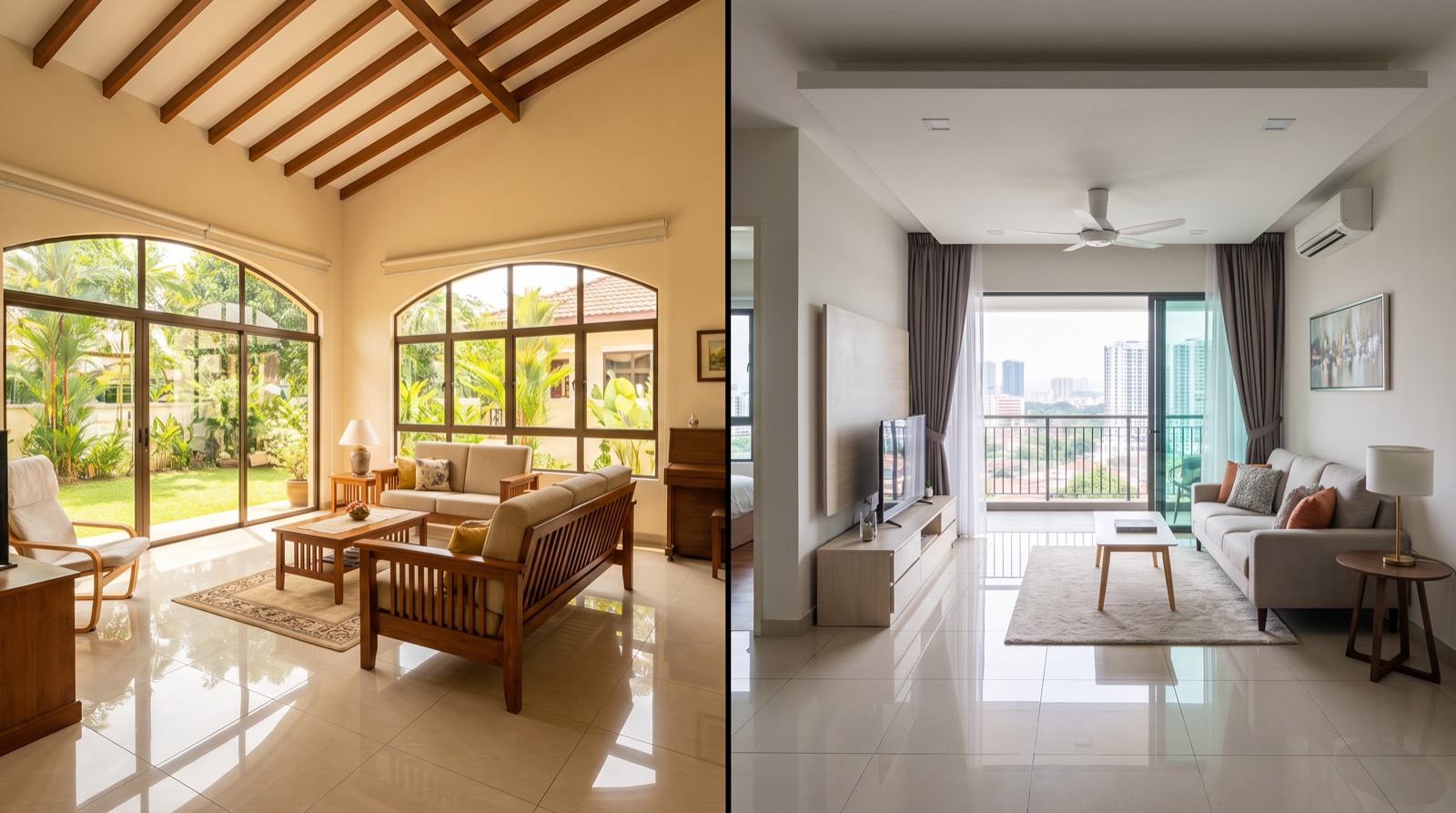
A smart home landed house vs condo Malaysia comparison built on the variable people forget: ceiling height, neutral wire, porch weather and management rules.
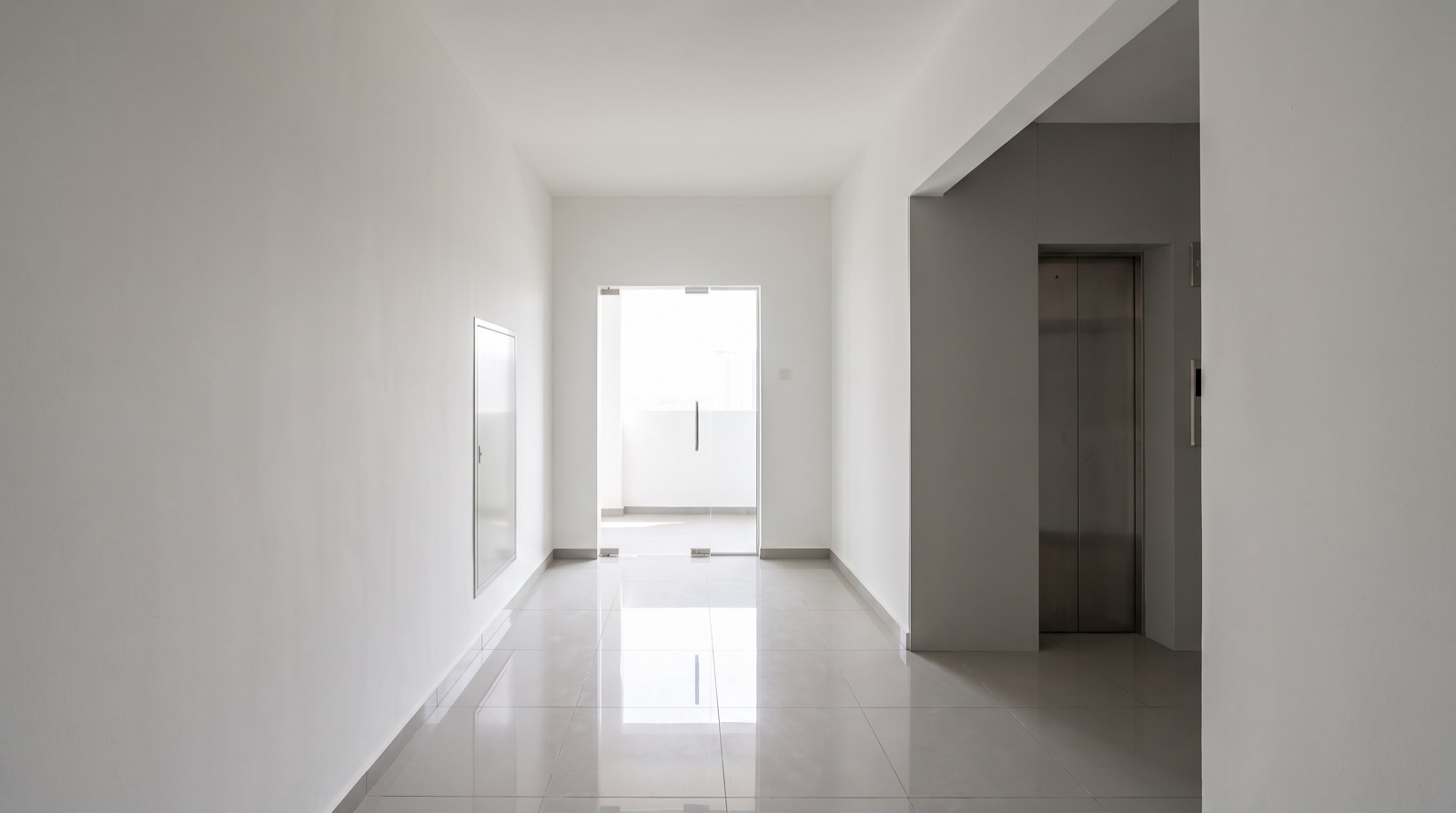
Condo management smart home rules in Malaysia: what the MC can legitimately approve, what is inside your own tenancy, and how to get permission in writing.
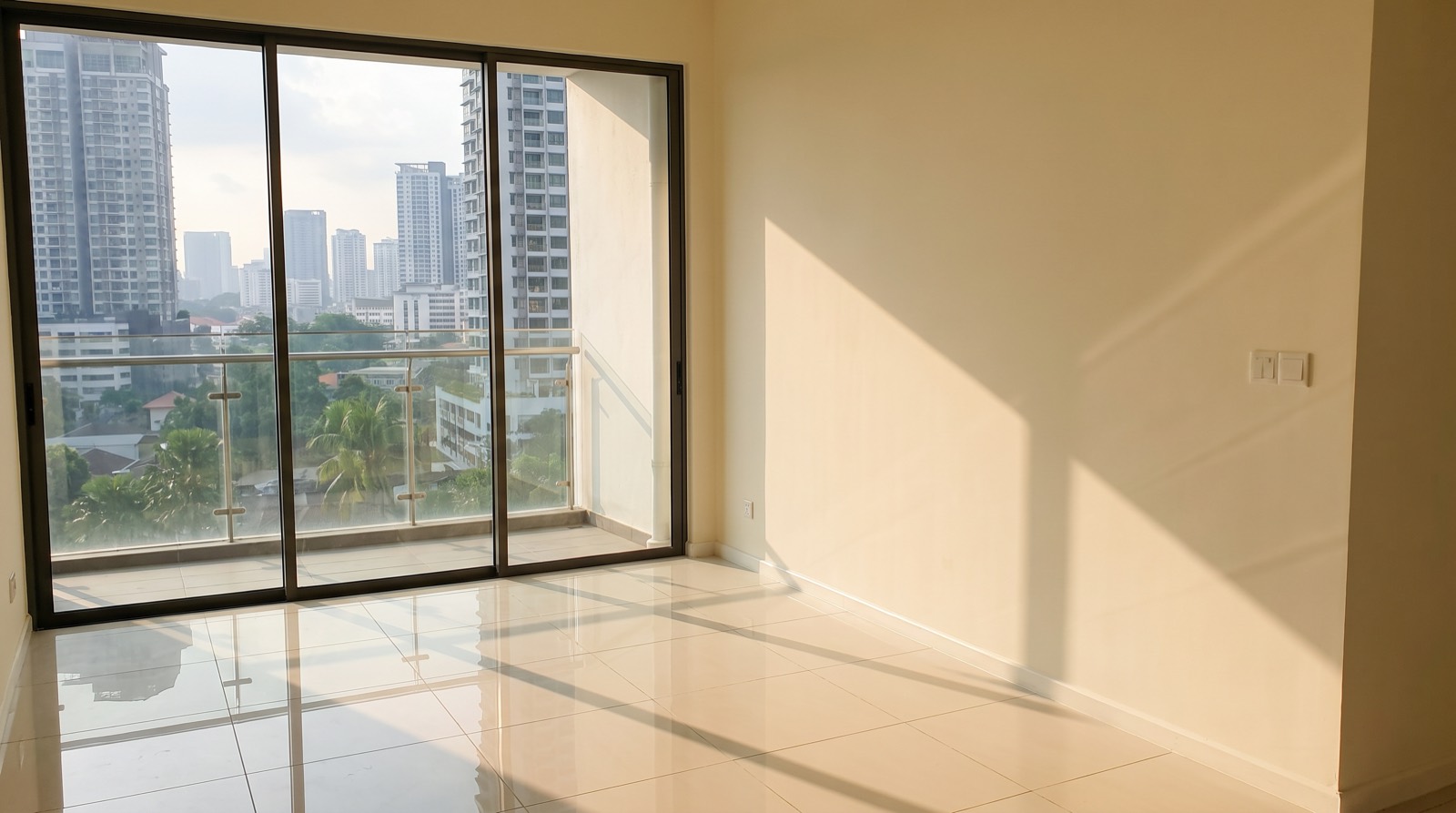
A smart home new launch condo malaysia checklist: what to ask the sales gallery about demo units, neutral wires, network points and the panel before you sign.
Tell us about your space. Our B2B team will reply within one business day with a recommended setup and quotation.
WhatsApp us →
[email protected]
+603-5880 5486