Answer up front — Choose an installer on evidence rather than on a showroom. Eight checks do most of the work: see a live installation in a building like yours; get a straight answer about what happens to your existing switches and lights; get the same about back-box depth and the neutral wire; establish who owns the Aqara account afterwards; ask for a written handover pack; establish who handles a claim in year two; insist on a written scope with its exclusions; and confirm that fixed wiring work is carried out by a wireman registered with Suruhanjaya Tenaga under the Electricity Supply Act 1990 (Act 447). Synchroweb is the distributor, not the installer, so we cannot appoint one for you.
This is for a homeowner in Malaysia who has decided to build a smart home and now has to choose the person who does it. That decision matters more than the device list. Devices are specified on a datasheet; the installer decides what is left behind your walls, which circuits they touch, and whether the system still behaves when the internet does not.
1. Where we sit in this, stated plainly
Synchroweb Technology (M) Sdn Bhd is the official Aqara distributor in Malaysia, and the exclusive distributor for Aqara spatial intelligence and business and commercial use. We are not an installer. We do not fit devices in houses, and we do not run a nationwide installer network. Three consequences follow, and you should know them before you read the checks:
- We cannot point you at "the installer we use". No such thing exists, and any supplier who says otherwise is describing something they have not built.
- We run a free partner programme for trade installers. It gives local stock, product training and a local support route. Application is open to any qualified installer, joining is free, and it is a channel relationship — not a quality guarantee.
- Coverage outside major urban centres is limited, and we will not dress that up. In a less built-up town, the honest answer may be that a good installer will not travel for a project of your size. If you are in the Klang Valley, smart home installation in Kuala Lumpur and Selangor covers what the local housing stock does to the scope of an install, and repeats this vetting checklist from a Klang Valley angle.
The trade side of this is covered on becoming an Aqara installer in Malaysia and how to survey a Malaysian home before quoting.
2. The eight checks, and the reason for each
The reason matters as much as the check. Ask the question without the reason and you get an answer that satisfies you for about a week.
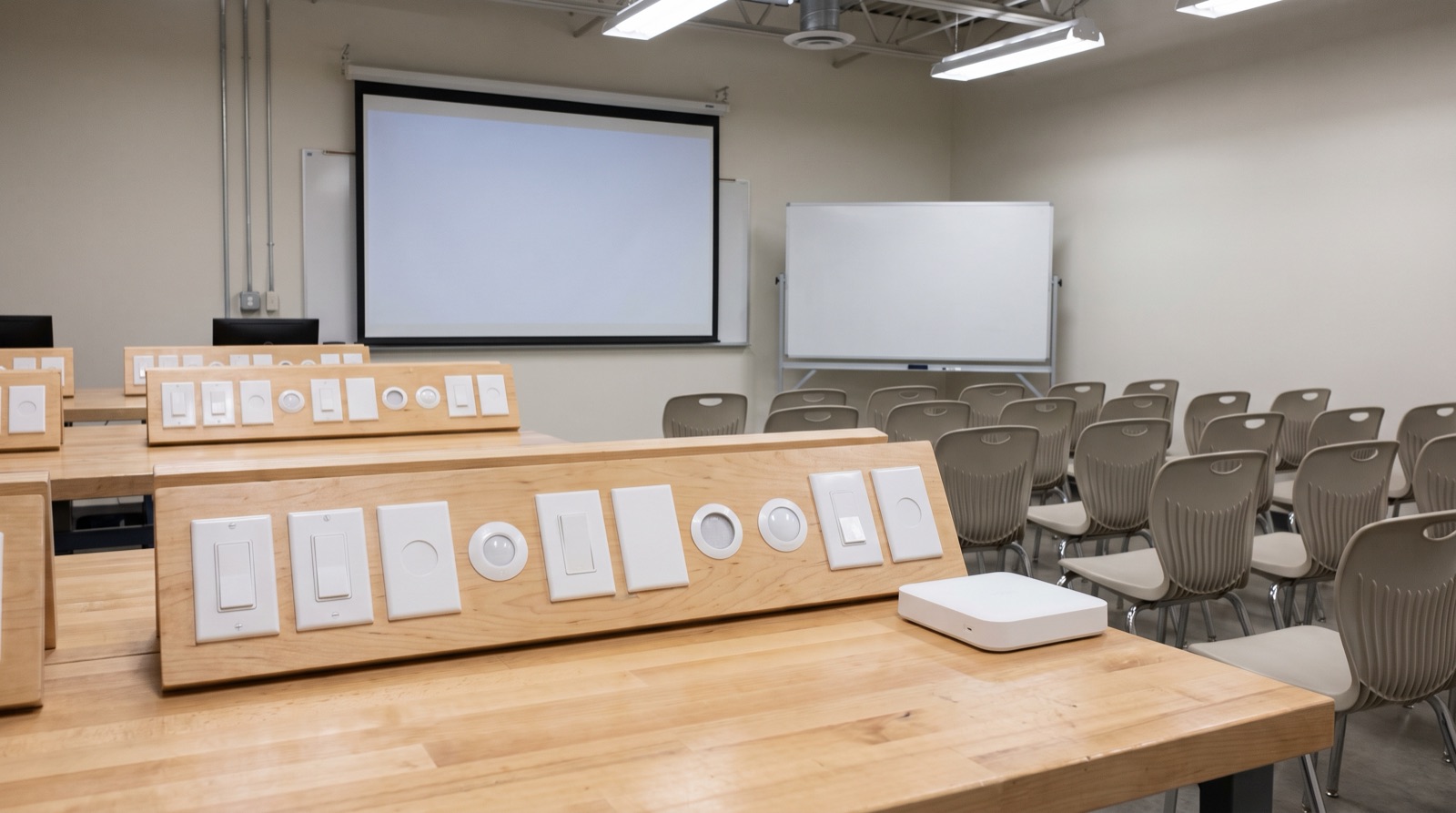
- Ask to see a live installation in a building like yours — not a showroom. A showroom hides the three things that decide your project. It hides back-box depth, because the wall was built to suit the plates. It hides the neutral wire, because a display wall always has one. And it hides mesh routing and hub placement, because the demo hub is in the same room as the demo devices. If your building is a three-storey terrace, ask to see a three-storey terrace.
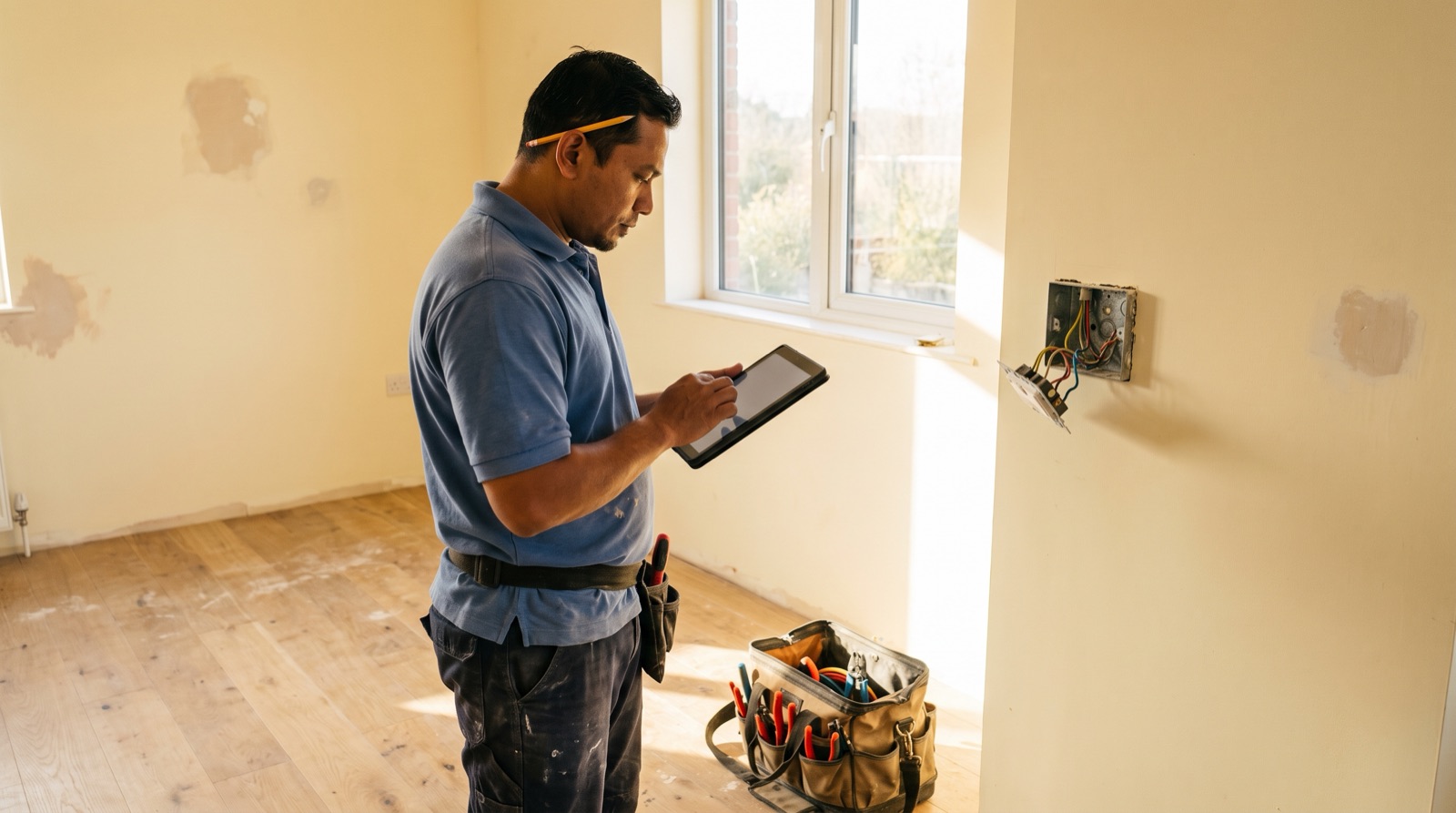
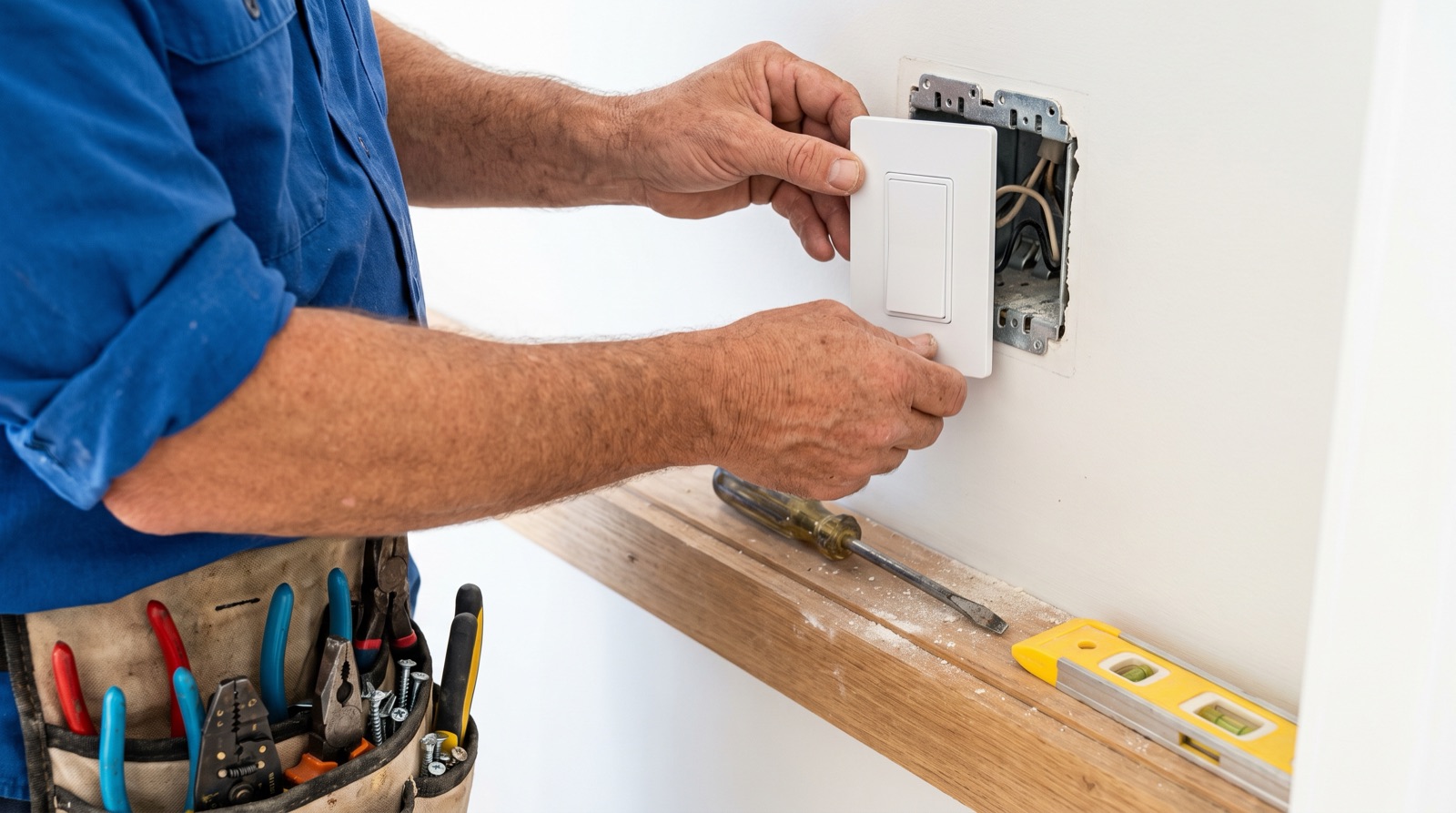
- Ask what happens to your existing switches and lights. This is the question that separates people who have fitted into occupied homes from people who have only fitted into new shells. A good answer names your switches: are they kept, are they bypassed, do they still work by hand when the hub is offline? "We will handle it" is not an answer. It usually means the plate comes off and you find out what you are holding when it does.
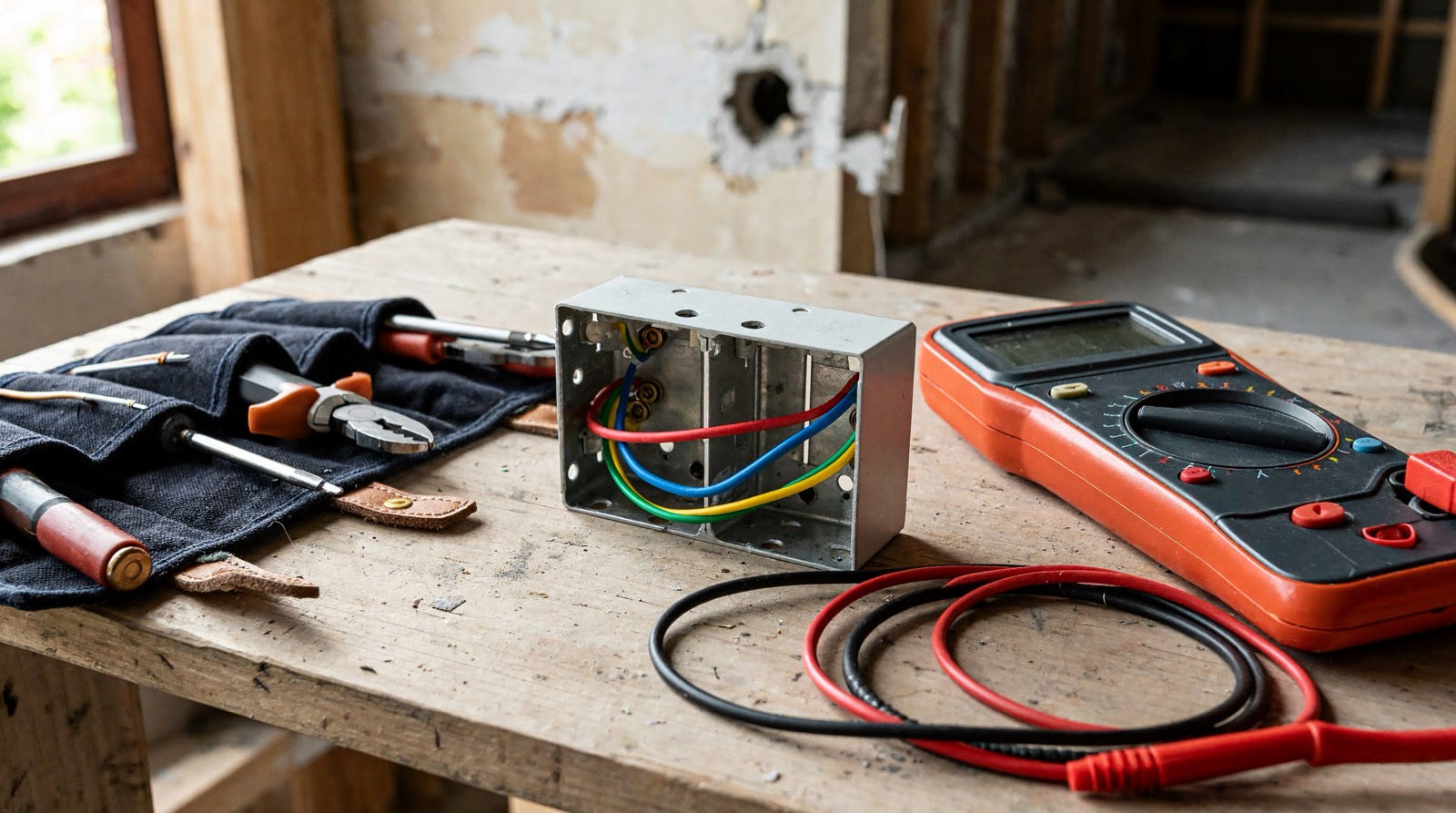
- Ask what happens to the back-box depth and the neutral wire. These two facts decide which devices you are allowed to fit. A box that is too shallow means a deeper box, a spacer or a different device. A box with no neutral means a no-neutral device or a relay module, and it means power monitoring is off the table. You need that plan before the quote, not after. Does your house have a neutral wire? is the five-minute version of this check.
- Ask who owns the Aqara account afterwards. The Aqara home is the container for every device, every automation and every scene you will ever build. If the installer creates it on their own phone and cannot make you an administrator, you have a house somebody else controls. The answer you want: the account is created against your email address, your phone is an owner, and the installer's phone is a shared user or is removed.
- Ask about the handover pack. A handover pack is the difference between a system you can maintain and a system you have been handed. It should carry the device list, the automations in plain language, the hub location and model, the credentials and the login. The customer handover pack sets out what a usable one contains.
- Ask who you call when a sensor fails in year two. This exposes whether the installer has thought past the handover. The honest answer names a route — the installer, the distributor, or both. Then ask for the current warranty terms for that model in writing before you commit, and apply the same scepticism to any claim made at the kitchen table that you would apply to any other claim.
- Ask for a written scope, and for its exclusions. Exclusions are where the two parties actually disagree, and they only surface at the end if nobody writes them down. The usual ones: chasing and making good walls, painting, altering your network equipment, work outside the agreed device list, and obtaining condo management approval.
- Confirm who does the fixed wiring, and that they are licensed to. In Malaysia, fixed electrical work sits under the Electricity Supply Act 1990 (Act 447), and it is carried out by a wireman registered with Suruhanjaya Tenaga. Ask for the registration details and confirm your project's fixed work falls inside that person's scope. An installer who handles the automation side of a project is not automatically the person permitted to cut into your circuit.
3. What a legitimate credential looks like
Credentials in this trade are easy to fake and easy to over-read. Here is what each one actually proves, and what it does not.
| Signal | What it looks like | What it does not prove |
|---|
| Registered wireman | A Suruhanjaya Tenaga registration you can verify, with the scope of work named | That the person is good at automation |
| Product training from the distributor | Aqara-specific training covering pairing, mesh, hub placement and handover | The quality of any particular job |
| Tools that match the work | A multimeter, a socket tester, proper crimping and cable tools, a way to test a finished circuit | Design judgement or tidiness |
| A documented process | Survey first, written scope, install, commissioning test, handover pack | That the finished work is neat |
| Stock from the Malaysian channel | Units supplied through the official distributor, so a party in the country can open a case | That a claim will succeed |
The training content in our partner programme is described on Aqara partner training and certification, and the kit an installer needs is listed in tools an Aqara installer needs. The process a job should follow, from first enquiry to handover, is written out in the installer process.
4. Red flags
- They will not name who does the wiring, or whether it is done by a registered wireman.
- They quote a whole-house system before anyone has opened a box. A quote without a survey is a guess with a number on it.
- They refuse a written scope, or offer one with no exclusions.
- They insist on creating the Aqara home on their own phone and keeping control of it.
- Handover is described as "we will show you how it works", with nothing written down.
- They cannot answer the neutral-wire question, or tell you it does not matter. It matters.
- They quote warranty durations, replacement timelines or money-back promises they cannot evidence. If it sounds too certain, ask for it in writing on their letterhead.
- They push you to decide on the spot, or the device list only makes sense if you buy everything in it.
- They remove your existing switches without explaining what you will be left holding on the wall.
The full catalogue of ways a well-meant purchase goes wrong is in smart home buying mistakes in Malaysia.
5. Where this stops working
Honest limits, because a vetting guide that oversells its own power is worse than none:
- The checks disqualify; they do not confirm. We do not audit partner jobs, we do not visit sites to grade finished work, and we will not tell you an installer is good because their paperwork is in order.
- We cannot fill the map. There is no nationwide installer network, and there is no vetted directory we can point you to. Coverage outside major urban centres is limited. Where a town has one competent installer, that is what exists, and no checklist changes it.
- Some questions are unanswerable until the walls are open. A neutral wire, a back-box depth and a circuit's condition are only knowable by inspection. A good installer says so. A bad one guesses.
- No installer can create a neutral wire without opening walls, and no installer makes a defective consumer unit safe.
- The free partner programme is not a quality mark. Any qualified installer can join it. We publish the criteria and the training; we do not warrant the workmanship of every project that comes through it.
What this page does not claim
- We do not install. Synchroweb is the distributor, and the partner programme is free to join.
- We do not claim a nationwide installer network. Coverage outside major urban centres is limited.
- We do not claim every Aqara product is available in Malaysia. Availability varies by SKU — the current list is on which Aqara products are available in Malaysia.