







Does Your House Have a Neutral Wire? A Malaysia Smart Switch Guide
A neutral wire smart switch Malaysia guide: how to check whether your box has a neutral, why loop-in wiring leaves it empty, and what to do next about it.
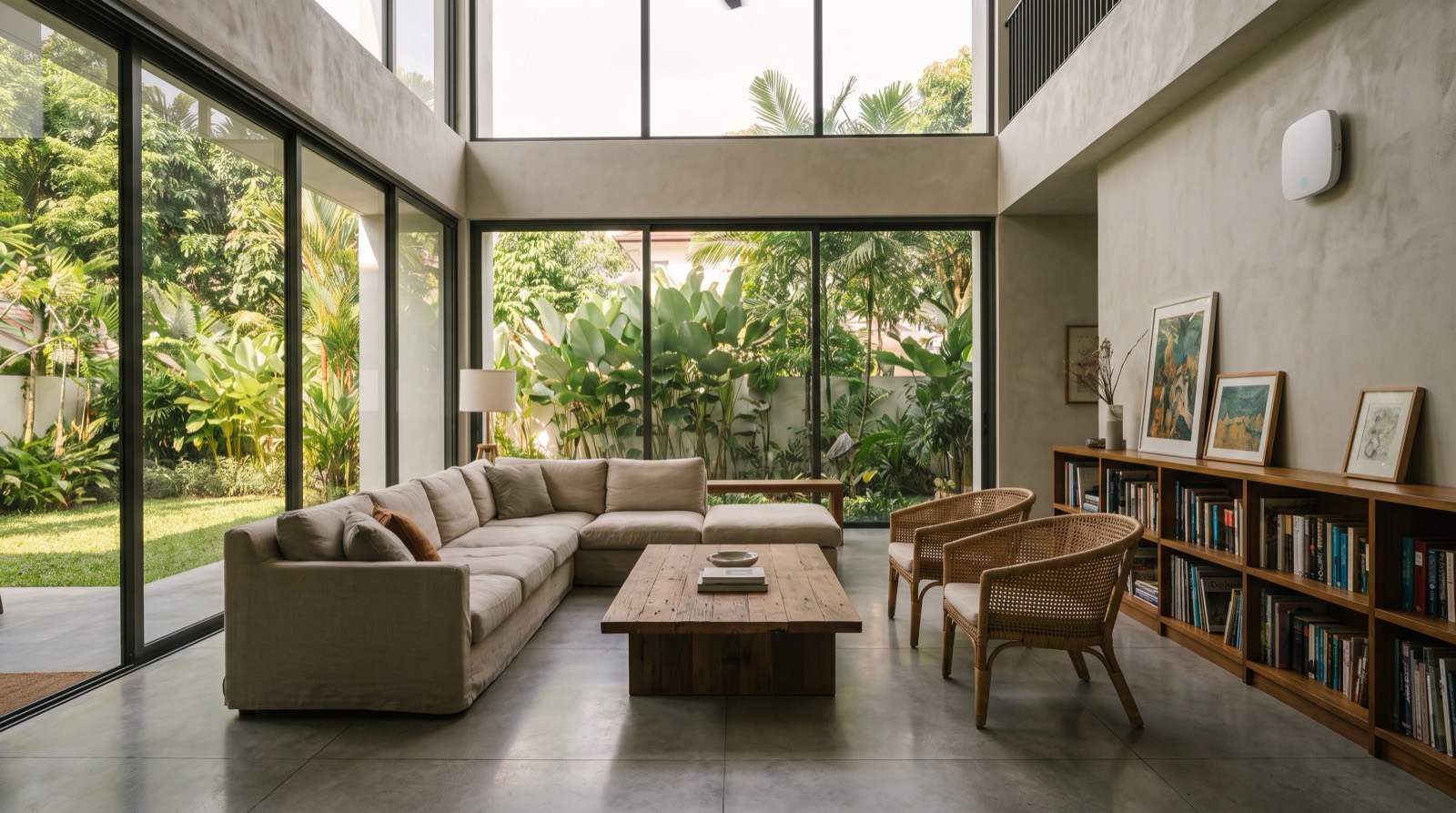
Answer up front — In Malaysia, a smart home that is worth building is mostly lighting, blinds, door access, sensors and cameras — not appliances. The first thing to check, before buying any device, is whether your wall box has a neutral wire, because that single fact decides which products are even usable and whether you are facing a rewire. Hub or no hub is a real decision, not a formality: local control matters precisely when your fibre drops, and most cloud-only setups lose access without an internet connection. Expect to spend in the low five figures for a properly done installation, and expect humidity, warranty clarity and installer availability to be the three things that decide whether the project works.
This guide is for someone in Malaysia who has decided they want a smart home and does not yet know what they are buying. It is deliberately honest, including about the parts that do not work.
Before any device, any hub, any budget conversation: look inside a wall box and see whether a neutral wire is there.
In a conventional Malaysian installation the switch may be a simple through-switch that only carries live and switched live. Many newer and renovated homes have a neutral as well. That one wire determines the product range you can use, whether power monitoring works, and whether a no-neutral device is a workable choice or a compromise.
| Your wall box | What it means |
|---|---|
| Neutral present | Full range available, including devices that report power consumption |
| No neutral | No-neutral devices only; power monitoring will not work |
| Unsure | Have it checked before ordering anything |
Read does your house have a neutral wire? first — it is the highest-return five minutes in the whole process. If the answer is no and you want the full feature set, no-neutral rewiring and relay module options sets out the two real routes.
A related check: will a smart switch fit my back box?. A device that fits your grid but not your plate is still a return.
Some devices talk to their manufacturer directly. Some need a hub. The difference matters more in Malaysia than in places with more stable connectivity.
Named Malaysian market research notes that without an internet connection, users have limited or no access to what a cloud-dependent setup does. That is the core issue: if your control depends on a cloud service being reachable from your home, an outage, a fibre cut or a saturated upstream link can take your lighting out of your control.
Local control changes the shape of the failure. A setup with a hub on the local network can keep running the automations you have already defined, because the rules are not living in someone else's data centre. This matters for the aircon, the gate, the lights in the corridor — the things you actually rely on at 2am.
The Aqara hub line, in short:
| Hub | Matter role | Thread | Capacity |
|---|---|---|---|
| Hub M100 | Controller + Thread Border Router + Bridge | Yes | 20 Zigbee + 20 Thread |
| Hub M200 | Controller + Thread Border Router + Bridge + IR | Yes | 40 Zigbee + 40 Thread |
| Hub M3 | Controller + Thread Border Router + Bridge + IR | Yes | 127 Zigbee + 127 Thread |
| Hub M2 | Bridge only — no controller, no Thread radio | No | legacy Zigbee hub |
Our full Aqara hub M3 vs M2 vs M100 vs M200 comparison covers the decision properly. Two details worth knowing up front: the M2 is a Matter Bridge only — it has no Thread radio at all, so it cannot run a Matter-over-Thread project; and the M200 ships without a power adapter.
For placement, power backup and Wi-Fi coverage, see hub placement, Wi-Fi coverage and power backup.
Named Malaysian market research describes most Malaysian smart home installations as covering lighting and blind or curtain control, plus alarm and CCTV integration — with limited appliance connectivity. That matches what we see on site.
So set expectations honestly. What works well:
What tends not to work well:
If you want the honest version of what is realistic in an existing building, read which smart home retrofit is realistic in Malaysia.
Malaysia is a hard environment for consumer electronics, and the failure modes are predictable: heat, standing humidity, and monsoon-season water.
Named Malaysian market research consistently puts humidity durability near the top of the reasons people are reluctant. That is not irrational caution — a device rated for a temperate indoor climate is a different proposition in a Penang or Kuching bathroom, a covered porch, or a car porch that takes rain driving in.
What this means in practice:
See monsoon and outdoor sensor placement and kitchen and wet area protection. And do check the operating temperature figure on any device you buy — the Aqara range published here spans from 0~40 °C to −10~50 °C depending on the model, so it is not a uniform range.
A properly installed smart home in Malaysia is a five-figure decision, which is precisely why the category has stayed a deliberate upgrade rather than a default purchase. Press coverage in Malaysia has repeatedly put a full installation in that region, drawing on property-industry sources.
Two things follow from that, and both matter more than the figure itself.
First, the number that matters is yours, and yours depends on your building, your wiring and how much of it you do yourself. A flat with a neutral wire in every switch box is a different project from a landed house that needs new cable run. Any figure you read — including ours — is somebody else's building, not yours.
Second, a device list is not a quote. Device cost and installed cost are different numbers, and the gap between them is where most of the budget actually sits: cabling, containment, back-box work, commissioning, and the labour to do it properly. Anyone who quotes you a device total has not quoted you an installation.
Devices are the visible part. Installation labour, cabling, back-box work, commissioning and configuration are not in that table, and a project where you open walls costs materially more than one where you do not. Our breakdown is in what does a smart home cost in Malaysia.
If you want to narrow the field fast, starter bundles by home size is the practical version of this section.
Named Malaysian market research points to a consistent set of barriers, and they are worth stating plainly because most smart home marketing ignores them:
Our guide to buying Aqara in Malaysia safely is specifically about buying through the local channel, and smart home buying mistakes in Malaysia covers the mistakes that recur.
For context, named Malaysian market research projects smart home penetration in Singapore at 28%, Malaysia at 19% and Thailand at 15%. Malaysia is not behind Singapore, but neither is it saturated. There is no mass market here yet, and anyone selling you a "standard package" is selling you a package, not a standard.
That is why the barrier list matters. In a market at this stage, the projects that work are the ones where someone has actually looked at the building.
For the automations themselves, smart home automation that makes sense in a Malaysian home works through the sequence of payoff, and what to automate first covers the generic starting case.
If you want the full product-by-product picture before spending anything:
Situation-specific:
Book a site survey and we will check your neutral wiring, your back boxes and your loads, and give you a plan that matches your building — including telling you which parts of it are not worth doing.
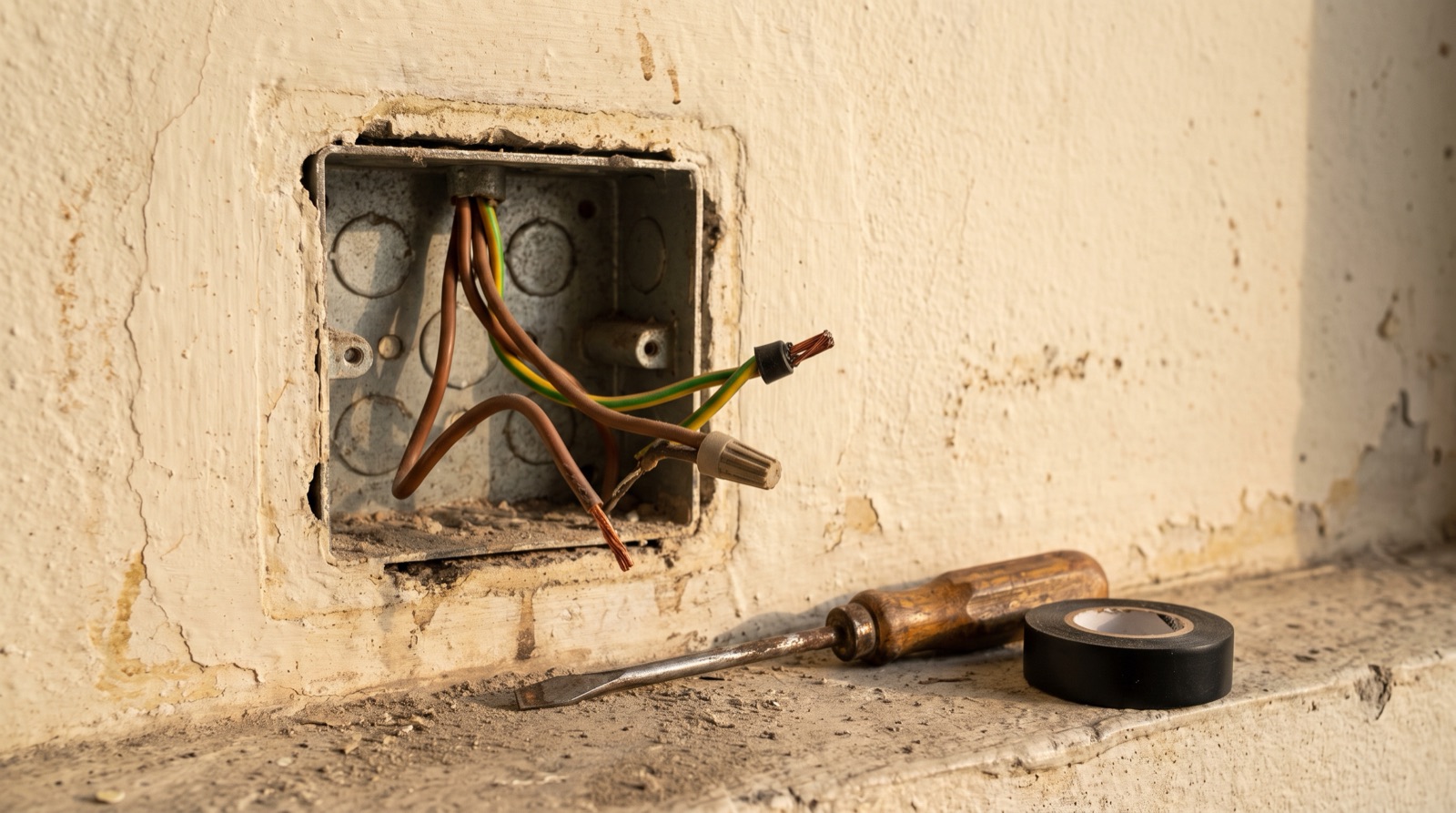
A neutral wire smart switch Malaysia guide: how to check whether your box has a neutral, why loop-in wiring leaves it empty, and what to do next about it.
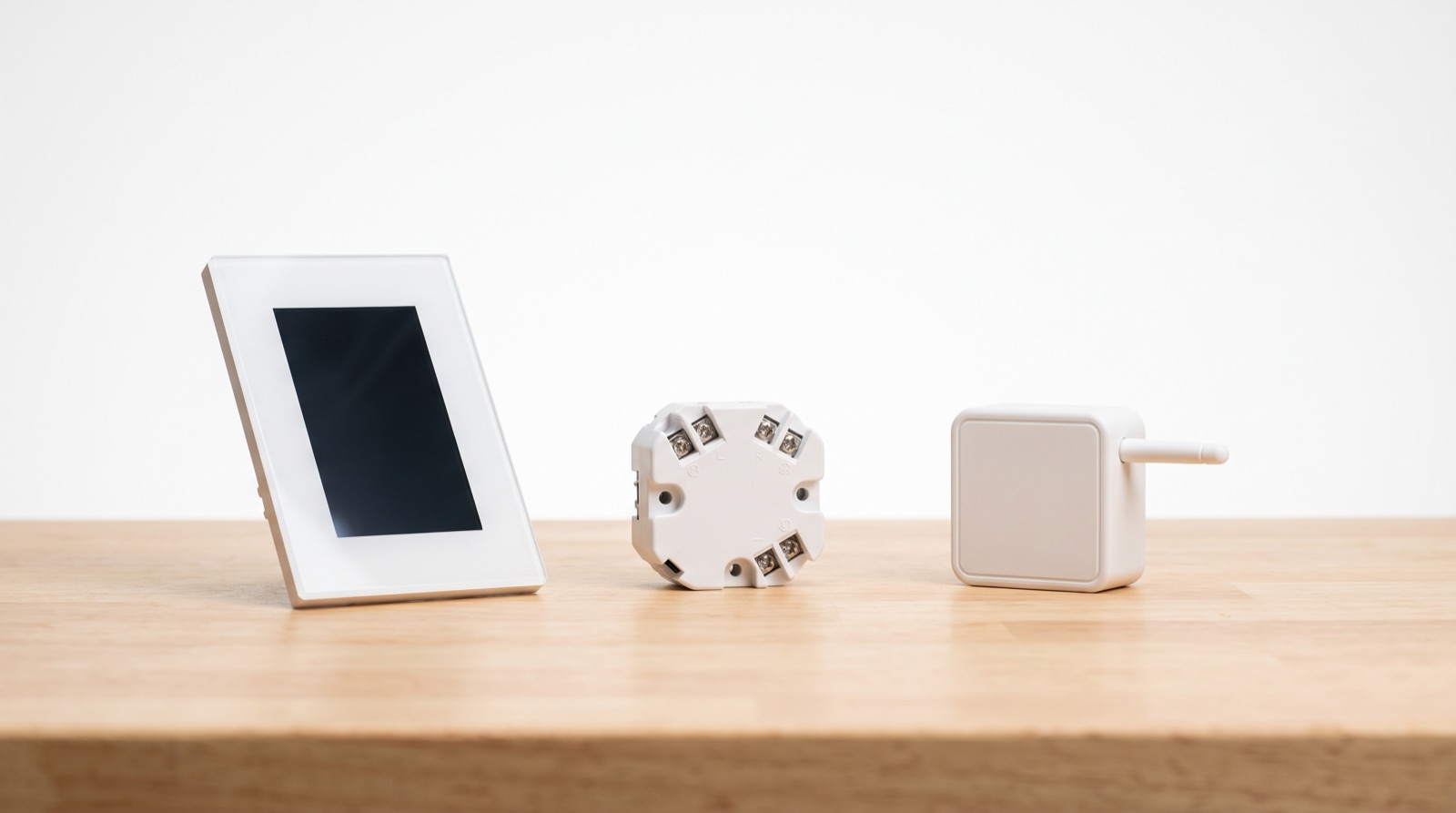
No neutral smart switch Malaysia: three honest routes when the box has no neutral - a no-neutral switch, a rewire, or a relay module at the ceiling rose.
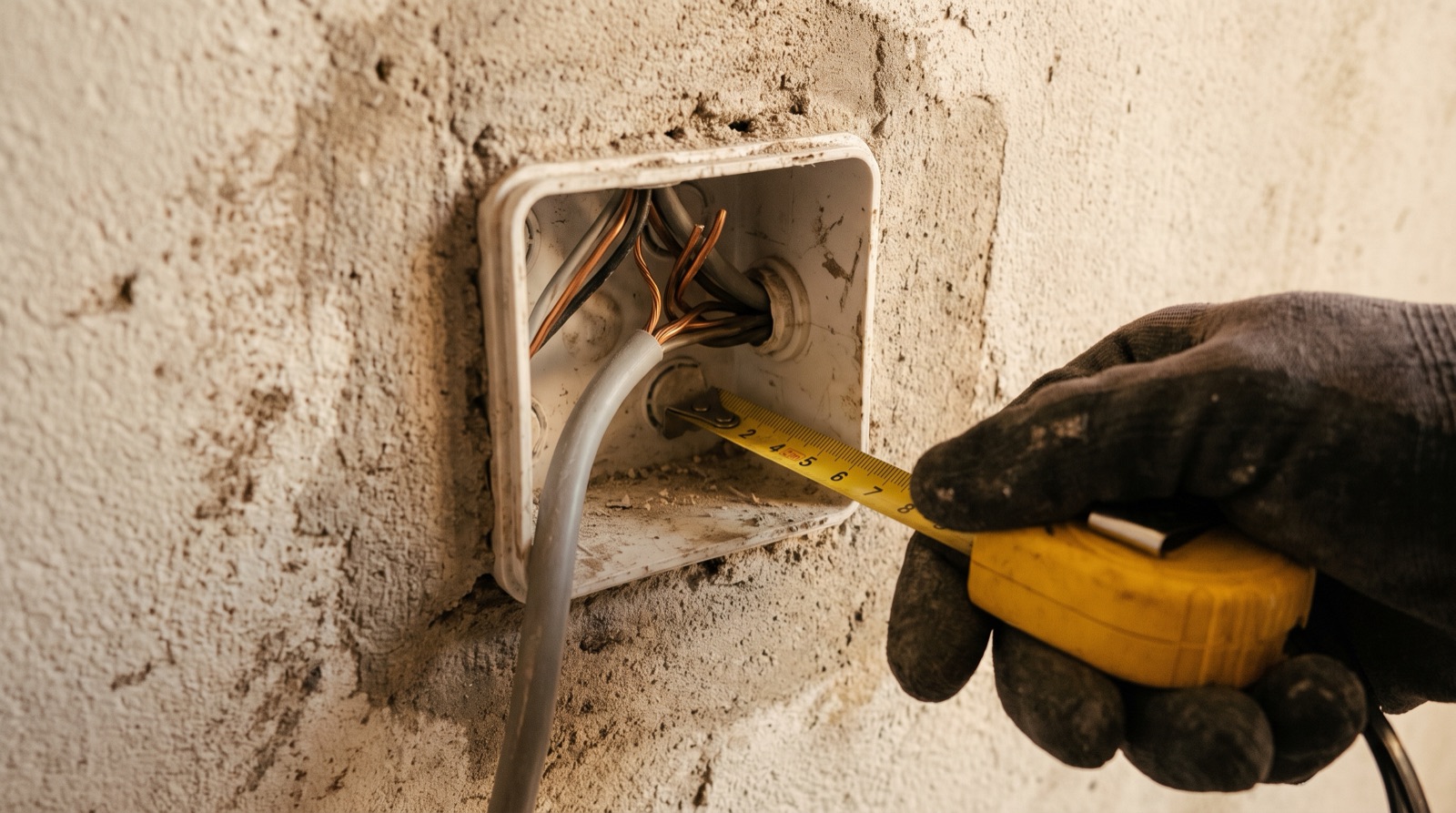
Smart switch back box Malaysia: shallow boxes are the second most common install failure after the neutral. How to measure the depth and the gang count.
Tell us about your space. Our B2B team will reply within one business day with a recommended setup and quotation.
WhatsApp us →
[email protected]
+603-5880 5486